Map of Belgium showing where the Everard arms are recorded
The Everard arms were recorded in Luxemb, c. 1865.
This is where the arms were entered in the register. Families often moved to other parts of the country, so the same name can turn up in more than one region.
The body that granted and recorded arms in Belgium in this period.
Leopold I of Belgium
Sovereign of the period
Leopold I of Belgium
1831–1865
Reigning in Belgium when the Everard arms are first recorded.
How Arms Worked in Belgium
In Belgium, a coat of arms is considered personal property that is passed down through the male line to legitimate descendants. Families often use the same shield design across generations to show their shared heritage. If a branch of the family wants to change the design, they must apply for an official update to their specific version of the arms.
Granting authority
The Conseil héraldique is the official body that regulates and approves all coats of arms in Belgium.
How they got arms
Families obtain their coats of arms through formal royal grants or by confirming their historical right to use existing designs.
Where arms were recorded
All approved coats of arms are officially recorded in the public registers of the Conseil héraldique since 1844.
The family's standing
Recorded among the armigerous families of Belgium.
Origin & History of the Everard Family in Belgium
The name Everard originates from the ancient Germanic name Eberhard, which combines the words for wild boar and brave or strong. In the region that is now Belgium and Luxembourg, the name became established as a common personal name during the Middle Ages before eventually evolving into a hereditary surname. By the mid-19th century, families carrying this name were well-integrated into the social and professional life of the Luxembourg province. Records from 1865 confirm that members of the Everard family were active participants in the local economy and community structure of this area. These early ancestors likely worked in agriculture or local trades, which was typical for families living in the Ardennes region during that period. Over time, the name transitioned from a descriptor of personal strength to a permanent family identifier that linked generations across the shifting borders of the Low Countries.
Coat of Arms & Family Crest Details
Symbols on this shield
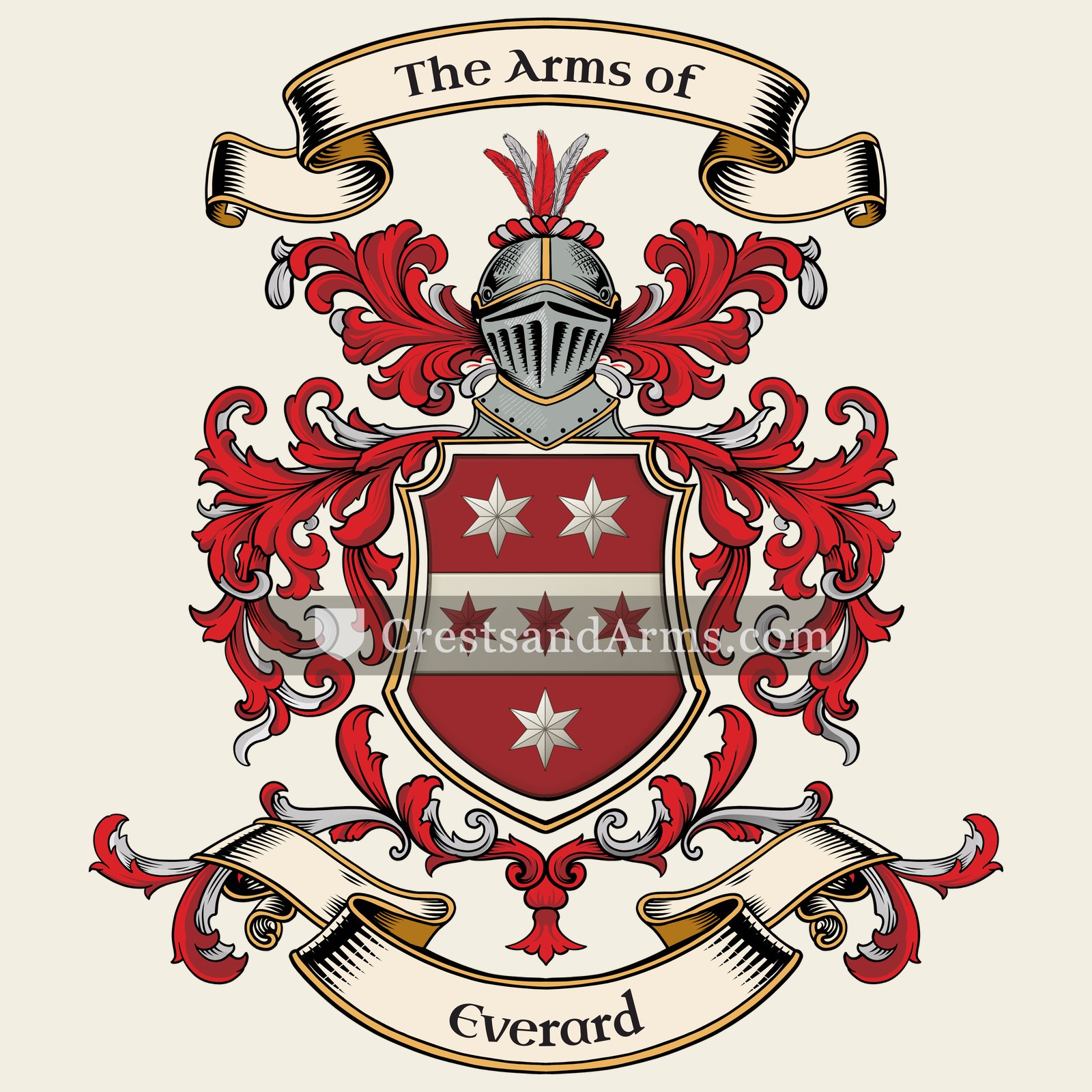
fessThe military belt, and readiness to serve
starThe celestial goddess, and nobility
Colours
Red (Gules)Means: Military strength
Silver (Argent)Means: Peace and sincerity
Historical info
Source
Sir Bernard Burke, The General Armory of England, Scotland, Ireland and Wales, London: Harrison & Sons, 1884
Blazon (the actual original written record)
“Gu. on a fess betw. three estoiles ar. as many”
LeicesterShenton · Leicester, c. 1556
Digital archive packCoat of arms PNG, gold border print PDF, vector SVG and the certificate of authenticity. Sent to your email in minutes.
Map of England showing where the Everard arms are recorded
The Everard arms were recorded in Leicester, c. 1556.
Leicestershire was grazing country, and wool and cattle made steady money rather than spectacular fortunes. Steady money bought manors, and manors are what brought families into the registers.
This is where the arms were entered in the register. Families often moved to other parts of the country, so the same name can turn up in more than one region.
The body that granted and recorded arms in England in this period.
Mary I
Sovereign of the period
Mary I
1553–1558
Reigning in Belgium when the Everard arms are first recorded.
How Arms Worked in England
English heraldry allowed arms to be shared by all legitimate descendants of the original owner. These symbols were treated as personal property that moved through the generations to all children. While the eldest son kept the original design, other family members could use the same shield without needing to change it or register their own unique versions.
Granting authority
The College of Arms in London has regulated the use of coats of arms throughout England and Wales since 1484.
How they got arms
Families typically obtained their coats of arms through a formal grant from the Crown or by proving their ancient right to them.
Where arms were recorded
All official coats of arms are recorded in the registers kept at the College of Arms, which date back to the fifteenth century.
The family's standing
Recorded among the armigerous families of Leicester.
Origin & History of the Everard Family in England
The surname Everard originates from the Old German name Eberhard, which combines the words for wild boar and brave or hardy. This name arrived in England following the Norman Conquest, as it was a popular choice among the ruling class who brought their continental naming traditions with them. By the middle of the sixteenth century, the family had established a notable presence in Leicester. Records from 1556 confirm that members of the Everard family were active participants in the local life of this town. During this era, families with this name often worked as landowners or tradespeople, helping to shape the social and economic structure of the English Midlands. As the name passed down through generations, it became a fixed identifier for these families, reflecting their long-standing roots in the region.
Coat of Arms & Family Crest Details
Symbols on this shield
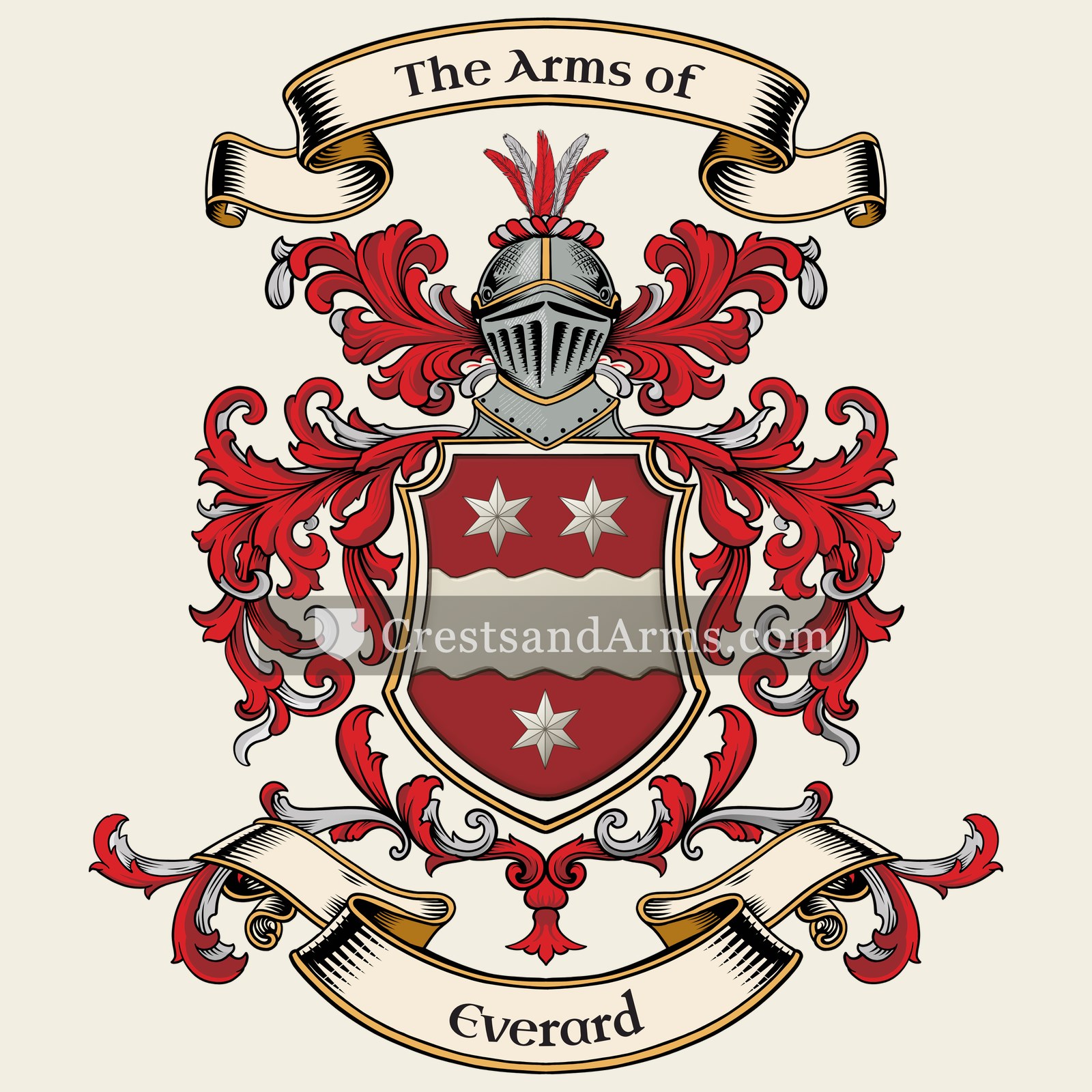
fessThe military belt, and readiness to serve
starThe celestial goddess, and nobility
Colours
Red (Gules)Means: Military strength
Silver (Argent)Means: Peace and sincerity
Historical info
Source
Sir Bernard Burke, The General Armory of England, Scotland, Ireland and Wales, London: Harrison & Sons, 1884
Blazon (the actual original written record)
“Gu. a fess wavy betw. three estoiles ar”
MeathRandlestown · Meath, c. 1187
Digital archive packCoat of arms PNG, gold border print PDF, vector SVG and the certificate of authenticity. Sent to your email in minutes.
Map of Ireland showing where the Everard arms are recorded
The Everard arms were recorded in Meath, c. 1187.
Meath was the best farmland in Ireland and the old seat of its high kings. Norman families took it early and held it, and land of that quality kept the same families on it for centuries.
This is where the arms were entered in the register. Families often moved to other parts of the country, so the same name can turn up in more than one region.
The body that granted and recorded arms in Ireland in this period.
Henry II of England
Sovereign of the period
Henry II of England
1154–1189
Reigning in Belgium when the Everard arms are first recorded.
How Arms Worked in Ireland
The Ulster King of Arms granted coats of arms to individuals who proved their social standing and good character. These symbols were typically inherited by all legitimate descendants of the original holder. If a family branch wanted a unique look, they could apply for a specific change to their design through the office to ensure their identity remained distinct.
Granting authority
The Ulster King of Arms acted as the official body that regulated and issued all coats of arms throughout Ireland.
How they got arms
Families obtained their arms through formal grants issued by the office after proving their eligibility and paying the required fees.
Where arms were recorded
All official grants were recorded in the registers held by the Ulster King of Arms starting from the year 1552.
The family's standing
Recorded among the armigerous families of Meath.
Origin & History of the Everard Family in Ireland
The Everard family name arrived in Ireland during the late twelfth century, marking a significant period of migration following the Norman expansion. Historical records confirm that members of the family were established in County Meath by 1187, where they integrated into the local social and political landscape. As the family settled into the region, they became prominent landowners and participants in the administrative life of the Anglo-Norman colony. Over the following centuries, the Everards became deeply rooted in Irish society, particularly in areas like Meath and later Tipperary. They transitioned from being newcomers to becoming a well-known part of the local gentry, often serving in government roles or managing large estates. This long history highlights how a family name can evolve from a foreign arrival into a permanent and influential part of the Irish landscape.
Everard Meaning & Related Branches
Root word
Eberhard
Derived from Germanic elements meaning wild boar and brave or hardy.
This name
EverardA name signifying the strength and courage of a wild boar.
also spelled
Everart
Evered
Everet
Related arms
Woodcocksame arms
Everet, Everett, and Everattvariant spelling
Birdrecorded with Everard, same area
Coneyrecorded with Everard, same area
Documented Sources
J. B. Rietstap, Armorial Général, Gouda: G. B. van Goor Zonen, 1884–87
Carnoy, Albert, Origines des noms de famille en Belgique, 1953
State Archives in Belgium (Archives de l'État à Arlon), Registres de l'état civil de la province de Luxembourg, 1865
Tavernier, René, Les noms de famille en Belgique, 1974
Digital archive packCoat of arms PNG, gold border print PDF, vector SVG and the certificate of authenticity. Sent to your email in minutes.


 mulletThe third son, and a divine quality from above
 mulletThe third son, and a divine quality from above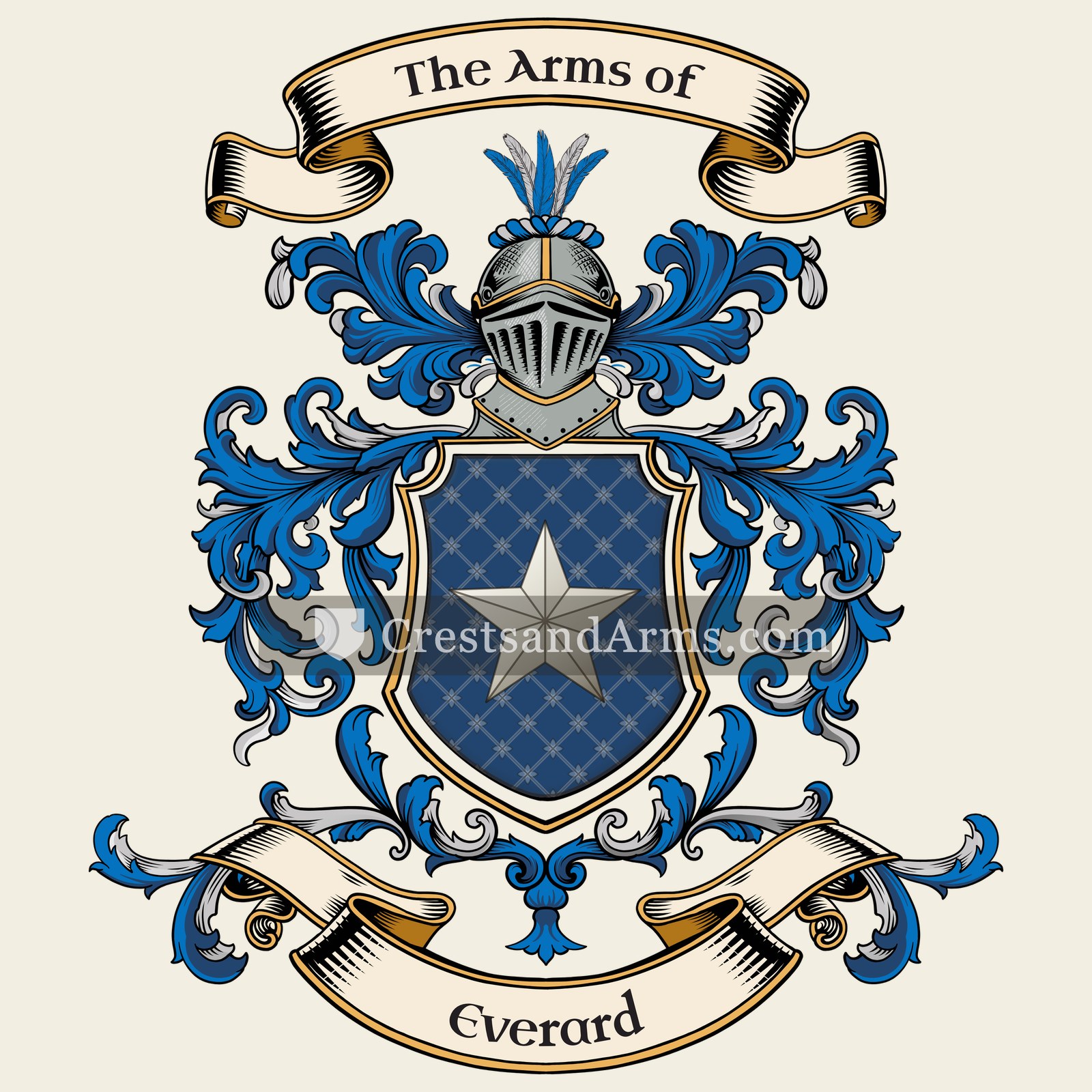


 fessThe military belt, and readiness to serve
 starThe celestial goddess, and nobility