Map of Germany showing where the Everden arms are recorded
The Everden arms were recorded in Pomerania, c. 1765.
Pomerania was flat farming country on the Baltic coast, held in large estates by a small number of families. They kept their land for generations, and generations of landholding is what fills the registers.
This is where the arms were entered in the register. Families often moved to other parts of the country, so the same name can turn up in more than one region.
The body that granted and recorded arms in Germany in this period.
Francis I, Holy Roman Emperor
Sovereign of the period
Francis I, Holy Roman Emperor
1745–1765
Reigning in Germany when the Everden arms are first recorded.
How Arms Worked in Germany
In the Holy Roman Empire, coats of arms were often granted to individuals by the Emperor or his representatives. These arms were then passed down through the generations to all legitimate descendants of the original holder. Younger branches of a family usually kept the same shield design without needing to change it, as the arms belonged to the entire lineage.
Granting authority
The Holy Roman Emperor held the sole power to grant new coats of arms throughout his vast imperial territories.
How they got arms
Families typically obtained their coats of arms through a formal imperial grant or by proving their noble status to the authorities.
Where arms were recorded
These grants were officially recorded in the Imperial Chancery registers, which began keeping formal records of such honors during the Middle Ages.
The family's standing
Recorded among the armigerous families of Pomerania.
Origin & History of the Everden Family in Germany
The family name Everden traces its roots to the northern regions of Germany, where it was historically associated with the landscape and local geography. By the mid-eighteenth century, records confirm that members of the family were well-established in the province of Pomerania. During this period, Pomerania was a region defined by its agricultural traditions and its shifting political borders between Prussia and neighboring powers. Families living in this area often took names that reflected their connection to the land or their specific village of origin. As the Everden name appears in official documentation in 1765, it suggests that the family was part of the settled population contributing to the local economy and community life of the Baltic coast. These early ancestors likely navigated the challenges of rural life in a changing Europe, helping to shape the cultural identity of the region before later generations began to migrate further afield.
Coat of Arms & Family Crest Details
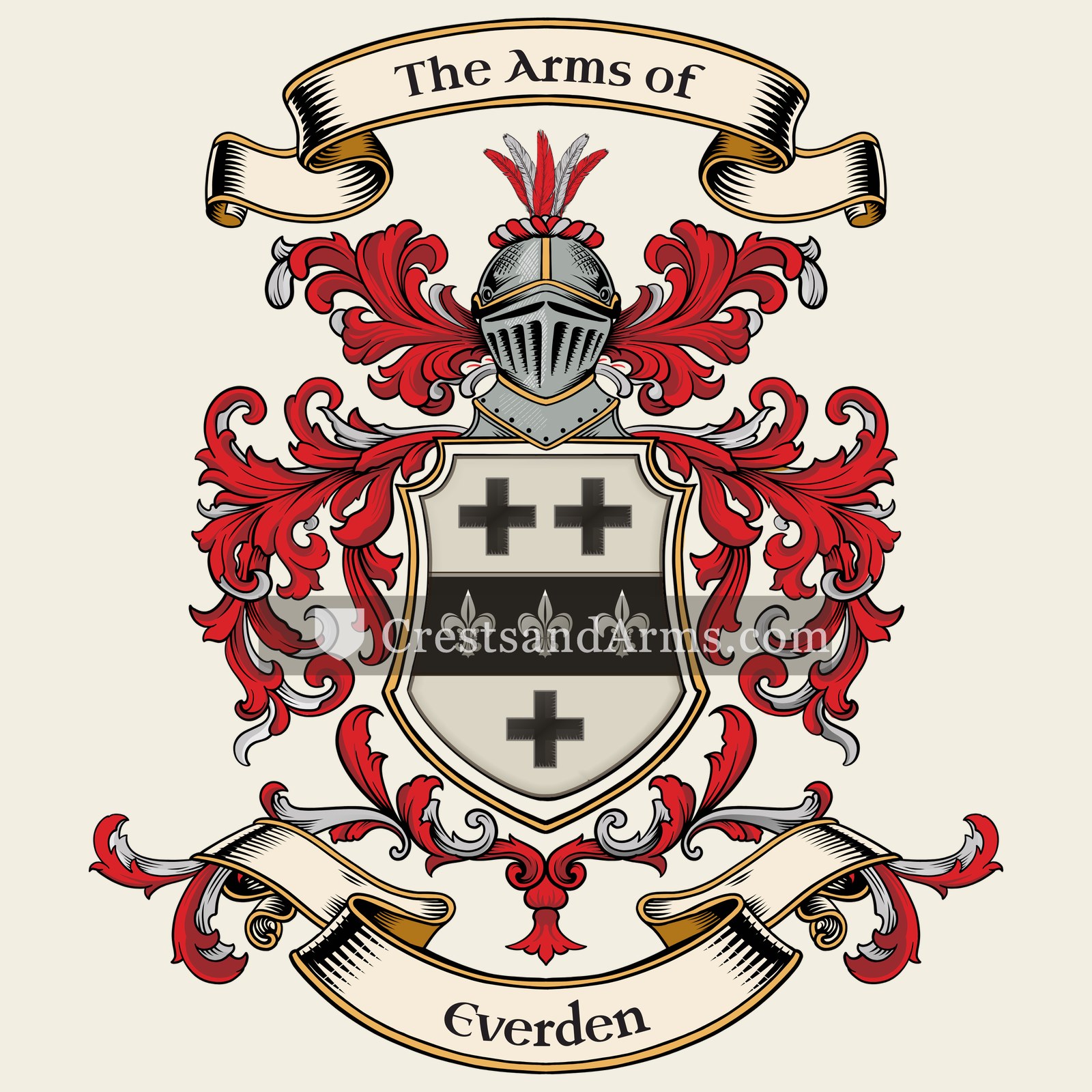
Symbols on this shield
fessThe military belt, and readiness to serve
cross symbolChristian faith and service
fleur de lisPurity, light, and the sixth son
Colours
Silver (Argent)Means: Peace and sincerity
Black (Sable)Means: Constancy
Historical info
Source
Sir Bernard Burke, The General Armory of England, Scotland, Ireland and Wales, London: Harrison & Sons, 1884
Blazon (the actual original written record)
“Ar. on a fesse sa. betw. three crosses crosslet of the second as many fleurs-de-lis of the first”
Englandc. 1620
Digital archive packCoat of arms PNG, gold border print PDF, vector SVG and the certificate of authenticity. Sent to your email in minutes.
Map of England showing where the Everden arms are recorded
The Everden arms were recorded in England, c. 1620.
Arms such as these were typically recorded in York.
Yorkshire is the largest of the English counties, and it held more gentry families than any other. Land there was split among a great many households rather than a few, so a great many of them carried arms.
This is where the arms were entered in the register. Families often moved to other parts of the country, so the same name can turn up in more than one region.
The body that granted and recorded arms in England in this period.
James VI and I
Sovereign of the period
James VI and I
1603–1625
Reigning in Germany when the Everden arms are first recorded.
How Arms Worked in England
English heraldry allowed arms to be shared by all legitimate descendants of the original owner. These symbols were treated as personal property that moved through the generations to all children. While the eldest son kept the original design, other family members could use the same shield without needing to change it or register their own unique versions.
Granting authority
The College of Arms in London has regulated the use of coats of arms throughout England and Wales since 1484.
How they got arms
Families typically obtained their coats of arms through a formal grant from the Crown or by proving their ancient right to them.
Where arms were recorded
All official coats of arms are recorded in the registers kept at the College of Arms, which date back to the fifteenth century.
The family's standing
Recorded among the armigerous families of England.
Origin & History of the Everden Family in England
The surname Everden is rooted in the landscape of medieval England, likely originating as a locative name for families who lived near a valley or a clearing associated with wild boar. By the early seventeenth century, the name had established a firm presence in the northern city of York. Records from 1620 confirm that members of the Everden family were active participants in the social and economic life of this historic walled city. During this period, York served as a vital regional hub for trade and administration, suggesting that these early ancestors were likely integrated into the urban merchant or artisan classes. The survival of the name in parish registers and local legal documents from this era highlights how families of that time maintained their identity while navigating the shifting political and religious landscape of Stuart England.
Everden Meaning & Related Branches
Root word
Eberhard
Derived from the Germanic elements for wild boar and brave or hardy.
This name
EverdenA topographic name referring to a valley inhabited by wild boars.
also spelled
Everd
Everdee
Everden
Documented Sources
J. B. Rietstap, Armorial Général, Gouda: G. B. van Goor Zonen, 1884–87
Gehrke, Roland, Die Geschichte des pommerschen Adels, 2004
State Archive in Szczecin (Archiwum Państwowe w Szczecinie), Kirchenbücher der Provinz Pommern, 1765
Heitz, Gerhard, Die Entwicklung der gutsherrlich-bäuerlichen Verhältnisse in Pommern, 1956
Digital archive packCoat of arms PNG, gold border print PDF, vector SVG and the certificate of authenticity. Sent to your email in minutes.


 boarA fierce fighter who battles to the end
 boarA fierce fighter who battles to the end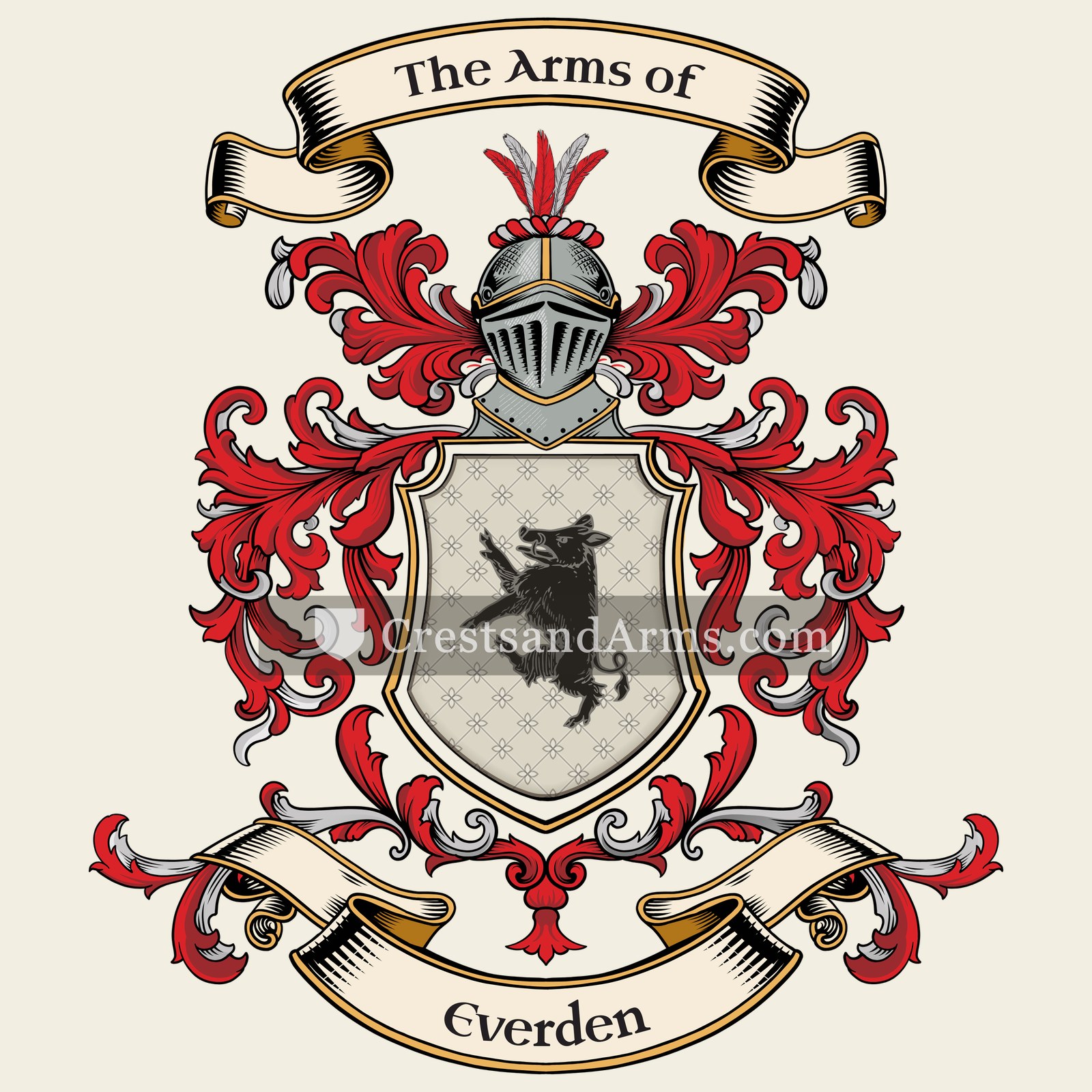


 fessThe military belt, and readiness to serve
 cross symbolChristian faith and service
 fleur de lisPurity, light, and the sixth son