Map of Belgium showing where the Fabri arms are recorded
The Fabri arms were recorded in Brabant, c. 1737.
Brabant lay at the heart of the Low Countries, where the trade routes met. Its towns were wealthy and its landowners many, and both kinds of family kept arms, which is why the region is so heavily represented.
This is where the arms were entered in the register. Families often moved to other parts of the country, so the same name can turn up in more than one region.
The body that granted and recorded arms in Belgium in this period.
Charles VI, Holy Roman Emperor
Sovereign of the period
Charles VI, Holy Roman Emperor
1711–1740
Reigning in Belgium when the Fabri arms are first recorded.
How Arms Worked in Belgium
In Belgium, a coat of arms is considered personal property that is passed down through the male line to legitimate descendants. Families often use the same shield design across generations to show their shared heritage. If a branch of the family wants to change the design, they must apply for an official update to their specific version of the arms.
Granting authority
The Conseil héraldique is the official body that regulates and approves all coats of arms in Belgium.
How they got arms
Families obtain their coats of arms through formal royal grants or by confirming their historical right to use existing designs.
Where arms were recorded
All approved coats of arms are officially recorded in the public registers of the Conseil héraldique since 1844.
The family's standing
Recorded among the armigerous families of Brabant.
Origin & History of the Fabri Family in Belgium
The family name Fabri originates from the Latin word for a craftsman or smith, reflecting a time when surnames were often chosen to describe a person’s trade. By the early 18th century, members of the Fabri family were well-established in the region of Brabant, which was then part of the Southern Netherlands under Austrian rule. During this period, the family likely integrated into the local economy as skilled laborers or merchants, benefiting from the region's reputation for craftsmanship and trade. Because Brabant was a central hub for European commerce, families with names like Fabri often held positions of local influence, participating in the civic life of towns that served as crossroads for travelers and goods. Their presence in the historical records of 1737 suggests they were part of a stable middle class that helped shape the social and economic fabric of the Belgian territories long before the modern nation was formed.
Coat of Arms & Family Crest Details
Symbols on this shield
griffinValour and vigilance, guarding great treasure
Colours
Blue (Azure)Means: Loyalty and truth
Gold (Or)Means: Generosity
Historical info
Source
J. B. Rietstap, Armorial Général, Gouda: G. B. van Goor Zonen, 1884–87
Blazon (the actual original written record)
“D'azur à un griffon d'or. C.: le griffon, iss.”
Germanyc. 1765
Digital archive packCoat of arms PNG, gold border print PDF, vector SVG and the certificate of authenticity. Sent to your email in minutes.
Map of Germany showing where the Fabri arms are recorded
The Fabri arms were recorded in Germany, c. 1765.
Arms such as these were typically recorded in Bavaria.
Bavaria was a country of old landed families and walled market towns. Estates passed down the same line for centuries, and both the landowners and the leading townsmen kept arms, which is why so many Bavarian names sit in the registers.
This is where the arms were entered in the register. Families often moved to other parts of the country, so the same name can turn up in more than one region.
The body that granted and recorded arms in Germany in this period.
Francis I, Holy Roman Emperor
Sovereign of the period
Francis I, Holy Roman Emperor
1745–1765
Reigning in Belgium when the Fabri arms are first recorded.
How Arms Worked in Germany
In the Holy Roman Empire, coats of arms were often granted to individuals by the Emperor or his representatives. These arms were then passed down through the generations to all legitimate descendants of the original holder. Younger branches of a family usually kept the same shield design without needing to change it, as the arms belonged to the entire lineage.
Granting authority
The Holy Roman Emperor held the sole power to grant new coats of arms throughout his vast imperial territories.
How they got arms
Families typically obtained their coats of arms through a formal imperial grant or by proving their noble status to the authorities.
Where arms were recorded
These grants were officially recorded in the Imperial Chancery registers, which began keeping formal records of such honors during the Middle Ages.
The family's standing
Recorded among the armigerous families of Germany.
Origin & History of the Fabri Family in Germany
The surname Fabri is a Latinized form of the word for a craftsman or smith, which reflects the professional roots of the family in medieval Europe. In the German-speaking regions, families often adopted these occupational names to identify their trade or their status within a local community. By the mid-eighteenth century, records confirm that members of the Fabri family were well-established in the Bavarian region. During this era, Bavaria was a center for skilled manual labor and guild-based craftsmanship, providing a stable environment for families to pass down their trade names through generations. The presence of the family in 1765 suggests they were part of the hardworking middle class that helped sustain the local economy and social structure of the Bavarian countryside. As the name transitioned from a simple description of a person’s work into a formal hereditary surname, it became a permanent marker of the family’s long-standing connection to the industrial and artisanal history of Southern Germany.
Coat of Arms & Family Crest Details
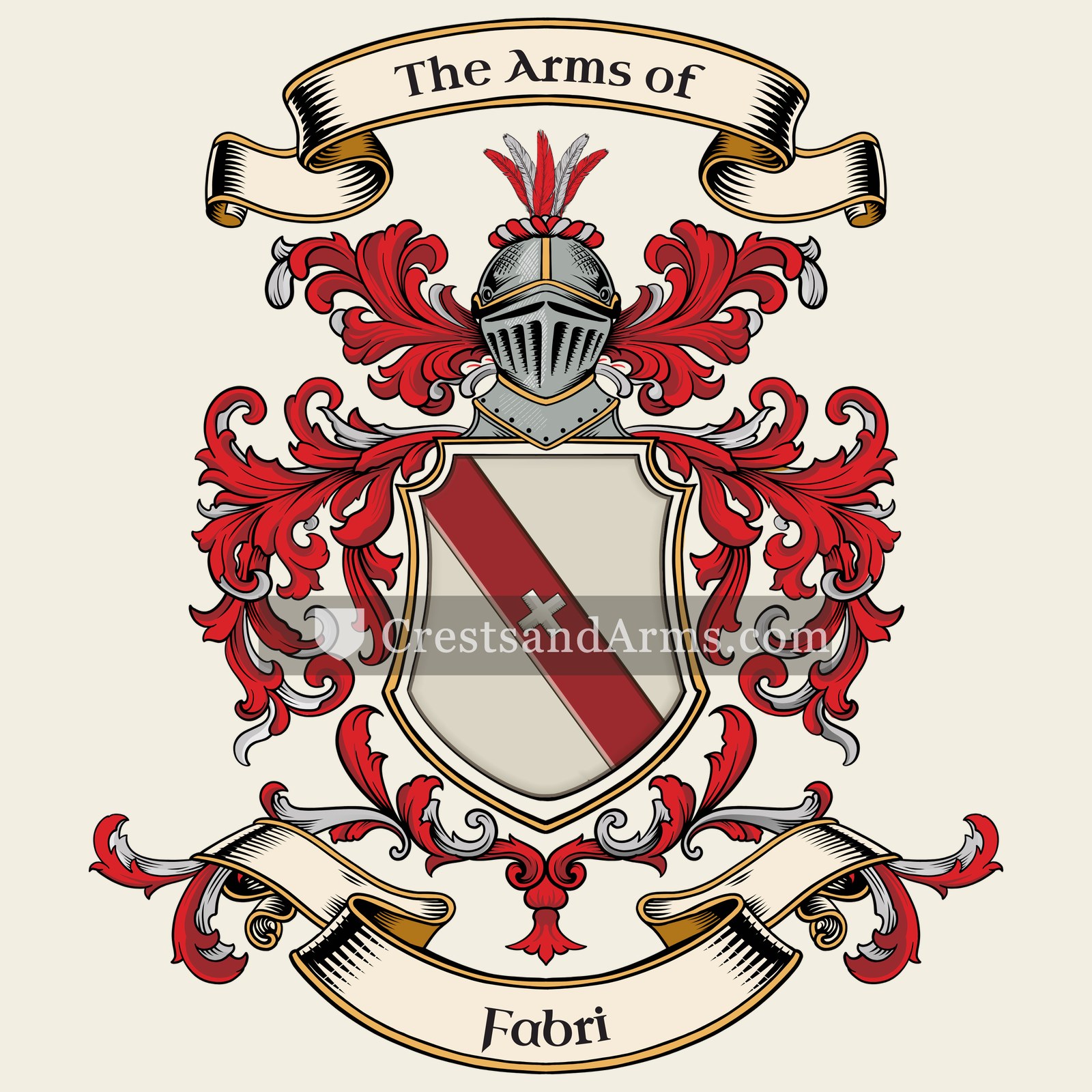
Symbols on this shield
bendDefence, and the scarf of a commander
cross symbolChristian faith and service
Colours
Silver (Argent)Means: Peace and sincerity
Red (Gules)Means: Military strength
Historical info
Source
J. B. Rietstap, Armorial Général, Gouda: G. B. van Goor Zonen, 1884–87
Blazon (the actual original written record)
“D'arg. à la bande de gu., ch. en haut d'une croix latine d'arg., posée dans le sens de la bande, chaque extrémité recroisettée.”
SwitzerlandGenève, c. 1745
Digital archive packCoat of arms PNG, gold border print PDF, vector SVG and the certificate of authenticity. Sent to your email in minutes.
Map of Switzerland showing where the Fabri arms are recorded
The Fabri arms were recorded in Genève, c. 1745.
This is where the arms were entered in the register. Families often moved to other parts of the country, so the same name can turn up in more than one region.
The body that granted and recorded arms in Switzerland in this period.
How Arms Worked in Switzerland
In Switzerland, coats of arms were not restricted to the nobility and were often adopted by common citizens and families. These symbols were passed down through generations to show family identity. When branches of a family grew, they often changed small details of the design to distinguish their own line from the original group.
Granting authority
Cantonal and civic authorities managed the use of coats of arms within their specific regions and local jurisdictions.
How they got arms
Families typically assumed their own coats of arms based on local custom rather than receiving them from a central monarch.
Where arms were recorded
Arms were recorded in various cantonal and civic registers starting from the fourteenth century throughout the Swiss region.
The family's standing
Recorded among the armigerous families of Switzerland.
Origin & History of the Fabri Family in Switzerland
The surname Fabri carries a long history rooted in the professional life of medieval Europe, as it is derived from the Latin word *faber*, meaning a smith or a skilled craftsman. In the context of Switzerland, the name reflects the importance of metalworkers and artisans in the development of early urban centers. By the time the family was firmly established in Geneva in 1745, they were part of a city known for its rigorous standards in watchmaking and precision engineering. This professional heritage suggests that the early ancestors of the Fabri family were likely respected members of the local guilds, contributing to the technical expertise that defined Geneva’s reputation. As the family integrated into the social fabric of the region, they transitioned from their roles as specialized craftsmen to become part of the growing middle class that helped shape the political and economic landscape of the Swiss Confederation.
Fabri Meaning & Related Branches
Root word
Faber
Latin term for a craftsman, smith, or maker.
This name
FabriAn occupational surname denoting a descendant or employee of a blacksmith or metalworker.
Related arms
Fabbrivariant spelling
Bertoiff de Belvenrecorded with Fabri, same area
Boddenrecorded with Fabri, same area
Documented Sources
J. B. Rietstap, Armorial Général, Gouda: G. B. van Goor Zonen, 1884–87
State Archives in Belgium (Rijksarchief), Parochieregisters van Brabant
State Archives in Belgium (Rijksarchief), Registers van de Burgerlijke Stand
Debrabandere, Frans, Woordenboek van de familienamen in België en Noord-Frankrijk, 2003
Marynissen, Ann, Familienamen in België, 2005
Digital archive packCoat of arms PNG, gold border print PDF, vector SVG and the certificate of authenticity. Sent to your email in minutes.


 hammerHonest labour, and the smith's craft
 hammerHonest labour, and the smith's craft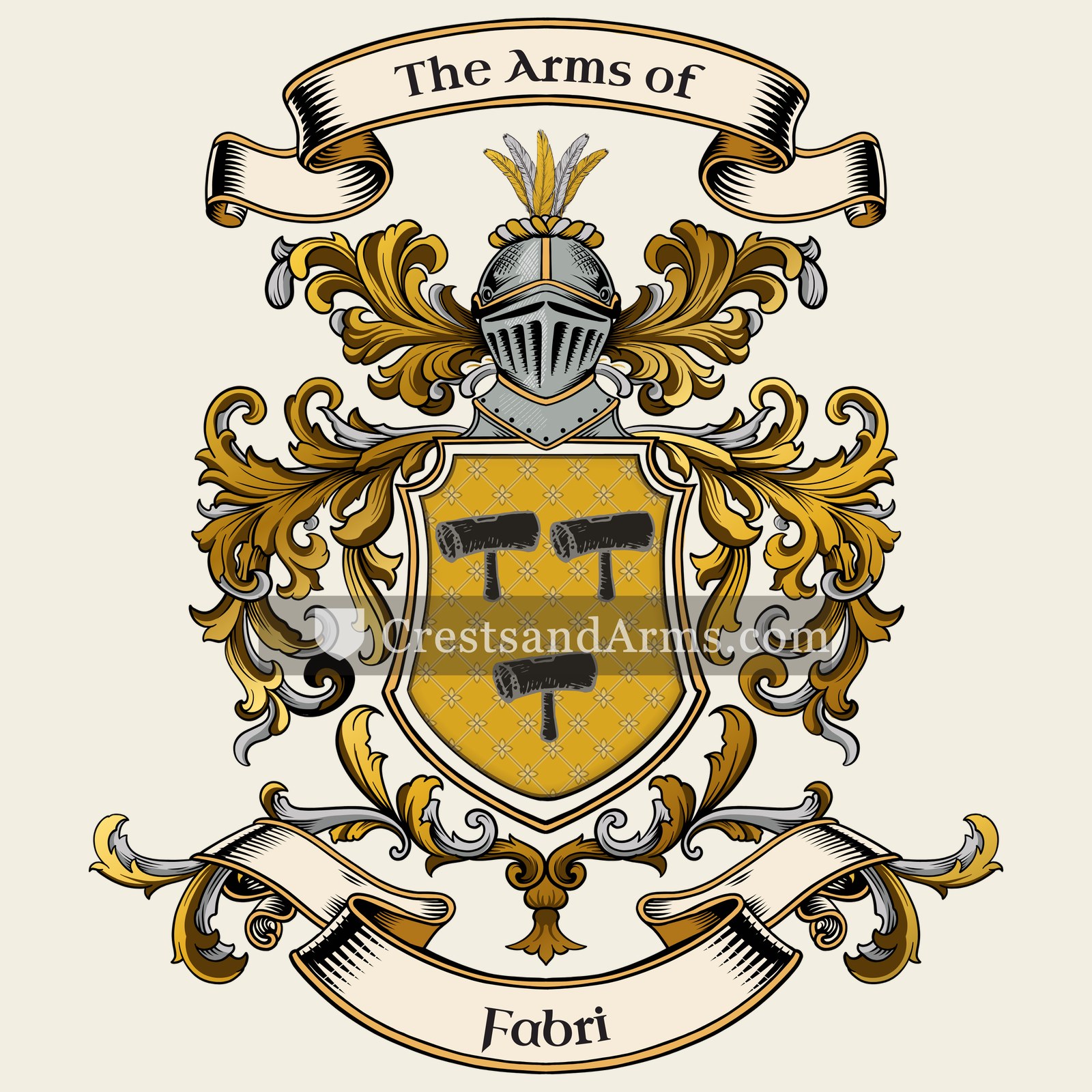


 griffinValour and vigilance, guarding great treasure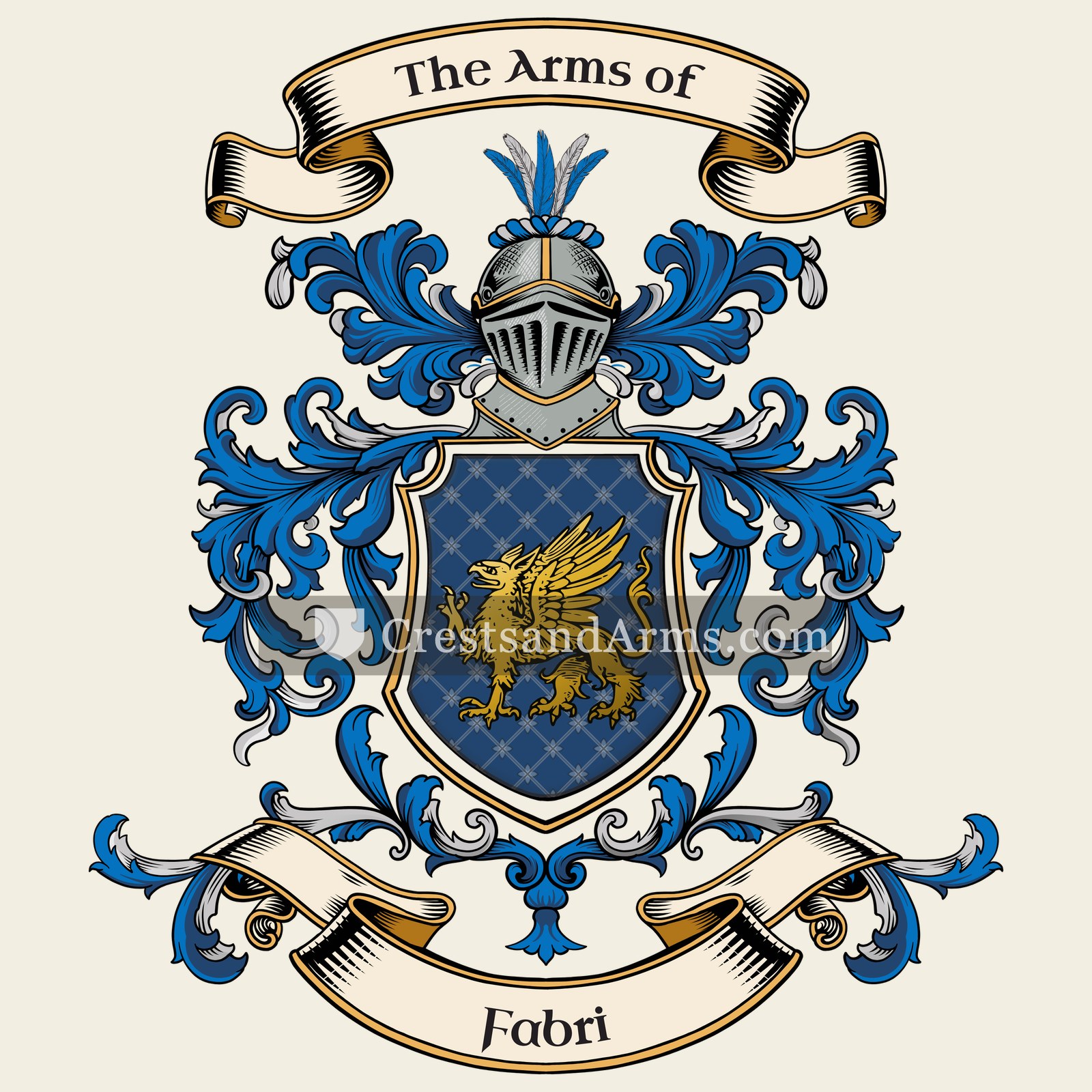


 bendDefence, and the scarf of a commander
 cross symbolChristian faith and service