Map of Netherlands showing where the Faiers arms are recorded
The Faiers arms were recorded in Harlem, c. 1815.
This is where the arms were entered in the register. Families often moved to other parts of the country, so the same name can turn up in more than one region.
Region
Harlem
Town
Harlem
First recorded
1815
Granting Authority for the Faiers Arms
Hoge Raad van Adel
Photograph made by me · CC BY-SA 3.0
The body that granted and recorded arms in Netherlands in this period.
William I of the Netherlands
Sovereign of the period
William I of the Netherlands
1815–1840
Reigning in Netherlands when the Faiers arms are first recorded.
How Arms Worked in Netherlands
In the Netherlands, coats of arms were often used by noble families and those who held specific public offices. These arms were passed down through the generations to legitimate descendants. Younger branches of a family usually kept the original design without needing to add special marks. This system ensured that the family identity remained clear and consistent over many years.
Granting authority
The Hoge Raad van Adel is the official body that regulates and manages noble titles and coats of arms in the Netherlands.
How they got arms
Families typically obtained their coats of arms through official royal grants or by proving their long-standing historical use of the symbols.
Where arms were recorded
Coats of arms are officially recorded in the registers held by the Hoge Raad van Adel, which began its work in 1814.
The family's standing
Recorded among the armigerous families of Netherlands.
Origin & History of the Faiers Family in Netherlands
The history of the Faiers name in the Netherlands is deeply connected to the urban development of Haarlem during the early nineteenth century. By 1815, family members were established residents of this historic city, which served as a vital hub for trade and craftsmanship following the end of the Napoleonic era. During this period, the Netherlands underwent significant administrative changes as it transitioned into the United Kingdom of the Netherlands. Families like the Faiers were part of a growing middle class that navigated these new civil registration laws, which required formal documentation of births, marriages, and deaths for the first time. Living in Haarlem placed the family at the center of a region known for its textile production and flower cultivation, providing them with opportunities to integrate into the local economy. Their presence in the city records from this time reflects a broader movement of families settling into stable urban lives as the country began a new chapter of national identity.
Coat of Arms & Family Crest Details
Symbols on this shield
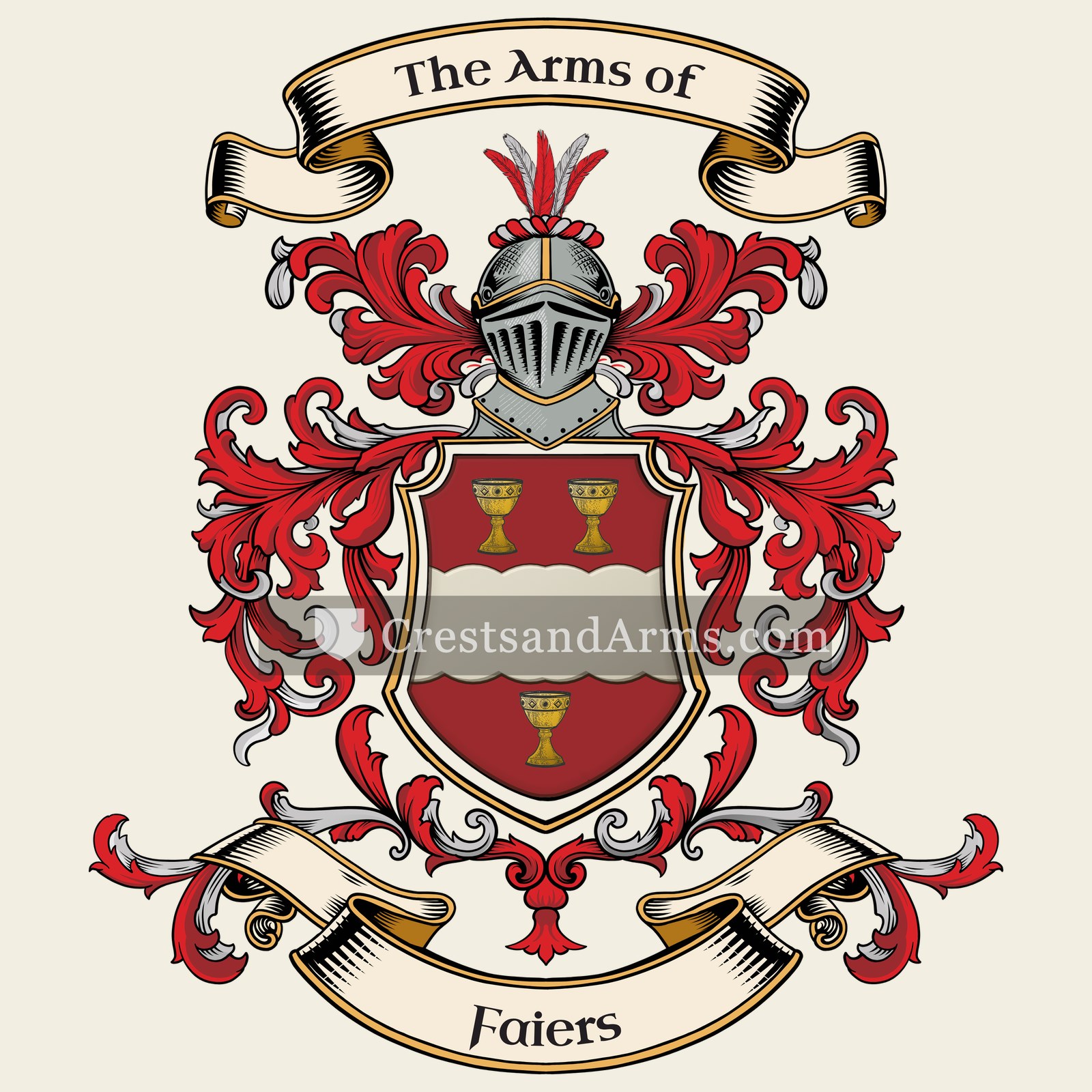
fessThe military belt, and readiness to serve
cupFaith, office, and a trust discharged
Colours
Red (Gules)Means: Military strength
Silver (Argent)Means: Peace and sincerity
Gold (Or)Means: Generosity
Historical info
Source
J. B. Rietstap, Armorial Général, Gouda: G. B. van Goor Zonen, 1884–87
Blazon (the actual original written record)
“De gu. à la fasce engr. d'arg., acc. de trois pots flambants d'or. C.: un pot de l'écu; entre un vol, d'arg. et de gu.”
BelgiumGand, c. 1737
Digital archive packCoat of arms PNG, gold border print PDF, vector SVG and the certificate of authenticity. Sent to your email in minutes.
Map of Belgium showing where the Faiers arms are recorded
The Faiers arms were recorded in Gand, c. 1737.
This is where the arms were entered in the register. Families often moved to other parts of the country, so the same name can turn up in more than one region.
The body that granted and recorded arms in Belgium in this period.
Charles VI, Holy Roman Emperor
Sovereign of the period
Charles VI, Holy Roman Emperor
1711–1740
Reigning in Netherlands when the Faiers arms are first recorded.
How Arms Worked in Belgium
In Belgium, a coat of arms is considered personal property that is passed down through the male line to legitimate descendants. Families often use the same shield design across generations to show their shared heritage. If a branch of the family wants to change the design, they must apply for an official update to their specific version of the arms.
Granting authority
The Conseil héraldique is the official body that regulates and approves all coats of arms in Belgium.
How they got arms
Families obtain their coats of arms through formal royal grants or by confirming their historical right to use existing designs.
Where arms were recorded
All approved coats of arms are officially recorded in the public registers of the Conseil héraldique since 1844.
The family's standing
Recorded among the armigerous families of Belgium.
Origin & History of the Faiers Family in Belgium
The history of the Faiers family in Belgium is rooted in the vibrant urban landscape of Ghent, known locally as Gand, where members of the family were documented as early as 1737. During the eighteenth century, Ghent was a major center for trade and textile production, which likely influenced the daily lives and occupations of early family members living in the region. The name itself suggests a connection to the skilled labor common in the area, as many surnames from this period were derived from the specific crafts or trades practiced by ancestors. Living in a bustling city like Ghent meant that the family was part of a complex social network defined by guild memberships and local parish life. By maintaining a presence in this historic city, the early Faiers family contributed to the long-standing tradition of craftsmanship and urban development that defined the Southern Netherlands during the Enlightenment era.
Related Branches & Arms
Root word
Fayer
Middle English term for a fair or market gathering.
This name
FaiersOccupational surname referring to someone who worked at or managed a market fair.
also spelled
Fierse
Fier
Feers
Documented Sources
J. B. Rietstap, Armorial Général, Gouda: G. B. van Goor Zonen, 1884–87
Noord-Hollands Archief, Bevolkingsregister van Haarlem (1815)
Noord-Hollands Archief, Burgerlijke Stand van de Gemeente Haarlem (1815)
Fockema Andreae, S. J., Geschiedenis van de Nederlandse Gemeente (1973)
Romein, Jan and Annie Romein-Verschoor, De Lage Landen bij de zee (1949)
Digital archive packCoat of arms PNG, gold border print PDF, vector SVG and the certificate of authenticity. Sent to your email in minutes.


 chevronProtection, and faithful service completed
 martletA younger son, who must win his own land
 chevronProtection, and faithful service completed
 martletA younger son, who must win his own land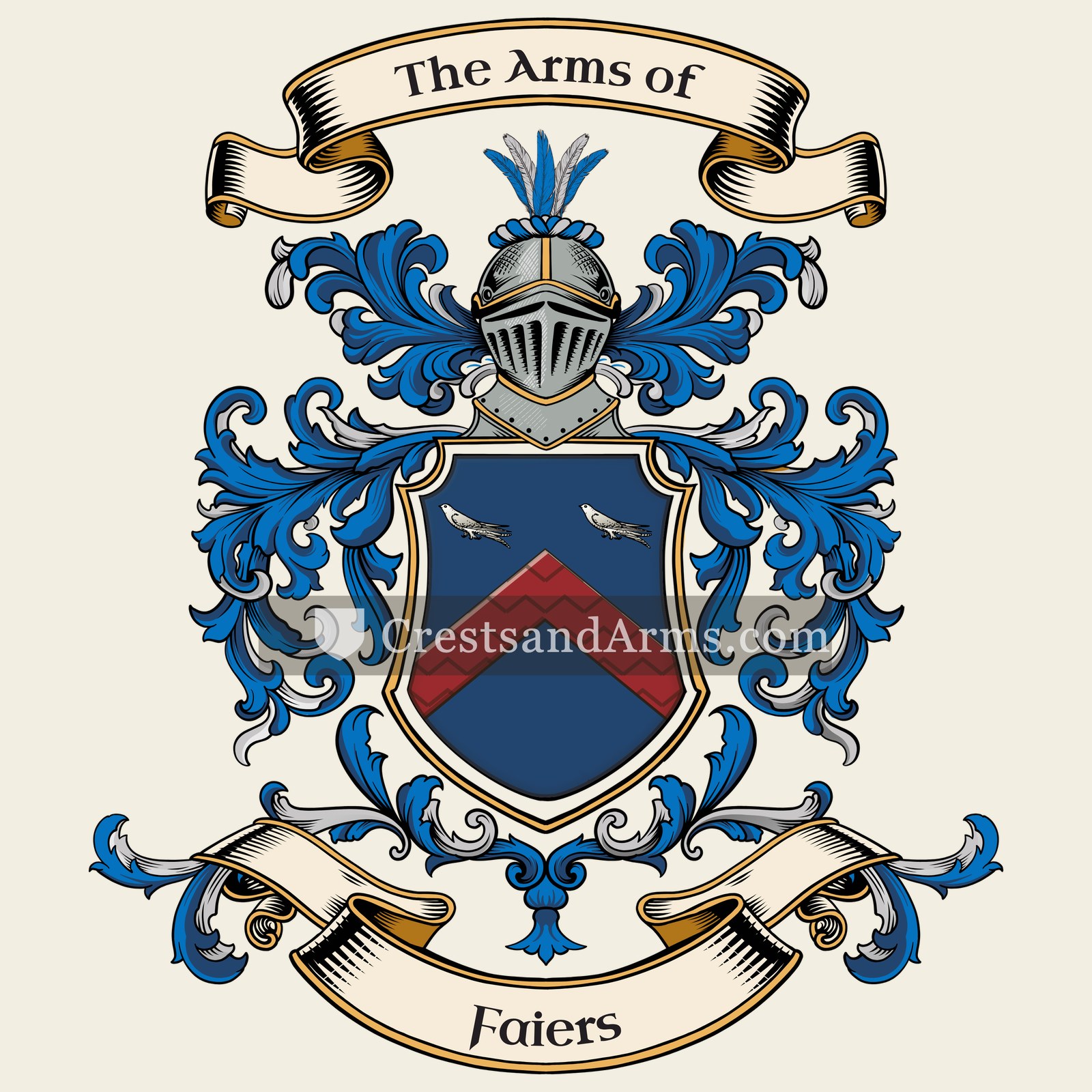


 fessThe military belt, and readiness to serve
 cupFaith, office, and a trust discharged