A record of documented arms, meaning and origin, researched for the Falck family lines. Documented in 3 countries.
Reg. 1623 · Swedish, D–F
Coat of Arms & Family Crest Details
Symbols on this shield
falconOne eager and quick in pursuit
branchPeace, and new growth
trefoilPerpetuity, and the Trinity
Colours
Gold (Or)Means: Generosity
Blue (Azure)Means: Loyalty and truth
Green (Vert)Means: Hope
Historical info
Source
J. B. Rietstap, Armorial Général, Gouda: G. B. van Goor Zonen, 1884–87
Blazon (the actual original written record)
“Coupé d'or sur azur; à un faucon au nat., br. sur le coupé, perché sur une branche posée en fasce, feuillée de quatre trèfles, le tout de sin. C.: un faucon au nat., entre deux petites bannières coupées d'or sur sa. L. d'or et d'azur.”
Swedenc. 1700
Digital archive packCoat of arms PNG, gold border print PDF, vector SVG and the certificate of authenticity. Sent to your email in minutes.
Map of Sweden showing where the Falck arms are recorded
The Falck arms were recorded in Sweden, c. 1700.
Arms such as these were typically recorded in Stockholm.
Stockholm held the Swedish court and the House of Nobility, where every noble family's arms were entered and kept. Families ennobled for service registered there, which is why so many are recorded around the city.
This is where the arms were entered in the register. Families often moved to other parts of the country, so the same name can turn up in more than one region.
The body that granted and recorded arms in Sweden in this period.
Carl XII of Sweden
Sovereign of the period
Carl XII of Sweden
1697–1718
Reigning in Sweden when the Falck arms are first recorded.
How Arms Worked in Sweden
In Sweden, a coat of arms belonged to a noble family as a whole rather than just one individual. These arms were passed down through the generations to all legitimate descendants. Younger branches of the family used the same shield without needing to change it. This system ensured that the entire lineage shared the same identity and status under the law.
Granting authority
The Riddarhuset, or House of Nobility, regulated all noble coats of arms in Sweden under royal authority.
How they got arms
Families received their coats of arms through royal grants of nobility which were then officially registered with the House.
Where arms were recorded
Coats of arms were officially recorded in the Swedish House of Nobility register starting in the year 1626.
The family's standing
Recorded among the armigerous families of Sweden.
Origin & History of the Falck Family in Sweden
The surname Falck has deep roots in the urban landscape of eighteenth-century Sweden, particularly within the bustling capital of Stockholm. By the year 1700, individuals bearing this name were already established as part of the city’s growing administrative and merchant classes. The name itself is derived from the Old Swedish word for falcon, a bird that was historically associated with keen vision and high status. During this era, families with this name often worked in roles that required literacy and organization, such as clerks, officials, or skilled tradespeople. As Stockholm expanded into a major center of trade and government, the Falck family became part of the social fabric that helped define the city’s identity. Their presence in the capital during this formative period suggests they were well-integrated into the professional life of the Swedish Empire, contributing to the daily operations of a society undergoing significant modernization.
Coat of Arms & Family Crest Details
Symbols on this shield
falconOne eager and quick in pursuit
fascesAuthority joined to unity
axeThe execution of military duty
Colours
Blue (Azure)Means: Loyalty and truth
Green (Vert)Means: Hope
Gold (Or)Means: Generosity
Silver (Argent)Means: Peace and sincerity
Historical info
Source
J. B. Rietstap, Armorial Général, Gouda: G. B. van Goor Zonen, 1884–87
Blazon (the actual original written record)
“Coupé, d'azur à un faucon volant et cont. d'or, sur sin. à un faisceau des licteurs d'or, posé en pal, la hache d'arg.; l'écu bordé d'or. T.: deux forgerons en habit de travail, au nat., la tête nue, tenant chacun un marteau de forgeron, posé sur l'épaule.”
Finlandc. 1719
Digital archive packCoat of arms PNG, gold border print PDF, vector SVG and the certificate of authenticity. Sent to your email in minutes.
Map of Finland showing where the Falck arms are recorded
The Falck arms were recorded in Finland, c. 1719.
Arms such as these were typically recorded in Uusimaa.
Uusimaa was the Finnish coast facing Sweden, and the part of the country most closely tied to Stockholm. Its landowners and officers served the Swedish crown, and that service is what put their arms on record.
This is where the arms were entered in the register. Families often moved to other parts of the country, so the same name can turn up in more than one region.
The body that granted and recorded arms in Finland in this period.
How Arms Worked in Finland
Nobility in Finland held the exclusive right to register their coats of arms with the House of Nobility. These symbols were tied to the family name and were inherited by all members of the noble house. If a family branch moved or changed status, they kept their original design to maintain their identity within the official records.
Granting authority
The Finnish House of Nobility served as the official body that managed and protected all noble coats of arms.
How they got arms
Families received their arms through formal letters of nobility or by having their existing ancestral symbols confirmed by the House.
Where arms were recorded
All approved coats of arms were officially recorded in the Finnish House of Nobility Armorial starting in 1818.
The family's standing
Recorded among the armigerous families of Finland.
Origin & History of the Falck Family in Finland
The history of the Falck family in Finland is deeply rooted in the region of Uusimaa, where members of the family were documented as early as 1719. During this period, the name was often associated with individuals serving in administrative or military roles within the Swedish realm, which then included Finland. Many people with this name worked as civil servants or held positions in the local government, helping to manage the affairs of the coastal districts. As the family settled into the social fabric of southern Finland, they became part of the growing class of professionals who helped shape the local community. Over time, the name became a recognized part of the regional history, reflecting the movement and integration of families across the Baltic region during the eighteenth century.
Coat of Arms & Family Crest Details
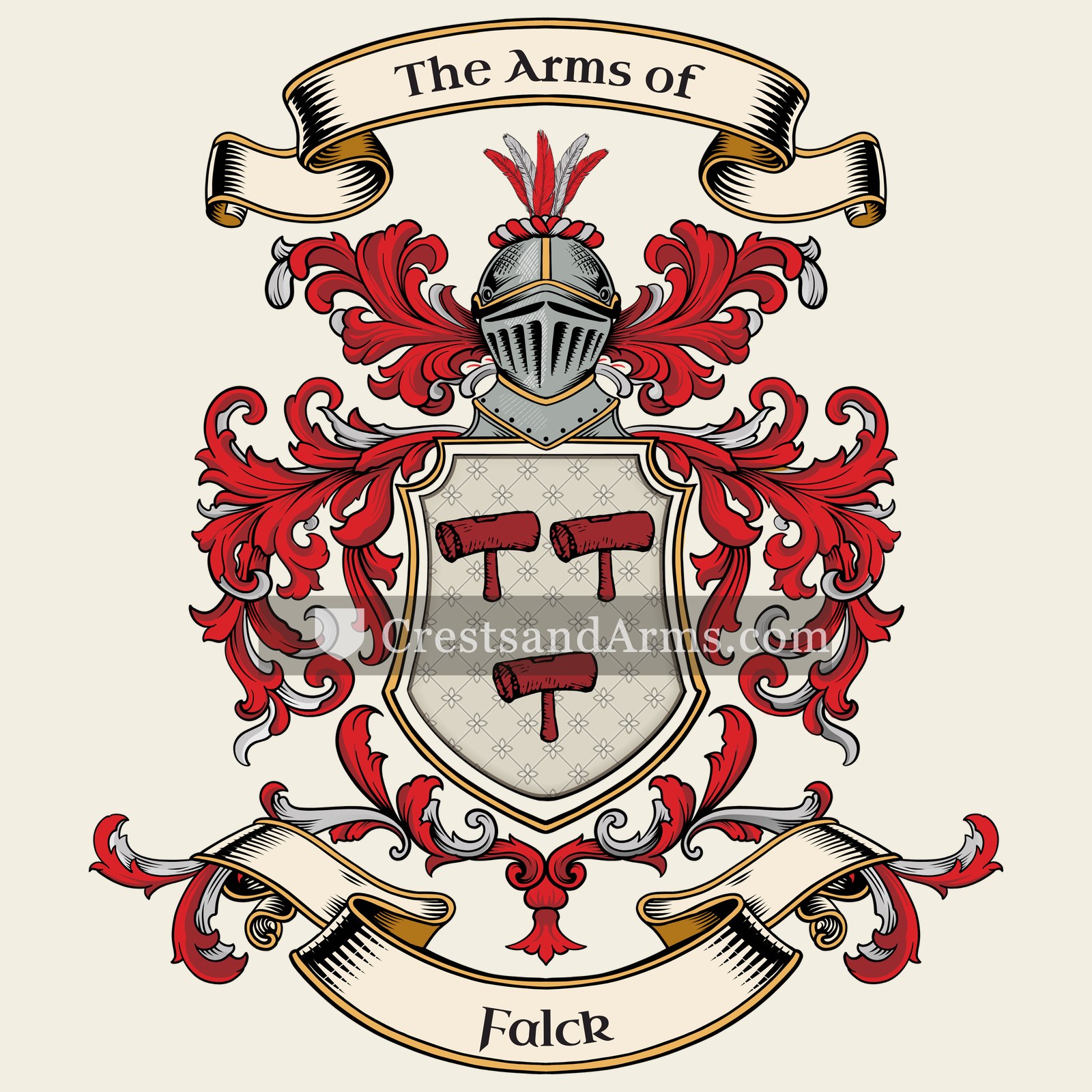
Symbols on this shield
hammerHonest labour, and the smith's craft
Colours
Silver (Argent)Means: Peace and sincerity
Red (Gules)Means: Military strength
Historical info
Source
J. B. Rietstap, Armorial Général, Gouda: G. B. van Goor Zonen, 1884–87
Blazon (the actual original written record)
“D'arg. à trois maillets de gu. C.: un mallet de gu., entre deux prob. fascées d'arg. et de gu.”
HesseHesse, c. 1765
Digital archive packCoat of arms PNG, gold border print PDF, vector SVG and the certificate of authenticity. Sent to your email in minutes.
Map of Germany showing where the Falck arms are recorded
The Falck arms were recorded in Hesse, c. 1765.
Hesse was central German country, divided among a large number of small landowners and prosperous towns. So many separate households held ground there that the region produced an unusual number of coats of arms.
This is where the arms were entered in the register. Families often moved to other parts of the country, so the same name can turn up in more than one region.
The body that granted and recorded arms in Germany in this period.
Francis I, Holy Roman Emperor
Sovereign of the period
Francis I, Holy Roman Emperor
1745–1765
Reigning in Sweden when the Falck arms are first recorded.
How Arms Worked in Germany
In the Holy Roman Empire, coats of arms were often granted to individuals by the Emperor or his representatives. These arms were then passed down through the generations to all legitimate descendants of the original holder. Younger branches of a family usually kept the same shield design without needing to change it, as the arms belonged to the entire lineage.
Granting authority
The Holy Roman Emperor held the sole power to grant new coats of arms throughout his vast imperial territories.
How they got arms
Families typically obtained their coats of arms through a formal imperial grant or by proving their noble status to the authorities.
Where arms were recorded
These grants were officially recorded in the Imperial Chancery registers, which began keeping formal records of such honors during the Middle Ages.
The family's standing
Recorded among the armigerous families of Hesse.
Origin & History of the Falck Family in Germany
The family name Falck has deep roots in the German language, originating as a descriptive nickname derived from the Middle High German word "valke," which means falcon. During the medieval period, such names were often given to individuals who displayed traits associated with the bird, such as keen eyesight, agility, or a sharp temperament. By the time members of the family were documented in the Hessian region in 1765, the name had long been established as a common surname across various German-speaking territories. In the eighteenth century, families in Hesse were often tied to the land through agriculture or local craft trades, and the name Falck likely served as a stable identifier within these tight-knit rural communities. As these ancestors navigated the social and economic changes of the Holy Roman Empire, the name persisted as a mark of their lineage, reflecting a history that connected personal identity to the natural world of the German landscape.
Falck Meaning & Related Branches
Root word
falk
A bird of prey known for its speed and hunting ability.
This name
FalckAn ornamental or habitational name referring to a falcon, often used to denote a sharp-sighted or swift person.
also spelled
Falk
Related arms
Falkvariant spelling
Documented Sources
J. B. Rietstap, Armorial Général, Gouda: G. B. van Goor Zonen, 1884–87
Elgenstierna, Gustaf. Den introducerade svenska adelns ättartavlor. 1925–1936
Lundkvist, Sven. Stockholms historia. 1967
Riksarkivet (National Archives of Sweden), Mantalslängder för Stockholms stad (Tax census records for the city of Stockholm)
Stockholms stadsarkiv (Stockholm City Archives), Borgarlängder (Burgher rolls)
Digital archive packCoat of arms PNG, gold border print PDF, vector SVG and the certificate of authenticity. Sent to your email in minutes.


 falconOne eager and quick in pursuit
 branchPeace, and new growth
 trefoilPerpetuity, and the Trinity
 falconOne eager and quick in pursuit
 branchPeace, and new growth
 trefoilPerpetuity, and the Trinity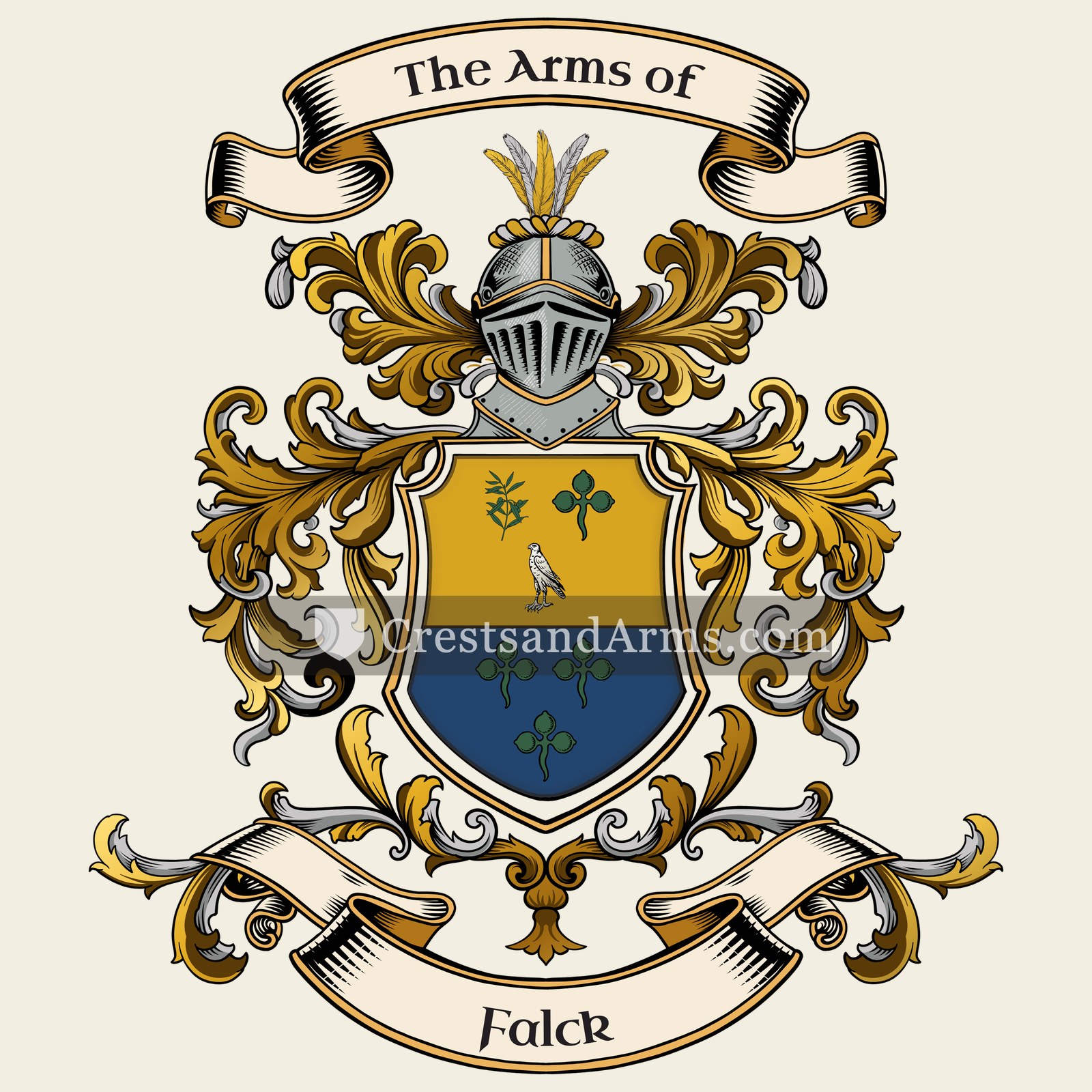


 fascesAuthority joined to unity
 axeThe execution of military duty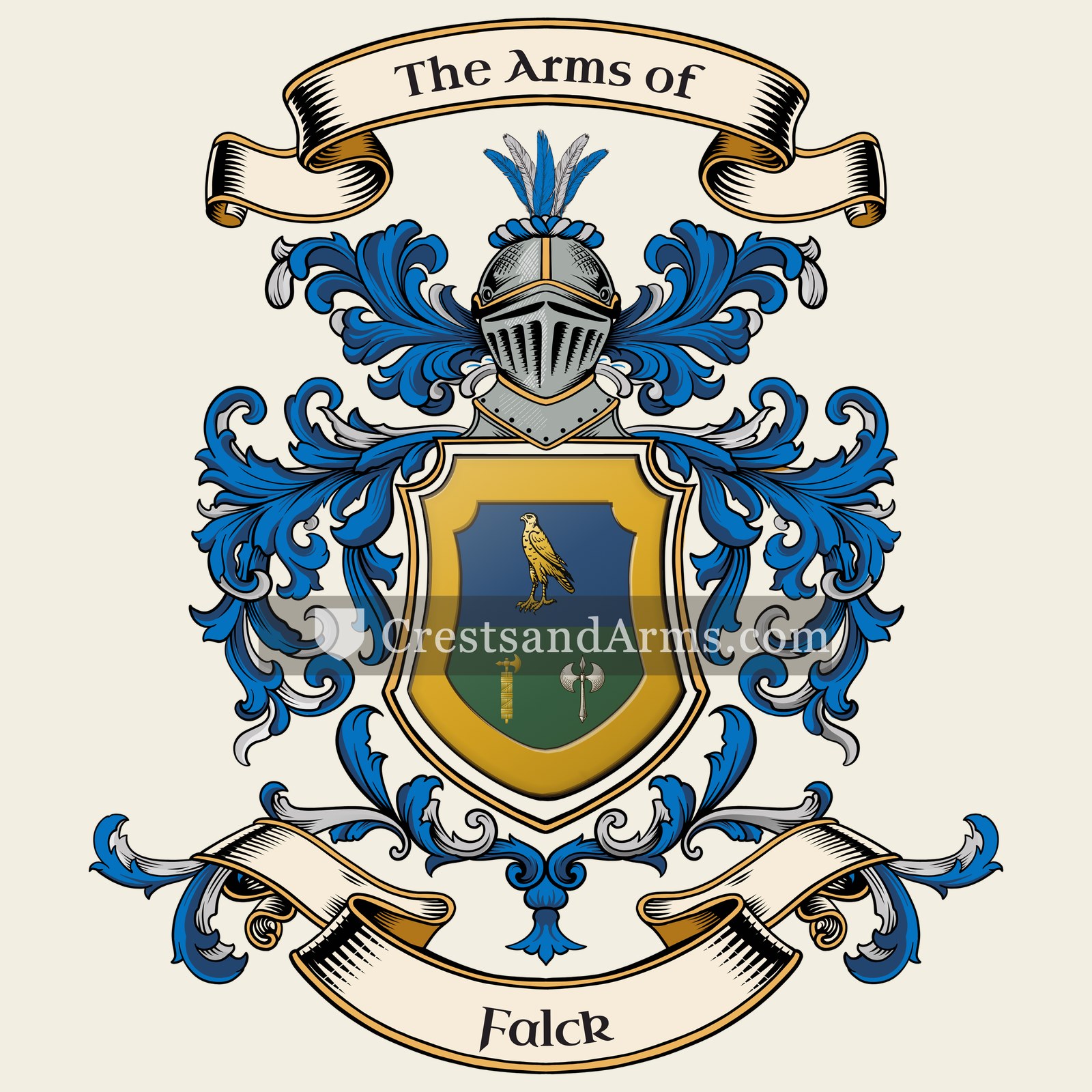

 hammerHonest labour, and the smith's craft