A record of documented arms, meaning and origin, researched for the Falcon family lines. Documented in 2 countries.
Reg. 4383 · Spanish, D–F
Coat of Arms & Family Crest Details
Symbols on this shield
lanceKnightly service and the tilt
Colours
Green (Vert)Means: Hope
Black (Sable)Means: Constancy
Historical info
Source
J. B. Rietstap, Armorial Général, Gouda: G. B. van Goor Zonen, 1884–87
Blazon (the actual original written record)
“De sin. à une tour sommée d'une tourelle au nat., portillée d'azur, avec une seule fenêtre carrée au-dessus de la porte, à laquelle se montre une demoiselle hab. à l'espagnole en buste; et une lance de tournoi de sa. en fasce, à dextre, iss. de l'une des deux fenêtres du donjon, et un faucon de sa. perché sur ladite lance.”
SpainAsturies, c. 1722
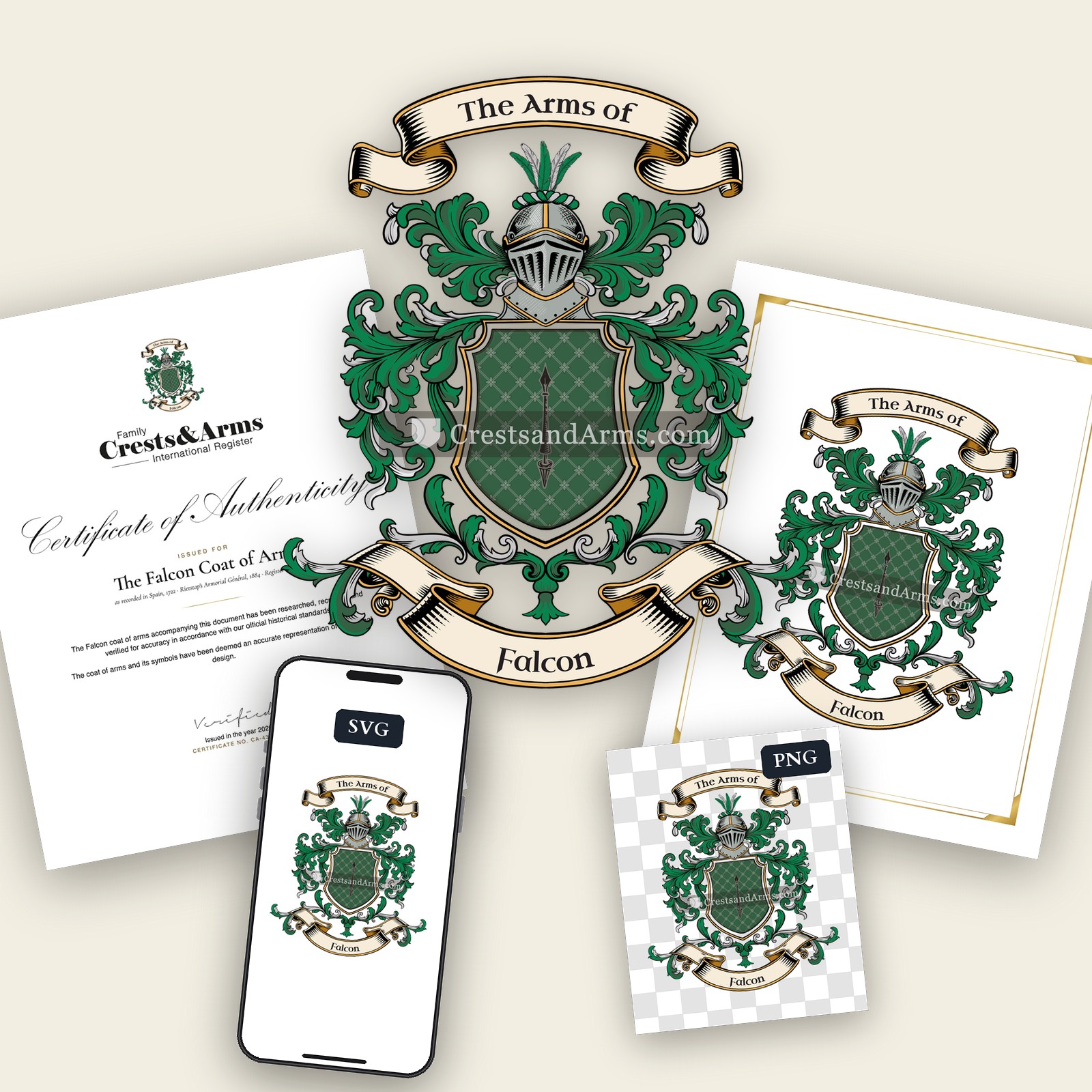
Digital archive packCoat of arms PNG, gold border print PDF, vector SVG and the certificate of authenticity. Sent to your email in minutes.
Map of Spain showing where the Falcon arms are recorded
The Falcon arms were recorded in Asturies, c. 1722.
This is where the arms were entered in the register. Families often moved to other parts of the country, so the same name can turn up in more than one region.
The body that granted and recorded arms in Spain in this period.
Philip V of Spain
Sovereign of the period
Philip V of Spain
1714–1724
Reigning in Spain when the Falcon arms are first recorded.
How Arms Worked in Spain
In Spain, a coat of arms was considered a form of property that belonged to the entire family line. These arms were passed down from a father to all his children equally. Younger branches of the family usually kept the original design without needing to add any special marks to distinguish their specific line.
Granting authority
The Cronista Rey de Armas was the official body that regulated and granted coats of arms throughout Spain.
How they got arms
Families often obtained their arms through royal grants or by proving their noble status to the official heraldic authority.
Where arms were recorded
Coats of arms were officially recorded in the registers of the Cronista Rey de Armas starting in 1496.
The family's standing
Recorded among the armigerous families of Spain.
Origin & History of the Falcon Family in Spain
The surname Falcón has deep roots in the Iberian Peninsula, where it emerged as a descriptive name linked to the tradition of falconry. In medieval Spain, the bird was a symbol of nobility and skill, and those who trained these raptors or possessed the keen eyesight associated with them often adopted the name. By the early 18th century, the family had established a notable presence in the northern region of Asturias. Records from 1722 confirm that members of the Falcón line were active participants in the social and administrative life of this mountainous territory. During this era, families in Asturias often held strong ties to the land and local governance, helping to solidify the name within the region’s historical fabric. The transition of the name from a professional descriptor to a hereditary surname reflects the broader patterns of social organization in northern Spain during the transition into the modern age.
Coat of Arms & Family Crest Details
Symbols on this shield
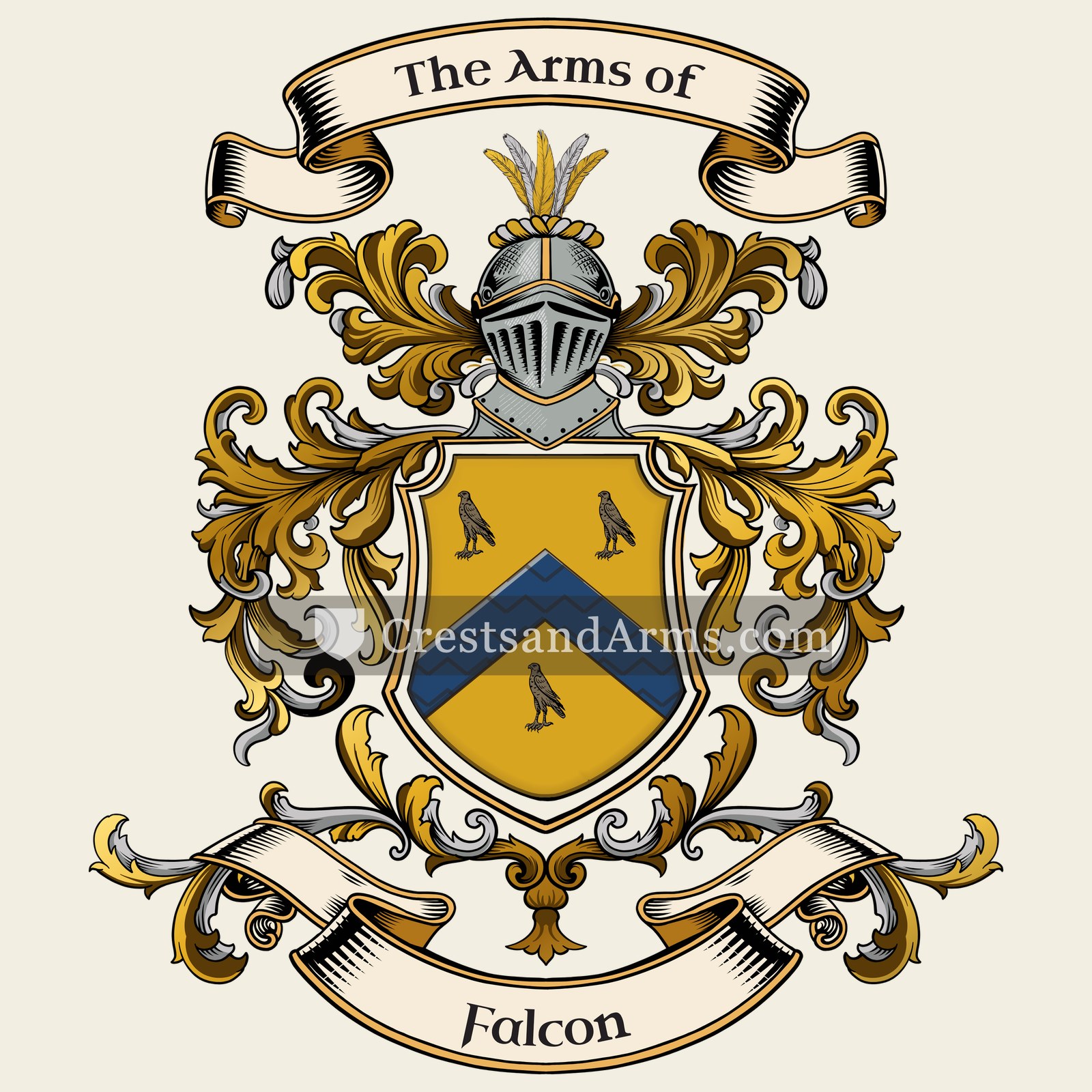
chevronProtection, and faithful service completed
falconOne eager and quick in pursuit
Colours
Gold (Or)Means: Generosity
Blue (Azure)Means: Loyalty and truth
Historical info
Source
Sir Bernard Burke, The General Armory of England, Scotland, Ireland and Wales, London: Harrison & Sons, 1884
Blazon (the actual original written record)
“Or, a chev. az. betw. three falcons close ppr”
CumberlandGarston House · Cumberland, c. 1620
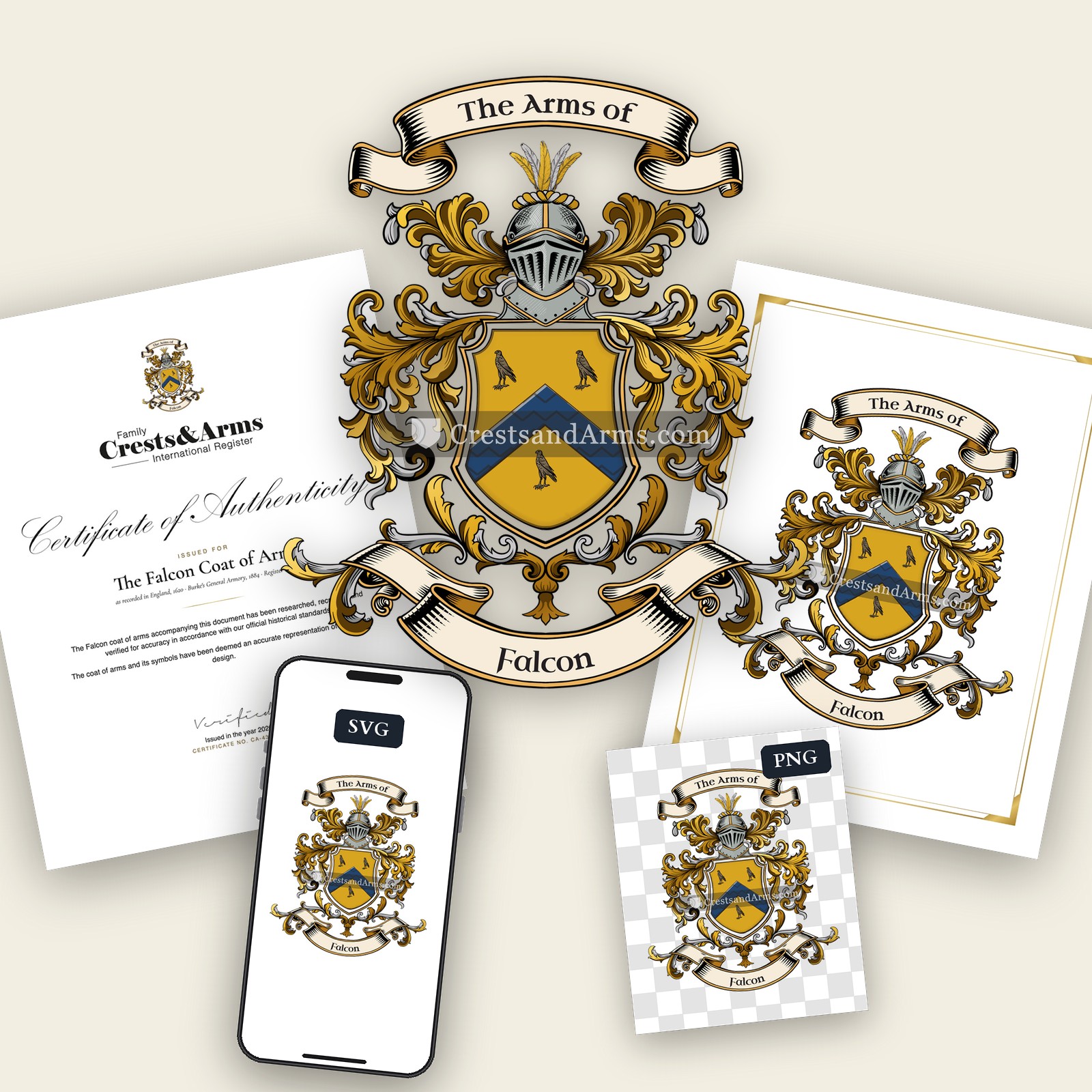
Digital archive packCoat of arms PNG, gold border print PDF, vector SVG and the certificate of authenticity. Sent to your email in minutes.
Map of England showing where the Falcon arms are recorded
The Falcon arms were recorded in Cumberland, c. 1620.
Cumberland was rough border country in the north-west, facing Scotland across a disputed line. Its families held land in return for keeping it defended, and men who fought carried shields of their own.
This is where the arms were entered in the register. Families often moved to other parts of the country, so the same name can turn up in more than one region.
The body that granted and recorded arms in England in this period.
James VI and I
Sovereign of the period
James VI and I
1603–1625
Reigning in Spain when the Falcon arms are first recorded.
How Arms Worked in England
English heraldry allowed arms to be shared by all legitimate descendants of the original owner. These symbols were treated as personal property that moved through the generations to all children. While the eldest son kept the original design, other family members could use the same shield without needing to change it or register their own unique versions.
Granting authority
The College of Arms in London has regulated the use of coats of arms throughout England and Wales since 1484.
How they got arms
Families typically obtained their coats of arms through a formal grant from the Crown or by proving their ancient right to them.
Where arms were recorded
All official coats of arms are recorded in the registers kept at the College of Arms, which date back to the fifteenth century.
The family's standing
Recorded among the armigerous families of Cumberland.
Origin & History of the Falcon Family in England
The family name Falcon has deep roots in the rugged landscape of Northern England, particularly within the county of Cumberland. By the early seventeenth century, records confirm that members of the family were well-established in this region, living among the hills and valleys near the Scottish border. The name itself likely originated as a descriptive nickname for a person who worked with hunting birds or possessed the sharp, focused traits associated with the falcon. During this period, families in Cumberland often lived in close-knit communities where they relied on farming and local trade to survive. As the name became more common, these early ancestors helped shape the local culture of the area, leaving behind a legacy that persisted through generations of life in the English countryside.
Falcon Meaning & Related Branches
Root word
falco
A Latin term referring to a bird of prey or sickle.
This name
FalconAn occupational surname for a falconer or a nickname for someone with hawk-like traits.
also spelled
Falcone
Falckon
Falconn
Falkon
Faucon
Documented Sources
J. B. Rietstap, Armorial Général, Gouda: G. B. van Goor Zonen, 1884–87
Moll, Francesc de Borja, Els llinatges catalans: Catalunya, País Valencià, Illes Balears, 1959
Archivo Histórico de Asturias, Catastro de Ensenada, 1752
Faure, Roberto, Diccionario de apellidos españoles, 2001
Digital archive packCoat of arms PNG, gold border print PDF, vector SVG and the certificate of authenticity. Sent to your email in minutes.


 lanceKnightly service and the tilt
 lanceKnightly service and the tilt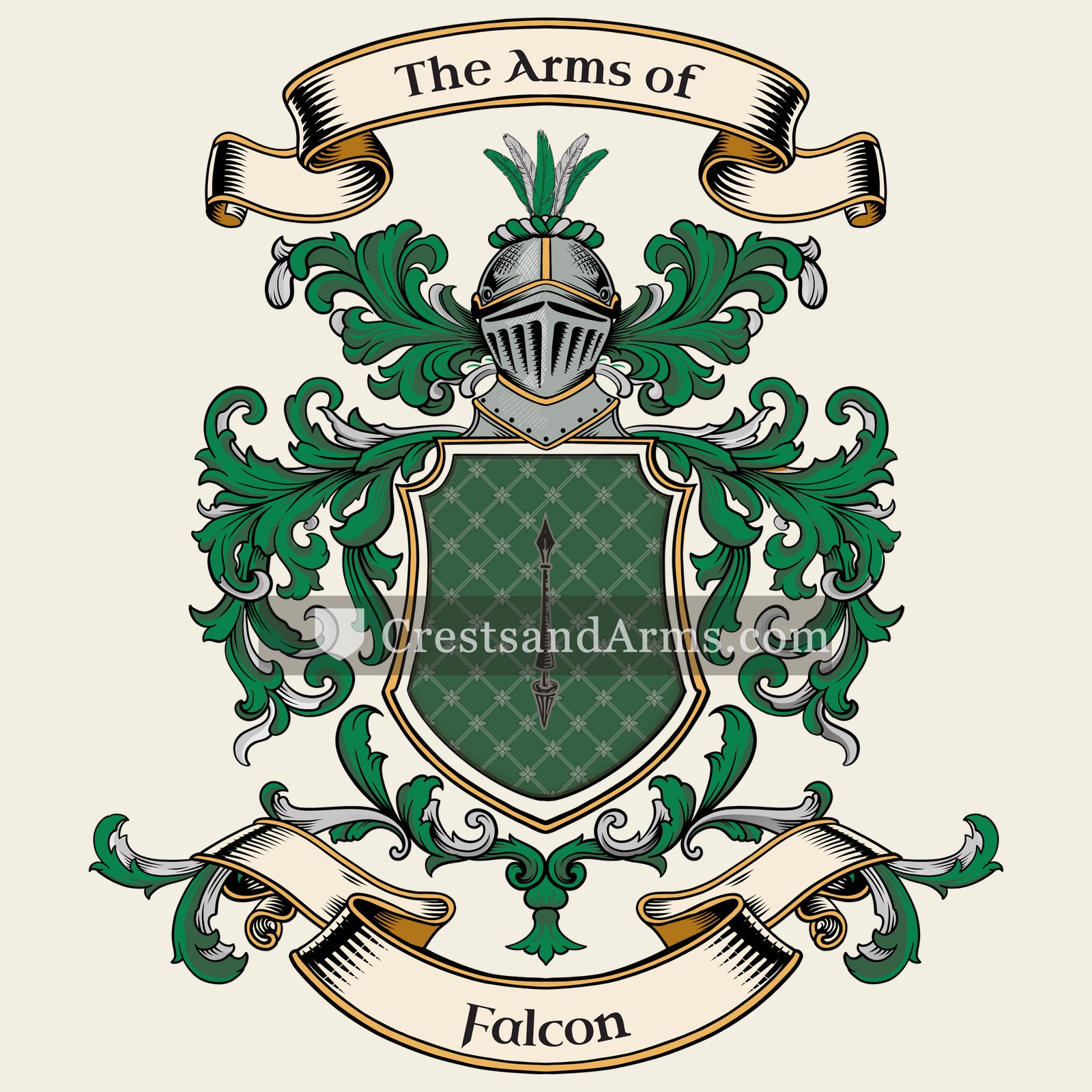


 chevronProtection, and faithful service completed
 falconOne eager and quick in pursuit