Map of France showing where the Fallon arms are recorded
The Fallon arms were recorded in Franche-Comte, c. 1663.
Franche-Comte sat between France and the Empire and changed hands more than once. Border families held their land under arms and expected to defend it, so a shield was a practical thing rather than an ornament.
This is where the arms were entered in the register. Families often moved to other parts of the country, so the same name can turn up in more than one region.
The body that granted and recorded arms in France in this period.
Louis XIV of France
Sovereign of the period
Louis XIV of France
1643–1715
Reigning in France when the Fallon arms are first recorded.
How Arms Worked in France
In France, a coat of arms was a mark of honor that passed down through the male line to all legitimate descendants. Families often used the same shield without changes to show their shared heritage. If a branch wanted to stand out, they could add a small mark to their shield to show their specific place in the family tree.
Granting authority
The Juge d'armes de France acted as the official authority that regulated and verified coats of arms across the country.
How they got arms
Families typically inherited their arms from ancestors, though they could also receive them through royal grants or by proving their noble status.
Where arms were recorded
Coats of arms were officially recorded in the Armorial Général de France, which began its main collection in the year 1696.
The family's standing
Recorded among the armigerous families of Franche-Comte.
Origin & History of the Fallon Family in France
The history of the Fallon family in France is deeply tied to the eastern region of Franche-Comté. By the year 1663, records confirm that members of the family were already established in this area, which was then a territory with a unique cultural and political identity. During the seventeenth century, Franche-Comté served as a bridge between the French kingdom and the Holy Roman Empire, creating a complex environment for families living there. The name Fallon likely emerged from the local linguistic traditions of this borderland, where families often held roles in local administration or agriculture. As the region transitioned under French rule during this period, the Fallon family became part of the local social fabric. Their presence in the historical records of the time suggests they were settled members of the community who navigated the changing political landscape of eastern France.
Coat of Arms & Family Crest Details
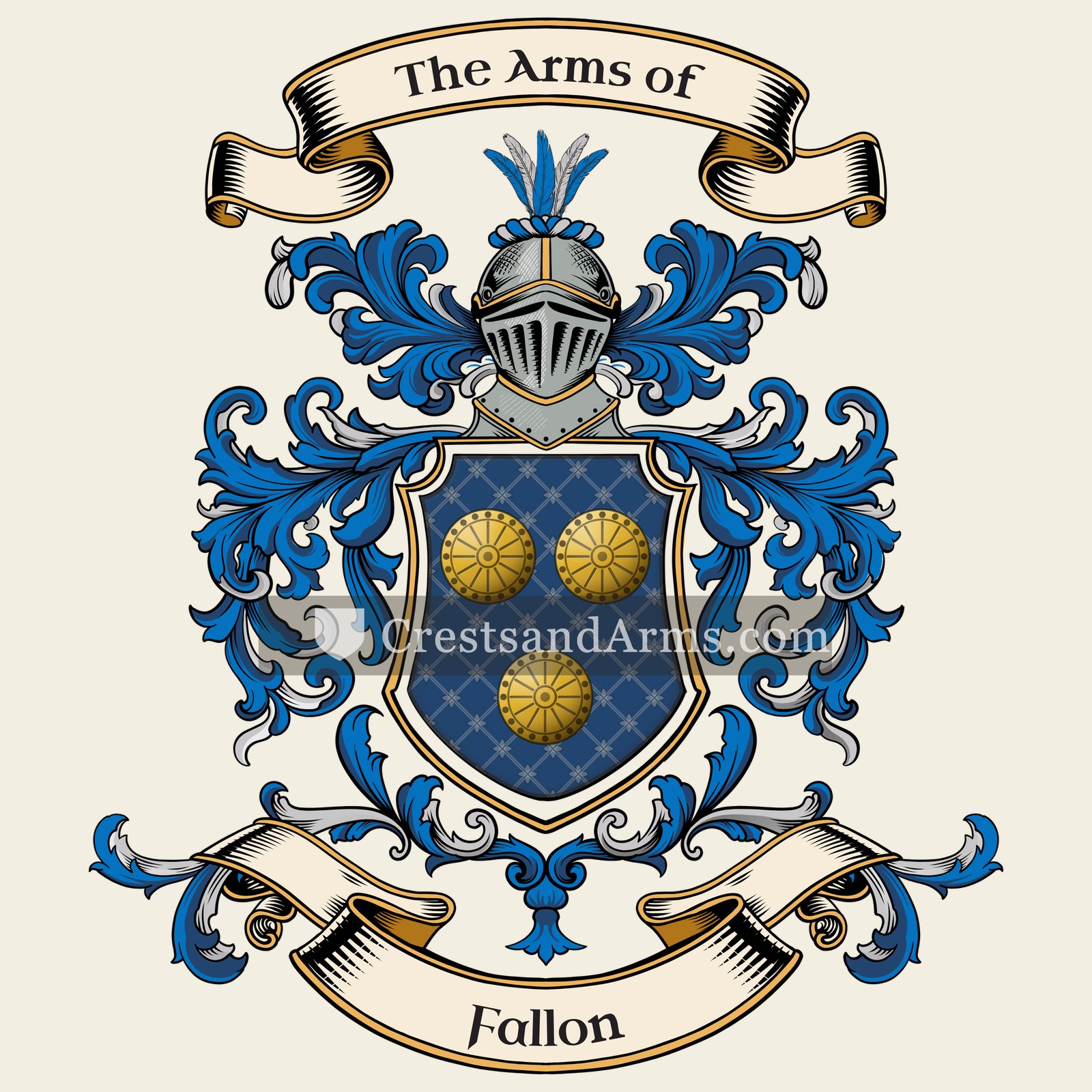
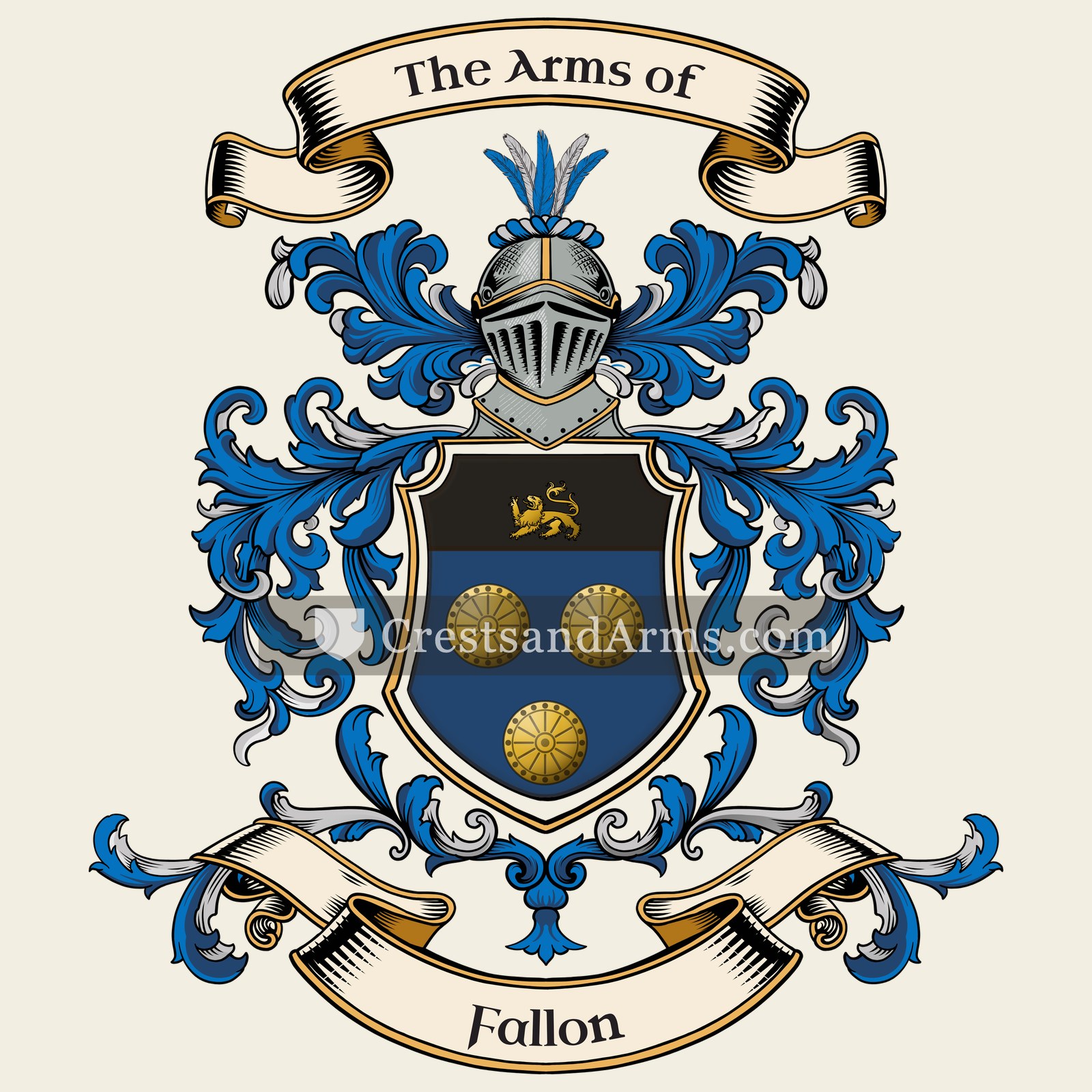
Symbols on this shield
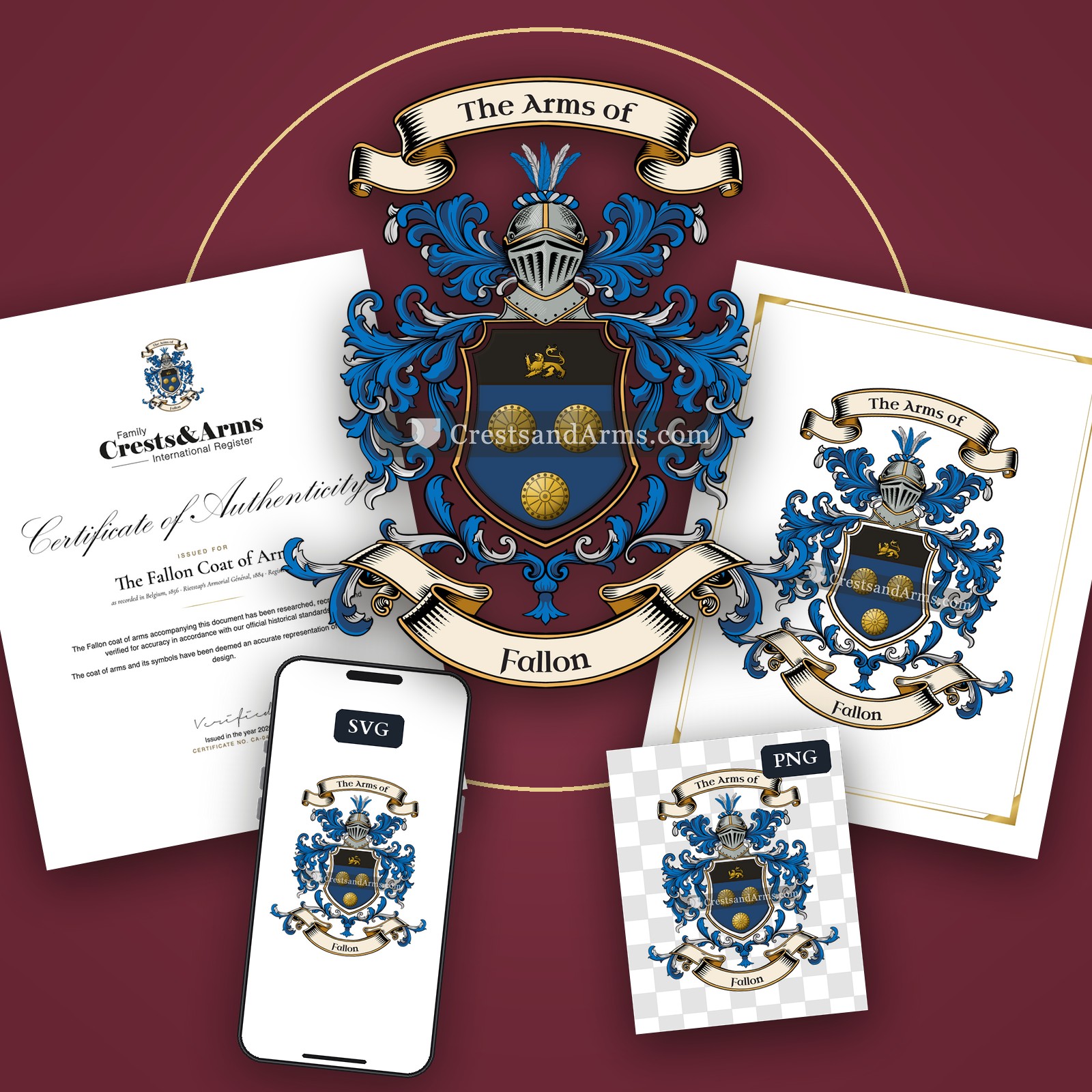
chiefAuthority, wisdom and dominion
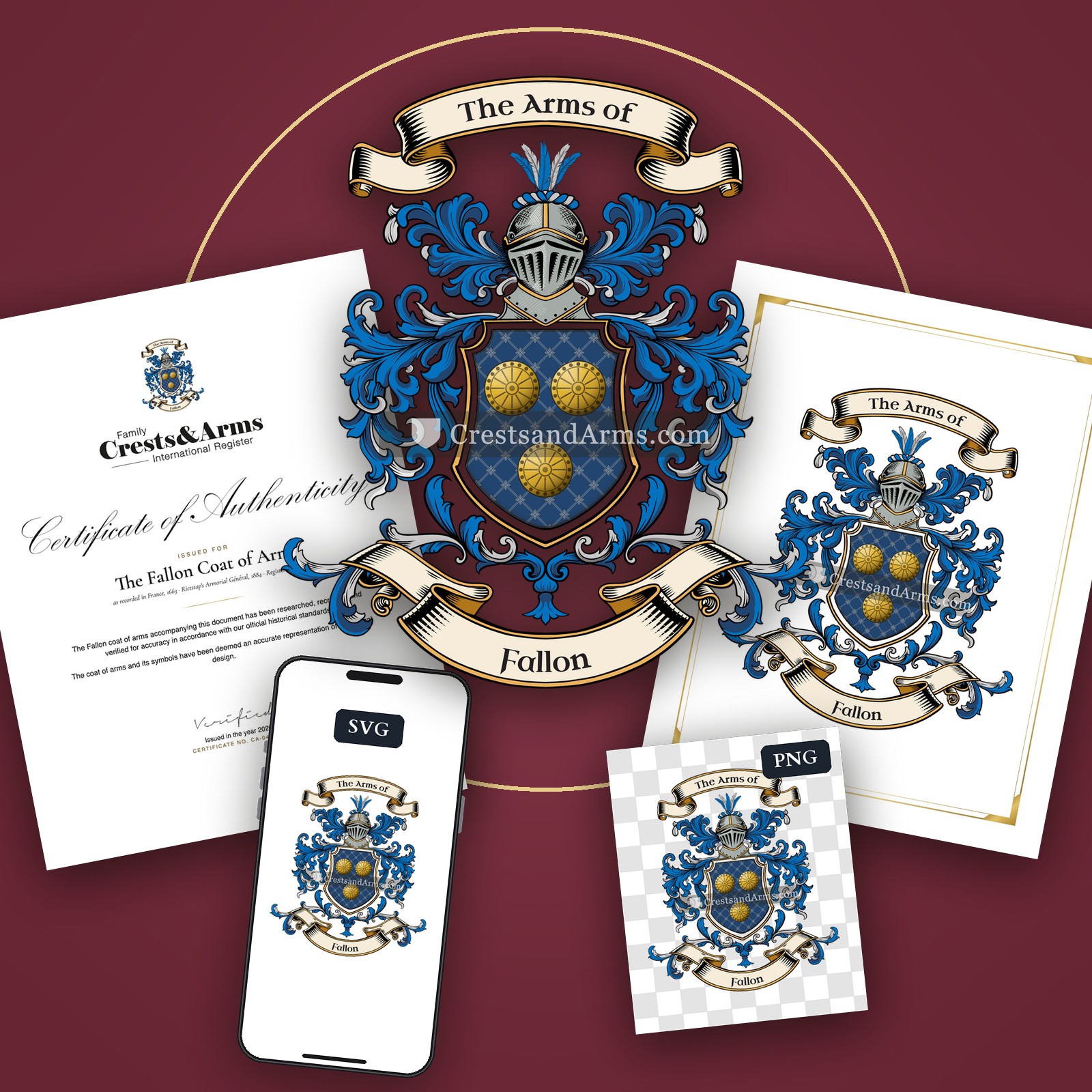
roundelA coin, and one who has been to the crusades
lionCourage, strength and royalty
Colours
Blue (Azure)Means: Loyalty and truth
Black (Sable)Means: Constancy
Gold (Or)Means: Generosity
Historical info
Source
J. B. Rietstap, Armorial Général, Gouda: G. B. van Goor Zonen, 1884–87
Blazon (the actual original written record)
“D'azur à trois bes. d'or; au chef de sa., ch. d'un lion iss du sec., arm. et lamp. de gu. Brl. d'or et d'azur. C.: un bes. de l'écu. L. d'or et d'azur. S.: deux léopards lionnés au nat. D.: PRO PATRIA CUM PATRIAQUE.”
NamurNamur, c. 1856
Digital archive packCoat of arms PNG, gold border print PDF, vector SVG and the certificate of authenticity. Sent to your email in minutes.
Map of Belgium showing where the Fallon arms are recorded
The Fallon arms were recorded in Namur, c. 1856.
Namur was small country where two rivers meet, living on iron and stone. Its families held land and worked metal, and both sorts of property were marked with arms.
This is where the arms were entered in the register. Families often moved to other parts of the country, so the same name can turn up in more than one region.
The body that granted and recorded arms in Belgium in this period.
Leopold I of Belgium
Sovereign of the period
Leopold I of Belgium
1831–1865
Reigning in France when the Fallon arms are first recorded.
How Arms Worked in Belgium
In Belgium, a coat of arms is considered personal property that is passed down through the male line to legitimate descendants. Families often use the same shield design across generations to show their shared heritage. If a branch of the family wants to change the design, they must apply for an official update to their specific version of the arms.
Granting authority
The Conseil héraldique is the official body that regulates and approves all coats of arms in Belgium.
How they got arms
Families obtain their coats of arms through formal royal grants or by confirming their historical right to use existing designs.
Where arms were recorded
All approved coats of arms are officially recorded in the public registers of the Conseil héraldique since 1844.
The family's standing
Recorded among the armigerous families of Namur.
Origin & History of the Fallon Family in Belgium
The history of the Fallon family in Belgium is closely tied to the social and political development of the Namur region during the nineteenth century. While the name itself has roots in older European traditions, the family established a prominent presence in Namur by 1856, where they became integrated into the local professional and civic life. During this era, members of the family were recognized for their contributions to the administration and legal structures of the city. Their transition into Belgian society was marked by a commitment to public service and the growth of their influence within the local community. By settling in this historic area, the family helped shape the regional identity of Namur during a time of significant industrial and cultural change in the country.
Coat of Arms & Family Crest Details
Symbols on this shield
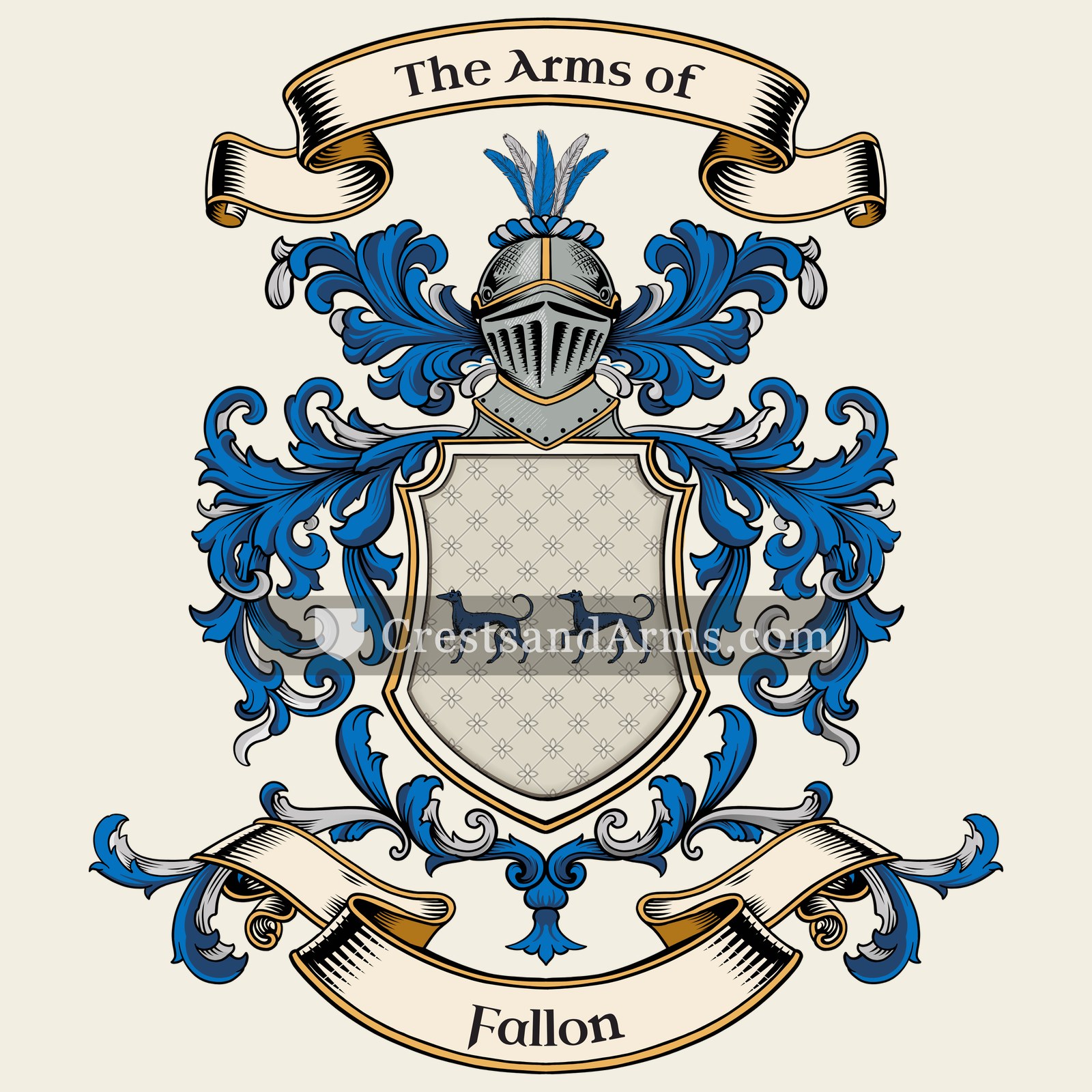
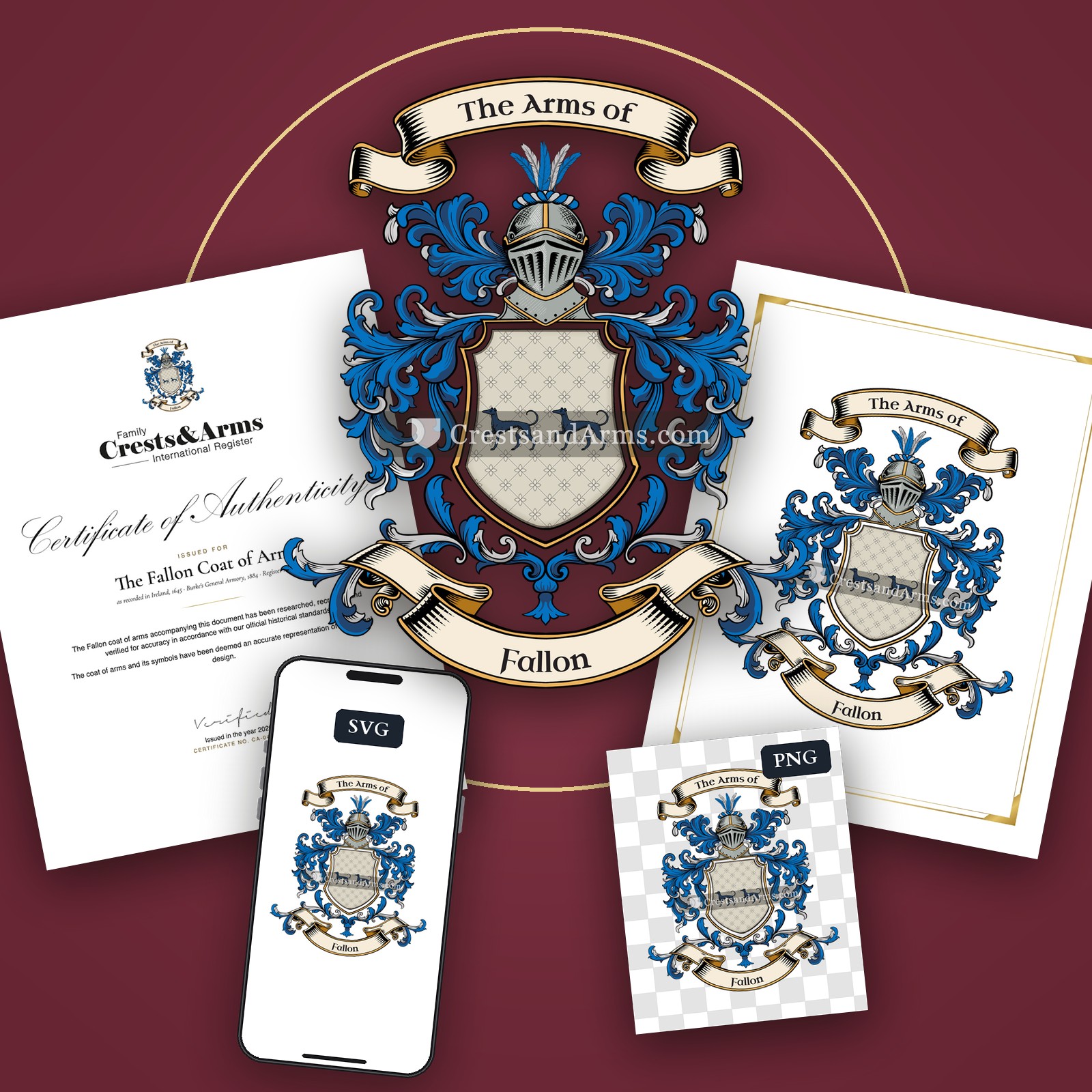
greyhoundCourage, vigilance and loyalty
Colours
Silver (Argent)Means: Peace and sincerity
Blue (Azure)Means: Loyalty and truth
Historical info
Source
Sir Bernard Burke, The General Armory of England, Scotland, Ireland and Wales, London: Harrison & Sons, 1884
Blazon (the actual original written record)
“Ar. two greyhounds ramp. combatant az. supporting a sword betw. them ppr. pommelled and hilted gu., quartering NETTERVILLE, Fox, DILLON, &c”
RoscommonRunnymede · Roscommon, c. 1645
Digital archive packCoat of arms PNG, gold border print PDF, vector SVG and the certificate of authenticity. Sent to your email in minutes.
Map of Ireland showing where the Fallon arms are recorded
The Fallon arms were recorded in Roscommon, c. 1645.
Roscommon was midland Irish grazing country, held by old Irish families before the plantations and by settlers after. Both sorts held land, and holding land is what brought arms.
This is where the arms were entered in the register. Families often moved to other parts of the country, so the same name can turn up in more than one region.
The body that granted and recorded arms in Ireland in this period.
Charles I of England
Sovereign of the period
Charles I of England
1625–1649
Reigning in France when the Fallon arms are first recorded.
How Arms Worked in Ireland
The Ulster King of Arms granted coats of arms to individuals who proved their social standing and good character. These symbols were typically inherited by all legitimate descendants of the original holder. If a family branch wanted a unique look, they could apply for a specific change to their design through the office to ensure their identity remained distinct.
Granting authority
The Ulster King of Arms acted as the official body that regulated and issued all coats of arms throughout Ireland.
How they got arms
Families obtained their arms through formal grants issued by the office after proving their eligibility and paying the required fees.
Where arms were recorded
All official grants were recorded in the registers held by the Ulster King of Arms starting from the year 1552.
The family's standing
Recorded among the armigerous families of Roscommon.
Origin & History of the Fallon Family in Ireland
The name Fallon originates from the Irish Gaelic surname Ó Fallamhain, which translates to a descendant of the ruler or leader. By the early seventeenth century, the family was firmly established in County Roscommon, where they held significant influence as a sept within the Kingdom of Connacht. Records confirm their presence in this region by 1645, a time when the family was deeply integrated into the local social and political structure of the province. As members of the Gaelic nobility, they were traditional supporters of the O'Connor kings, who served as the primary monarchs of the area. Following the turbulent political shifts of the mid-1600s, the family maintained their connection to the land in Roscommon, preserving their heritage despite the widespread displacement of native Irish families during that era.
Fallon Meaning & Related Branches
Root word
fala
A Celtic or Old Irish term referring to a leader or ruler.
This name
FallonDerived from the Gaelic word meaning a descendant of the ruler or leader.
also spelled
Falon
Fallen
Related arms
Fallunvariant spelling
Documented Sources
J. B. Rietstap, Armorial Général, Gouda: G. B. van Goor Zonen, 1884–87
Benoit, Arthur. Recherches sur les familles notables de la Franche-Comté. 1882
Archives départementales du Doubs. Série B: Cours et juridictions. 1663
Digital archive packCoat of arms PNG, gold border print PDF, vector SVG and the certificate of authenticity. Sent to your email in minutes.


 roundelA coin, and one who has been to the crusades
 roundelA coin, and one who has been to the crusades


 chiefAuthority, wisdom and dominion
 lionCourage, strength and royalty


 greyhoundCourage, vigilance and loyalty