Map of Spain showing where the Fara arms are recorded
The Fara arms were recorded in Belg, c. 1722.
Arms such as these were typically recorded in Castile.
Castile was the heart of Spain and the source of most of its noble families. Land won in the long wars against the Moors was granted out to fighting men, and a man granted land was granted arms along with it.
This is where the arms were entered in the register. Families often moved to other parts of the country, so the same name can turn up in more than one region.
The body that granted and recorded arms in Spain in this period.
Philip V of Spain
Sovereign of the period
Philip V of Spain
1714–1724
Reigning in Spain when the Fara arms are first recorded.
How Arms Worked in Spain
In Spain, a coat of arms was considered a form of property that belonged to the entire family line. These arms were passed down from a father to all his children equally. Younger branches of the family usually kept the original design without needing to add any special marks to distinguish their specific line.
Granting authority
The Cronista Rey de Armas was the official body that regulated and granted coats of arms throughout Spain.
How they got arms
Families often obtained their arms through royal grants or by proving their noble status to the official heraldic authority.
Where arms were recorded
Coats of arms were officially recorded in the registers of the Cronista Rey de Armas starting in 1496.
The family's standing
Recorded among the armigerous families of Spain.
Origin & History of the Fara Family in Spain
The history of the Fara family in Spain is deeply rooted in the rugged landscapes of Castile, where records confirm their presence as early as 1722. During this period, Castile served as the political and cultural heart of the Spanish kingdom, and families like the Fara were often integrated into the local agrarian or merchant economies that sustained the region. The name itself likely evolved from regional linguistic patterns common in the Iberian Peninsula, reflecting the movement of people across the central plateau. As residents of Castile, these early family members lived through a time of significant administrative change, often appearing in local parish registers that tracked baptisms, marriages, and deaths. These documents provide a window into a life defined by community ties and the slow, steady growth of family influence within the Spanish heartland. By maintaining their presence in this region, the Fara family contributed to the social fabric of a territory that was essential to the development of modern Spain.
Coat of Arms & Family Crest Details
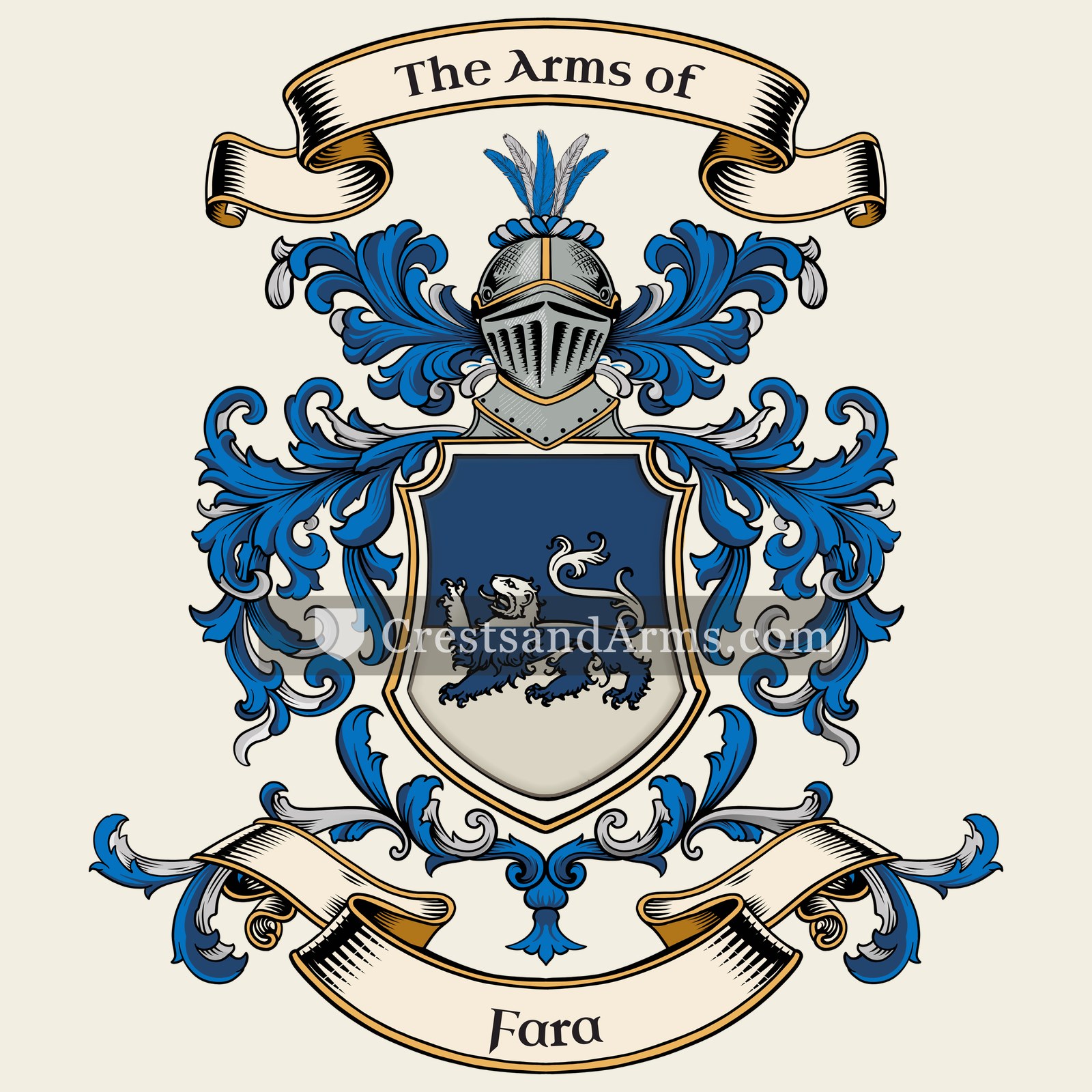
Symbols on this shield
lionCourage, strength and royalty
Colours
Blue (Azure)Means: Loyalty and truth
Silver (Argent)Means: Peace and sincerity
Historical info
Source
J. B. Rietstap, Armorial Général, Gouda: G. B. van Goor Zonen, 1884–87
Blazon (the actual original written record)
“Coupé d'azur sur arg.; au lion de l'un en l'autre. - Ou: Coupé d'or sur azur; au lion de l'un en l'autre.”
ItalyTrévise, c. 1775
Digital archive packCoat of arms PNG, gold border print PDF, vector SVG and the certificate of authenticity. Sent to your email in minutes.
Map of Italy showing where the Fara arms are recorded
The Fara arms were recorded in Trévise, c. 1775.
This is where the arms were entered in the register. Families often moved to other parts of the country, so the same name can turn up in more than one region.
The body that granted and recorded arms in Italy in this period.
Alvise Giovanni Mocenigo
Sovereign of the period
Alvise Giovanni Mocenigo
1763–1778
Reigning in Spain when the Fara arms are first recorded.
How Arms Worked in Italy
In the Italian states, coats of arms were often used by noble families to show their status and history. These symbols were passed down through the generations to all legitimate male descendants. Younger branches of a family usually kept the original design but sometimes added small changes to distinguish their specific line from the main branch.
Granting authority
Various local rulers and city governments controlled the use of coats of arms across the different Italian states.
How they got arms
Families often assumed their own arms or received them as official grants from local lords, popes, or city councils.
Where arms were recorded
Arms were recorded in local city archives or private family books rather than in one single national register.
The family's standing
Recorded among the armigerous families of Italy.
Origin & History of the Fara Family in Italy
The name Fara carries a deep connection to the history of northern Italy, particularly within the Veneto region. By the late 18th century, records confirm that members of the family were well-established residents of Treviso by 1775. The name itself is thought to be linked to the historical term "fara," which was used by the Lombards to describe a specific social unit or a group of migrating families who settled in new territories. As these groups established permanent communities, the term often became a marker for the places where they lived or the lineages they formed. Over time, families associated with these settlements adopted the name as a way to identify their origins and their place within the local social structure of the Italian peninsula. By the time the family appeared in the records of Treviso, they were part of a long tradition of families who had integrated into the urban life of the region while maintaining a name that reflected the ancient patterns of migration and settlement in Italy.
Fara Meaning & Related Branches
Root word
Faro
Derived from the Latin word pharus meaning a lighthouse or beacon.
This name
FaraRefers to a person who lived near a lighthouse or served as a guide.
Related arms
del Pratorecorded with Fara, same area
Fernandez de Castillorecorded with Fara, same area
Gutierrez de Lararecorded with Fara, same area
Lopez-Gallorecorded with Fara, same area
Documented Sources
J. B. Rietstap, Armorial Général, Gouda: G. B. van Goor Zonen, 1884–87
Archivo Histórico Diocesano de Burgos, Libros de Bautismos y Matrimonios de la Parroquia de San Esteban, 1722
García de Cortázar, José Ángel, La historia rural de Castilla durante la Edad Moderna, 1989
Archivo General de Simancas, Catastro de Ensenada: Respuestas Generales, 1750-1754
Digital archive packCoat of arms PNG, gold border print PDF, vector SVG and the certificate of authenticity. Sent to your email in minutes.


 fessThe military belt, and readiness to serve
 towerGrandeur and solidity, and a stronghold defended
 fessThe military belt, and readiness to serve
 towerGrandeur and solidity, and a stronghold defended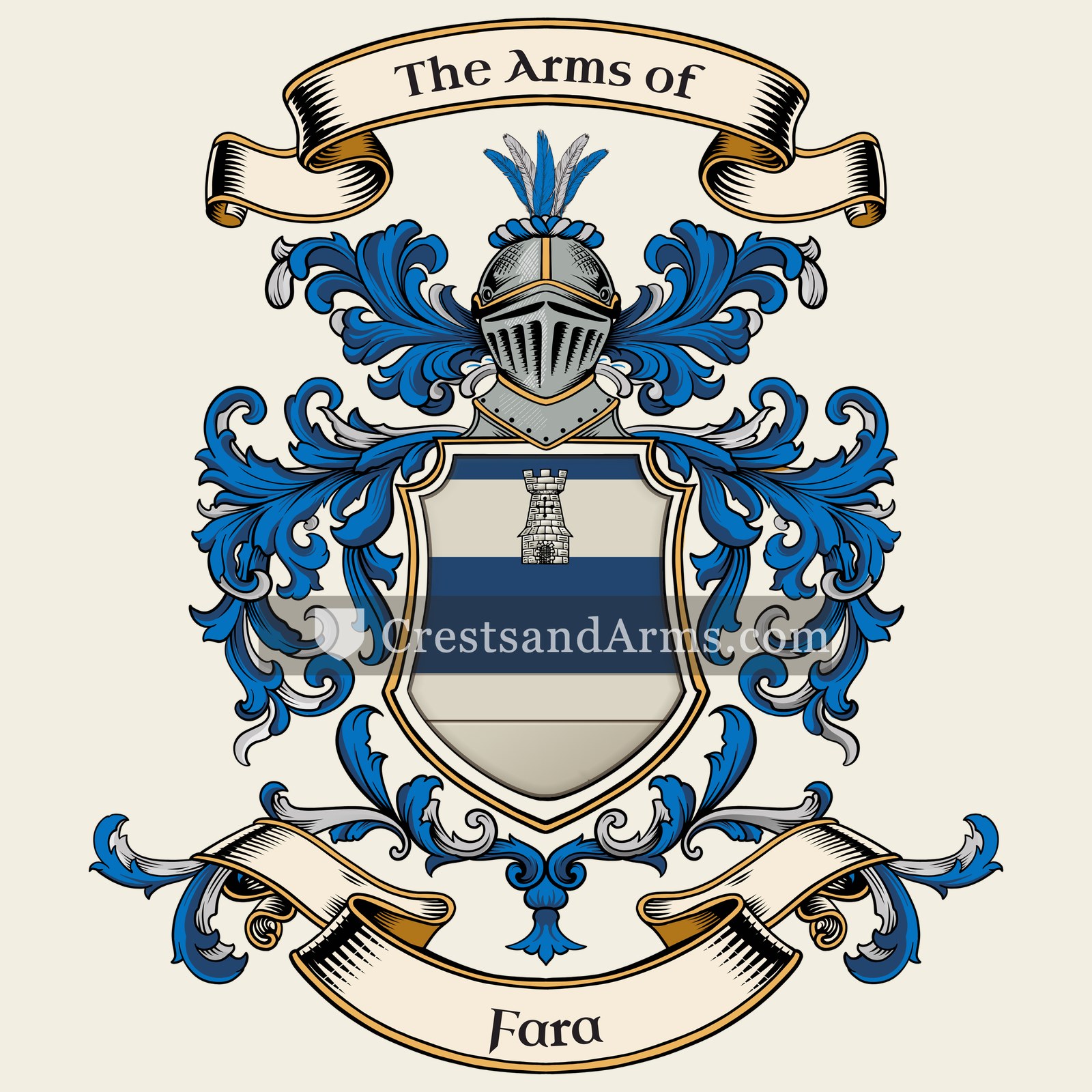


 lionCourage, strength and royalty