Map of Ireland showing where the Faunt arms are recorded
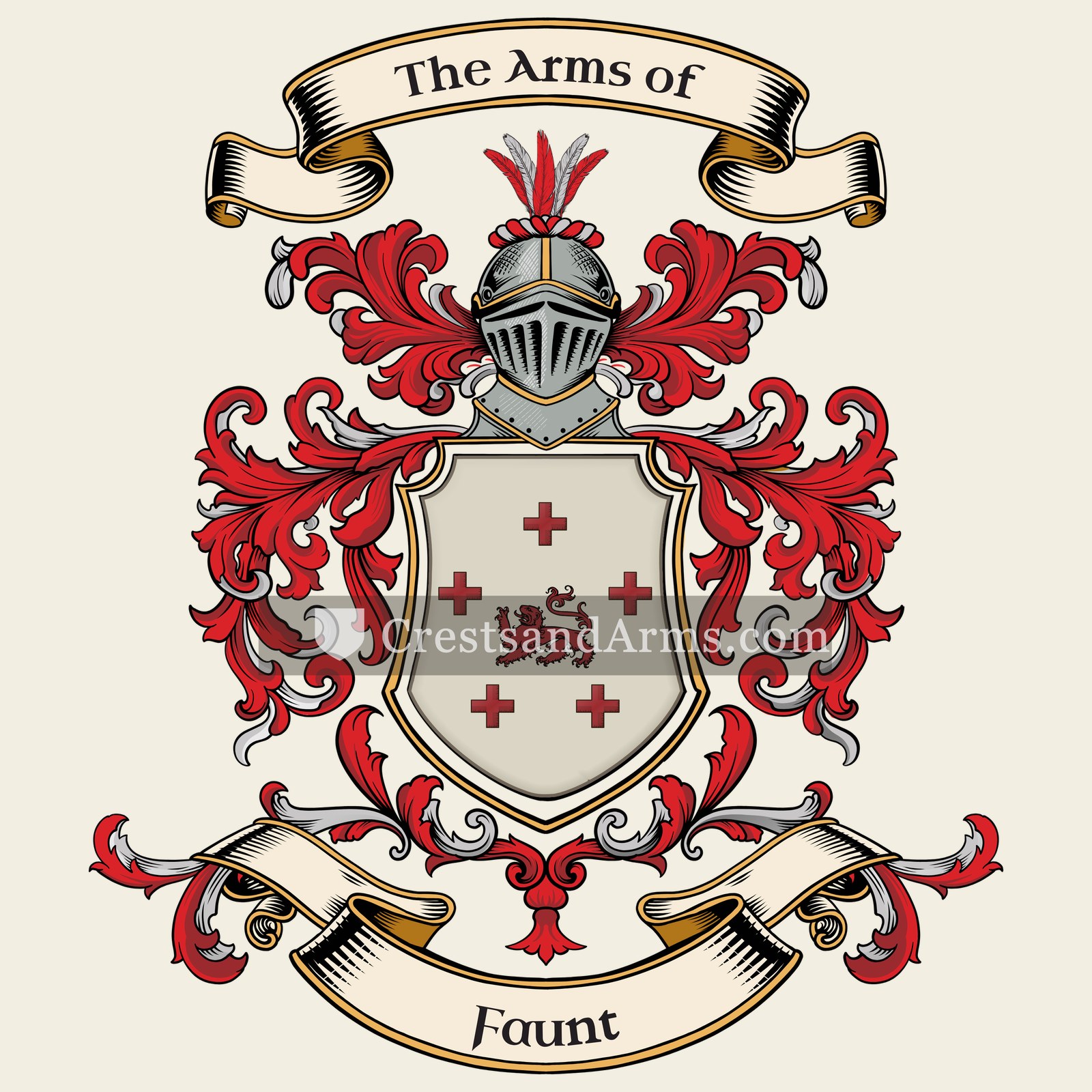
The Faunt arms were recorded in Leicester, c. 1380.
Leicestershire was grazing country, and wool and cattle made steady money rather than spectacular fortunes. Steady money bought manors, and manors are what brought families into the registers.
This is where the arms were entered in the register. Families often moved to other parts of the country, so the same name can turn up in more than one region.
The body that granted and recorded arms in Ireland in this period.
Richard II of England
Sovereign of the period
Richard II of England
1377–1399
Reigning in Ireland when the Faunt arms are first recorded.
How Arms Worked in Ireland
The Ulster King of Arms granted coats of arms to individuals who proved their social standing and good character. These symbols were typically inherited by all legitimate descendants of the original holder. If a family branch wanted a unique look, they could apply for a specific change to their design through the office to ensure their identity remained distinct.
Granting authority
The Ulster King of Arms acted as the official body that regulated and issued all coats of arms throughout Ireland.
How they got arms
Families obtained their arms through formal grants issued by the office after proving their eligibility and paying the required fees.
Where arms were recorded
All official grants were recorded in the registers held by the Ulster King of Arms starting from the year 1552.
The family's standing
Recorded among the armigerous families of Leicester.
Origin & History of the Faunt Family in Ireland
The surname Faunt carries a long history rooted in the medieval landscape of Leicestershire. Records confirm that members of the family were established in Leicester by 1380, where they lived as prominent citizens during the late fourteenth century. The name itself is believed to be a nickname derived from the Middle English word faunt, which meant a child or an infant. It is likely that the original bearer of the name was known for a youthful appearance or a particularly lively personality. Over the following centuries, the family grew in local influence and became deeply connected to the social and economic life of the region. By settling in the East Midlands, the early Faunts secured a lasting place in the historical records of the area, transitioning from local residents to a recognized name within the English gentry.
Faunt Meaning & Related Branches
Root word
Infans
Latin term meaning a young child or one who cannot speak.
This name
FauntA nickname derived from Middle English referring to a young nobleman or child.
also spelled
Fawnt
Fawnte
Documented Sources
Sir Bernard Burke, The General Armory of England, Scotland, Ireland and Wales, London: Harrison & Sons, 1884
Nichols, John, The History and Antiquities of the County of Leicester, 1795
The National Archives, Poll Tax Returns for Leicestershire, E 179/133/26, 1380
Digital archive packCoat of arms PNG, gold border print PDF, vector SVG and the certificate of authenticity. Sent to your email in minutes.


 cross symbolChristian faith and service
 lionCourage, strength and royalty
 cross symbolChristian faith and service
 lionCourage, strength and royalty