A record of documented arms, meaning and origin, researched for the Fayne family lines. Documented in 3 countries.
Reg. 3399 · French, D–F
Coat of Arms & Family Crest Details
Symbols on this shield
towerGrandeur and solidity, and a stronghold defended
lionCourage, strength and royalty
escallopThe pilgrim's shell, and a long journey made
Colours
Blue (Azure)Means: Loyalty and truth
Silver (Argent)Means: Peace and sincerity
Gold (Or)Means: Generosity
Historical info
Source
J. B. Rietstap, Armorial Général, Gouda: G. B. van Goor Zonen, 1884–87
Blazon (the actual original written record)
“D'azur à une tour d'arg., maçonnée et crén. de sa., soutenue de deux lions affr. d'or, arm. et lamp. de gu.; acc. de trois coquilles d'or, rangées en chef.”
LanguedocLanguedoc, c. 1663
Digital archive packCoat of arms PNG, gold border print PDF, vector SVG and the certificate of authenticity. Sent to your email in minutes.
Map of France showing where the Fayne arms are recorded
The Fayne arms were recorded in Languedoc, c. 1663.
Languedoc stretched across the south of France, a country of small towns, vineyards and old local families. Its gentry were numerous rather than grand, and a great many of them held arms even where their estates were modest.
This is where the arms were entered in the register. Families often moved to other parts of the country, so the same name can turn up in more than one region.
The body that granted and recorded arms in France in this period.
Louis XIV of France
Sovereign of the period
Louis XIV of France
1643–1715
Reigning in France when the Fayne arms are first recorded.
How Arms Worked in France
In France, a coat of arms was a mark of honor that passed down through the male line to all legitimate descendants. Families often used the same shield without changes to show their shared heritage. If a branch wanted to stand out, they could add a small mark to their shield to show their specific place in the family tree.
Granting authority
The Juge d'armes de France acted as the official authority that regulated and verified coats of arms across the country.
How they got arms
Families typically inherited their arms from ancestors, though they could also receive them through royal grants or by proving their noble status.
Where arms were recorded
Coats of arms were officially recorded in the Armorial Général de France, which began its main collection in the year 1696.
The family's standing
Recorded among the armigerous families of Languedoc.
Origin & History of the Fayne Family in France
The family name Fayne finds its historical roots in the sun-drenched region of Languedoc, where records confirm the family was established by at least 1663. During this period, the name was closely tied to the rural landscape of southern France, likely evolving from local dialects that described the terrain or the specific occupations of those living in the area. Families in this region often lived in small, tight-knit agricultural communities that relied on the local vineyards and trade routes connecting the Mediterranean coast to the interior. As the seventeenth century progressed, the Fayne family became part of the social fabric of Languedoc, participating in the daily life and administrative shifts of a province known for its distinct cultural identity. By maintaining their presence in this area, early members of the family helped shape the local history of the region during a time of significant transition for the French monarchy and the provincial nobility.
Coat of Arms & Family Crest Details
Symbols on this shield
cross symbolChristian faith and service
roseThe seventh son, and beauty with grace
lionCourage, strength and royalty
Colours
Blue (Azure)Means: Loyalty and truth
Red (Gules)Means: Military strength
Silver (Argent)Means: Peace and sincerity
Historical info
Source
J. B. Rietstap, Armorial Général, Gouda: G. B. van Goor Zonen, 1884–87
Blazon (the actual original written record)
“Parti: au 1 d'azur à la croix d'arg., ch. d'une rose de gu.; au 2 de gu. au lion d'arg., surm. d'une fleur-de-lis du même. Cq. cour. C.: une double rose de gu. L. d'arg. et de gu.”
Germanyc. 1765
Digital archive packCoat of arms PNG, gold border print PDF, vector SVG and the certificate of authenticity. Sent to your email in minutes.
Map of Germany showing where the Fayne arms are recorded
The Fayne arms were recorded in Germany, c. 1765.
Arms such as these were typically recorded in Bavaria.
Bavaria was a country of old landed families and walled market towns. Estates passed down the same line for centuries, and both the landowners and the leading townsmen kept arms, which is why so many Bavarian names sit in the registers.
This is where the arms were entered in the register. Families often moved to other parts of the country, so the same name can turn up in more than one region.
The body that granted and recorded arms in Germany in this period.
Francis I, Holy Roman Emperor
Sovereign of the period
Francis I, Holy Roman Emperor
1745–1765
Reigning in France when the Fayne arms are first recorded.
How Arms Worked in Germany
In the Holy Roman Empire, coats of arms were often granted to individuals by the Emperor or his representatives. These arms were then passed down through the generations to all legitimate descendants of the original holder. Younger branches of a family usually kept the same shield design without needing to change it, as the arms belonged to the entire lineage.
Granting authority
The Holy Roman Emperor held the sole power to grant new coats of arms throughout his vast imperial territories.
How they got arms
Families typically obtained their coats of arms through a formal imperial grant or by proving their noble status to the authorities.
Where arms were recorded
These grants were officially recorded in the Imperial Chancery registers, which began keeping formal records of such honors during the Middle Ages.
The family's standing
Recorded among the armigerous families of Germany.
Origin & History of the Fayne Family in Germany
The family name Fayne traces its roots in Germany to the southern region of Bavaria, where records confirm members of the family were established by 1765. During this period, Bavaria was a center of agricultural development and trade, and families with this name likely lived as part of the rural working class or local craft guilds. The name itself likely evolved from regional dialects, reflecting the way people identified their neighbors by their specific trade or their location near a particular landmark. Life for the Fayne family in the eighteenth century revolved around the seasonal rhythms of the Bavarian countryside, where they contributed to the local economy through farming or skilled manual labor. As the family grew, they became part of the social fabric of their village, participating in local church life and community governance. This early history highlights a family deeply connected to the land and the traditional customs of southern Germany during a time of significant cultural change.
Coat of Arms & Family Crest Details
Symbols on this shield
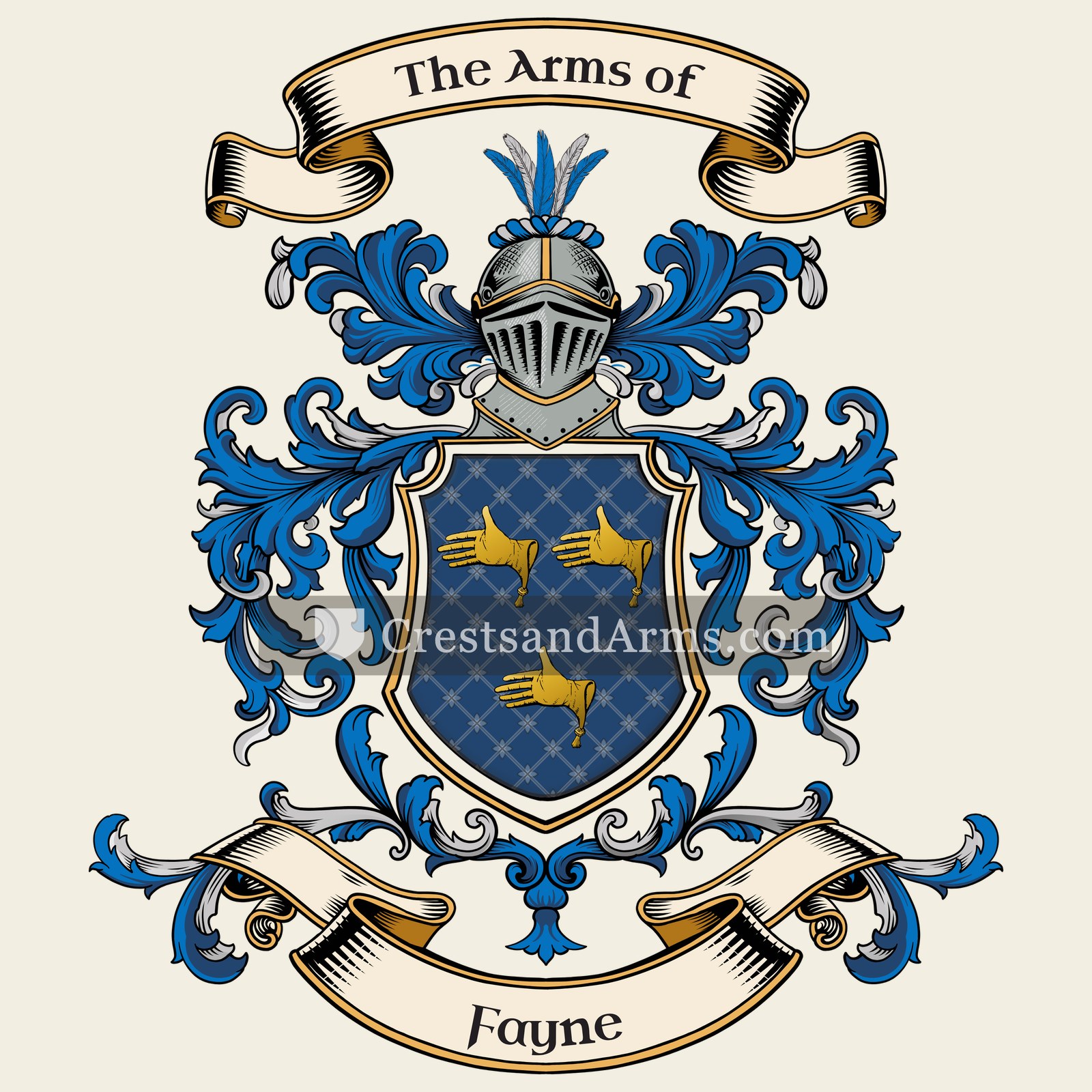
gauntletA challenge given and the readiness to meet it
Colours
Blue (Azure)Means: Loyalty and truth
Gold (Or)Means: Generosity
Historical info
Source
Sir Bernard Burke, The General Armory of England, Scotland, Ireland and Wales, London: Harrison & Sons, 1884
Blazon (the actual original written record)
“Az. three dexter gauntlets, backs affrontée or”
WestmorlandWestmorland, c. 1620
Digital archive packCoat of arms PNG, gold border print PDF, vector SVG and the certificate of authenticity. Sent to your email in minutes.
Map of England showing where the Fayne arms are recorded
The Fayne arms were recorded in Westmorland, c. 1620.
This is where the arms were entered in the register. Families often moved to other parts of the country, so the same name can turn up in more than one region.
The body that granted and recorded arms in England in this period.
James VI and I
Sovereign of the period
James VI and I
1603–1625
Reigning in France when the Fayne arms are first recorded.
How Arms Worked in England
English heraldry allowed arms to be shared by all legitimate descendants of the original owner. These symbols were treated as personal property that moved through the generations to all children. While the eldest son kept the original design, other family members could use the same shield without needing to change it or register their own unique versions.
Granting authority
The College of Arms in London has regulated the use of coats of arms throughout England and Wales since 1484.
How they got arms
Families typically obtained their coats of arms through a formal grant from the Crown or by proving their ancient right to them.
Where arms were recorded
All official coats of arms are recorded in the registers kept at the College of Arms, which date back to the fifteenth century.
The family's standing
Recorded among the armigerous families of Westmorland.
Origin & History of the Fayne Family in England
The family name Fayne has roots that stretch back to the rugged landscapes of northern England. By the year 1620, records confirm that members of the family were firmly established in the county of Westmorland. During this period, Westmorland was a remote and rural area defined by its rolling hills and close-knit farming communities. Families like the Faynes often lived as yeomen, which meant they were independent landowners who played a vital role in the local economy. Because the region was somewhat isolated from the major political centers in the south, the Fayne family likely developed a strong sense of local identity and self-reliance. Over time, the name became part of the historical fabric of the region, reflecting the lives of people who worked the land and participated in the daily growth of their northern parishes.
Fayne Meaning & Related Branches
Root word
fain
Old French word meaning joyful, glad, or willing.
This name
FayneA nickname for a cheerful or happy person, or one who is willing.
also spelled
Fayne
Faynn
Fayns
Fan
Documented Sources
J. B. Rietstap, Armorial Général, Gouda: G. B. van Goor Zonen, 1884–87
Archives départementales de l'Hérault, Registres paroissiaux et d'état civil
Le Roy Ladurie, Emmanuel, Les Paysans de Languedoc, 1966
Wolff, Philippe, Histoire du Languedoc, 1967
Digital archive packCoat of arms PNG, gold border print PDF, vector SVG and the certificate of authenticity. Sent to your email in minutes.


 towerGrandeur and solidity, and a stronghold defended
 lionCourage, strength and royalty
 escallopThe pilgrim's shell, and a long journey made
 towerGrandeur and solidity, and a stronghold defended
 lionCourage, strength and royalty
 escallopThe pilgrim's shell, and a long journey made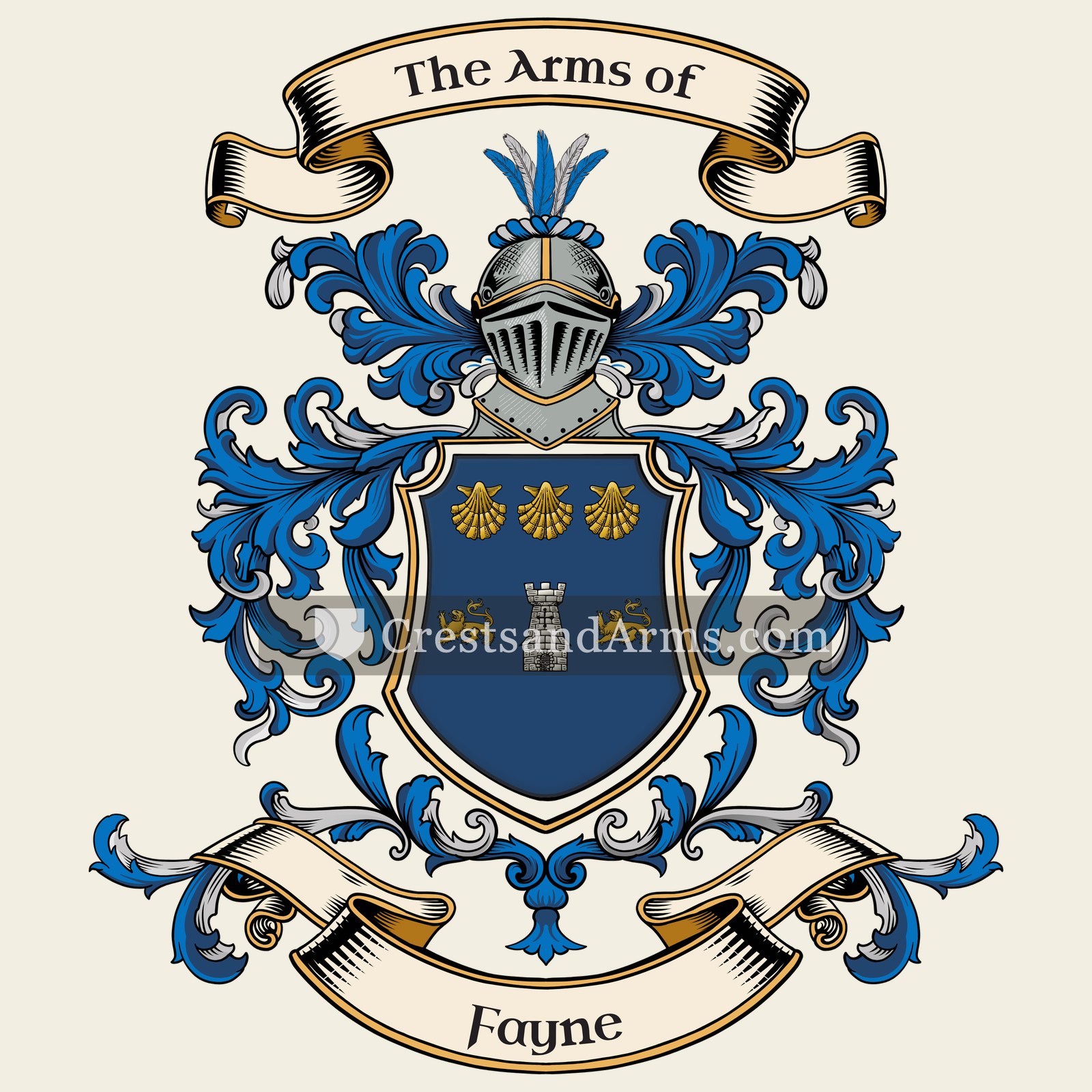


 cross symbolChristian faith and service
 roseThe seventh son, and beauty with grace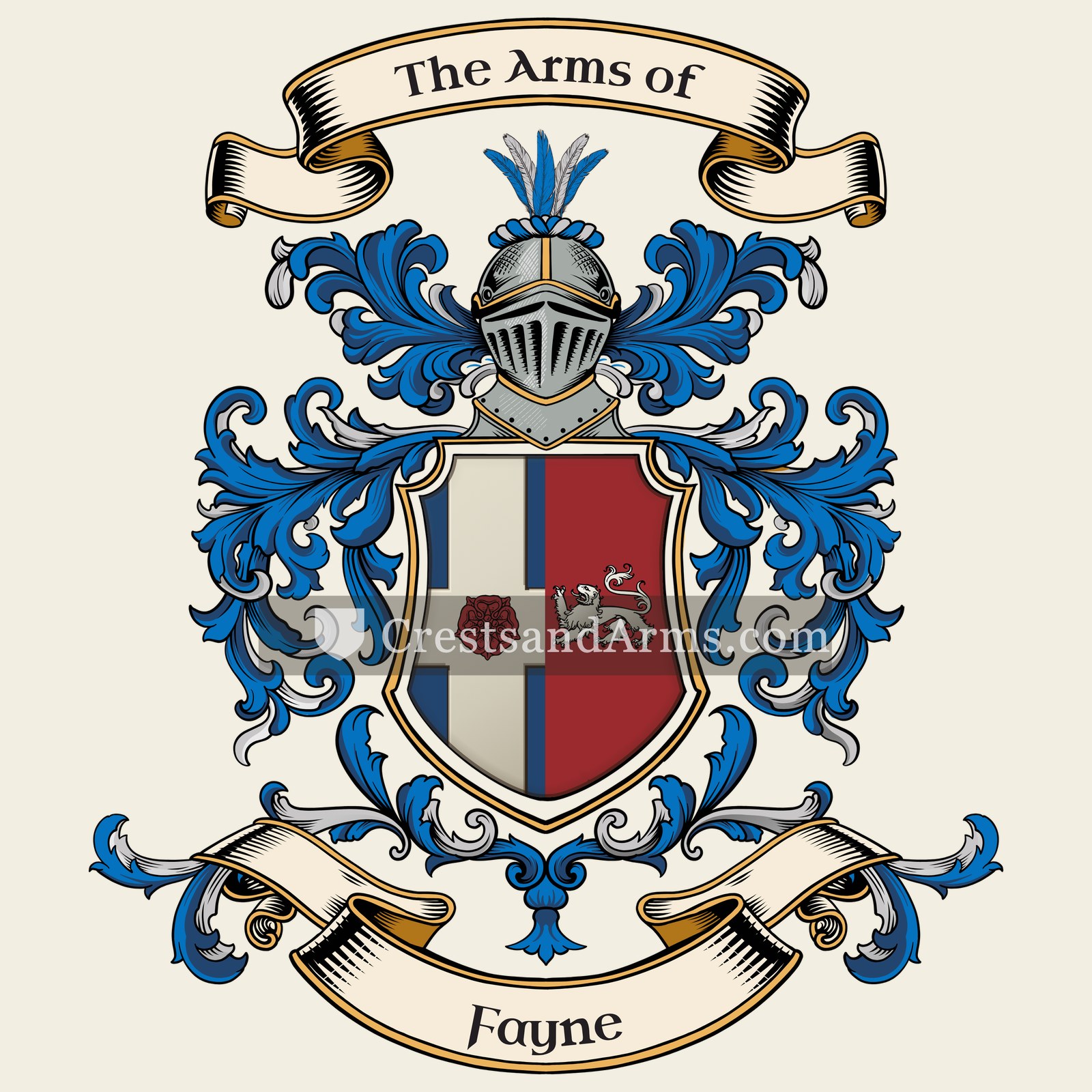


 gauntletA challenge given and the readiness to meet it