Map of Belgium showing where the Feltz arms are recorded
The Feltz arms were recorded in Belgium, c. 1737.
Arms such as these were typically recorded in Brabant.
Brabant lay at the heart of the Low Countries, where the trade routes met. Its towns were wealthy and its landowners many, and both kinds of family kept arms, which is why the region is so heavily represented.
This is where the arms were entered in the register. Families often moved to other parts of the country, so the same name can turn up in more than one region.
The body that granted and recorded arms in Belgium in this period.
Charles VI, Holy Roman Emperor
Sovereign of the period
Charles VI, Holy Roman Emperor
1711–1740
Reigning in Belgium when the Feltz arms are first recorded.
How Arms Worked in Belgium
In Belgium, a coat of arms is considered personal property that is passed down through the male line to legitimate descendants. Families often use the same shield design across generations to show their shared heritage. If a branch of the family wants to change the design, they must apply for an official update to their specific version of the arms.
Granting authority
The Conseil héraldique is the official body that regulates and approves all coats of arms in Belgium.
How they got arms
Families obtain their coats of arms through formal royal grants or by confirming their historical right to use existing designs.
Where arms were recorded
All approved coats of arms are officially recorded in the public registers of the Conseil héraldique since 1844.
The family's standing
Recorded among the armigerous families of Belgium.
Origin & History of the Feltz Family in Belgium
The family name Feltz has deep roots in the historical region of Brabant, where records confirm members of the family were living as early as 1737. During the eighteenth century, Brabant was a central hub of the Austrian Netherlands, characterized by a complex mix of agricultural traditions and growing urban trade. Families with this name were often integrated into the local social fabric of the duchy, likely participating in the rural economy or the craft guilds that defined life in the region at the time. Because the name is linked to the Germanic linguistic tradition, it likely emerged as a descriptive identifier for individuals living near specific types of terrain or field structures. As the family established itself in the Brabant landscape, they became part of a long lineage of local residents who navigated the shifting political borders and economic changes that defined the Low Countries throughout the late modern period.
Coat of Arms & Family Crest Details
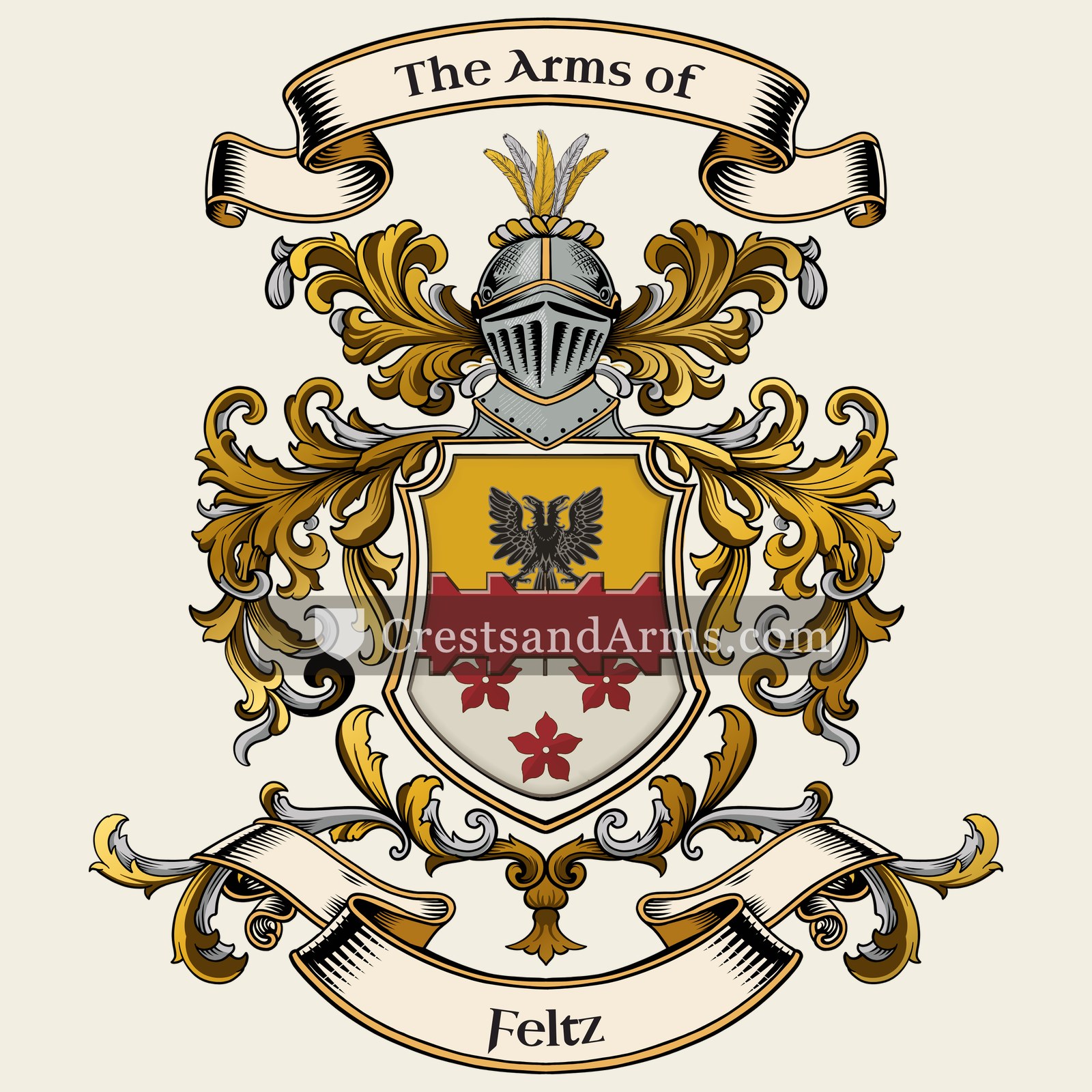
Symbols on this shield
fessThe military belt, and readiness to serve
eagleNobility, strength and a keen mind
cinquefoilHope and joy
Colours
Gold (Or)Means: Generosity
Silver (Argent)Means: Peace and sincerity
Red (Gules)Means: Military strength
Black (Sable)Means: Constancy
Historical info
Source
J. B. Rietstap, Armorial Général, Gouda: G. B. van Goor Zonen, 1884–87
Blazon (the actual original written record)
“Coupé, d'or à l'aigle de sa., sur arg. à trois quintefeuilles de gu., 2 et 1; à la fasce bastillée d'une pièce et deux demies de gu., br. sur le coupé. C.: l'aigle.”
Switzerlandc. 1745
Digital archive packCoat of arms PNG, gold border print PDF, vector SVG and the certificate of authenticity. Sent to your email in minutes.
Map of Switzerland showing where the Feltz arms are recorded
The Feltz arms were recorded in Switzerland, c. 1745.
Arms such as these were typically recorded in Bern.
Bern was the largest of the Swiss cantons and ran itself, with its own council and its own courts. Its governing families held office for generations, and office of that kind carried a shield with it.
This is where the arms were entered in the register. Families often moved to other parts of the country, so the same name can turn up in more than one region.
The body that granted and recorded arms in Switzerland in this period.
How Arms Worked in Switzerland
In Switzerland, coats of arms were not restricted to the nobility and were often adopted by common citizens and families. These symbols were passed down through generations to show family identity. When branches of a family grew, they often changed small details of the design to distinguish their own line from the original group.
Granting authority
Cantonal and civic authorities managed the use of coats of arms within their specific regions and local jurisdictions.
How they got arms
Families typically assumed their own coats of arms based on local custom rather than receiving them from a central monarch.
Where arms were recorded
Arms were recorded in various cantonal and civic registers starting from the fourteenth century throughout the Swiss region.
The family's standing
Recorded among the armigerous families of Switzerland.
Origin & History of the Feltz Family in Switzerland
The surname Feltz has deep roots in the Swiss region of Bern, where records confirm the family was established by at least 1745. The name likely originated as a descriptive term, potentially derived from the Middle High German word *velt*, which refers to an open field or a stretch of flat land. Families during this period often adopted names based on the specific geography of their farms or the nature of their local landscape. In the social structure of eighteenth-century Bern, the Feltz family would have been part of a society deeply connected to agricultural life and the rigid administrative systems of the Swiss cantons. As citizens of this region, they were likely subject to the local ordinances and communal record-keeping practices that defined life in the Old Swiss Confederacy. Over generations, the family name became a permanent marker of their identity within the alpine valleys and rolling hills that characterized the Bernese territory.
Feltz Meaning & Related Branches
Root word
Felt
A Germanic term referring to a field or open land.
This name
FeltzAn occupational or habitational name for someone who lived or worked on a field.
also spelled
Feltze
Velz
Feltzer
Felts
Documented Sources
J. B. Rietstap, Armorial Général, Gouda: G. B. van Goor Zonen, 1884–87
State Archives in Belgium (Rijksarchief te België), Parochieregisters van Brabant
De Smet, J., Geschiedenis van de Brabantse bevolking in de 18de eeuw, 1962
Warlop, E., De Vlaamse adel voor 1300, 1968
Digital archive packCoat of arms PNG, gold border print PDF, vector SVG and the certificate of authenticity. Sent to your email in minutes.


 cross symbolChristian faith and service
 cross symbolChristian faith and service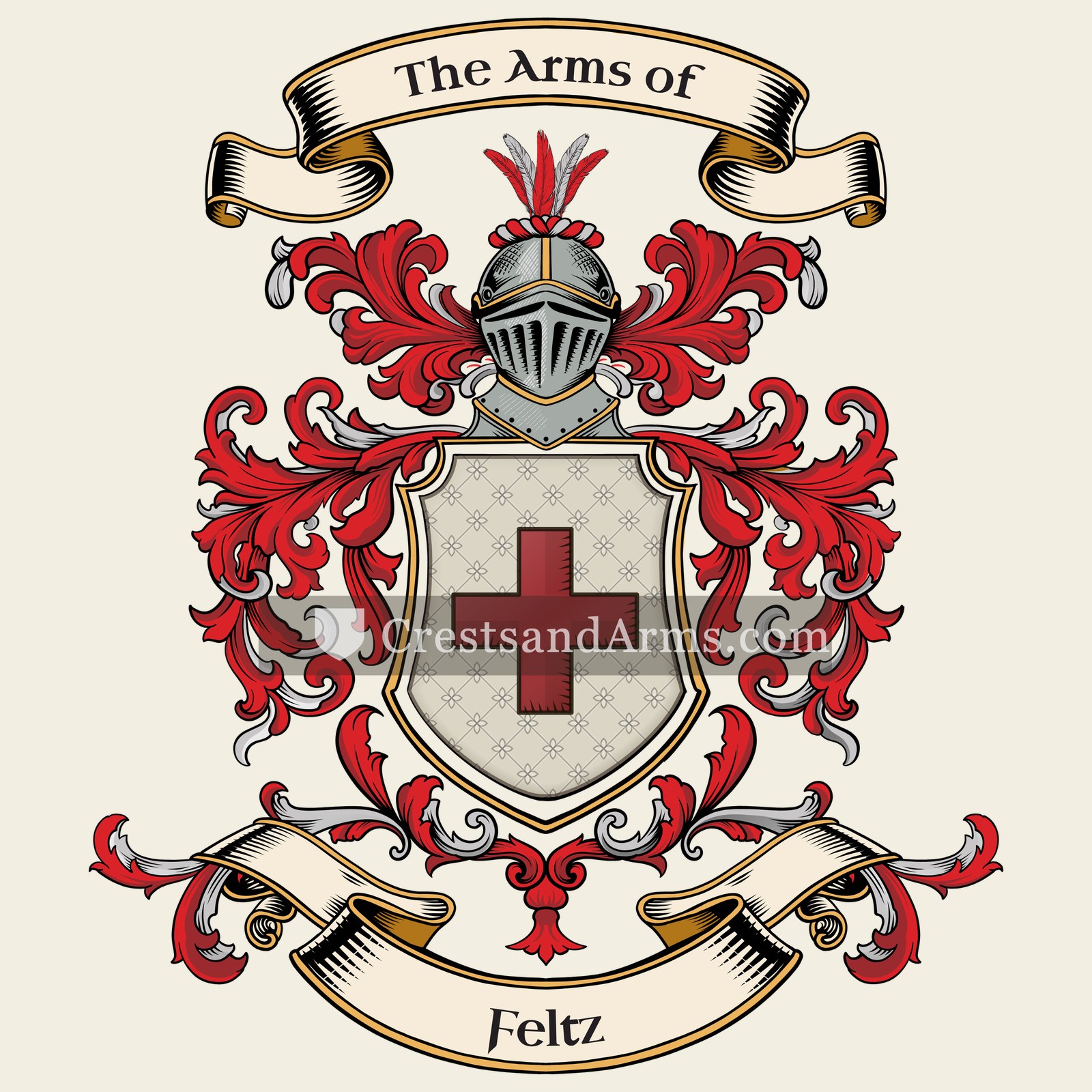


 fessThe military belt, and readiness to serve
 eagleNobility, strength and a keen mind
 cinquefoilHope and joy