A record of documented arms, meaning and origin, researched for the Fermor family lines. Documented in 2 countries.
Reg. 4265 · Polish, D–F
Coat of Arms & Family Crest Details
Symbols on this shield
fessThe military belt, and readiness to serve
lionCourage, strength and royalty
Colours
Silver (Argent)Means: Peace and sincerity
Black (Sable)Means: Constancy
Red (Gules)Means: Military strength
Historical info
Source
J. B. Rietstap, Armorial Général, Gouda: G. B. van Goor Zonen, 1884–87
Blazon (the actual original written record)
“D'arg. à la fasce de sa., acc. de trois têtes de lion de gu. Cq. cour. C.: une tête de coq de gu., crêtée et barbée d'or. S.: deux lions, au nat. D.: HORA E SEMPRE.”
Polandc. 1641
Digital archive packCoat of arms PNG, gold border print PDF, vector SVG and the certificate of authenticity. Sent to your email in minutes.
Map of Poland showing where the Fermor arms are recorded
The Fermor arms were recorded in Poland, c. 1641.
Arms such as these were typically recorded in Mazovia.
Mazovia held Warsaw, the Polish court and the assemblies where the szlachta met. Poland's nobles were unusually numerous and every one of them bore arms, and Warsaw is where those arms were argued over and recorded.
This is where the arms were entered in the register. Families often moved to other parts of the country, so the same name can turn up in more than one region.
Region
Mazovia
First recorded
1641
Granting Authority for the Fermor Arms
Ennoblement by the Sejm
Author: Olek Remesz · CC BY-SA 3.0
The body that granted and recorded arms in Poland in this period.
Władysław IV Vasa
Sovereign of the period
Władysław IV Vasa
1632–1648
Reigning in Poland when the Fermor arms are first recorded.
How Arms Worked in Poland
Polish noble families shared a single coat of arms across many different surnames, creating large clans rather than individual designs. These symbols were held collectively by all members of the clan regardless of their specific family name. When a new family joined the nobility, they were adopted into an existing clan and began using that group's established shield.
Granting authority
The Sejm, which was the Polish parliament, held the power to grant noble status and the right to bear arms.
How they got arms
Families typically received their coat of arms through a formal act of ennoblement granted by the Sejm for distinguished service.
Where arms were recorded
These grants were officially recorded in the Crown Metrica, which served as the central archive for state documents starting in the sixteenth century.
The family's standing
Recorded among the armigerous families of Poland.
Origin & History of the Fermor Family in Poland
The Fermor family established a notable presence in the Mazovia region of Poland by the early seventeenth century, with records confirming their residence there as early as 1641. The name itself is believed to have roots in the broader European tradition of occupational or descriptive surnames, though the family quickly integrated into the local social structures of the Polish-Lithuanian Commonwealth. During this period, the family members were active participants in the regional political and economic life of Mazovia, which served as a central hub for the Polish nobility. As they settled into the local landscape, they became involved in the management of land and the administrative duties typical of families in that area. Their history reflects the movement of families across borders during a time when Poland acted as a crossroads for various European cultures. By maintaining their status in Mazovia, the Fermors secured a place in the historical record of the region, transitioning from their earlier origins into a family deeply connected to the development of the Polish heartland.
Coat of Arms & Family Crest Details
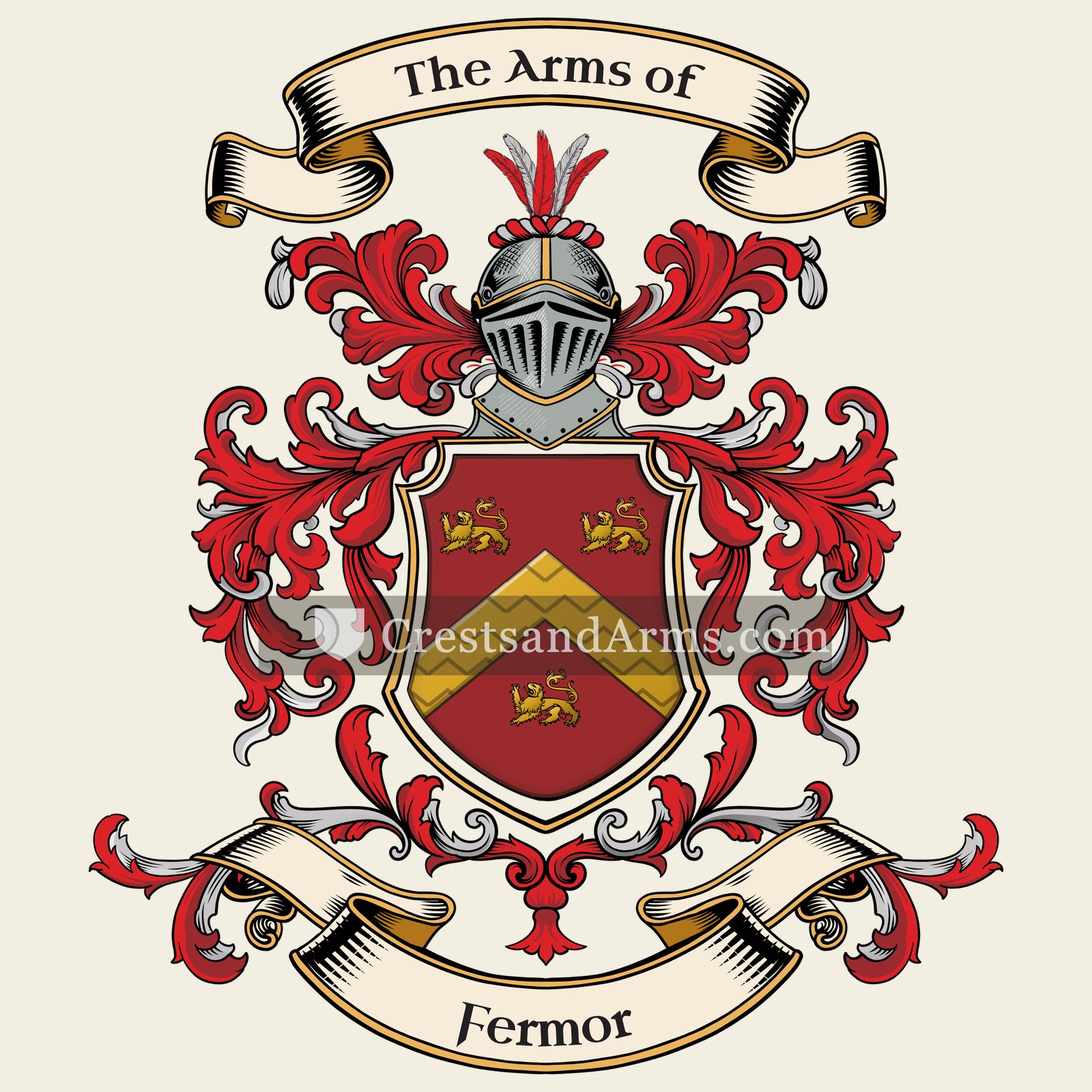
Symbols on this shield
chevronProtection, and faithful service completed
vairProtection, and the winter fur
lionCourage, strength and royalty
Colours
Red (Gules)Means: Military strength
Gold (Or)Means: Generosity
Historical info
Source
Sir Bernard Burke, The General Armory of England, Scotland, Ireland and Wales, London: Harrison & Sons, 1884
Blazon (the actual original written record)
“Gu. a chev. vair betw. three lions ramp. or”
SussexWelches · Sussex, c. 1725
Digital archive packCoat of arms PNG, gold border print PDF, vector SVG and the certificate of authenticity. Sent to your email in minutes.
Map of England showing where the Fermor arms are recorded
The Fermor arms were recorded in Sussex, c. 1725.
Sussex had ironworks in its woods and good farmland on its downs. Both made money, and families who made it bought manors, which is what put their names in the heraldic records.
This is where the arms were entered in the register. Families often moved to other parts of the country, so the same name can turn up in more than one region.
The body that granted and recorded arms in England in this period.
George I of Great Britain
Sovereign of the period
George I of Great Britain
1714–1727
Reigning in Poland when the Fermor arms are first recorded.
How Arms Worked in England
English heraldry allowed arms to be shared by all legitimate descendants of the original owner. These symbols were treated as personal property that moved through the generations to all children. While the eldest son kept the original design, other family members could use the same shield without needing to change it or register their own unique versions.
Granting authority
The College of Arms in London has regulated the use of coats of arms throughout England and Wales since 1484.
How they got arms
Families typically obtained their coats of arms through a formal grant from the Crown or by proving their ancient right to them.
Where arms were recorded
All official coats of arms are recorded in the registers kept at the College of Arms, which date back to the fifteenth century.
The family's standing
Recorded among the armigerous families of Sussex.
Origin & History of the Fermor Family in England
The surname Fermor is rooted in the social and economic shifts of medieval England, originating as an occupational name for a person who held land under a lease or served as a tax collector. Derived from the Old French word *ferme*, which refers to a fixed payment or rent, the name highlights the family’s early connection to land management and agricultural administration. While the family established a notable presence in Sussex by the early eighteenth century, their roots trace back much further to the period when surnames were first becoming permanent fixtures of English identity. Over time, the name evolved from a description of a person’s professional duties into a hereditary family title. By the time the Fermors were documented in Sussex records in 1725, they were already part of a long-standing tradition of families who transitioned from managing estates for others to becoming established landowners within their local communities.
Fermor Meaning & Related Branches
Root word
firmus
Latin term meaning steadfast, strong, or reliable.
This name
FermorA surname derived from the Latin adjective denoting a person of firm character or strength.
also spelled
Fermour
Farmer
Fermer
Related arms
Farmersimilar arms
Fermer, Fenmer, and Ferimorvariant spelling
Fermourvariant spelling
Frankerecorded with Fermor, same area
Documented Sources
J. B. Rietstap, Armorial Général, Gouda: G. B. van Goor Zonen, 1884–87
Boniecki, Adam, Herbarz polski: wiadomości historyczno-genealogiczne o rodach szlacheckich, 1902


 fessThe military belt, and readiness to serve
 lionCourage, strength and royalty
 fessThe military belt, and readiness to serve
 lionCourage, strength and royalty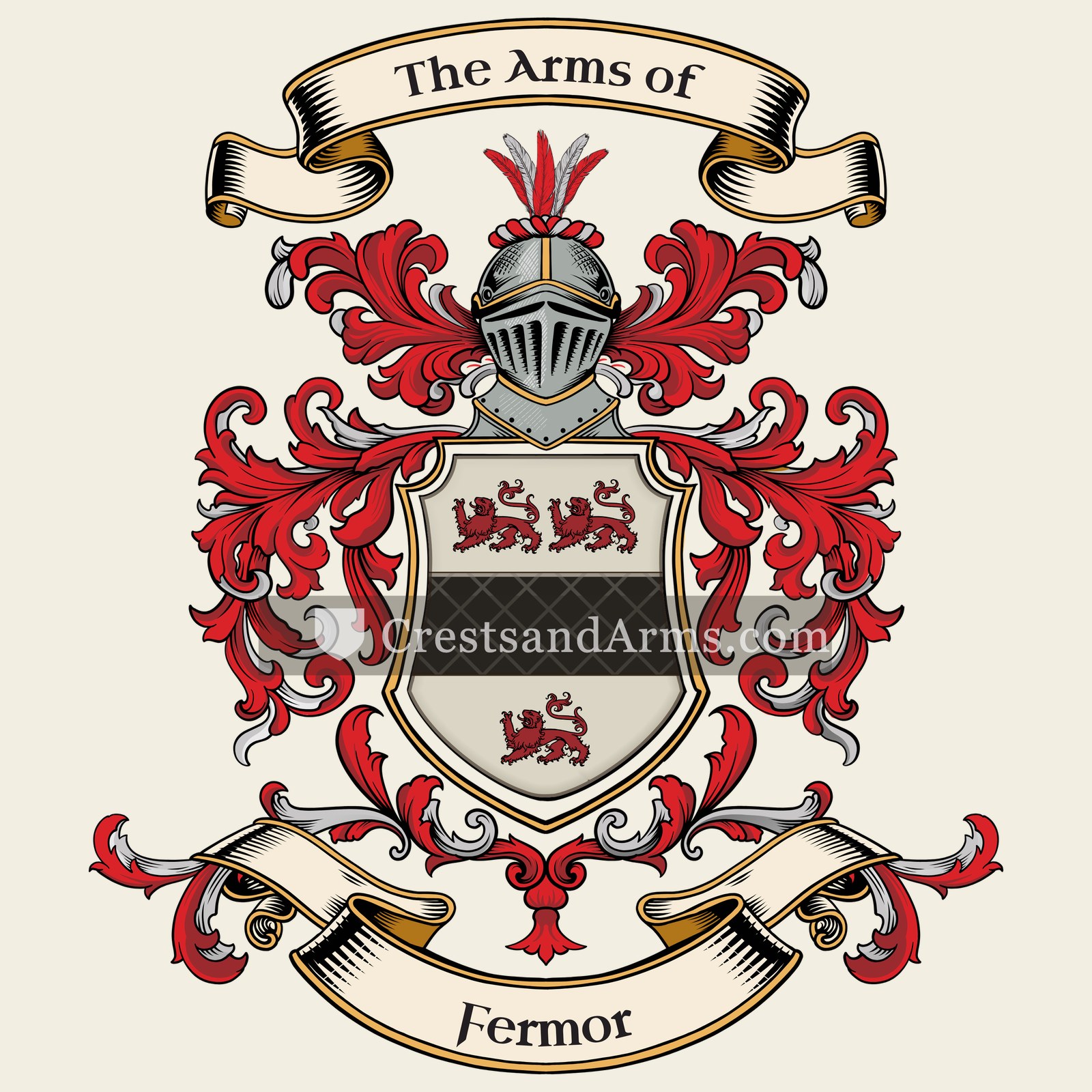


 chevronProtection, and faithful service completed