Map of Italy showing where the Ferro arms are recorded
The Ferro arms were recorded in Padoue, c. 1775.
This is where the arms were entered in the register. Families often moved to other parts of the country, so the same name can turn up in more than one region.
The body that granted and recorded arms in Italy in this period.
Alvise Giovanni Mocenigo
Sovereign of the period
Alvise Giovanni Mocenigo
1763–1778
Reigning in Italy when the Ferro arms are first recorded.
How Arms Worked in Italy
In the Italian states, coats of arms were often used by noble families to show their status and history. These symbols were passed down through the generations to all legitimate male descendants. Younger branches of a family usually kept the original design but sometimes added small changes to distinguish their specific line from the main branch.
Granting authority
Various local rulers and city governments controlled the use of coats of arms across the different Italian states.
How they got arms
Families often assumed their own arms or received them as official grants from local lords, popes, or city councils.
Where arms were recorded
Arms were recorded in local city archives or private family books rather than in one single national register.
The family's standing
Recorded among the armigerous families of Italy.
Origin & History of the Ferro Family in Italy
The surname Ferro is deeply rooted in the linguistic and industrial history of Italy, as it is derived from the Italian word for iron. During the Middle Ages, names were often chosen to reflect a person’s trade, and the Ferro family likely descended from skilled metalworkers, blacksmiths, or ironmongers who played a vital role in the local economy. By the late eighteenth century, the family established a notable presence in the city of Padua. Records confirm that members of the Ferro family were living in Padua by 1775, a time when the city was a thriving center of culture and trade under the Republic of Venice. As the family settled into the urban life of the Veneto region, they became part of the social fabric of the city, contributing to the professional and civic development of the area during a period of significant historical transition.
Coat of Arms & Family Crest Details
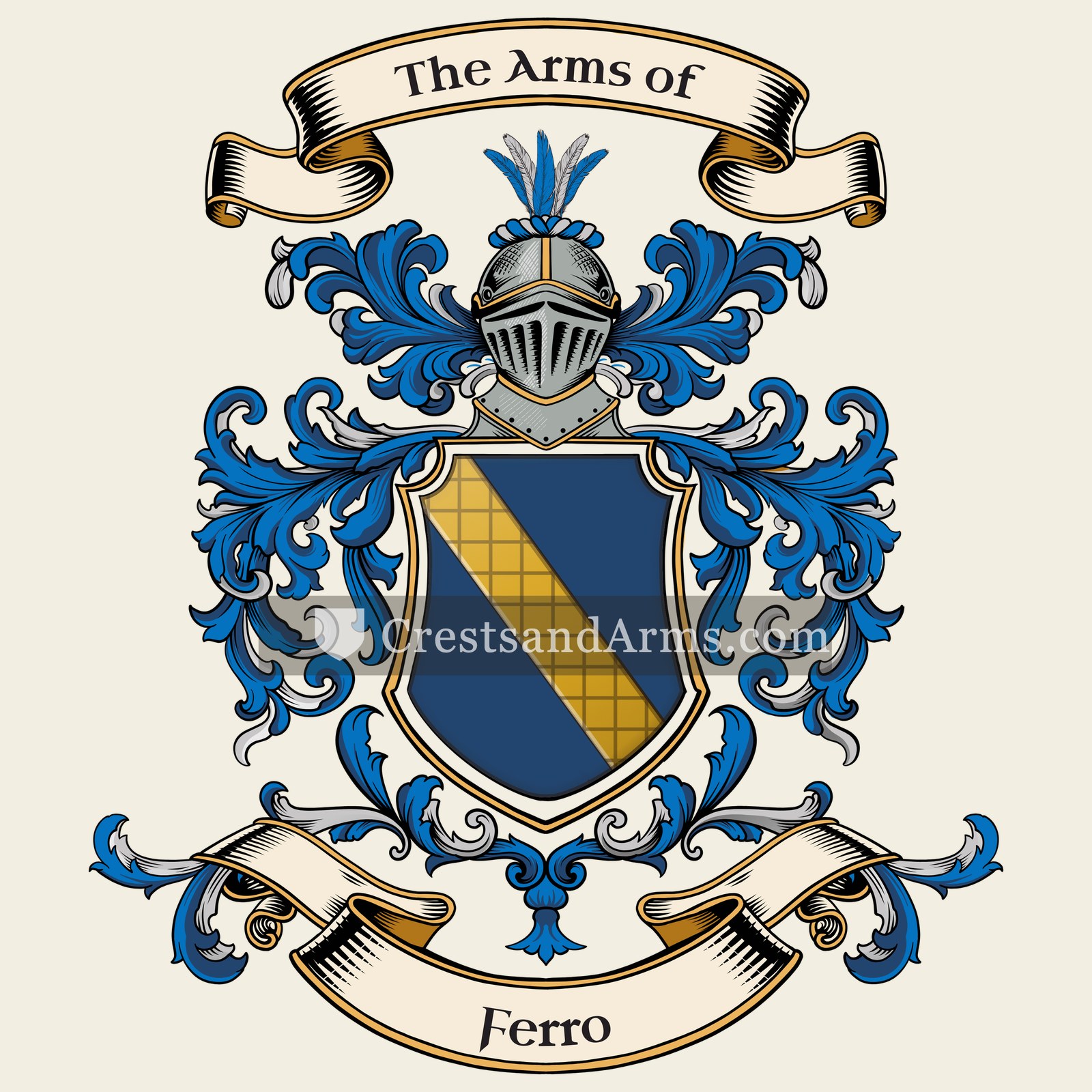
Symbols on this shield
bendDefence, and the scarf of a commander
Colours
Blue (Azure)Means: Loyalty and truth
Gold (Or)Means: Generosity
Historical info
Source
J. B. Rietstap, Armorial Général, Gouda: G. B. van Goor Zonen, 1884–87
Blazon (the actual original written record)
“D'azur à deux bandes d'or. Deux cq. cour. C.: 1º une aigle cont. de sa.; 2º un serpent ondoyant au nat., en pal.”
StyriaStyria, c. 1772
Digital archive packCoat of arms PNG, gold border print PDF, vector SVG and the certificate of authenticity. Sent to your email in minutes.
Map of Austria showing where the Ferro arms are recorded
The Ferro arms were recorded in Styria, c. 1772.
Styria was mountain and forest country in southern Austria, with iron in its hills. Mining and landholding both made money, and families who held either kind of property took arms to seal their papers with.
This is where the arms were entered in the register. Families often moved to other parts of the country, so the same name can turn up in more than one region.
Region
Styria
First recorded
1772
Granting Authority for the Ferro Arms
Imperial and Royal chancery
Sodacan · CC BY-SA 3.0
The body that granted and recorded arms in Austria in this period.
Joseph II, Holy Roman Emperor
Sovereign of the period
Joseph II, Holy Roman Emperor
1765–1790
Reigning in Italy when the Ferro arms are first recorded.
How Arms Worked in Austria
Austrian coats of arms were often linked directly to noble titles granted by the Emperor. These symbols belonged to the entire family line rather than just one individual. When a family grew, new branches kept the original design without needing to change it. This system allowed all members of a noble house to share the same identity across many generations.
Granting authority
The Imperial and Royal chancery managed all heraldic matters and controlled the official granting of arms throughout the Austrian lands.
How they got arms
Families typically received their arms through a formal imperial decree that often accompanied the elevation of a person to noble status.
Where arms were recorded
Official records of these grants were kept in the Imperial Register of Nobility which began its formal documentation process in 1453.
The family's standing
Recorded among the armigerous families of Styria.
Origin & History of the Ferro Family in Austria
The family name Ferro has deep roots in the historical landscape of Austria, particularly within the mountainous region of Styria. By the late 18th century, records confirm that members of the Ferro family were well-established residents in this area. The name itself is often linked to the Italian word for iron, which suggests that early ancestors may have been involved in the metalworking or mining industries that defined the economy of Styrian towns during that era. As the region was a center for iron production, families with this name likely played a practical role in the local trade and craftsmanship that supported the Austrian economy. Over time, these individuals integrated into the social fabric of their communities, moving from their origins as skilled laborers to become recognized members of the local population. Their presence in 1772 serves as a clear historical marker, showing that the family was already settled and contributing to the development of their home province long before the modern era.
Ferro Meaning & Related Branches
Root word
Ferrum
The Latin word for the chemical element iron.
This name
FerroAn occupational name for a blacksmith or someone who worked with iron.
also spelled
Fero
Ferrou
Fereau
Related arms
Ferovariant spelling
Documented Sources
J. B. Rietstap, Armorial Général, Gouda: G. B. van Goor Zonen, 1884–87
Archivio di Stato di Padova, Anagrafe storica della città di Padova
Archivio Storico Diocesano di Padova, Registri parrocchiali di battesimi, matrimoni e morti
De Felice, Emidio, Dizionario dei cognomi italiani, 1978
Gloria, Andrea, Storia del territorio padovano, 1862
Digital archive packCoat of arms PNG, gold border print PDF, vector SVG and the certificate of authenticity. Sent to your email in minutes.


 griffinValour and vigilance, guarding great treasure
 griffinValour and vigilance, guarding great treasure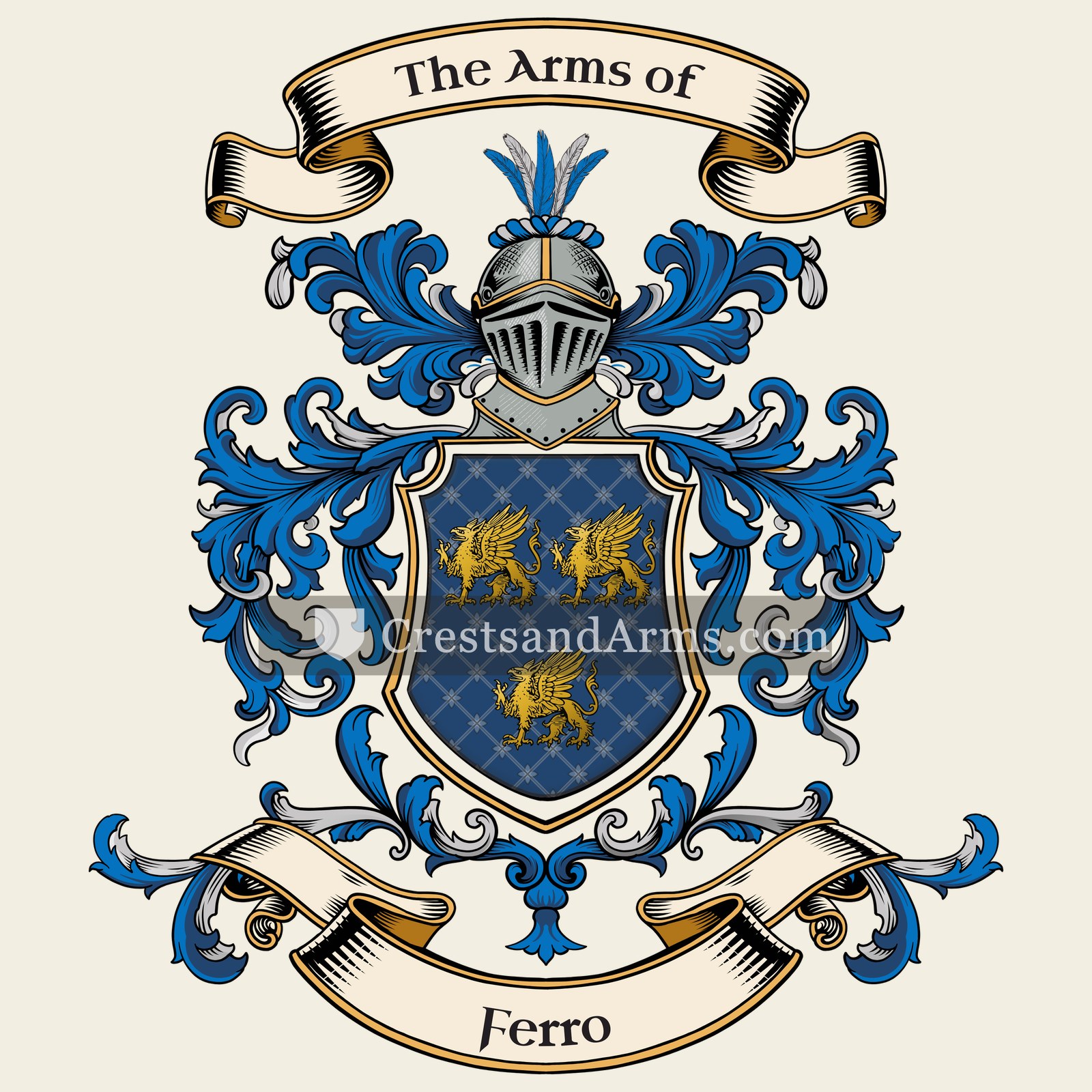


 bendDefence, and the scarf of a commander