Map of Belgium showing where the Festa arms are recorded
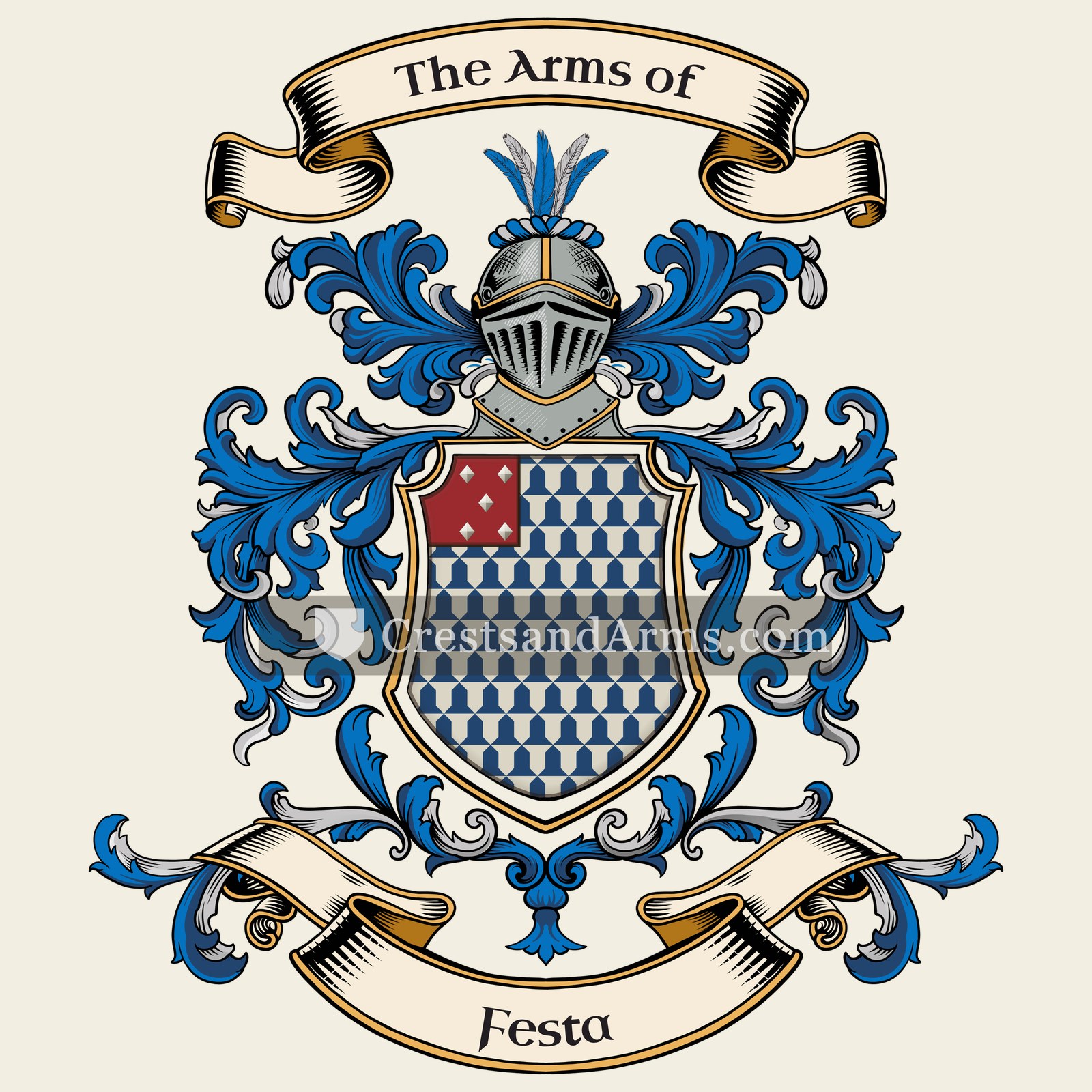
The Festa arms were recorded in Belgium, c. 1737.
Arms such as these were typically recorded in Brabant.
Brabant lay at the heart of the Low Countries, where the trade routes met. Its towns were wealthy and its landowners many, and both kinds of family kept arms, which is why the region is so heavily represented.
This is where the arms were entered in the register. Families often moved to other parts of the country, so the same name can turn up in more than one region.
The body that granted and recorded arms in Belgium in this period.
Charles VI, Holy Roman Emperor
Sovereign of the period
Charles VI, Holy Roman Emperor
1711–1740
Reigning in Belgium when the Festa arms are first recorded.
How Arms Worked in Belgium
In Belgium, a coat of arms is considered personal property that is passed down through the male line to legitimate descendants. Families often use the same shield design across generations to show their shared heritage. If a branch of the family wants to change the design, they must apply for an official update to their specific version of the arms.
Granting authority
The Conseil héraldique is the official body that regulates and approves all coats of arms in Belgium.
How they got arms
Families obtain their coats of arms through formal royal grants or by confirming their historical right to use existing designs.
Where arms were recorded
All approved coats of arms are officially recorded in the public registers of the Conseil héraldique since 1844.
The family's standing
Recorded among the armigerous families of Belgium.
Origin & History of the Festa Family in Belgium
The surname Festa carries a rich history that is deeply rooted in the cultural traditions of Europe. The name is derived from the Latin word *festum*, which translates to feast or holiday. Historically, this name was often given to individuals who were born during a festive season or to those known for their joyful and celebratory character. By the year 1737, records confirm that members of the Festa family were established in the region of Brabant. At that time, Brabant was a bustling area known for its trade and agricultural success. Families living there often played active roles in the local community and contributed to the development of the region through their work and social connections. The presence of the Festa name in these early records suggests that the family was well-integrated into the local society of the eighteenth century.
Festa Meaning & Related Branches
Root word
Festus
Latin term meaning joyful, festive, or celebratory.
This name
FestaDerived from a nickname for someone with a cheerful disposition or born during a festival.
also spelled
Festo
Documented Sources
J. B. Rietstap, Armorial Général, Gouda: G. B. van Goor Zonen, 1884–87
Fruin, Robert, Geschiedenis der Staatsinstellingen in Nederland tot den val der Republiek, 1901
State Archives in Belgium (Rijksarchief in België), Parochieregisters van Brabant (Registers of the Brabant Parishes), 1737
Digital archive packCoat of arms PNG, gold border print PDF, vector SVG and the certificate of authenticity. Sent to your email in minutes.


 lozengeHonour and nobility, and the arms of a woman
 lozengeHonour and nobility, and the arms of a woman