Map of France showing where the Fier arms are recorded
The Fier arms were recorded in France, c. 1663.
Arms such as these were typically recorded in Bretagne.
More families held coats of arms in Bretagne than anywhere else in France. The land was divided into many small estates rather than a few large ones, so far more households counted as gentry, and each needed a shield of its own to be told apart.
This is where the arms were entered in the register. Families often moved to other parts of the country, so the same name can turn up in more than one region.
The body that granted and recorded arms in France in this period.
Louis XIV of France
Sovereign of the period
Louis XIV of France
1643–1715
Reigning in France when the Fier arms are first recorded.
How Arms Worked in France
In France, a coat of arms was a mark of honor that passed down through the male line to all legitimate descendants. Families often used the same shield without changes to show their shared heritage. If a branch wanted to stand out, they could add a small mark to their shield to show their specific place in the family tree.
Granting authority
The Juge d'armes de France acted as the official authority that regulated and verified coats of arms across the country.
How they got arms
Families typically inherited their arms from ancestors, though they could also receive them through royal grants or by proving their noble status.
Where arms were recorded
Coats of arms were officially recorded in the Armorial Général de France, which began its main collection in the year 1696.
The family's standing
Recorded among the armigerous families of France.
Origin & History of the Fier Family in France
The family name Fier carries a history deeply rooted in the rugged landscape of western France. By 1663, records confirm that members of the family were firmly established in the province of Bretagne. During this period, the region was a center of maritime trade and traditional agriculture, which likely shaped the daily lives of the early Fier ancestors. The name itself is thought to have originated as a descriptive nickname, as the French word "fier" translates to "proud" or "haughty." In the social structure of seventeenth-century France, such names were often given to individuals who displayed a confident or dignified demeanor within their local parish. As these families settled into the coastal towns and rural villages of Bretagne, they became part of the long-standing cultural fabric of the region, contributing to the local economy and community life for generations.
Coat of Arms & Family Crest Details
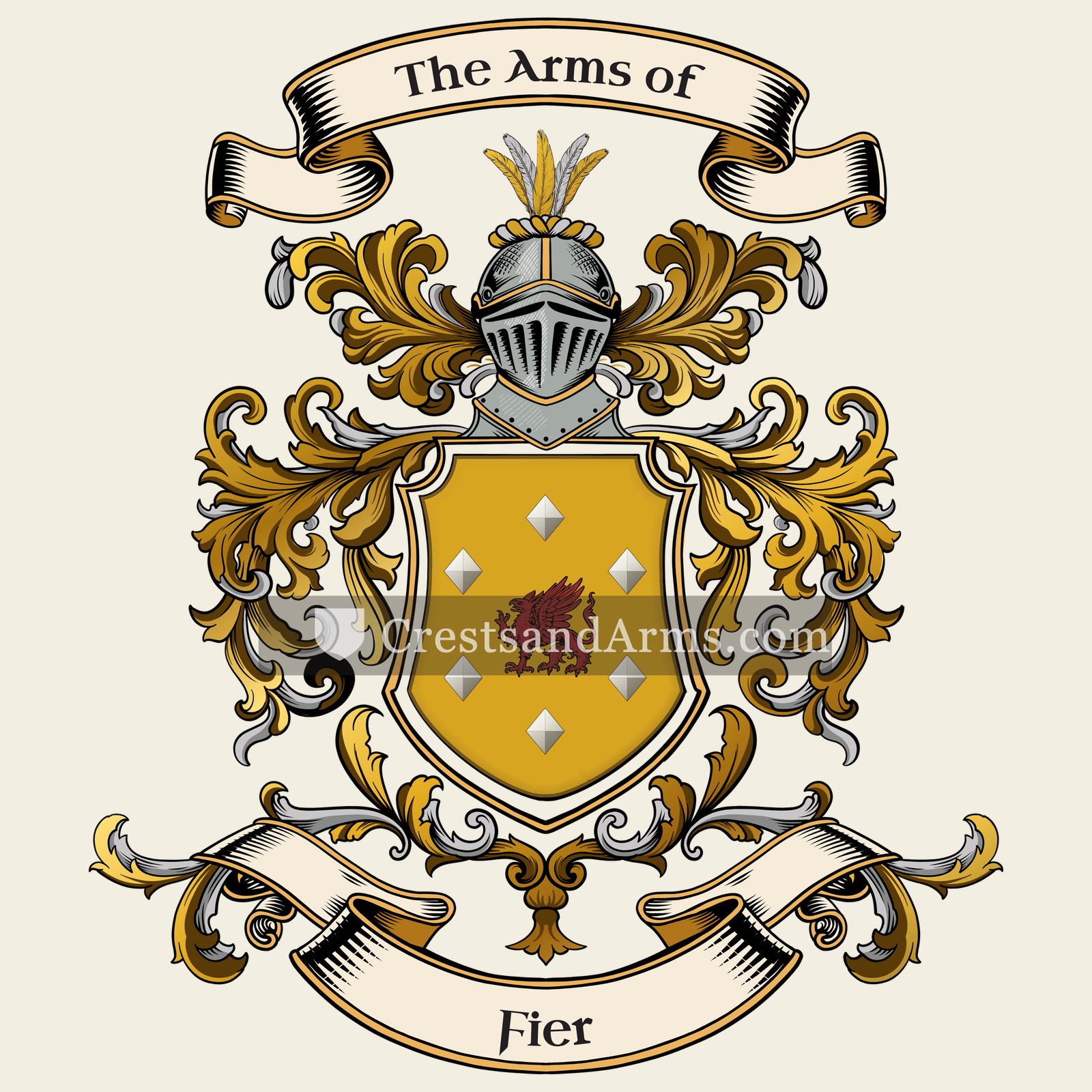
Symbols on this shield
griffinValour and vigilance, guarding great treasure
lozengeHonour and nobility, and the arms of a woman
Colours
Gold (Or)Means: Generosity
Red (Gules)Means: Military strength
Silver (Argent)Means: Peace and sincerity
Historical info
Source
J. B. Rietstap, Armorial Général, Gouda: G. B. van Goor Zonen, 1884–87
Blazon (the actual original written record)
“D'or à un griffon de gu., tenant une branche de chêne feuillée de trois pièces et englantée d'autant de pièces, le tout au nat.; le champ chapé-ployé d'azur, ch. tant à dextre qu'à sen. de trois los. d'arg., 2 et 1. Cq. cour. C.: le griffon, iss. L. d'arg. et d'azur.”
BavariaBavaria, c. 1745
Digital archive packCoat of arms PNG, gold border print PDF, vector SVG and the certificate of authenticity. Sent to your email in minutes.
Map of Germany showing where the Fier arms are recorded
The Fier arms were recorded in Bavaria, c. 1745.
Bavaria was a country of old landed families and walled market towns. Estates passed down the same line for centuries, and both the landowners and the leading townsmen kept arms, which is why so many Bavarian names sit in the registers.
This is where the arms were entered in the register. Families often moved to other parts of the country, so the same name can turn up in more than one region.
The body that granted and recorded arms in Germany in this period.
Charles VII, Holy Roman Emperor
Sovereign of the period
Charles VII, Holy Roman Emperor
1742–1745
Reigning in France when the Fier arms are first recorded.
How Arms Worked in Germany
In the Holy Roman Empire, coats of arms were often granted to individuals by the Emperor or his representatives. These arms were then passed down through the generations to all legitimate descendants of the original holder. Younger branches of a family usually kept the same shield design without needing to change it, as the arms belonged to the entire lineage.
Granting authority
The Holy Roman Emperor held the sole power to grant new coats of arms throughout his vast imperial territories.
How they got arms
Families typically obtained their coats of arms through a formal imperial grant or by proving their noble status to the authorities.
Where arms were recorded
These grants were officially recorded in the Imperial Chancery registers, which began keeping formal records of such honors during the Middle Ages.
The family's standing
Recorded among the armigerous families of Bavaria.
Origin & History of the Fier Family in Germany
The family name Fier has deep roots in the southern German region of Bavaria, where records confirm members of the family were established by 1745. During the eighteenth century, Bavaria was a landscape defined by small farming communities and local trade guilds. The name itself likely originated as a descriptive term or a nickname used to identify individuals in these tight-knit village settings. Because many people at the time lived and worked in the same area for generations, the Fier family would have been closely tied to the local agricultural economy and the traditions of the Bavarian countryside. As the family grew, they became part of the social fabric of their local parishes, leaving behind traces in church registers that documented their daily lives, marriages, and contributions to their community long before the modern era of industrialization.
Fier Meaning & Related Branches
Root word
ferus
Latin term meaning wild, untamed, or fierce in nature.
This name
FierA descriptive nickname for a person who was perceived as proud, arrogant, or bold.
also spelled
Fiere
Feer
Documented Sources
J. B. Rietstap, Armorial Général, Gouda: G. B. van Goor Zonen, 1884–87
Archives départementales d’Ille-et-Vilaine, Registres paroissiaux et d'état civil, 1663
Dauzat, Albert, Dictionnaire étymologique des noms de famille et prénoms de France, 1951
Morlet, Marie-Thérèse, Dictionnaire étymologique des noms de famille, 1991
Digital archive packCoat of arms PNG, gold border print PDF, vector SVG and the certificate of authenticity. Sent to your email in minutes.


 chevronProtection, and faithful service completed
 mountThe ground held, and steadfastness upon it
 chiefAuthority, wisdom and dominion
 treeLife, endurance and deep roots
 crescentHonour by the sovereign, and the second son
 mulletThe third son, and a divine quality from above
 chevronProtection, and faithful service completed
 mountThe ground held, and steadfastness upon it
 chiefAuthority, wisdom and dominion
 treeLife, endurance and deep roots
 crescentHonour by the sovereign, and the second son
 mulletThe third son, and a divine quality from above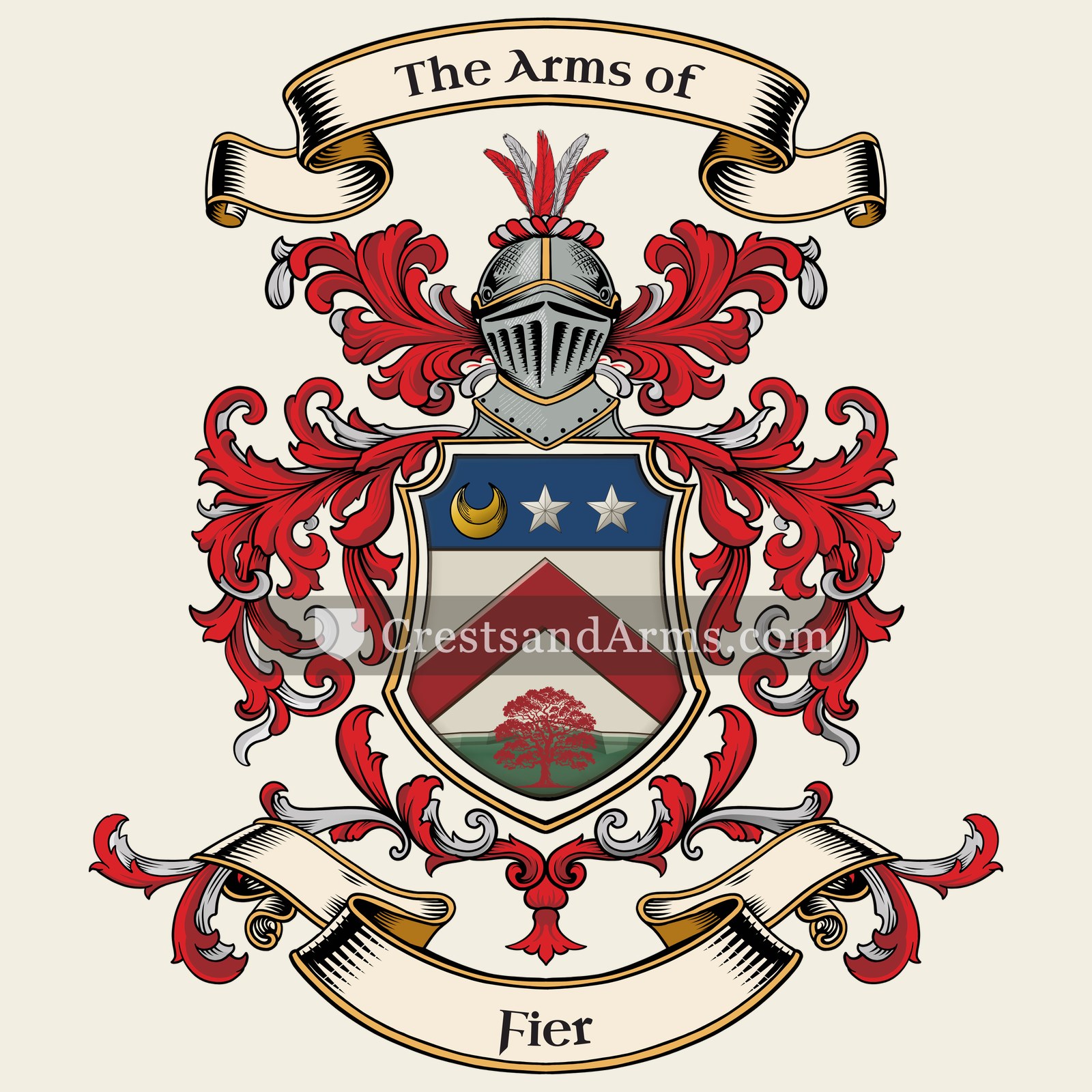


 griffinValour and vigilance, guarding great treasure
 lozengeHonour and nobility, and the arms of a woman