Map of Italy showing where the Fierro arms are recorded
The Fierro arms were recorded in Padoue, c. 1775.
This is where the arms were entered in the register. Families often moved to other parts of the country, so the same name can turn up in more than one region.
The body that granted and recorded arms in Italy in this period.
Alvise Giovanni Mocenigo
Sovereign of the period
Alvise Giovanni Mocenigo
1763–1778
Reigning in Italy when the Fierro arms are first recorded.
How Arms Worked in Italy
In the Italian states, coats of arms were often used by noble families to show their status and history. These symbols were passed down through the generations to all legitimate male descendants. Younger branches of a family usually kept the original design but sometimes added small changes to distinguish their specific line from the main branch.
Granting authority
Various local rulers and city governments controlled the use of coats of arms across the different Italian states.
How they got arms
Families often assumed their own arms or received them as official grants from local lords, popes, or city councils.
Where arms were recorded
Arms were recorded in local city archives or private family books rather than in one single national register.
The family's standing
Recorded among the armigerous families of Italy.
Origin & History of the Fierro Family in Italy
The surname Fierro carries a strong connection to the historical landscape of Northern Italy, particularly within the Veneto region. The name itself is derived from the Italian word for iron, which suggests that early ancestors may have been skilled metalworkers or blacksmiths during the Middle Ages. By the year 1775, official records confirm that members of the Fierro family were well-established residents of Padua. At this time, Padua was a significant intellectual and cultural hub under the influence of the Venetian Republic. Families living in the city during this period often participated in the local trade guilds or the administrative life of the university. While the name is found in various parts of the Mediterranean, the presence of the family in Padua highlights their long-standing integration into the professional and social fabric of Northern Italian society.
Coat of Arms & Family Crest Details
Symbols on this shield
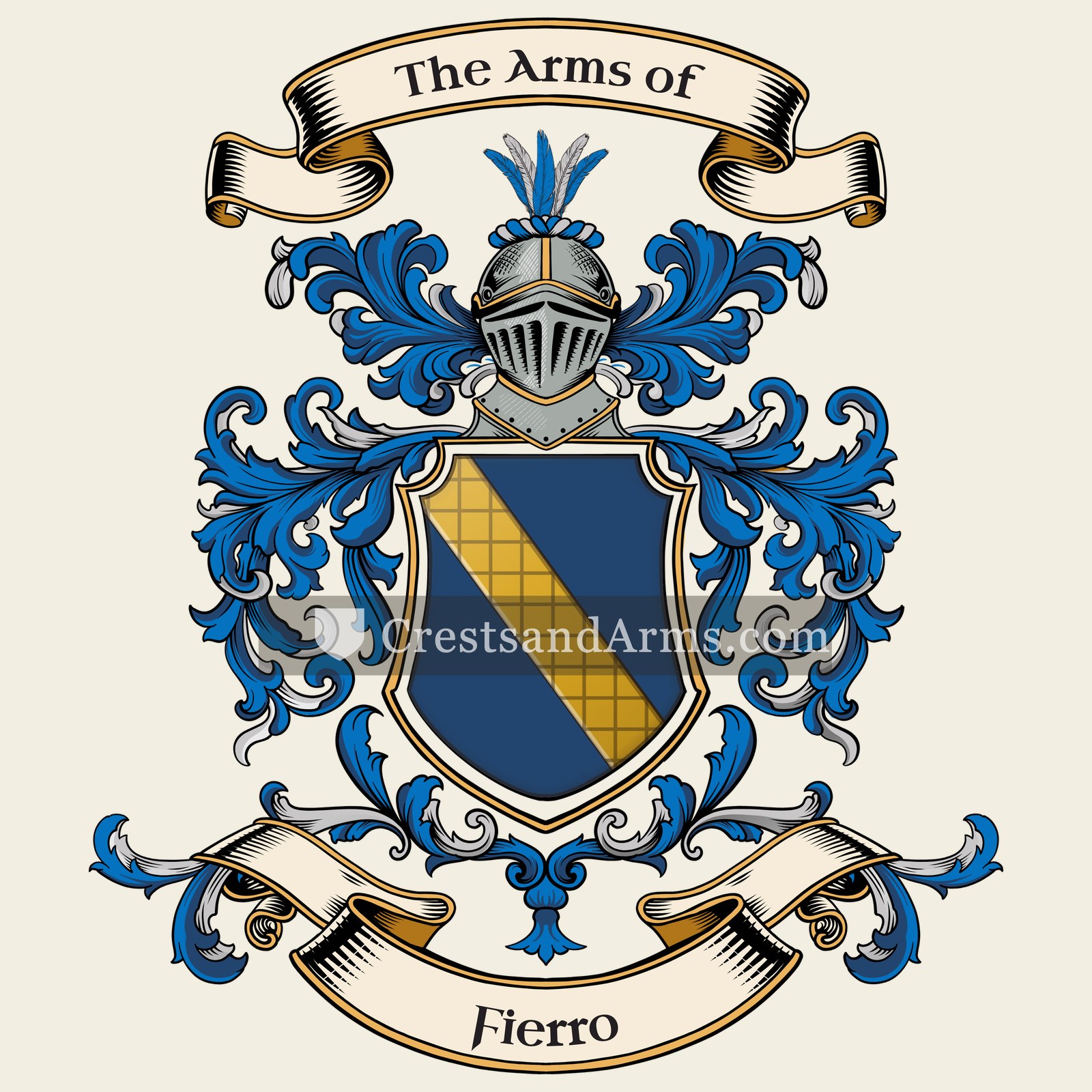
bendDefence, and the scarf of a commander
Colours
Blue (Azure)Means: Loyalty and truth
Gold (Or)Means: Generosity
Historical info
Source
J. B. Rietstap, Armorial Général, Gouda: G. B. van Goor Zonen, 1884–87
Blazon (the actual original written record)
“D'azur à deux bandes d'or. Deux cq. cour. C.: 1º une aigle cont. de sa.; 2º un serpent ondoyant au nat., en pal.”
StyriaStyria, c. 1772
Digital archive packCoat of arms PNG, gold border print PDF, vector SVG and the certificate of authenticity. Sent to your email in minutes.
Map of Austria showing where the Fierro arms are recorded
The Fierro arms were recorded in Styria, c. 1772.
Styria was mountain and forest country in southern Austria, with iron in its hills. Mining and landholding both made money, and families who held either kind of property took arms to seal their papers with.
This is where the arms were entered in the register. Families often moved to other parts of the country, so the same name can turn up in more than one region.
Region
Styria
First recorded
1772
Granting Authority for the Fierro Arms
Imperial and Royal chancery
Sodacan · CC BY-SA 3.0
The body that granted and recorded arms in Austria in this period.
Joseph II, Holy Roman Emperor
Sovereign of the period
Joseph II, Holy Roman Emperor
1765–1790
Reigning in Italy when the Fierro arms are first recorded.
How Arms Worked in Austria
Austrian coats of arms were often linked directly to noble titles granted by the Emperor. These symbols belonged to the entire family line rather than just one individual. When a family grew, new branches kept the original design without needing to change it. This system allowed all members of a noble house to share the same identity across many generations.
Granting authority
The Imperial and Royal chancery managed all heraldic matters and controlled the official granting of arms throughout the Austrian lands.
How they got arms
Families typically received their arms through a formal imperial decree that often accompanied the elevation of a person to noble status.
Where arms were recorded
Official records of these grants were kept in the Imperial Register of Nobility which began its formal documentation process in 1453.
The family's standing
Recorded among the armigerous families of Styria.
Origin & History of the Fierro Family in Austria
The family name Fierro carries a distinct history within the Austrian region of Styria, where records confirm the presence of family members as early as 1772. While the name is often associated with Mediterranean roots, its appearance in the mountainous landscapes of Styria suggests a history of migration and integration into the local German-speaking population. During the late 18th century, families in this region were frequently tied to the land through agriculture or trade, and the name likely became established as these individuals settled into the social structure of the Habsburg Empire. By maintaining their identity while adapting to the customs of the Styrian countryside, the early members of the Fierro family became part of the diverse cultural tapestry that defined the Austrian provinces. Their presence in the official records from this era provides a clear link to a time of significant transition in Central European history.
Related Branches & Arms
Root word
Ferrum
Latin word for iron or a metal tool.
This name
FierroA topographic or occupational name for someone who worked with iron or lived near an iron mine.
also spelled
Fero
Ferrou
Fereau
Documented Sources
J. B. Rietstap, Armorial Général, Gouda: G. B. van Goor Zonen, 1884–87
Archivio di Stato di Padova, Stato delle anime della parrocchia di San Clemente, 1775
Dante Olivieri, Dizionario dei cognomi italiani, 1965
Emidio De Felice, Dizionario dei cognomi italiani, 1978
Digital archive packCoat of arms PNG, gold border print PDF, vector SVG and the certificate of authenticity. Sent to your email in minutes.


 griffinValour and vigilance, guarding great treasure
 griffinValour and vigilance, guarding great treasure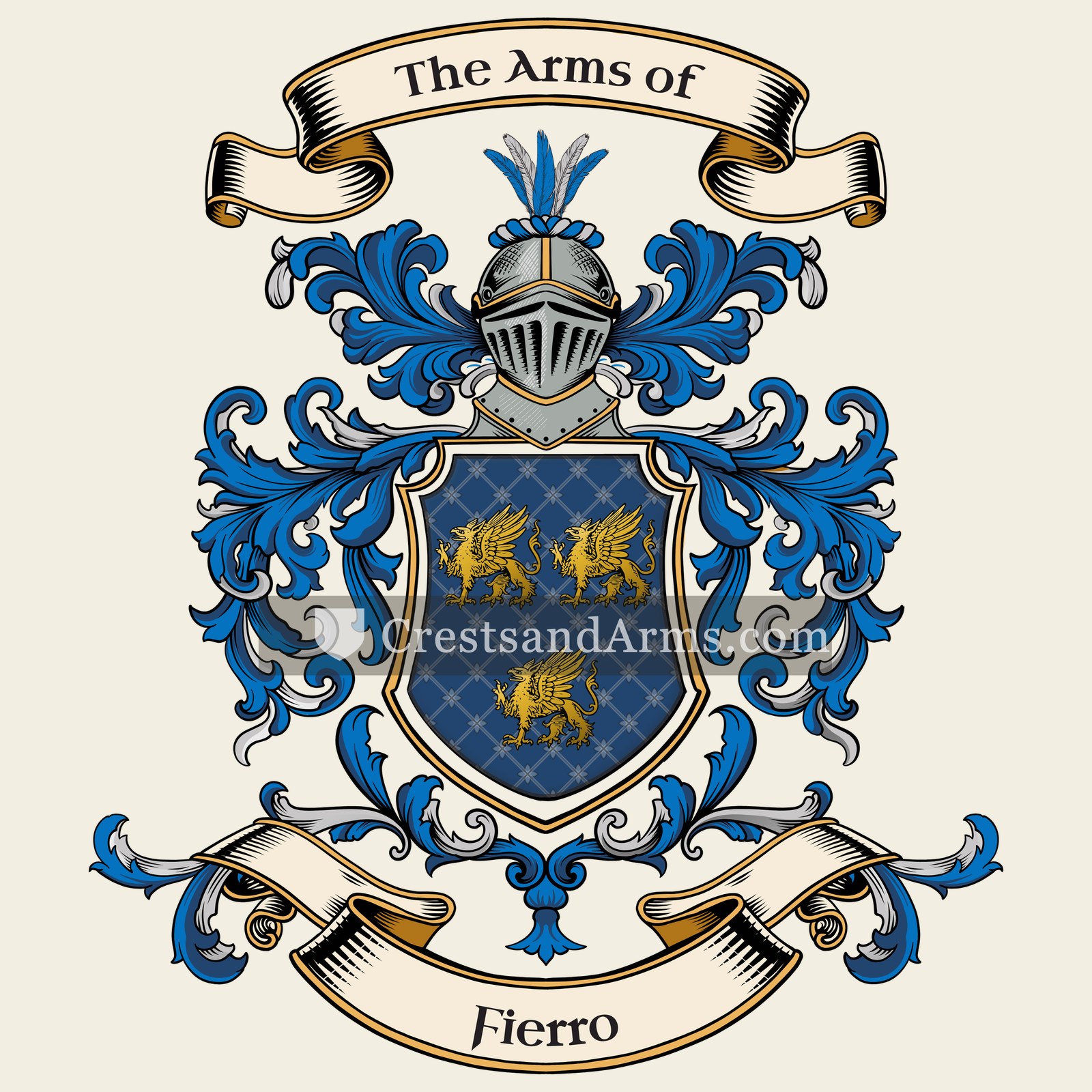


 bendDefence, and the scarf of a commander