Map of Belgium showing where the Fili arms are recorded
The Fili arms were recorded in Flandre, c. 1679.
Flandre grew rich on cloth, and its towns were among the busiest in Europe. Merchant families bought land with their profits and took arms to go with it, so trade put as many names in the registers here as land did.
This is where the arms were entered in the register. Families often moved to other parts of the country, so the same name can turn up in more than one region.
The body that granted and recorded arms in Belgium in this period.
Charles II of Spain
Sovereign of the period
Charles II of Spain
1665–1700
Reigning in Belgium when the Fili arms are first recorded.
How Arms Worked in Belgium
In Belgium, a coat of arms is considered personal property that is passed down through the male line to legitimate descendants. Families often use the same shield design across generations to show their shared heritage. If a branch of the family wants to change the design, they must apply for an official update to their specific version of the arms.
Granting authority
The Conseil héraldique is the official body that regulates and approves all coats of arms in Belgium.
How they got arms
Families obtain their coats of arms through formal royal grants or by confirming their historical right to use existing designs.
Where arms were recorded
All approved coats of arms are officially recorded in the public registers of the Conseil héraldique since 1844.
The family's standing
Recorded among the armigerous families of Flandre.
Origin & History of the Fili Family in Belgium
The history of the Fili family in Belgium traces back to the late seventeenth century, with documented evidence confirming their presence in the Flanders region by 1679. During this period, Flanders was a landscape defined by shifting borders and the influence of the Spanish Netherlands, creating a complex environment for families to establish their roots. The name itself likely evolved from local linguistic traditions, reflecting the agricultural and social structures common to the Flemish countryside at the time. As the family settled into these communities, they participated in the daily life of the region, which was then recovering from decades of regional conflict. By embedding themselves in the local parishes and trade networks of Flanders, the early members of the Fili family helped form the demographic foundation of the area, transitioning from local inhabitants to established residents within the fabric of Belgian history.
Meaning of the Fili family crest colors & symbols
Symbols on this shield
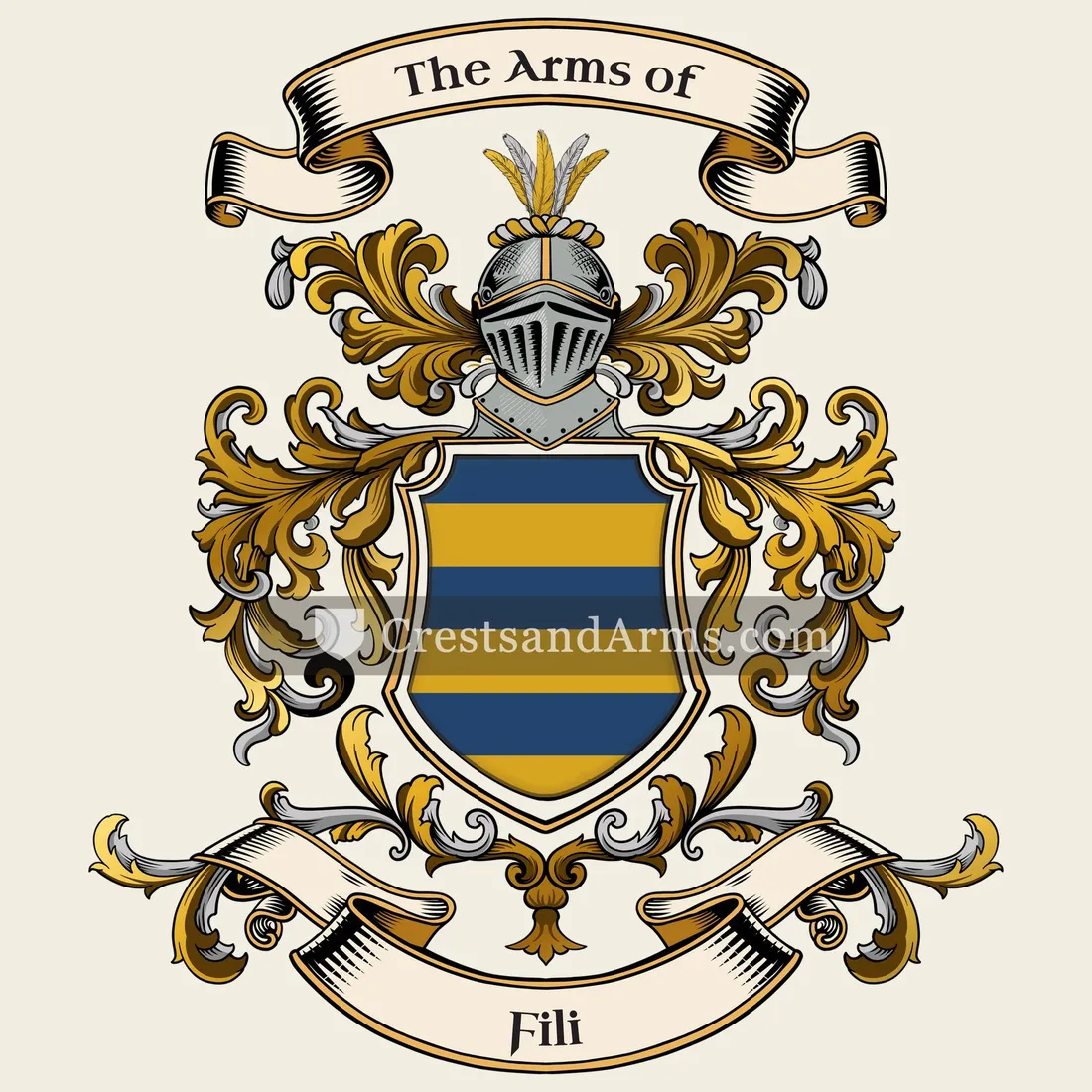
fessThe military belt, and readiness to serve
Colours
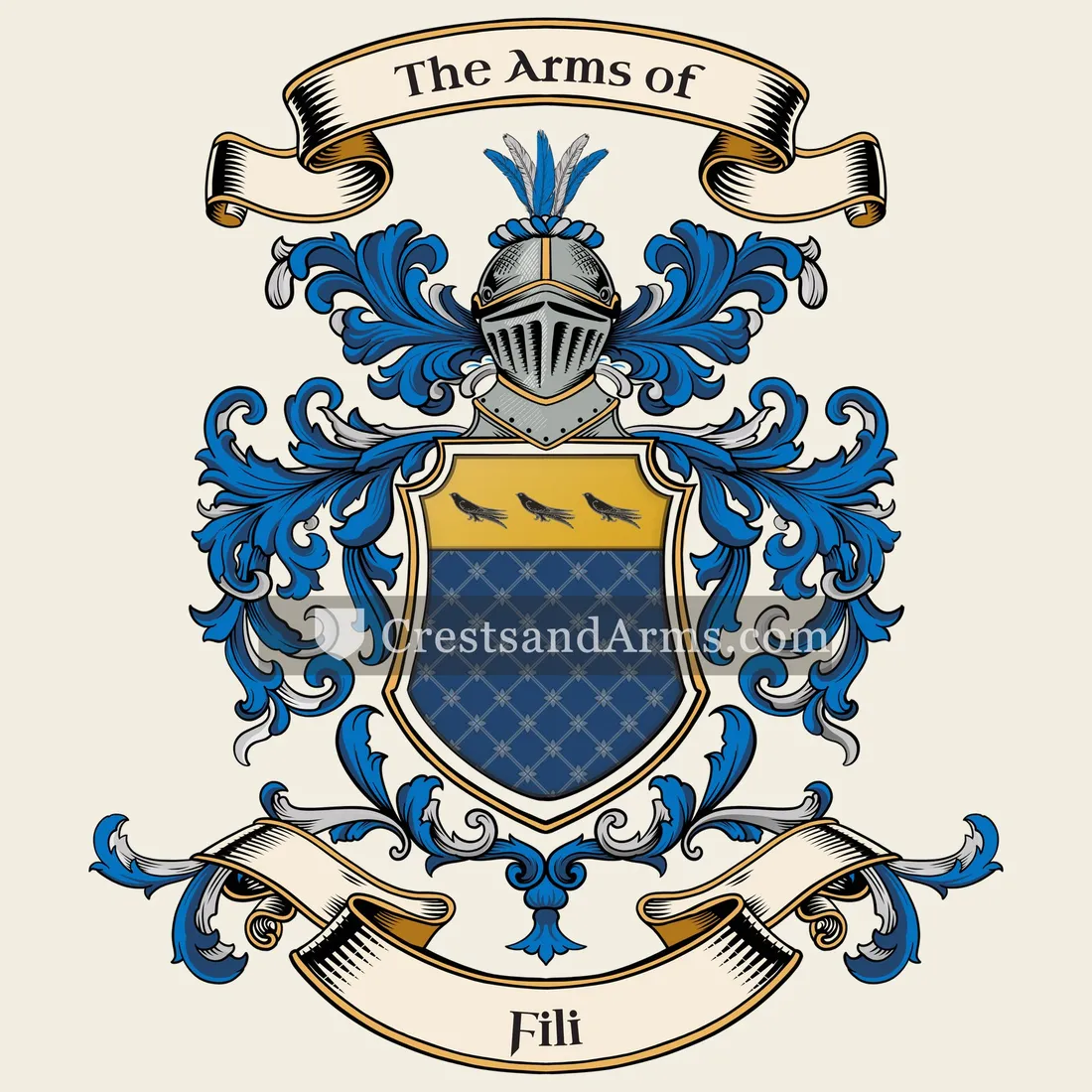
Gold (Or)Means: Generosity
Blue (Azure)Means: Loyalty and truth
Historical info
Source
J. B. Rietstap, Armorial Général, Gouda: G. B. van Goor Zonen, 1884–87
Blazon (the actual original written record)
“Fascé contre-fascé d'or et d'azur, de quatre pièces. C.: un vol, l'aile dextre fascée de la partie dextre de l'écu, l'aile sen. fascée de la partie sen. [V. de le Flye.]”
FranceLille, c. 1503
Digital archive packCoat of arms PNG, gold border print PDF, vector SVG and the certificate of authenticity. Sent to your email in minutes.
Map of France showing where the Fili arms are recorded
The Fili arms were recorded in Lille, c. 1503.
This is where the arms were entered in the register. Families often moved to other parts of the country, so the same name can turn up in more than one region.
The body that granted and recorded arms in France in this period.
Louis XII of France
Sovereign of the period
Louis XII of France
1498–1515
Reigning in Belgium when the Fili arms are first recorded.
How Arms Worked in France
In France, a coat of arms was a mark of honor that passed down through the male line to all legitimate descendants. Families often used the same shield without changes to show their shared heritage. If a branch wanted to stand out, they could add a small mark to their shield to show their specific place in the family tree.
Granting authority
The Juge d'armes de France acted as the official authority that regulated and verified coats of arms across the country.
How they got arms
Families typically inherited their arms from ancestors, though they could also receive them through royal grants or by proving their noble status.
Where arms were recorded
Coats of arms were officially recorded in the Armorial Général de France, which began its main collection in the year 1696.
The family's standing
Recorded among the armigerous families of France.
Origin & History of the Fili Family in France
The family name Fili traces its roots to the northern region of France, where records confirm members of the family were established in the city of Lille by the year 1503. During this period, Lille was a bustling center of trade and textile production located within the Burgundian Netherlands, which placed the family at the heart of a rapidly evolving European economy. The name likely emerged as a localized identifier for families living within or near the city walls, reflecting the dense social structures of the late Middle Ages and the early Renaissance. As the family became integrated into the urban life of Lille, they participated in the typical activities of the era, such as skilled craftsmanship and regional commerce. This early presence in such a significant commercial hub suggests that the family was part of the growing middle class that helped shape the administrative and economic foundations of northern France.
Fili Meaning & Related Branches
Root word
Philippus
Derived from the Greek word for lover of horses.
This name
FiliA shortened form of names originating from the Greek term for horse-lover.
also spelled
Fly
Flee
Documented Sources
J. B. Rietstap, Armorial Général, Gouda: G. B. van Goor Zonen, 1884–87
State Archives in Belgium (Rijksarchief), Parochieregisters van de provincie West-Vlaanderen, 1679
Devos, Jozef, Geschiedenis van de Vlaamse bevolking, 1985
Van der Wee, Herman, The Growth of the Antwerp Market and the European Economy, 1963
Digital archive packCoat of arms PNG, gold border print PDF, vector SVG and the certificate of authenticity. Sent to your email in minutes.


 chiefAuthority, wisdom and dominion
 martletA younger son, who must win his own land
 chiefAuthority, wisdom and dominion
 martletA younger son, who must win his own land


 fessThe military belt, and readiness to serve