A record of documented arms, meaning and origin, researched for the Fillyaw family lines. Documented in 2 countries.
Reg. 4229 · Belgian, D–F
Meaning of the Fillyaw family crest colors & symbols
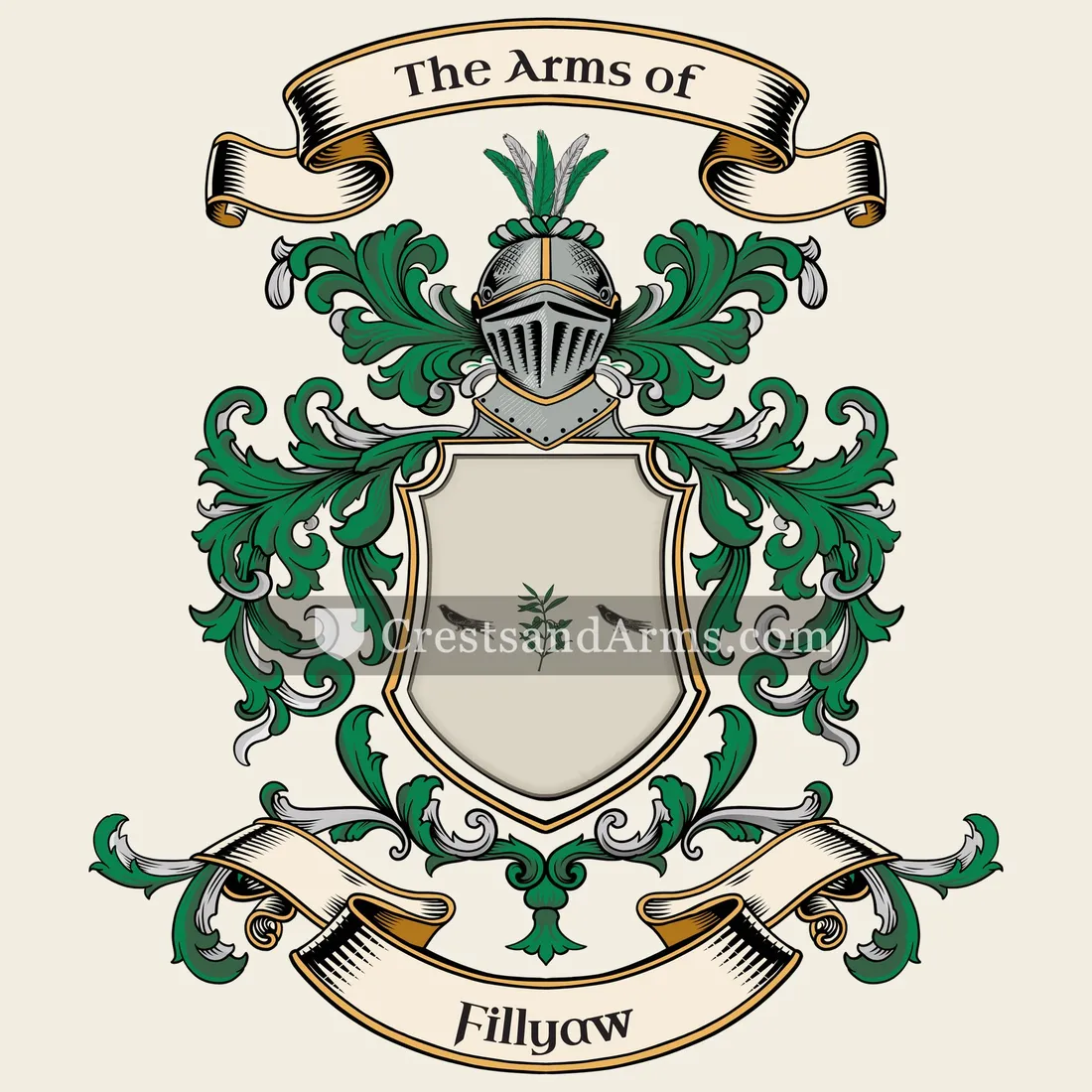
Symbols on this shield
branchPeace, and new growth
martletA younger son, who must win his own land
Colours
Silver (Argent)Means: Peace and sincerity
Green (Vert)Means: Hope
Black (Sable)Means: Constancy
Historical info
Source
J. B. Rietstap, Armorial Général, Gouda: G. B. van Goor Zonen, 1884–87
Blazon (the actual original written record)
“D'arg. à un rameau arr. de houx, feuillé de trois pièces de gu., accosté en p. de deux merlettes affr. de sa. C.: un griffon iss. de sa., entre un vol de gu. S.: deux griffons de sa.”
BelgiumLuxemb, c. 1857
Digital archive packCoat of arms PNG, gold border print PDF, vector SVG and the certificate of authenticity. Sent to your email in minutes.
Map of Belgium showing where the Fillyaw arms are recorded
The Fillyaw arms were recorded in Luxemb, c. 1857.
This is where the arms were entered in the register. Families often moved to other parts of the country, so the same name can turn up in more than one region.
The body that granted and recorded arms in Belgium in this period.
Leopold I of Belgium
Sovereign of the period
Leopold I of Belgium
1831–1865
Reigning in Belgium when the Fillyaw arms are first recorded.
How Arms Worked in Belgium
In Belgium, a coat of arms is considered personal property that is passed down through the male line to legitimate descendants. Families often use the same shield design across generations to show their shared heritage. If a branch of the family wants to change the design, they must apply for an official update to their specific version of the arms.
Granting authority
The Conseil héraldique is the official body that regulates and approves all coats of arms in Belgium.
How they got arms
Families obtain their coats of arms through formal royal grants or by confirming their historical right to use existing designs.
Where arms were recorded
All approved coats of arms are officially recorded in the public registers of the Conseil héraldique since 1844.
The family's standing
Recorded among the armigerous families of Belgium.
Origin & History of the Fillyaw Family in Belgium
The history of the Fillyaw name is deeply rooted in the border regions of Belgium and Luxembourg during the mid-nineteenth century. By 1857, records confirm that members of the family were established in the Luxembourg area, which at that time shared close administrative and cultural ties with neighboring Belgian provinces. During this period, the region was undergoing significant industrial growth, driven by the expansion of the iron and steel industries. Families like the Fillyaws often moved between these borders to find work in the burgeoning mining towns or to participate in the local agricultural economy. Because the name appears in regional civil registries during this era, it suggests the family was part of a mobile workforce that navigated the complex social and political transitions occurring in the Low Countries. This migration pattern reflects the broader historical trend of families seeking stability in the heart of Europe as the modern borders of Belgium and Luxembourg were being solidified.
Meaning of the Fillyaw family crest colors & symbols
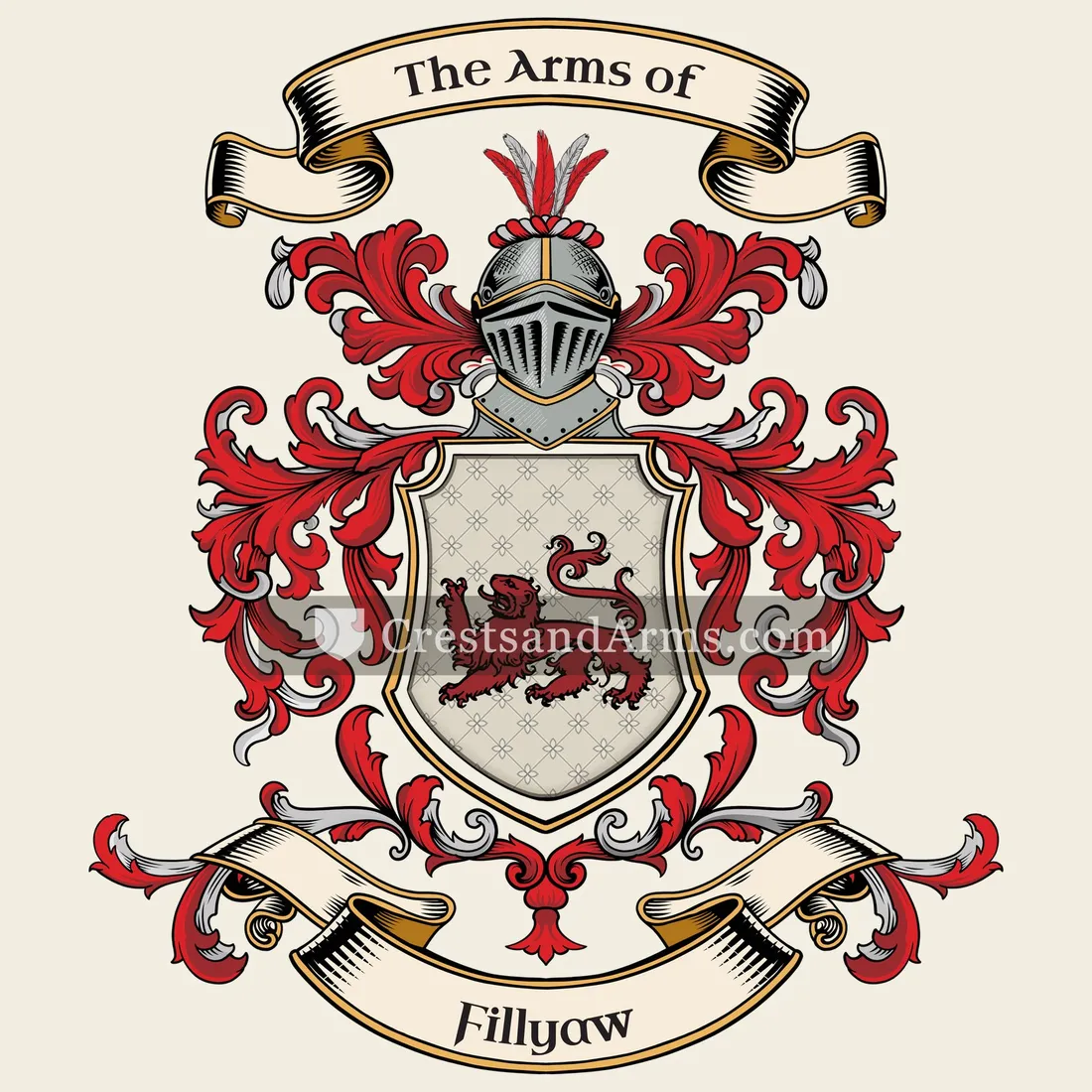
Symbols on this shield
lionCourage, strength and royalty
Colours
Silver (Argent)Means: Peace and sincerity
Red (Gules)Means: Military strength
Historical info
Source
J. B. Rietstap, Armorial Général, Gouda: G. B. van Goor Zonen, 1884–87
Blazon (the actual original written record)
“D'arg. au lion de gu.”
FranceCambr, c. 1663
Digital archive packCoat of arms PNG, gold border print PDF, vector SVG and the certificate of authenticity. Sent to your email in minutes.
Map of France showing where the Fillyaw arms are recorded
The Fillyaw arms were recorded in Cambr, c. 1663.
This is where the arms were entered in the register. Families often moved to other parts of the country, so the same name can turn up in more than one region.
The body that granted and recorded arms in France in this period.
Louis XIV of France
Sovereign of the period
Louis XIV of France
1643–1715
Reigning in Belgium when the Fillyaw arms are first recorded.
How Arms Worked in France
In France, a coat of arms was a mark of honor that passed down through the male line to all legitimate descendants. Families often used the same shield without changes to show their shared heritage. If a branch wanted to stand out, they could add a small mark to their shield to show their specific place in the family tree.
Granting authority
The Juge d'armes de France acted as the official authority that regulated and verified coats of arms across the country.
How they got arms
Families typically inherited their arms from ancestors, though they could also receive them through royal grants or by proving their noble status.
Where arms were recorded
Coats of arms were officially recorded in the Armorial Général de France, which began its main collection in the year 1696.
The family's standing
Recorded among the armigerous families of France.
Origin & History of the Fillyaw Family in France
The family name Fillyaw traces its roots to the historical region of France, where early records place members of the family in the town of Cambrai by the year 1663. During this period, Cambrai was a significant location that transitioned from Spanish control to French rule under the reign of King Louis XIV. Families living in this area often navigated a complex landscape of shifting borders and religious tensions. The name likely evolved from local linguistic patterns in Northern France, reflecting the specific dialect and naming traditions of the region. By maintaining a presence in such a strategically important city, the early Fillyaw ancestors were part of a community deeply connected to the trade, military, and administrative life of seventeenth-century France. This period of history suggests that the family was likely integrated into the urban fabric of a city known for its resilience and cultural development during the transition into the modern French state.
Fillyaw Meaning & Related Branches
Root word
Filius
Latin term meaning son or offspring.
This name
FillyawDerived from a patronymic reference to the son of a person named William.
also spelled
Faily
Fayee
Documented Sources
J. B. Rietstap, Armorial Général, Gouda: G. B. van Goor Zonen, 1884–87
Archives nationales de Luxembourg, État civil, Naissances, mariages, décès
Luxembourg State Archives, Recensement de la population 1857
Digital archive packCoat of arms PNG, gold border print PDF, vector SVG and the certificate of authenticity. Sent to your email in minutes.


 branchPeace, and new growth
 martletA younger son, who must win his own land
 branchPeace, and new growth
 martletA younger son, who must win his own land


 lionCourage, strength and royalty