Map of Germany showing where the Fiorello arms are recorded
The Fiorello arms were recorded in Germany, c. 1765.
Arms such as these were typically recorded in Bavaria.
Bavaria was a country of old landed families and walled market towns. Estates passed down the same line for centuries, and both the landowners and the leading townsmen kept arms, which is why so many Bavarian names sit in the registers.
This is where the arms were entered in the register. Families often moved to other parts of the country, so the same name can turn up in more than one region.
The body that granted and recorded arms in Germany in this period.
Francis I, Holy Roman Emperor
Sovereign of the period
Francis I, Holy Roman Emperor
1745–1765
Reigning in Germany when the Fiorello arms are first recorded.
How Arms Worked in Germany
In the Holy Roman Empire, coats of arms were often granted to individuals by the Emperor or his representatives. These arms were then passed down through the generations to all legitimate descendants of the original holder. Younger branches of a family usually kept the same shield design without needing to change it, as the arms belonged to the entire lineage.
Granting authority
The Holy Roman Emperor held the sole power to grant new coats of arms throughout his vast imperial territories.
How they got arms
Families typically obtained their coats of arms through a formal imperial grant or by proving their noble status to the authorities.
Where arms were recorded
These grants were officially recorded in the Imperial Chancery registers, which began keeping formal records of such honors during the Middle Ages.
The family's standing
Recorded among the armigerous families of Germany.
Origin & History of the Fiorello Family in Germany
The surname Fiorello is rooted in the Italian language, where it functions as a diminutive form of the word fiore, meaning flower. While the name is distinctly Italian in its linguistic origins, historical records confirm that members of the family were established in the region of Bavaria by 1765. During the eighteenth century, the movement of families across European borders was often driven by trade, craftsmanship, or the shifting political boundaries of the Holy Roman Empire. The presence of the Fiorello family in Bavaria suggests they were part of a broader pattern of migration where Italian artisans or merchants settled in German-speaking lands to pursue new economic opportunities. Over time, these families integrated into their new communities while maintaining the unique linguistic heritage of their original surname. This transition reflects the complex history of European migration, where names served as lasting markers of ancestral origins even as families built new lives in different cultural environments.
Fiorello Meaning & Related Branches
Root word
flos
Latin term referring to a flower or blossom.
This name
FiorelloA diminutive form meaning little flower, often used as a term of endearment.
also spelled
Forel
Forelle
Documented Sources
J. B. Rietstap, Armorial Général, Gouda: G. B. van Goor Zonen, 1884–87


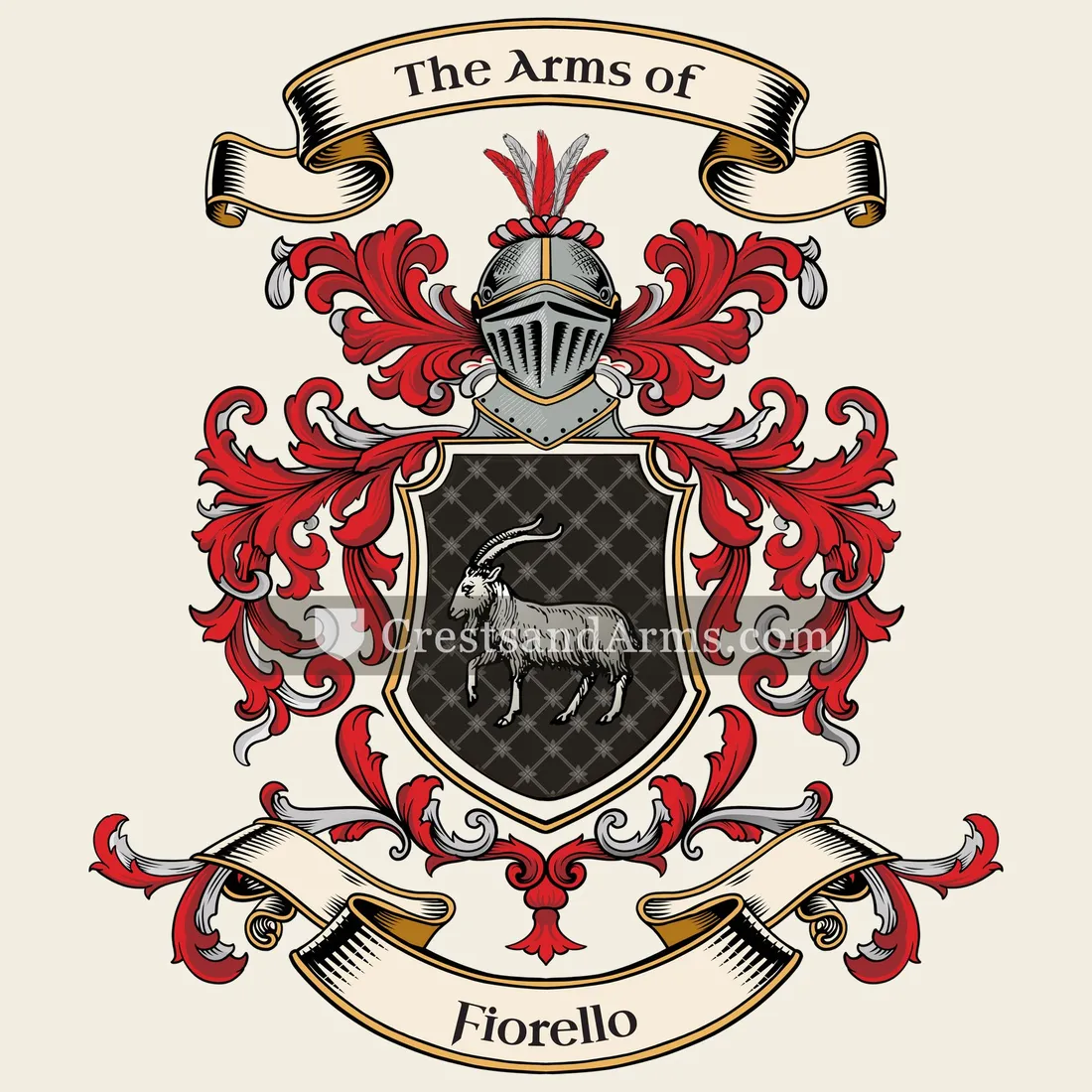
 goatOne who wins by diplomacy rather than force
 goatOne who wins by diplomacy rather than force