A record of documented arms, meaning and origin, researched for the Fischer family lines. Documented in 3 countries.
Reg. 3727 · German, D–F
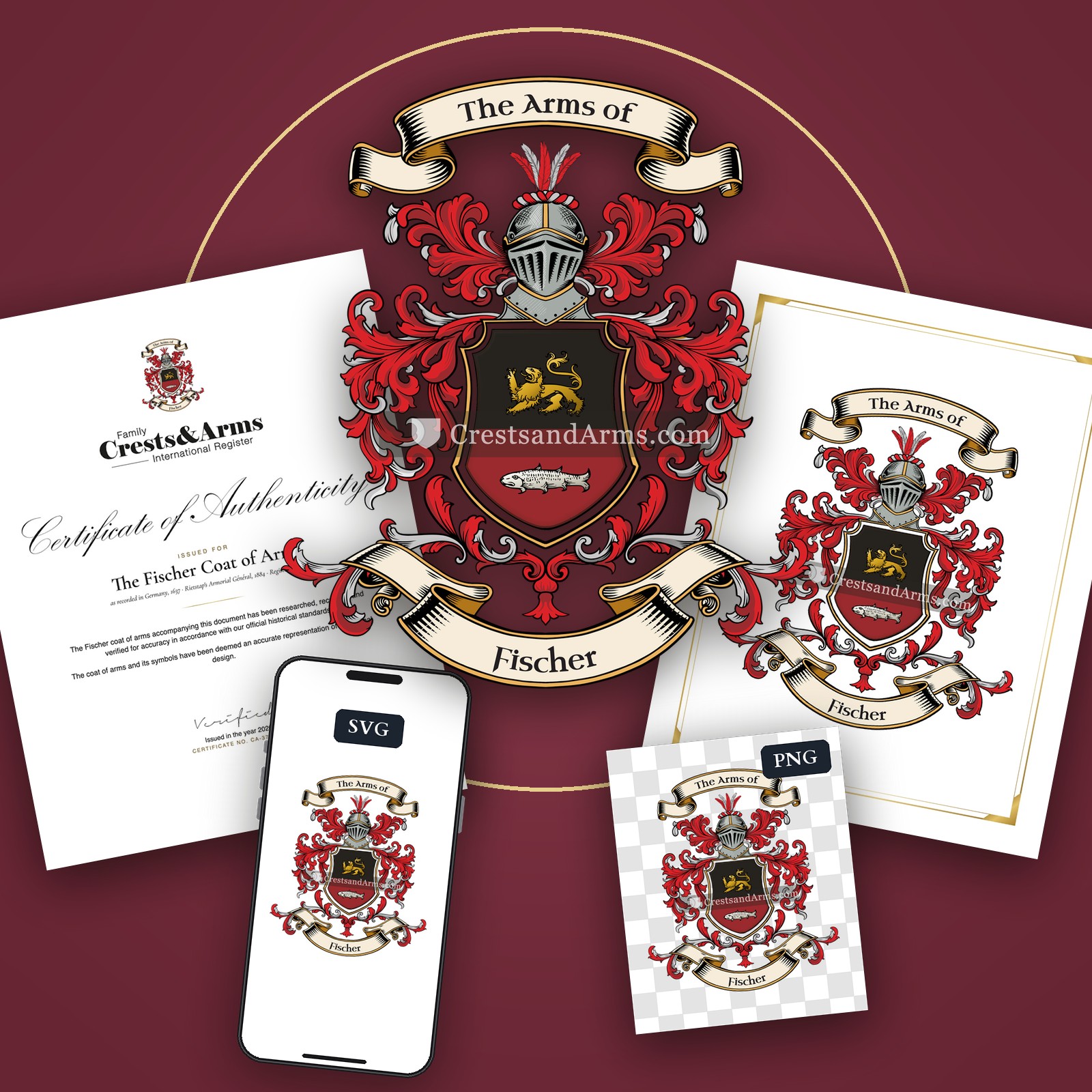
Coat of Arms & Family Crest Details
Symbols on this shield
lionCourage, strength and royalty
fishA true and generous mind, and Christian faith
Colours
Black (Sable)Means: Constancy
Red (Gules)Means: Military strength
Gold (Or)Means: Generosity
Historical info
Source
J. B. Rietstap, Armorial Général, Gouda: G. B. van Goor Zonen, 1884–87
Blazon (the actual original written record)
“Coupé: au 1 de sa. au lion léopardé d'or, arm. et lamp. de gu.; au 2 de gu. à un poisson nageant dans une mer, le tout au nat. Cq. cour. C.: un lion iss. d'or, arm. et lamp. de gu., tenant entre ses pattes un poisson d'arg., en pal; entre un vol coupé alt. de sa. et d'arg. L.: à dextre d'or et de sa., à sen. d'arg. et de gu. [D'après le diplôme de 1637 le champ du 2 était d'arg.]”
SaxonySaxony, c. 1637
Digital archive packCoat of arms PNG, gold border print PDF, vector SVG and the certificate of authenticity. Sent to your email in minutes.
Map of Germany showing where the Fischer arms are recorded
The Fischer arms were recorded in Saxony, c. 1637.
Saxony had mines, trade and old landed families all at once. Silver made some fortunes and land held others, and both sorts of family kept arms, which is why Saxon names appear so often in the registers.
This is where the arms were entered in the register. Families often moved to other parts of the country, so the same name can turn up in more than one region.
The body that granted and recorded arms in Germany in this period.
Ferdinand II, Holy Roman Emperor
Sovereign of the period
Ferdinand II, Holy Roman Emperor
1619–1637
Reigning in Germany when the Fischer arms are first recorded.
How Arms Worked in Germany
In the Holy Roman Empire, coats of arms were often granted to individuals by the Emperor or his representatives. These arms were then passed down through the generations to all legitimate descendants of the original holder. Younger branches of a family usually kept the same shield design without needing to change it, as the arms belonged to the entire lineage.
Granting authority
The Holy Roman Emperor held the sole power to grant new coats of arms throughout his vast imperial territories.
How they got arms
Families typically obtained their coats of arms through a formal imperial grant or by proving their noble status to the authorities.
Where arms were recorded
These grants were officially recorded in the Imperial Chancery registers, which began keeping formal records of such honors during the Middle Ages.
The family's standing
Recorded among the armigerous families of Saxony.
Origin & History of the Fischer Family in Germany
The surname Fischer is a classic occupational name that emerged in Germany during the Middle Ages to identify individuals who worked as fishermen. Because rivers and lakes were vital sources of food and trade, people living near these waters often adopted the name to describe their livelihood. By the time your ancestors were recorded in Saxony in 1637, the name was already well-established across German-speaking lands. During the seventeenth century, Saxony was a region defined by both agricultural traditions and the growing influence of local craft guilds. Families like the Fischers were often deeply rooted in their local communities, where they contributed to the regional economy through their specialized trade. As the name spread through different German states, it became one of the most common identifiers for families who maintained a long-standing connection to the water and the essential resources it provided.
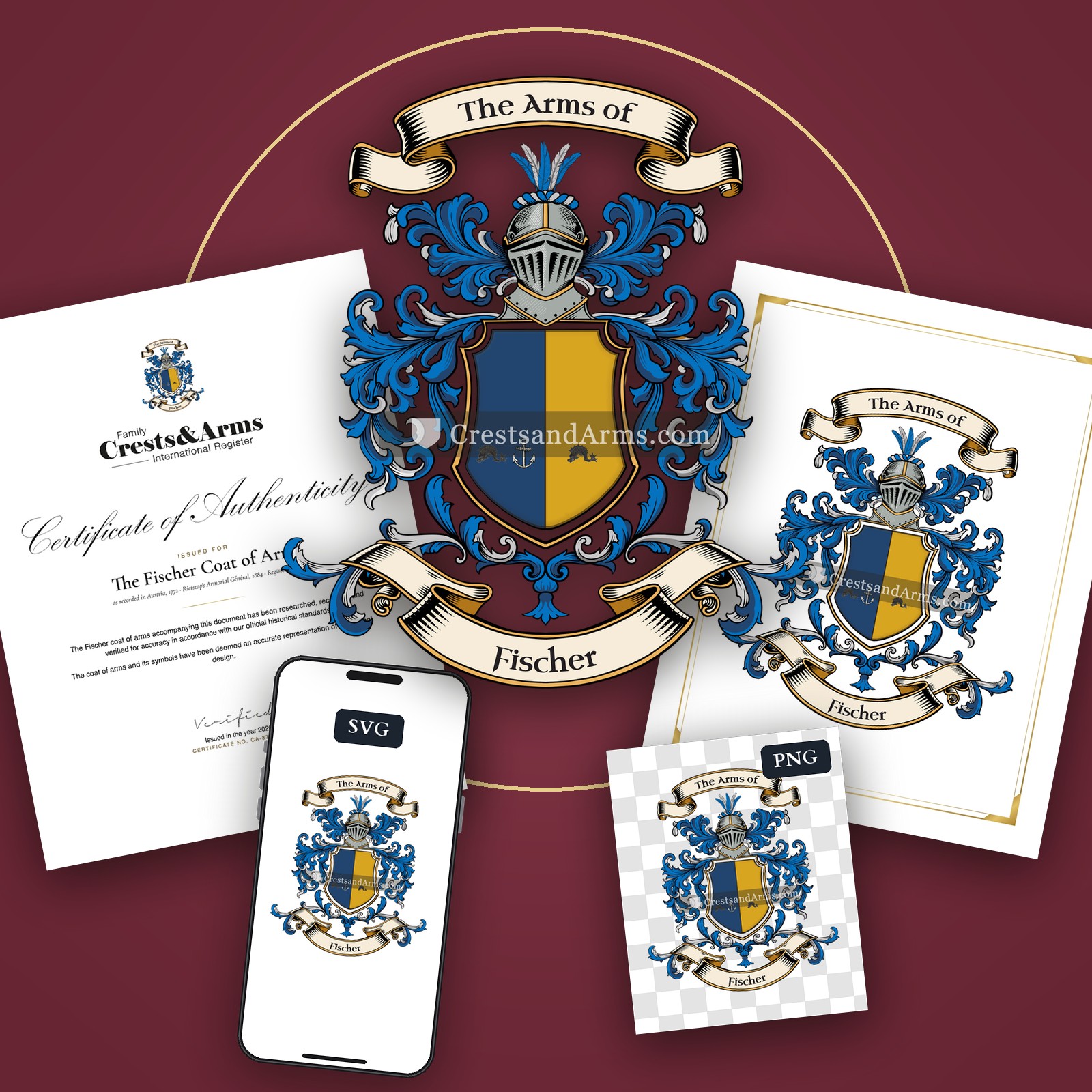
Coat of Arms & Family Crest Details
Symbols on this shield
anchorHope, and steadfastness in trouble
dolphinSwiftness, charity and love
Colours
Blue (Azure)Means: Loyalty and truth
Gold (Or)Means: Generosity
Silver (Argent)Means: Peace and sincerity
Historical info
Source
J. B. Rietstap, Armorial Général, Gouda: G. B. van Goor Zonen, 1884–87
Blazon (the actual original written record)
“Parti d'azur et d'or; à une ancre sans trabe d'arg., br. sur le parti et accostée de deux dauphins en pals de l'un à l'autre, les têtes en bas. C.: l'ancre, renversée, accostée de deux dauphins en pals, à dextre d'azur et à sen. d'or, les têtes en haut; le tout entre un vol d'azur. L.: d'or et d'azur.”
Austriac. 1772
Digital archive packCoat of arms PNG, gold border print PDF, vector SVG and the certificate of authenticity. Sent to your email in minutes.
Map of Austria showing where the Fischer arms are recorded
The Fischer arms were recorded in Austria, c. 1772.
Arms such as these were typically recorded in Tyrol.
Tyrol was mountain country in western Austria, where the valleys were held by families who had been there a very long time. Old tenure counted for more than money, and old families carried arms.
This is where the arms were entered in the register. Families often moved to other parts of the country, so the same name can turn up in more than one region.
Region
Tyrol
First recorded
1772
Granting Authority for the Fischer Arms
Imperial and Royal chancery
Sodacan · CC BY-SA 3.0
The body that granted and recorded arms in Austria in this period.
Joseph II, Holy Roman Emperor
Sovereign of the period
Joseph II, Holy Roman Emperor
1765–1790
Reigning in Germany when the Fischer arms are first recorded.
How Arms Worked in Austria
Austrian coats of arms were often linked directly to noble titles granted by the Emperor. These symbols belonged to the entire family line rather than just one individual. When a family grew, new branches kept the original design without needing to change it. This system allowed all members of a noble house to share the same identity across many generations.
Granting authority
The Imperial and Royal chancery managed all heraldic matters and controlled the official granting of arms throughout the Austrian lands.
How they got arms
Families typically received their arms through a formal imperial decree that often accompanied the elevation of a person to noble status.
Where arms were recorded
Official records of these grants were kept in the Imperial Register of Nobility which began its formal documentation process in 1453.
The family's standing
Recorded among the armigerous families of Austria.
Origin & History of the Fischer Family in Austria
The surname Fischer is a classic occupational name that originated from the Middle High German word *vischære*, which translates directly to fisherman. In the mountainous landscape of Austria, particularly within the Tyrol region, this name was often given to individuals who lived near the many rivers and alpine lakes that defined the local geography. By the time records confirm the presence of the Fischer family in Tyrol in 1772, the name had been established for centuries as a common identifier for those who made their living through fishing or managing waterways. Because Tyrol served as a vital crossroads for trade between northern and southern Europe, families with this name were often integrated into the local village economies. These early ancestors were likely essential members of their communities, as they provided a steady food supply and managed the natural resources of the rugged mountain valleys. Over generations, the name transitioned from a simple job description to a permanent family identity that remained deeply rooted in the Austrian countryside.
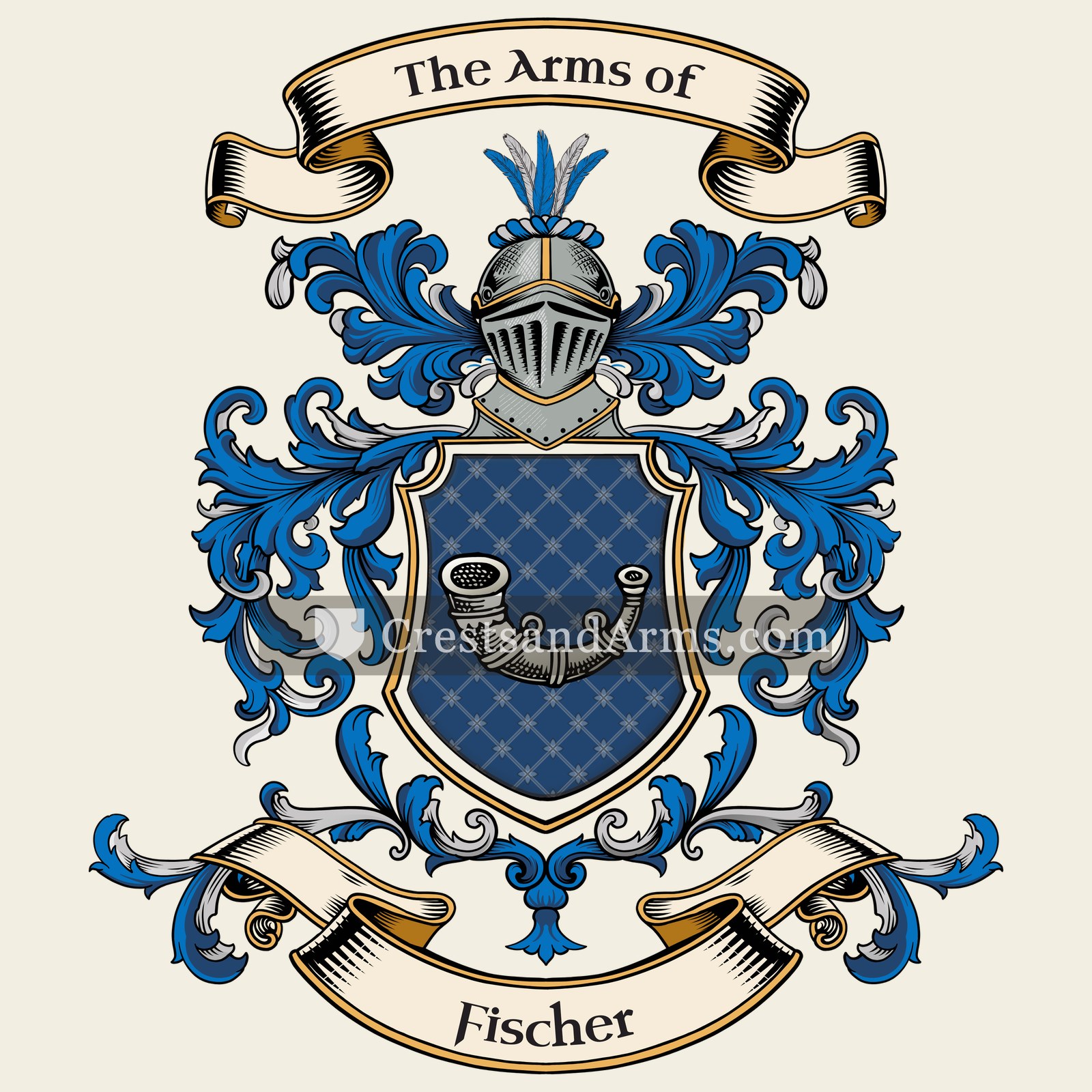
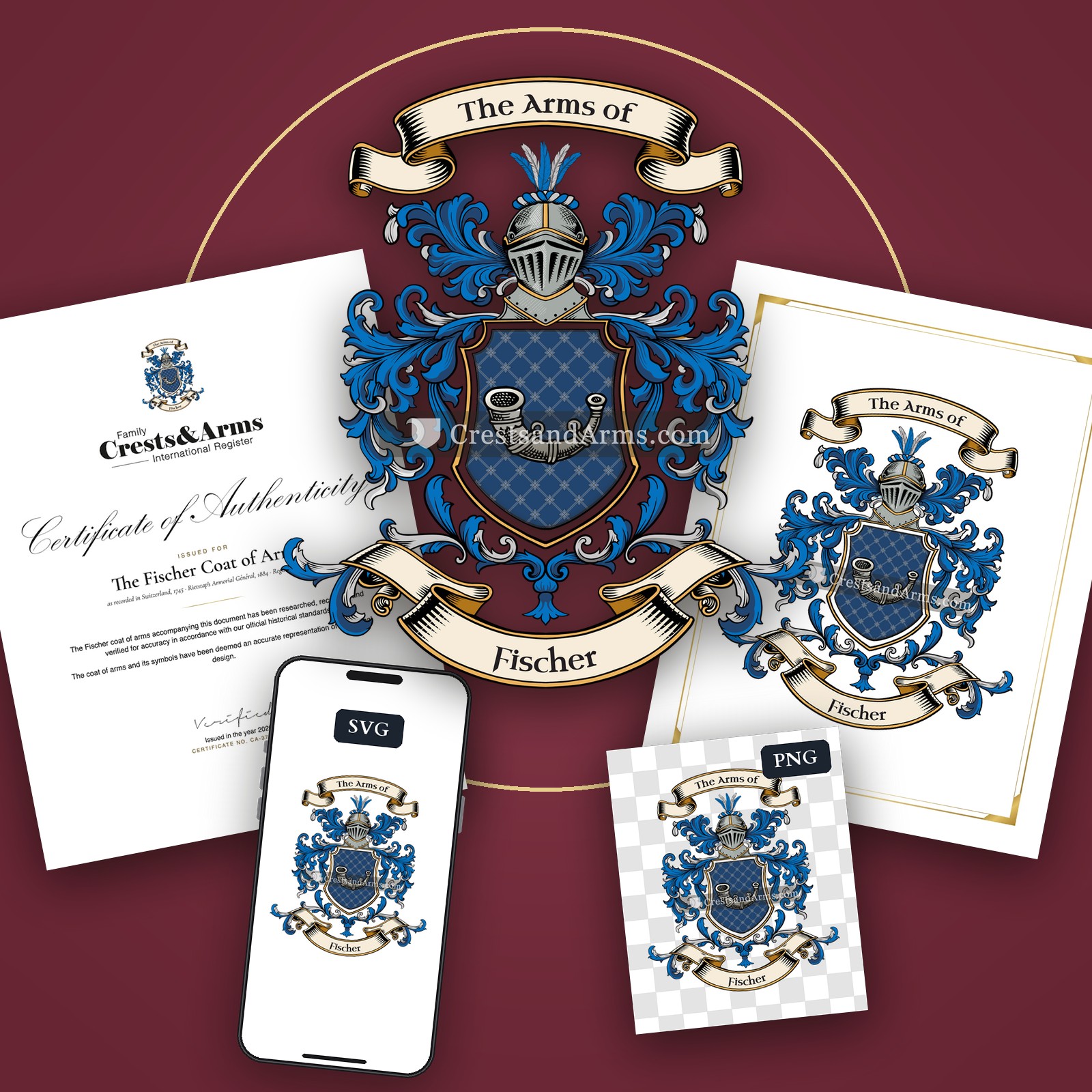
Coat of Arms & Family Crest Details
Symbols on this shield
hunting horn stringedOne who delights in the chase
Colours
Blue (Azure)Means: Loyalty and truth
Silver (Argent)Means: Peace and sincerity
Historical info
Source
J. B. Rietstap, Armorial Général, Gouda: G. B. van Goor Zonen, 1884–87
Blazon (the actual original written record)
“D'azur à un cor-de-chasse en forme de poisson d'arg., lié et vir. d'or, suspendu à un croc de sa., emm. d'or, le fer en bas, le manche ayant en haut une traverse pour poignée; le cor suspendu à cette poignée et br. sur le manche. C.: les meubles de l'écu, sauf que le fer du croc est renversé, le cor suspendu au fer, et le manche du croc br. sur le cor. L. d'arg. et d'azur.”
SwitzerlandBâle, c. 1745
Digital archive packCoat of arms PNG, gold border print PDF, vector SVG and the certificate of authenticity. Sent to your email in minutes.
Map of Switzerland showing where the Fischer arms are recorded
The Fischer arms were recorded in Bâle, c. 1745.
This is where the arms were entered in the register. Families often moved to other parts of the country, so the same name can turn up in more than one region.
The body that granted and recorded arms in Switzerland in this period.
How Arms Worked in Switzerland
In Switzerland, coats of arms were not restricted to the nobility and were often adopted by common citizens and families. These symbols were passed down through generations to show family identity. When branches of a family grew, they often changed small details of the design to distinguish their own line from the original group.
Granting authority
Cantonal and civic authorities managed the use of coats of arms within their specific regions and local jurisdictions.
How they got arms
Families typically assumed their own coats of arms based on local custom rather than receiving them from a central monarch.
Where arms were recorded
Arms were recorded in various cantonal and civic registers starting from the fourteenth century throughout the Swiss region.
The family's standing
Recorded among the armigerous families of Switzerland.
Origin & History of the Fischer Family in Switzerland
The surname Fischer is a classic occupational name that originated from the German word for a fisherman. In the context of Switzerland, this name reflects the vital role that rivers and lakes played in the daily survival of early communities. By the time members of the family were documented in Basel in 1745, the name was already well-established across German-speaking regions as a identifier for those who earned their living through trade on the water. These early ancestors were likely part of the skilled labor class that helped manage the city's bustling river commerce along the Rhine. Because Basel served as a major hub for trade and transportation, families with this name were often integrated into the urban economy, moving goods and food supplies that were essential for the growing population. The presence of the Fischer name in these historical records highlights how families often settled near major waterways to maintain their professional traditions and secure their livelihoods in the eighteenth century.
Fischer Meaning & Related Branches
Root word
fisc
A Germanic term referring to a fish or fishing activity.
This name
FischerAn occupational surname for someone who earned their living by catching or selling fish.
also spelled
Fyscher
Fisher
Fissher
Fysher
Related arms
Erlbeeksimilar arms
Giovanniziosimilar arms
Hohlgardtsimilar arms
Fishervariant spelling
Documented Sources
J. B. Rietstap, Armorial Général, Gouda: G. B. van Goor Zonen, 1884–87
Bahlow, Hans, Deutsches Namenlexikon: Familien- und Vornamen nach Ursprung und Sinn erklärt, 1967
Heintze, Albert, Die deutschen Familien-Namen: geschichtlich, geographisch, sprachlich, 1903
Sächsisches Staatsarchiv (Leipzig), Kirchenbücher der evangelisch-lutherischen Landeskirche Sachsens, 1637
Digital archive packCoat of arms PNG, gold border print PDF, vector SVG and the certificate of authenticity. Sent to your email in minutes.


 lionCourage, strength and royalty
 fishA true and generous mind, and Christian faith
 lionCourage, strength and royalty
 fishA true and generous mind, and Christian faith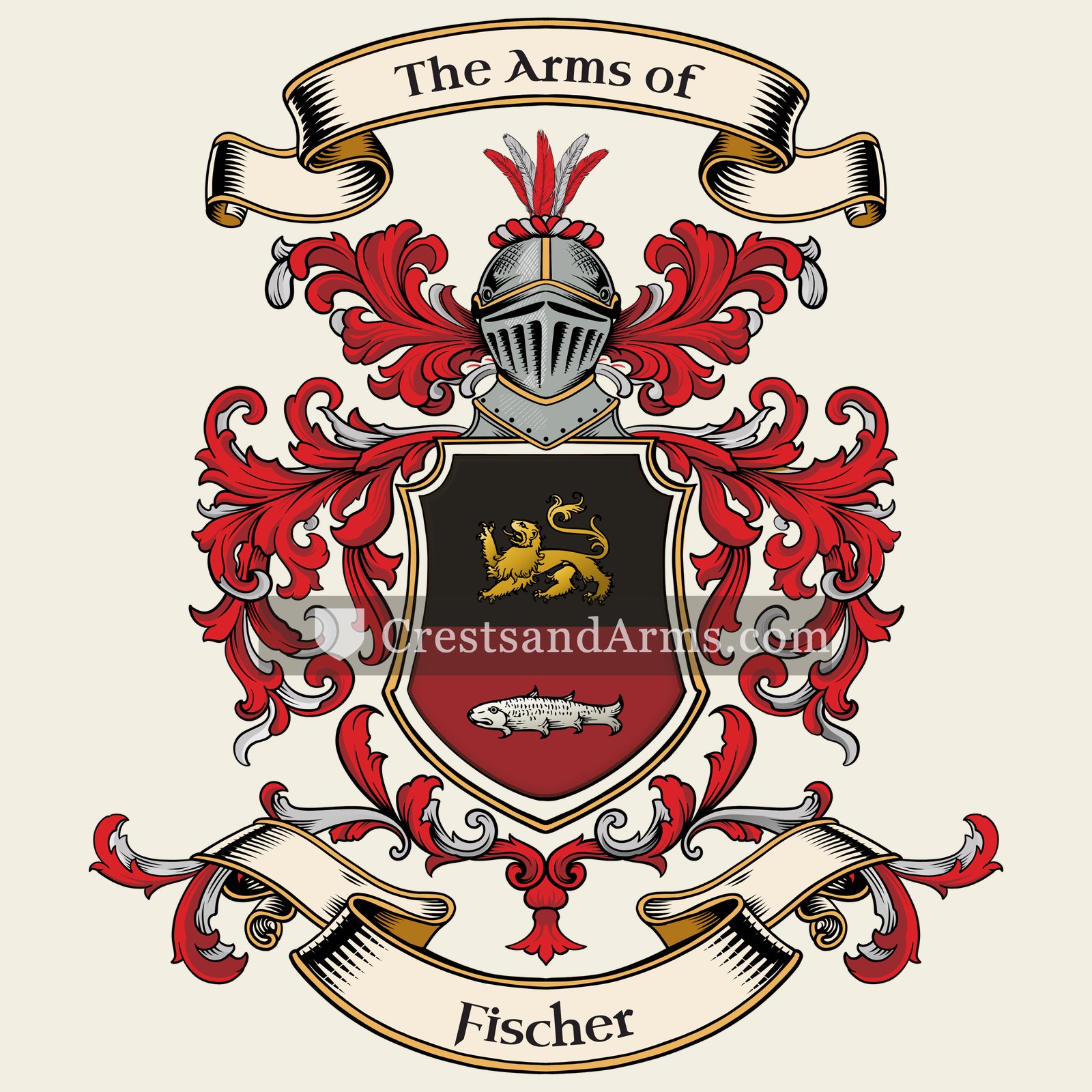


 anchorHope, and steadfastness in trouble
 dolphinSwiftness, charity and love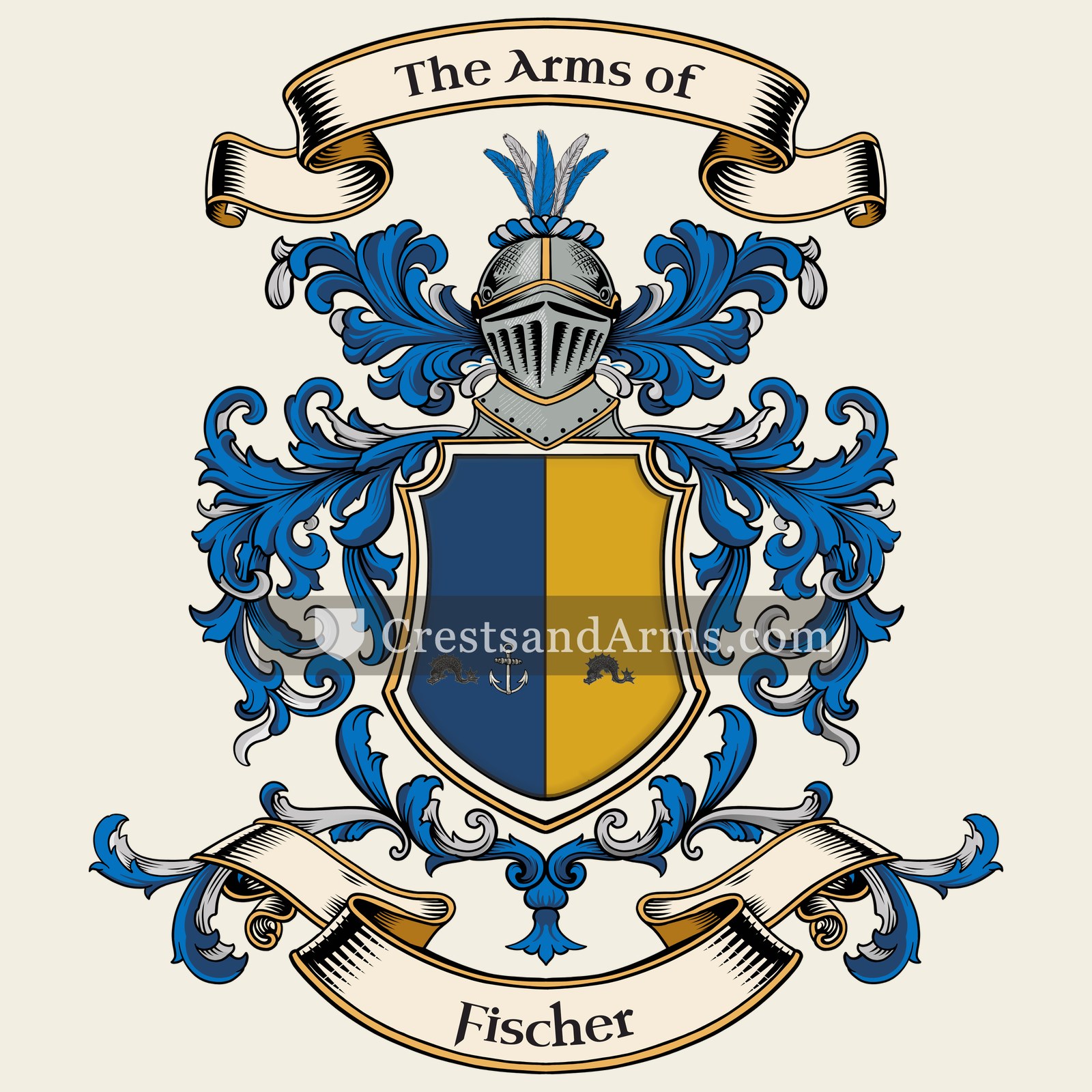


 hunting horn stringedOne who delights in the chase