A record of documented arms, meaning and origin, researched for the Fitzhugh family lines. Documented in 3 countries.
Reg. 5557 · Britain, D–F
Coat of Arms & Family Crest Details
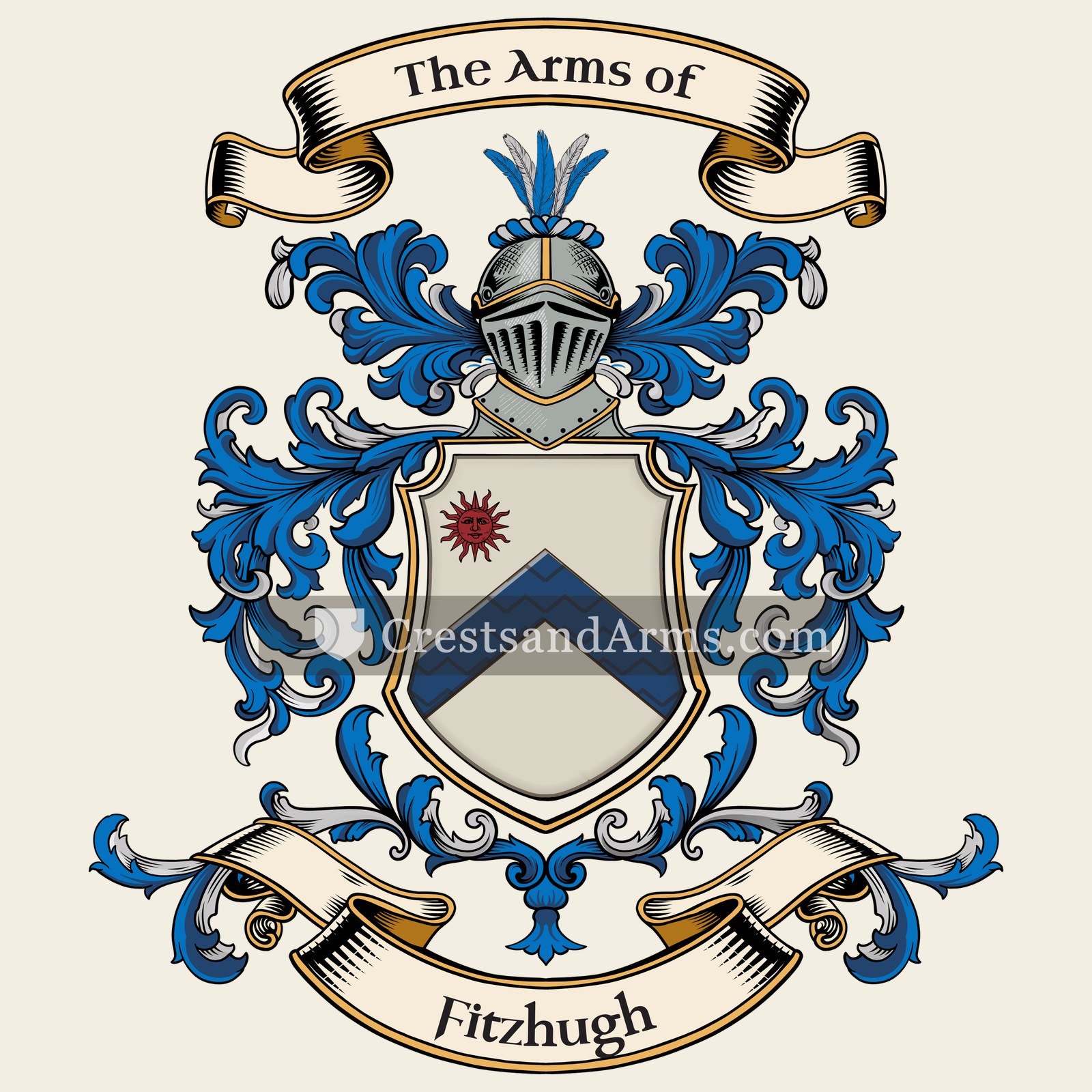
Symbols on this shield
chevronProtection, and faithful service completed
chiefAuthority, wisdom and dominion
Colours
Blue (Azure)Means: Loyalty and truth
Gold (Or)Means: Generosity
Historical info
Source
J. B. Rietstap, Armorial Général, Gouda: G. B. van Goor Zonen, 1884–87
Blazon (the actual original written record)
“D'azur à trois chev. accostés et entrelacés d'or; au chef du même. C.: un dragon sans pieds d'arg., soutenu d'un chapeau de tournoi de gu., retr. d'herm.”
Britainc. 1700
Digital archive packCoat of arms PNG, gold border print PDF, vector SVG and the certificate of authenticity. Sent to your email in minutes.
Map of Britain showing where the Fitzhugh arms are recorded
The Fitzhugh arms were recorded in Britain, c. 1700.
Arms such as these were typically recorded in Kent.
Kent sits between London and the short crossing to Europe, and the trade passing through made it wealthy. Merchant families bought land with that money, and it was landowners who took coats of arms.
This is where the arms were entered in the register. Families often moved to other parts of the country, so the same name can turn up in more than one region.
The body that granted and recorded arms in Britain in this period.
William III of England
Sovereign of the period
William III of England
1694–1702
Reigning in Britain when the Fitzhugh arms are first recorded.
How Arms Worked in Britain
English heraldry allowed arms to be shared by all legitimate descendants of the original owner. These symbols were treated as personal property that moved through the generations to all children. While the eldest son kept the original design, other family members could use the same shield without needing to change it or register their own unique versions.
Granting authority
The College of Arms in London has regulated the use of coats of arms throughout England and Wales since 1484.
How they got arms
Families typically obtained their coats of arms through a formal grant from the Crown or by proving their ancient right to them.
Where arms were recorded
All official coats of arms are recorded in the registers kept at the College of Arms, which date back to the fifteenth century.
The family's standing
Recorded among the armigerous families of Britain.
Origin & History of the Fitzhugh Family in Britain
The surname Fitzhugh is a patronymic name, which means it was originally formed by combining the prefix "Fitz," derived from the Old French word for son, with the given name Hugh. This naming convention became common in Britain following the Norman Conquest of 1066, as families began to adopt surnames to distinguish themselves in legal and land records. While the name has roots in the administrative shifts of the medieval period, by the early 18th century, the family had established a notable presence in the county of Kent. During this time, Kent served as a vital hub for trade and agriculture, and families living there were often deeply integrated into the local parish systems. These parish records from the 1700s provide a clear look at how the family lived, worked, and grew within the social fabric of southeastern England during the Georgian era.
Coat of Arms & Family Crest Details
Symbols on this shield
chiefAuthority, wisdom and dominion
martletA younger son, who must win his own land
Colours
ErmineMeans: Dignity
Red (Gules)Means: Military strength
Gold (Or)Means: Generosity
Historical info
Source
Sir Bernard Burke, The General Armory of England, Scotland, Ireland and Wales, London: Harrison & Sons, 1884
Blazon (the actual original written record)
“Erm. on a chief gu. three martlets or”
BuckinghamWanendon · Buckingham, c. 1620
Digital archive packCoat of arms PNG, gold border print PDF, vector SVG and the certificate of authenticity. Sent to your email in minutes.
Map of England showing where the Fitzhugh arms are recorded
The Fitzhugh arms were recorded in Buckingham, c. 1620.
Buckinghamshire was quiet farming country on the road out of London. Court officials and lawyers bought manors there within easy reach of the capital, and a manor was the usual reason to take arms.
This is where the arms were entered in the register. Families often moved to other parts of the country, so the same name can turn up in more than one region.
The body that granted and recorded arms in England in this period.
James VI and I
Sovereign of the period
James VI and I
1603–1625
Reigning in Britain when the Fitzhugh arms are first recorded.
How Arms Worked in England
English heraldry allowed arms to be shared by all legitimate descendants of the original owner. These symbols were treated as personal property that moved through the generations to all children. While the eldest son kept the original design, other family members could use the same shield without needing to change it or register their own unique versions.
Granting authority
The College of Arms in London has regulated the use of coats of arms throughout England and Wales since 1484.
How they got arms
Families typically obtained their coats of arms through a formal grant from the Crown or by proving their ancient right to them.
Where arms were recorded
All official coats of arms are recorded in the registers kept at the College of Arms, which date back to the fifteenth century.
The family's standing
Recorded among the armigerous families of Buckingham.
Origin & History of the Fitzhugh Family in England
The surname Fitzhugh originates from the Anglo-Norman period and translates literally to mean the son of Hugh. During the Middle Ages, names like this were used to identify individuals by their father’s given name, which helped distinguish people in growing communities. By the early 17th century, the family had established a notable presence in Buckingham, England. Records from 1620 confirm that members of the family were living in this region during a time of significant social and political transition. As the family settled into local life, they became part of the fabric of the English countryside, participating in the agricultural and civic activities that defined life in Buckinghamshire. Their history reflects the broader movement of families who transitioned from using patronymic descriptions to adopting stable, inherited surnames that persisted through generations.
Coat of Arms & Family Crest Details
Symbols on this shield
chevronProtection, and faithful service completed
sunGlory, splendour and the source of life
Colours
Silver (Argent)Means: Peace and sincerity
Blue (Azure)Means: Loyalty and truth
Red (Gules)Means: Military strength
Historical info
Source
Sir Bernard Burke, The General Armory of England, Scotland, Ireland and Wales, London: Harrison & Sons, 1884
Blazon (the actual original written record)
“Ar. three chev. braced in base az. in chief a sun gu”
Walesc. 1647
Digital archive packCoat of arms PNG, gold border print PDF, vector SVG and the certificate of authenticity. Sent to your email in minutes.
Map of Wales showing where the Fitzhugh arms are recorded
The Fitzhugh arms were recorded in Wales, c. 1647.
Arms such as these were typically recorded in Denbigh.
Denbighshire was north Welsh country of hills and small estates. Land was held by a great many families rather than a few, and each holding brought its own claim to a coat of arms.
This is where the arms were entered in the register. Families often moved to other parts of the country, so the same name can turn up in more than one region.
The body that granted and recorded arms in Wales in this period.
Charles I of England
Sovereign of the period
Charles I of England
1625–1649
Reigning in Britain when the Fitzhugh arms are first recorded.
How Arms Worked in Wales
English heraldry allowed arms to be shared by all legitimate descendants of the original owner. These symbols were treated as personal property that moved through the generations to all children. While the eldest son kept the original design, other family members could use the same shield without needing to change it or register their own unique versions.
Granting authority
The College of Arms in London has regulated the use of coats of arms throughout England and Wales since 1484.
How they got arms
Families typically obtained their coats of arms through a formal grant from the Crown or by proving their ancient right to them.
Where arms were recorded
All official coats of arms are recorded in the registers kept at the College of Arms, which date back to the fifteenth century.
The family's standing
Recorded among the armigerous families of Wales.
Origin & History of the Fitzhugh Family in Wales
The surname Fitzhugh is a patronymic name that literally translates to son of Hugh, reflecting a naming tradition that became common among the Anglo-Norman families who moved into Wales during the Middle Ages. While the name has roots in the broader Norman influence over Britain, the family established a notable presence in the Denbigh area by the mid-seventeenth century. By 1647, records show members of the family living in this region, which was a time of great political tension during the English Civil War. Because Denbigh served as a strategic stronghold, families living there were often deeply involved in the local administration and the shifting loyalties of the era. The Fitzhughs likely integrated into the local Welsh society by participating in the agricultural and civic life of the Vale of Clwyd, gradually becoming a part of the regional history of North Wales.
Fitzhugh Meaning & Related Branches
Root word
Filius Hugonis
Latin for son of Hugh, derived from Germanic elements meaning mind or heart.
This name
FitzhughPatronymic surname indicating descent from a person named Hugh.
also spelled
Fizhugh
Phitzhugh
Fitzhew
Fitzhewe
Documented Sources
J. B. Rietstap, Armorial Général, Gouda: G. B. van Goor Zonen, 1884–87
Reaney, P.H. and Wilson, R.M., A Dictionary of English Surnames, 1991
Lower, Mark Antony, Patronymica Britannica: A Dictionary of the Family Names of the United Kingdom, 1860
The National Archives, Parish registers for the county of Kent, series RG 4
Digital archive packCoat of arms PNG, gold border print PDF, vector SVG and the certificate of authenticity. Sent to your email in minutes.


 chevronProtection, and faithful service completed
 chiefAuthority, wisdom and dominion
 chevronProtection, and faithful service completed
 chiefAuthority, wisdom and dominion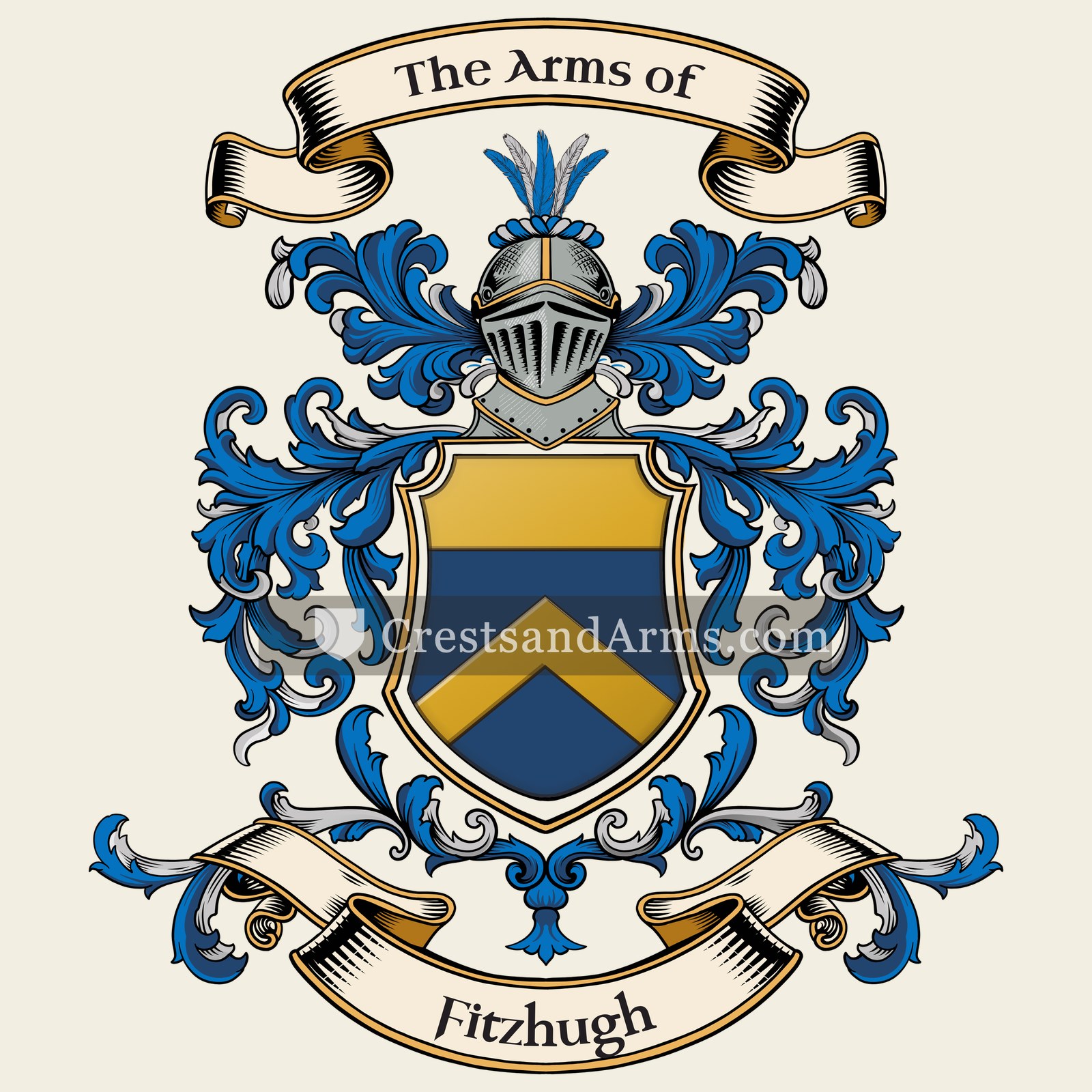


 martletA younger son, who must win his own land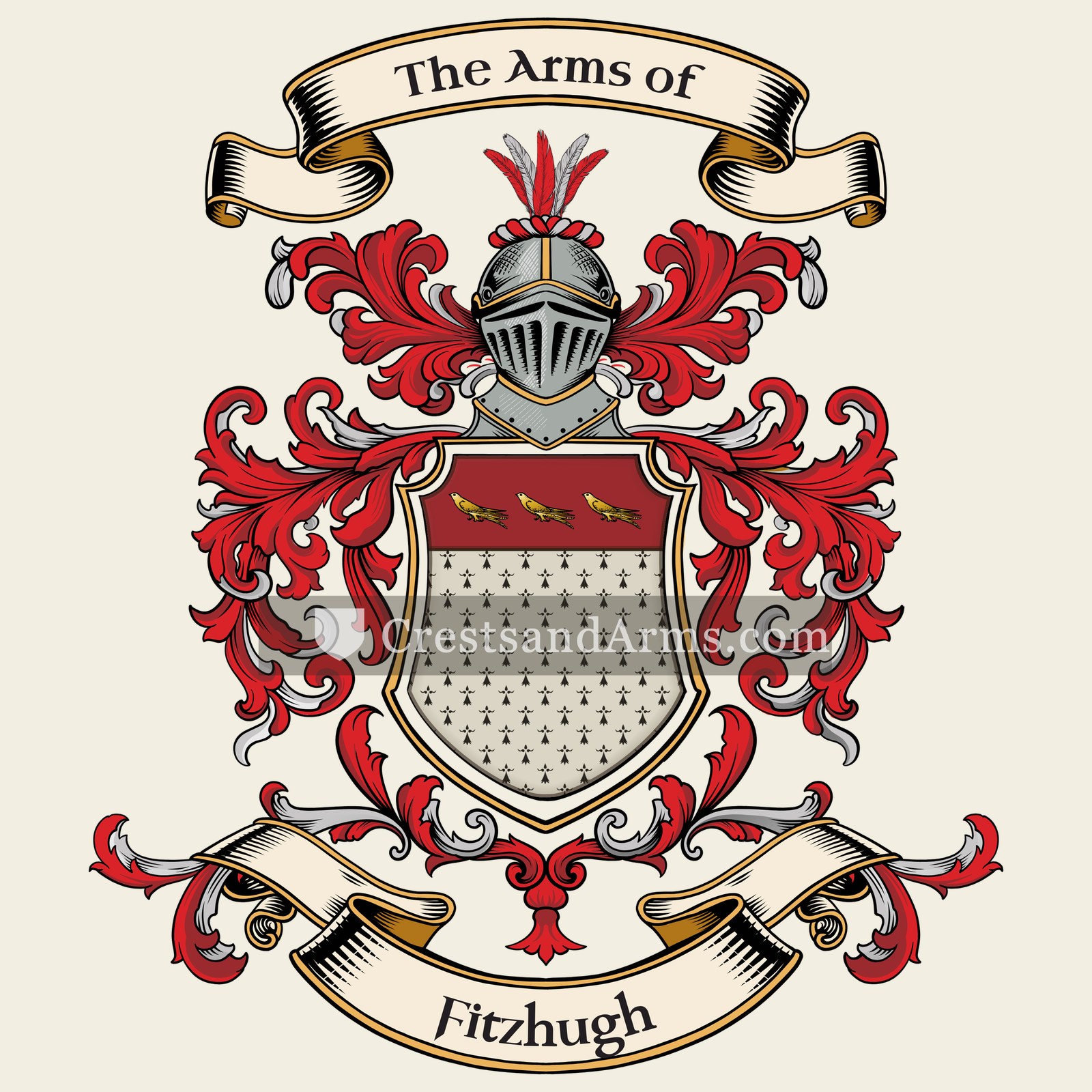

 sunGlory, splendour and the source of life