Map of France showing where the Flaming arms are recorded
The Flaming arms were recorded in Flandre, c. 1663.
Flandre grew rich on cloth, and its towns were among the busiest in Europe. Merchant families bought land with their profits and took arms to go with it, so trade put as many names in the registers here as land did.
This is where the arms were entered in the register. Families often moved to other parts of the country, so the same name can turn up in more than one region.
The body that granted and recorded arms in France in this period.
Louis XIV of France
Sovereign of the period
Louis XIV of France
1643–1715
Reigning in France when the Flaming arms are first recorded.
How Arms Worked in France
In France, a coat of arms was a mark of honor that passed down through the male line to all legitimate descendants. Families often used the same shield without changes to show their shared heritage. If a branch wanted to stand out, they could add a small mark to their shield to show their specific place in the family tree.
Granting authority
The Juge d'armes de France acted as the official authority that regulated and verified coats of arms across the country.
How they got arms
Families typically inherited their arms from ancestors, though they could also receive them through royal grants or by proving their noble status.
Where arms were recorded
Coats of arms were officially recorded in the Armorial Général de France, which began its main collection in the year 1696.
The family's standing
Recorded among the armigerous families of Flandre.
Origin & History of the Flaming Family in France
The family name Flaming traces its roots to the historic region of Flanders, a territory that straddled the borderlands of modern-day France and Belgium during the seventeenth century. By 1663, records confirm that members of the family were firmly established in this area, which was then a crossroads of intense cultural and political change. The name itself likely functioned as a geographic identifier, used to describe individuals who hailed from the Flemish lands or who spoke the local Germanic dialect. As the French monarchy expanded its influence into these northern territories, families like the Flamings often found themselves navigating a complex landscape of shifting borders and evolving administrative loyalties. This early presence in the region suggests that the family was part of a mobile population that moved through the towns and rural parishes of the French-Flemish border, contributing to the local economy and social fabric of the era.
Coat of Arms & Family Crest Details
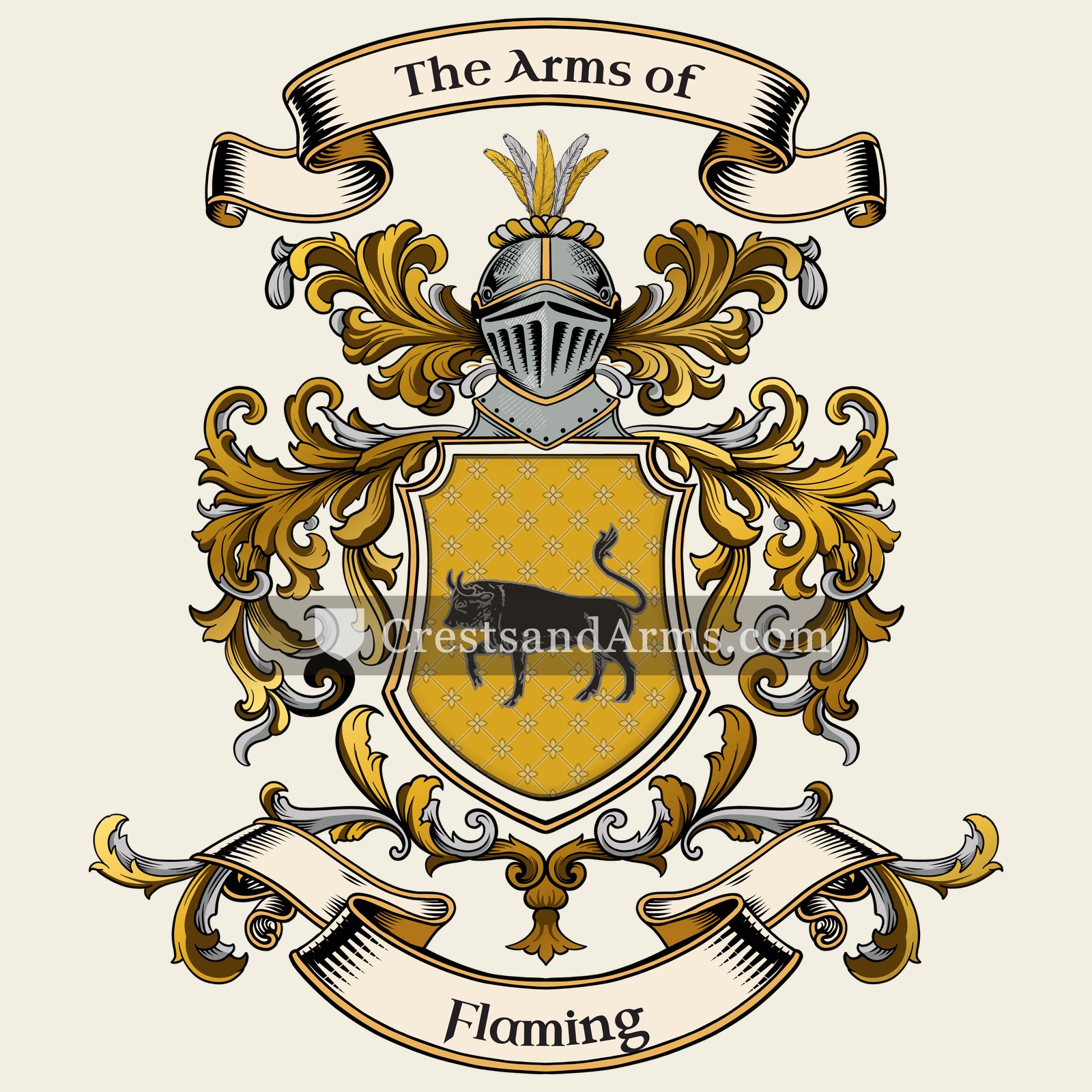
Symbols on this shield
bullValour and generosity
Colours
Gold (Or)Means: Generosity
Black (Sable)Means: Constancy
Historical info
Source
J. B. Rietstap, Armorial Général, Gouda: G. B. van Goor Zonen, 1884–87
Blazon (the actual original written record)
“D'or à une tête de boeuf de sa., posée de profil.”
Austriac. 1772
Digital archive packCoat of arms PNG, gold border print PDF, vector SVG and the certificate of authenticity. Sent to your email in minutes.
Map of Austria showing where the Flaming arms are recorded
The Flaming arms were recorded in Austria, c. 1772.
Arms such as these were typically recorded in Tyrol.
Tyrol was mountain country in western Austria, where the valleys were held by families who had been there a very long time. Old tenure counted for more than money, and old families carried arms.
This is where the arms were entered in the register. Families often moved to other parts of the country, so the same name can turn up in more than one region.
Region
Tyrol
First recorded
1772
Granting Authority for the Flaming Arms
Imperial and Royal chancery
Sodacan · CC BY-SA 3.0
The body that granted and recorded arms in Austria in this period.
Joseph II, Holy Roman Emperor
Sovereign of the period
Joseph II, Holy Roman Emperor
1765–1790
Reigning in France when the Flaming arms are first recorded.
How Arms Worked in Austria
Austrian coats of arms were often linked directly to noble titles granted by the Emperor. These symbols belonged to the entire family line rather than just one individual. When a family grew, new branches kept the original design without needing to change it. This system allowed all members of a noble house to share the same identity across many generations.
Granting authority
The Imperial and Royal chancery managed all heraldic matters and controlled the official granting of arms throughout the Austrian lands.
How they got arms
Families typically received their arms through a formal imperial decree that often accompanied the elevation of a person to noble status.
Where arms were recorded
Official records of these grants were kept in the Imperial Register of Nobility which began its formal documentation process in 1453.
The family's standing
Recorded among the armigerous families of Austria.
Origin & History of the Flaming Family in Austria
The family name Flaming has deep roots in the mountainous region of Tyrol, where records confirm members of the family were established by 1772. During this period, Tyrol was a vital part of the Habsburg Monarchy, serving as a gateway between the German-speaking lands and Italy. The name itself likely originated as a descriptive term, often used in medieval German to identify people who had migrated from Flanders or the Low Countries. As these early settlers moved into the Alpine valleys, they integrated into the local agrarian and trade-based economy. Over time, the family became part of the distinct cultural fabric of the region, adapting to the unique traditions and social structures of the Tyrolean landscape. Their presence in the late 18th century suggests they were likely involved in the local industries of the time, such as mountain farming, forestry, or the regional trade routes that defined life in the heart of the Alps.
Flaming Meaning & Related Branches
Root word
Flamingus
Latin term referring to a person from Flanders or a Fleming.
This name
FlamingAn occupational or habitational surname denoting an individual of Flemish origin or descent.
Documented Sources
J. B. Rietstap, Armorial Général, Gouda: G. B. van Goor Zonen, 1884–87
Archives départementales du Nord, Série G: Clergé séculier et paroisses
De Smet, Jos, De Vlaamse bevolking in de 17de eeuw, 1954
Lottin, Alain, Histoire des provinces françaises du Nord, 1988
Digital archive packCoat of arms PNG, gold border print PDF, vector SVG and the certificate of authenticity. Sent to your email in minutes.


 cross symbolChristian faith and service
 crescentHonour by the sovereign, and the second son
 cross symbolChristian faith and service
 crescentHonour by the sovereign, and the second son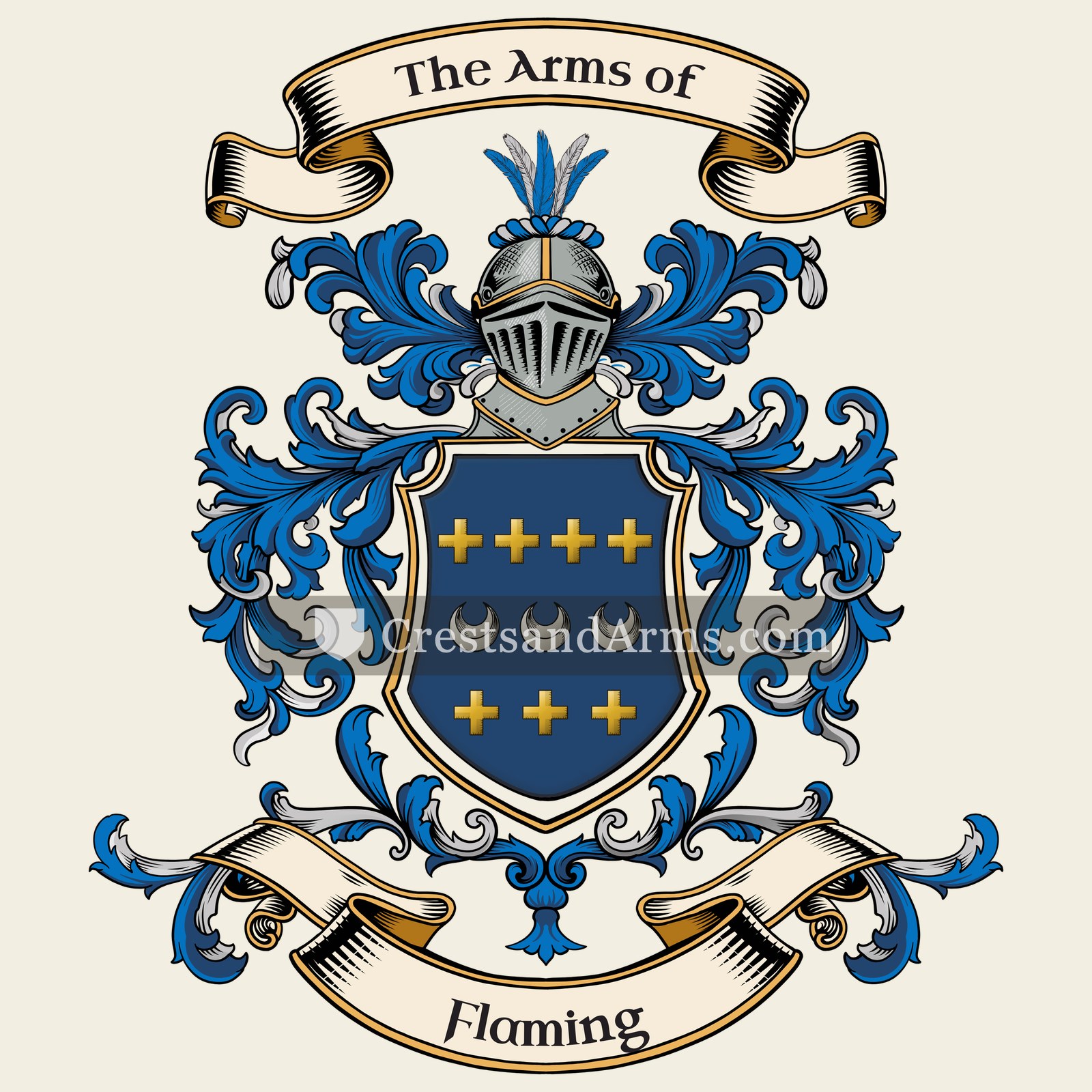


 bullValour and generosity