A record of documented arms, meaning and origin, researched for the Fleming family lines. Documented in 3 countries.
Reg. 1754 · Swedish, D–F
Coat of Arms & Family Crest Details
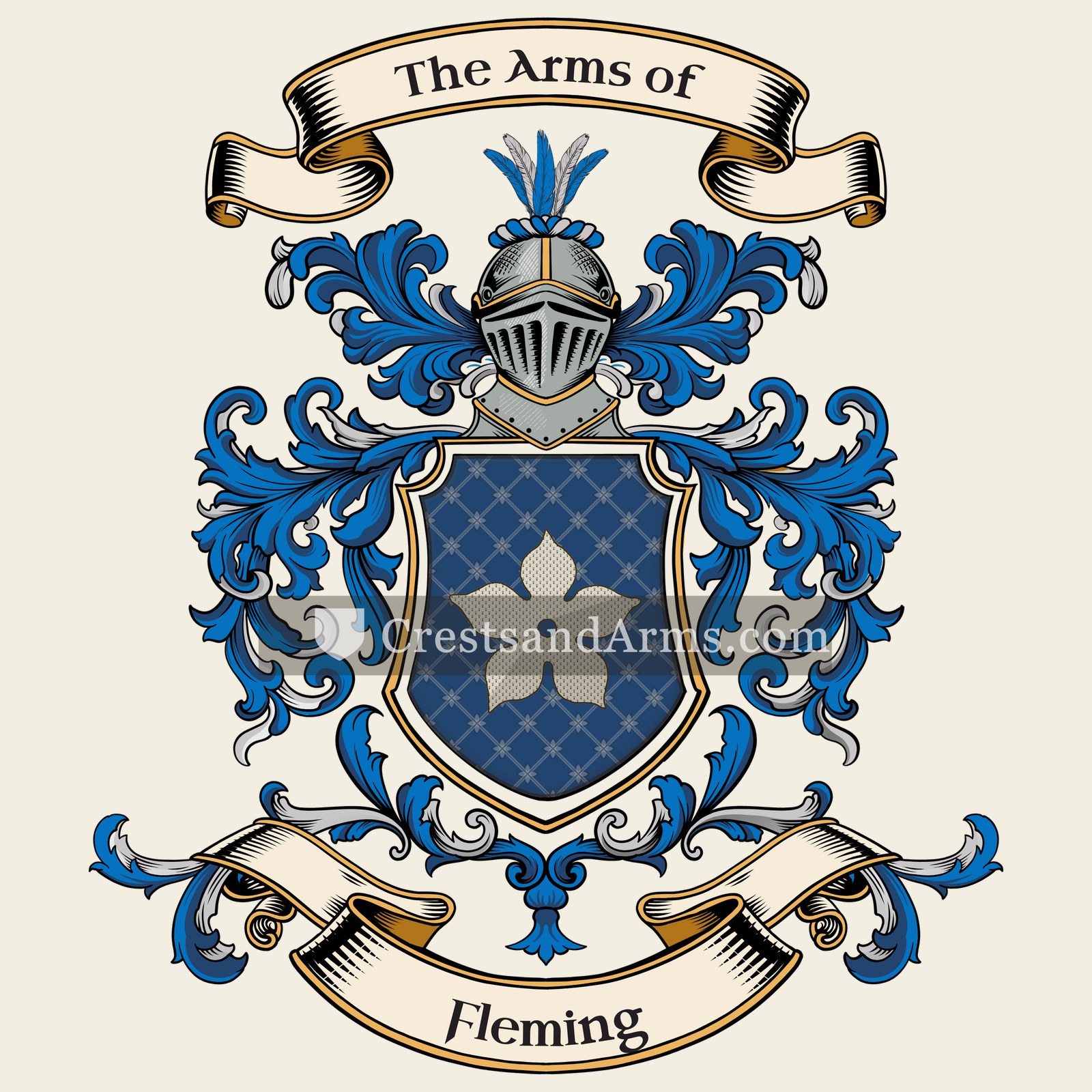
Symbols on this shield
vairProtection, and the winter fur
chiefAuthority, wisdom and dominion
chequyConstancy, and the counting-board
Colours
Gold (Or)Means: Generosity
Red (Gules)Means: Military strength
Historical info
Source
J. B. Rietstap, Armorial Général, Gouda: G. B. van Goor Zonen, 1884–87
Blazon (the actual original written record)
“De vair; au chef échiq. d'or et de gu. de trois tires. C.: un panier duquel sortent des flammes au nat., et deux chaînes endantes des bords du panier. S.: deux lévriers, au nat. D.: BARN AR AGIN.”
Swedenc. 1537
Digital archive packCoat of arms PNG, gold border print PDF, vector SVG and the certificate of authenticity. Sent to your email in minutes.
Map of Sweden showing where the Fleming arms are recorded
The Fleming arms were recorded in Sweden, c. 1537.
Arms such as these were typically recorded in Stockholm.
Stockholm held the Swedish court and the House of Nobility, where every noble family's arms were entered and kept. Families ennobled for service registered there, which is why so many are recorded around the city.
This is where the arms were entered in the register. Families often moved to other parts of the country, so the same name can turn up in more than one region.
The body that granted and recorded arms in Sweden in this period.
Gustav I of Sweden
Sovereign of the period
Gustav I of Sweden
1523–1560
Reigning in Sweden when the Fleming arms are first recorded.
How Arms Worked in Sweden
In Sweden, a coat of arms belonged to a noble family as a whole rather than just one individual. These arms were passed down through the generations to all legitimate descendants. Younger branches of the family used the same shield without needing to change it. This system ensured that the entire lineage shared the same identity and status under the law.
Granting authority
The Riddarhuset, or House of Nobility, regulated all noble coats of arms in Sweden under royal authority.
How they got arms
Families received their coats of arms through royal grants of nobility which were then officially registered with the House.
Where arms were recorded
Coats of arms were officially recorded in the Swedish House of Nobility register starting in the year 1626.
The family's standing
Recorded among the armigerous families of Sweden.
Origin & History of the Fleming Family in Sweden
The Fleming family established a significant presence in Sweden during the sixteenth century, becoming a prominent force in the nation's political and social landscape. While the name itself suggests origins connected to the Flanders region, the family became deeply integrated into the Swedish aristocracy by the time they were documented in Stockholm in 1537. During this era, members of the family served as trusted advisors to the Swedish crown and held important administrative roles that helped shape the country’s development. They were known for their influence in the royal court and their involvement in the complex power struggles that defined the Swedish Reformation. By securing land and high-ranking positions, the Flemings transitioned from their ancestral roots to become a foundational pillar of the Swedish nobility. Their history reflects the broader movement of European families who migrated to the Baltic region and rose to prominence through loyal service to the monarchy.
Coat of Arms & Family Crest Details
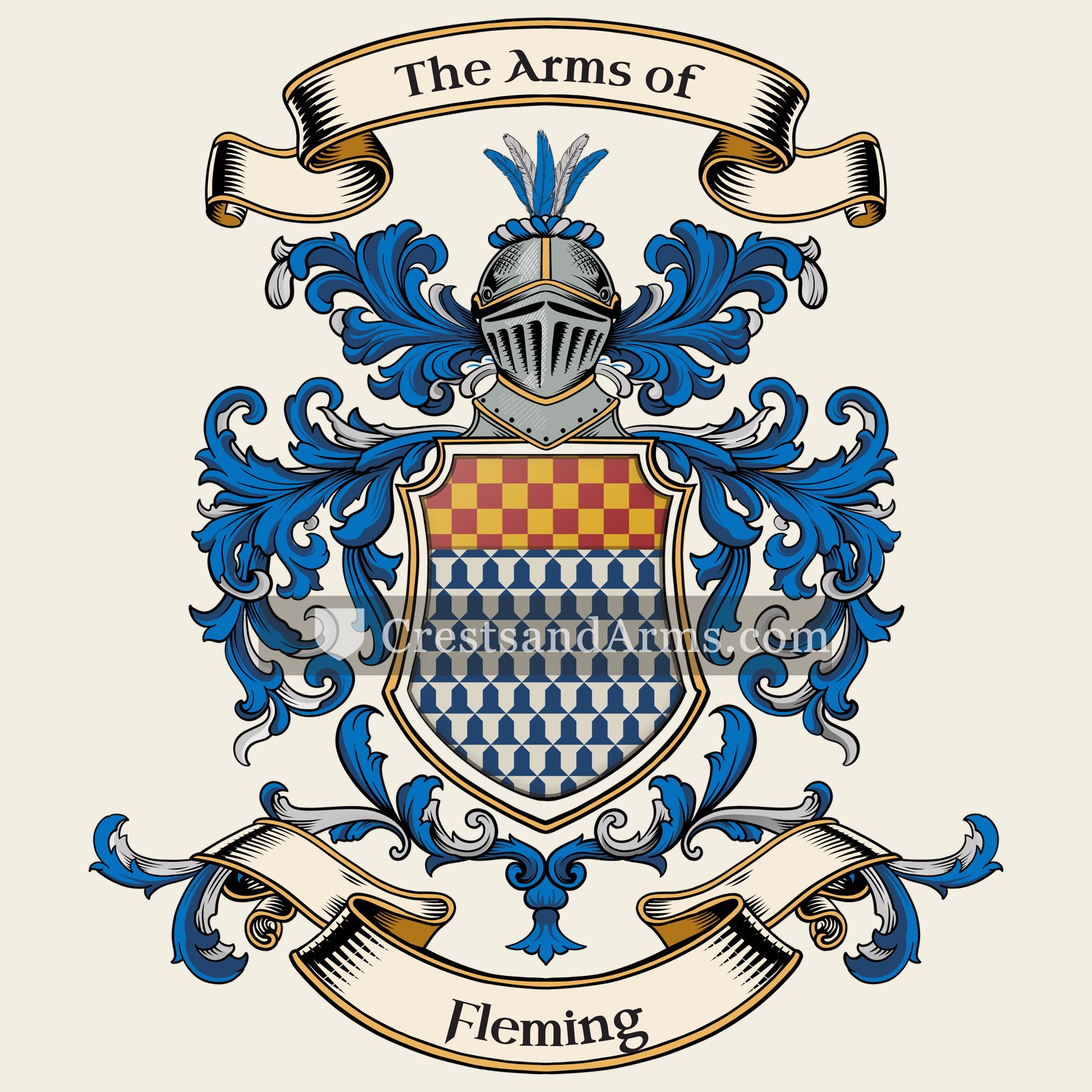
Symbols on this shield
lozengeHonour and nobility, and the arms of a woman
Colours
Silver (Argent)Means: Peace and sincerity
Red (Gules)Means: Military strength
Blue (Azure)Means: Loyalty and truth
Historical info
Source
Sir Bernard Burke, The General Armory of England, Scotland, Ireland and Wales, London: Harrison & Sons, 1884
Blazon (the actual original written record)
“Barry of six ar. and az. in chief three lozenges gu”
LancasterLancaster, c. 1420
Digital archive packCoat of arms PNG, gold border print PDF, vector SVG and the certificate of authenticity. Sent to your email in minutes.
Map of England showing where the Fleming arms are recorded
The Fleming arms were recorded in Lancaster, c. 1420.
Lancashire was divided among a great many small landed families, more than most northern counties. Estates were passed down whole rather than split up, so the same names hold the same ground for centuries in the records.
This is where the arms were entered in the register. Families often moved to other parts of the country, so the same name can turn up in more than one region.
The body that granted and recorded arms in England in this period.
Henry V of England
Sovereign of the period
Henry V of England
1413–1422
Reigning in Sweden when the Fleming arms are first recorded.
How Arms Worked in England
English heraldry allowed arms to be shared by all legitimate descendants of the original owner. These symbols were treated as personal property that moved through the generations to all children. While the eldest son kept the original design, other family members could use the same shield without needing to change it or register their own unique versions.
Granting authority
The College of Arms in London has regulated the use of coats of arms throughout England and Wales since 1484.
How they got arms
Families typically obtained their coats of arms through a formal grant from the Crown or by proving their ancient right to them.
Where arms were recorded
All official coats of arms are recorded in the registers kept at the College of Arms, which date back to the fifteenth century.
The family's standing
Recorded among the armigerous families of Lancaster.
Origin & History of the Fleming Family in England
The surname Fleming originated as a descriptive name for people who migrated to England from the region of Flanders, which is located in modern-day Belgium. During the Middle Ages, many Flemish weavers and merchants moved across the English Channel to seek new economic opportunities and escape political instability in their homeland. By the time the name appeared in Lancaster records in 1420, families bearing this title had already established themselves as part of the local social fabric. These early settlers were often integrated into the wool trade, which was a vital industry in northern England at the time. Over several generations, the name shifted from a label describing a person’s place of origin to a permanent family surname passed down through descendants who became deeply rooted in English life.
Coat of Arms & Family Crest Details
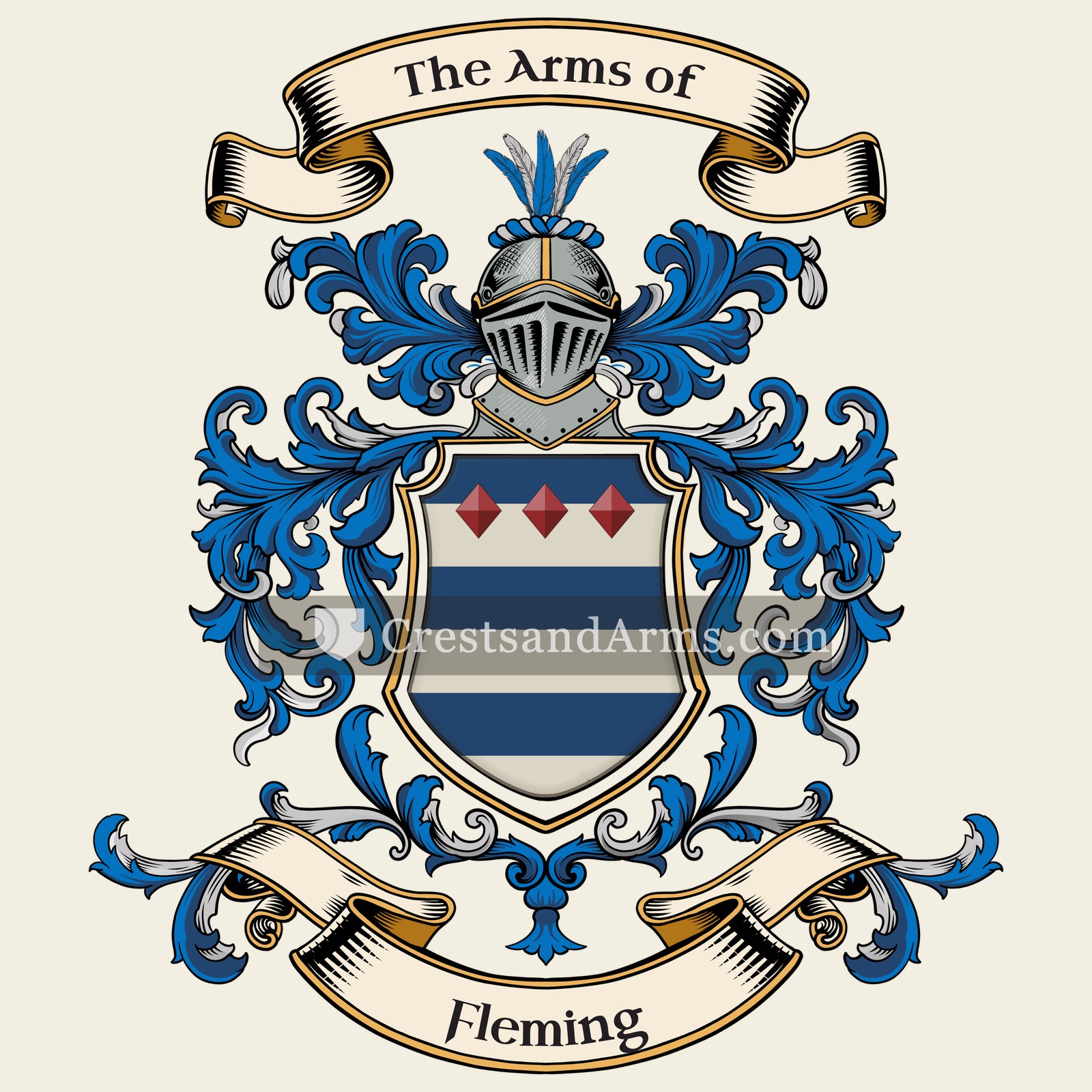
Symbols on this shield
cinquefoilHope and joy
Colours
Blue (Azure)Means: Loyalty and truth
ErmineMeans: Dignity
Historical info
Source
Sir Bernard Burke, The General Armory of England, Scotland, Ireland and Wales, London: Harrison & Sons, 1884
Blazon (the actual original written record)
“Az. a cinquefoil erm. charged with an annulet of the first”
Scotlandc. 1748
Digital archive packCoat of arms PNG, gold border print PDF, vector SVG and the certificate of authenticity. Sent to your email in minutes.
Map of Scotland showing where the Fleming arms are recorded
The Fleming arms were recorded in Scotland, c. 1748.
Arms such as these were typically recorded in Edinburgh.
Edinburgh was the seat of Scotland's government, its courts and its heralds. Families with business there settled nearby, and being close to where arms were recorded is exactly why so many of them appear.
This is where the arms were entered in the register. Families often moved to other parts of the country, so the same name can turn up in more than one region.
The body that granted and recorded arms in Scotland in this period.
George II of Great Britain
Sovereign of the period
George II of Great Britain
1727–1760
Reigning in Sweden when the Fleming arms are first recorded.
How Arms Worked in Scotland
Scottish heraldry is unique because it treats a coat of arms as a piece of personal property protected by law. Only one person can own a specific design at any given time. When a family grows, the head keeps the original shield while other relatives must apply for their own distinct version with slight changes to prove their specific identity.
Granting authority
The Court of the Lord Lyon acts as the official body that regulates and controls all heraldic matters throughout Scotland.
How they got arms
Individuals obtain a legal right to their arms through a formal petition process that confirms their identity and family connection.
Where arms were recorded
All valid coats of arms are officially entered into the Public Register of All Arms and Bearings starting from 1672.
The family's standing
Recorded among the armigerous families of Scotland.
Origin & History of the Fleming Family in Scotland
The name Fleming originated as a descriptive label for people who migrated to the British Isles from the Flanders region of modern-day Belgium and France. In the medieval period, these settlers were often invited to Scotland by monarchs who valued their expertise in trade, weaving, and urban development. By the time the family was firmly established in Edinburgh by 1748, the name had transitioned from a reference to a person's place of origin into a permanent hereditary surname. These early residents of Edinburgh were part of a long tradition of Flemish families who integrated into Scottish society over several centuries. They contributed to the growing commercial life of the city while maintaining a unique identity that connected them to their continental roots. Through their involvement in local business and civic life, the family became a standard part of the Scottish population long before the mid-eighteenth century.
Fleming Meaning & Related Branches
Root word
Flandrensis
Latin term referring to a person from the region of Flanders.
This name
FlemingAn ethnic surname denoting an individual who originated from the Flemish region.
also spelled
Flemyng
Related arms
Flemyngvariant spelling
Benendenrecorded with Fleming, same area
Bowenrecorded with Fleming, same area
Cheversrecorded with Fleming, same area
Documented Sources
J. B. Rietstap, Armorial Général, Gouda: G. B. van Goor Zonen, 1884–87
Anrep, Gabriel. Svenska adelns ättar-taflor. 1858
Elgenstierna, Gustaf. Den introducerade svenska adelns ättartavlor. 1926
Riksarkivet (National Archives of Sweden). Riksregistraturet. 1537
Digital archive packCoat of arms PNG, gold border print PDF, vector SVG and the certificate of authenticity. Sent to your email in minutes.


 chiefAuthority, wisdom and dominion
 chequyConstancy, and the counting-board
 chiefAuthority, wisdom and dominion
 chequyConstancy, and the counting-board


 lozengeHonour and nobility, and the arms of a woman


 cinquefoilHope and joy