Map of France showing where the Fleur arms are recorded
The Fleur arms were recorded in Lorraine, c. 1523.
Lorraine sat on the border between France and the German lands, and border country bred soldiers. Families here held small estates and served in arms, and a fighting man was exactly the sort who carried a shield of his own.
This is where the arms were entered in the register. Families often moved to other parts of the country, so the same name can turn up in more than one region.
The body that granted and recorded arms in France in this period.
Francis I of France
Sovereign of the period
Francis I of France
1515–1547
Reigning in France when the Fleur arms are first recorded.
How Arms Worked in France
In France, a coat of arms was a mark of honor that passed down through the male line to all legitimate descendants. Families often used the same shield without changes to show their shared heritage. If a branch wanted to stand out, they could add a small mark to their shield to show their specific place in the family tree.
Granting authority
The Juge d'armes de France acted as the official authority that regulated and verified coats of arms across the country.
How they got arms
Families typically inherited their arms from ancestors, though they could also receive them through royal grants or by proving their noble status.
Where arms were recorded
Coats of arms were officially recorded in the Armorial Général de France, which began its main collection in the year 1696.
The family's standing
Recorded among the armigerous families of Lorraine.
Origin & History of the Fleur Family in France
The family name Fleur traces its roots back to the northeastern region of France known as Lorraine, where members of the family were firmly established by the year 1523. During this period, Lorraine was a crossroads of European culture and politics, situated between the French Kingdom and the Holy Roman Empire. Families in this area often took names inspired by the natural world, and the name Fleur likely originated as a descriptive term for someone who lived near a prominent garden or worked as a florist. Because the region was frequently affected by shifting borders and regional conflicts, the early Fleur family would have been deeply involved in the local agricultural and social life of the duchy. By maintaining a presence in Lorraine during the early sixteenth century, the family became part of the long history of a region known for its unique blend of Germanic and French influences.
Meaning of the Fleur family crest colors & symbols
Symbols on this shield
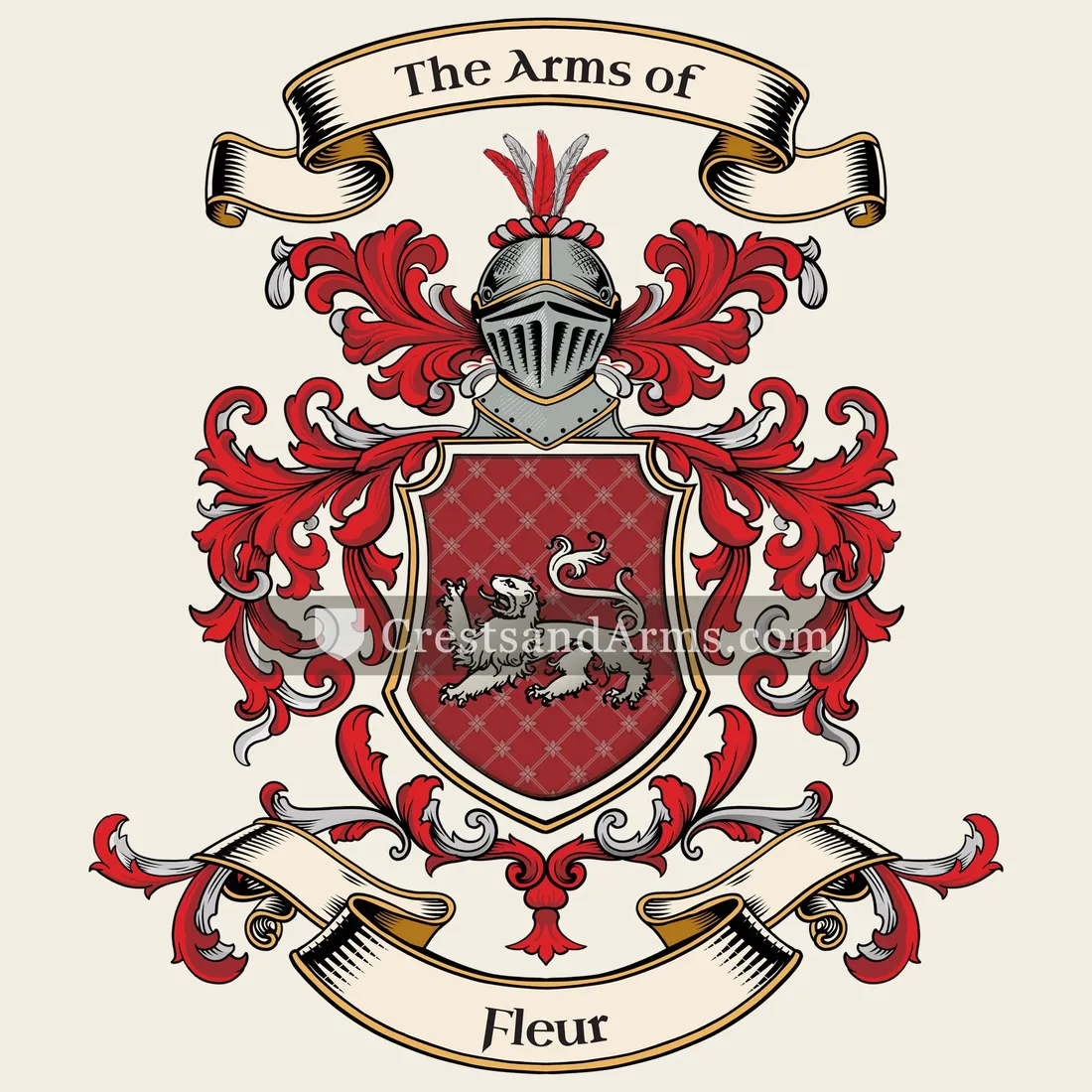
fleur de lisPurity, light, and the sixth son
Colours
Red (Gules)Means: Military strength
Gold (Or)Means: Generosity
Historical info
Source
J. B. Rietstap, Armorial Général, Gouda: G. B. van Goor Zonen, 1884–87
Blazon (the actual original written record)
“De gu. à une fleur-de-lis d'or.”
SwitzerlandNeufchâtel, c. 1745
Digital archive packCoat of arms PNG, gold border print PDF, vector SVG and the certificate of authenticity. Sent to your email in minutes.
Map of Switzerland showing where the Fleur arms are recorded
The Fleur arms were recorded in Neufchâtel, c. 1745.
This is where the arms were entered in the register. Families often moved to other parts of the country, so the same name can turn up in more than one region.
The body that granted and recorded arms in Switzerland in this period.
How Arms Worked in Switzerland
In Switzerland, coats of arms were not restricted to the nobility and were often adopted by common citizens and families. These symbols were passed down through generations to show family identity. When branches of a family grew, they often changed small details of the design to distinguish their own line from the original group.
Granting authority
Cantonal and civic authorities managed the use of coats of arms within their specific regions and local jurisdictions.
How they got arms
Families typically assumed their own coats of arms based on local custom rather than receiving them from a central monarch.
Where arms were recorded
Arms were recorded in various cantonal and civic registers starting from the fourteenth century throughout the Swiss region.
The family's standing
Recorded among the armigerous families of Switzerland.
Origin & History of the Fleur Family in Switzerland
The history of the Fleur family in Switzerland is deeply rooted in the cultural landscape of the Neuchâtel region during the eighteenth century. By 1745, records confirm that members of the family were already established residents in this area, which was then a principality with strong ties to both Swiss cantons and the Prussian monarchy. During this period, families in Neuchâtel often lived in close-knit communities where their surname reflected the local French-speaking traditions of the Jura Mountains. Life for the Fleur family likely revolved around the seasonal rhythms of agriculture, viticulture, or the emerging watchmaking industry that defined the regional economy. As the family grew, they became part of the social fabric of the town, participating in local parish life and contributing to the steady development of the Neuchâtelois identity. Their presence in 1745 serves as a clear marker of their long-standing integration into the unique political and social environment of this historic Swiss territory.
Meaning of the Fleur family crest colors & symbols
Symbols on this shield
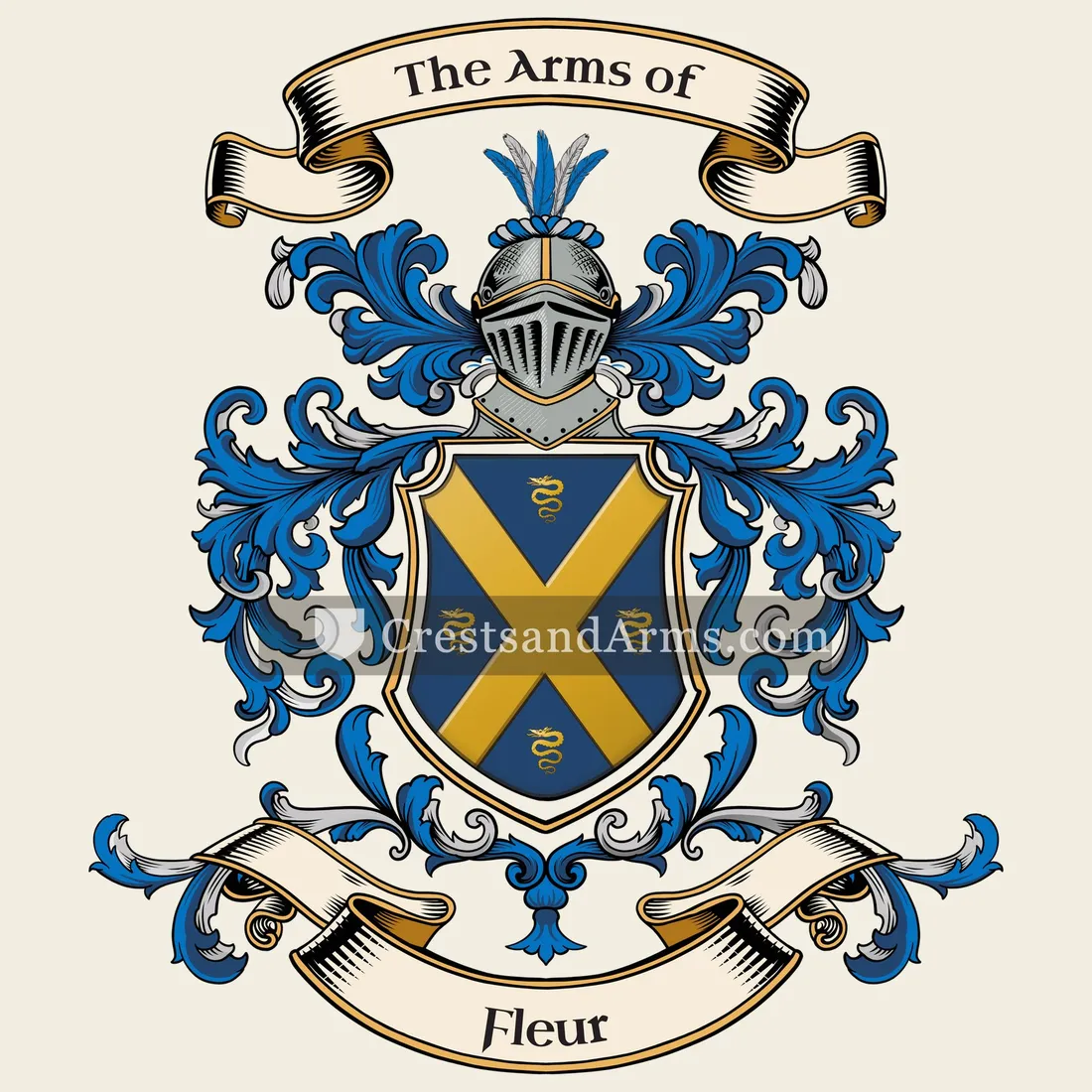
saltireResolution, and St Andrew's cross
serpentWisdom, healing and prudence
Colours
Blue (Azure)Means: Loyalty and truth
Gold (Or)Means: Generosity
Historical info
Source
Sir Bernard Burke, The General Armory of England, Scotland, Ireland and Wales, London: Harrison & Sons, 1884
Blazon (the actual original written record)
“Az. a saltire or, betw. four eels naiant wavy of the last”
Irelandc. 1645
Digital archive packCoat of arms PNG, gold border print PDF, vector SVG and the certificate of authenticity. Sent to your email in minutes.
Map of Ireland showing where the Fleur arms are recorded
The Fleur arms were recorded in Ireland, c. 1645.
Arms such as these were typically recorded in Dublin.
Dublin was the seat of government in Ireland and the place where grants were sought and recorded. Families with business at the castle or the courts settled nearby, and settling there put their arms on record.
This is where the arms were entered in the register. Families often moved to other parts of the country, so the same name can turn up in more than one region.
The body that granted and recorded arms in Ireland in this period.
Charles I of England
Sovereign of the period
Charles I of England
1625–1649
Reigning in France when the Fleur arms are first recorded.
How Arms Worked in Ireland
The Ulster King of Arms granted coats of arms to individuals who proved their social standing and good character. These symbols were typically inherited by all legitimate descendants of the original holder. If a family branch wanted a unique look, they could apply for a specific change to their design through the office to ensure their identity remained distinct.
Granting authority
The Ulster King of Arms acted as the official body that regulated and issued all coats of arms throughout Ireland.
How they got arms
Families obtained their arms through formal grants issued by the office after proving their eligibility and paying the required fees.
Where arms were recorded
All official grants were recorded in the registers held by the Ulster King of Arms starting from the year 1552.
The family's standing
Recorded among the armigerous families of Ireland.
Origin & History of the Fleur Family in Ireland
The history of the Fleur family in Ireland begins in the mid-seventeenth century, a time when Dublin served as a bustling center for trade and political transition. By 1645, records indicate that family members had established a presence in the city, likely drawn by the opportunities found in Ireland’s growing urban economy. During this period, Dublin was a melting pot of cultures, and the name Fleur suggests a connection to the influence of French-speaking communities that moved across Europe for professional or religious reasons. These early settlers integrated into the local society by participating in the city's commercial life, helping to build the foundations of a family legacy that persisted through the turbulent decades of the seventeenth century. Their arrival reflects the broader movement of people who sought new beginnings in Irish port cities, where they contributed to the social and economic fabric of the capital during a transformative era in history.
Fleur Meaning & Related Branches
Root word
flos
Latin term referring to a flower or blossom.
This name
FleurA habitational or ornamental name derived from the French word for flower.
also spelled
Fleurie
Fleurye
Fleuris
Flury
Fleurey
Documented Sources
J. B. Rietstap, Armorial Général, Gouda: G. B. van Goor Zonen, 1884–87
Bastien, Henri. Histoire de la Lorraine. 1978
Digital archive packCoat of arms PNG, gold border print PDF, vector SVG and the certificate of authenticity. Sent to your email in minutes.


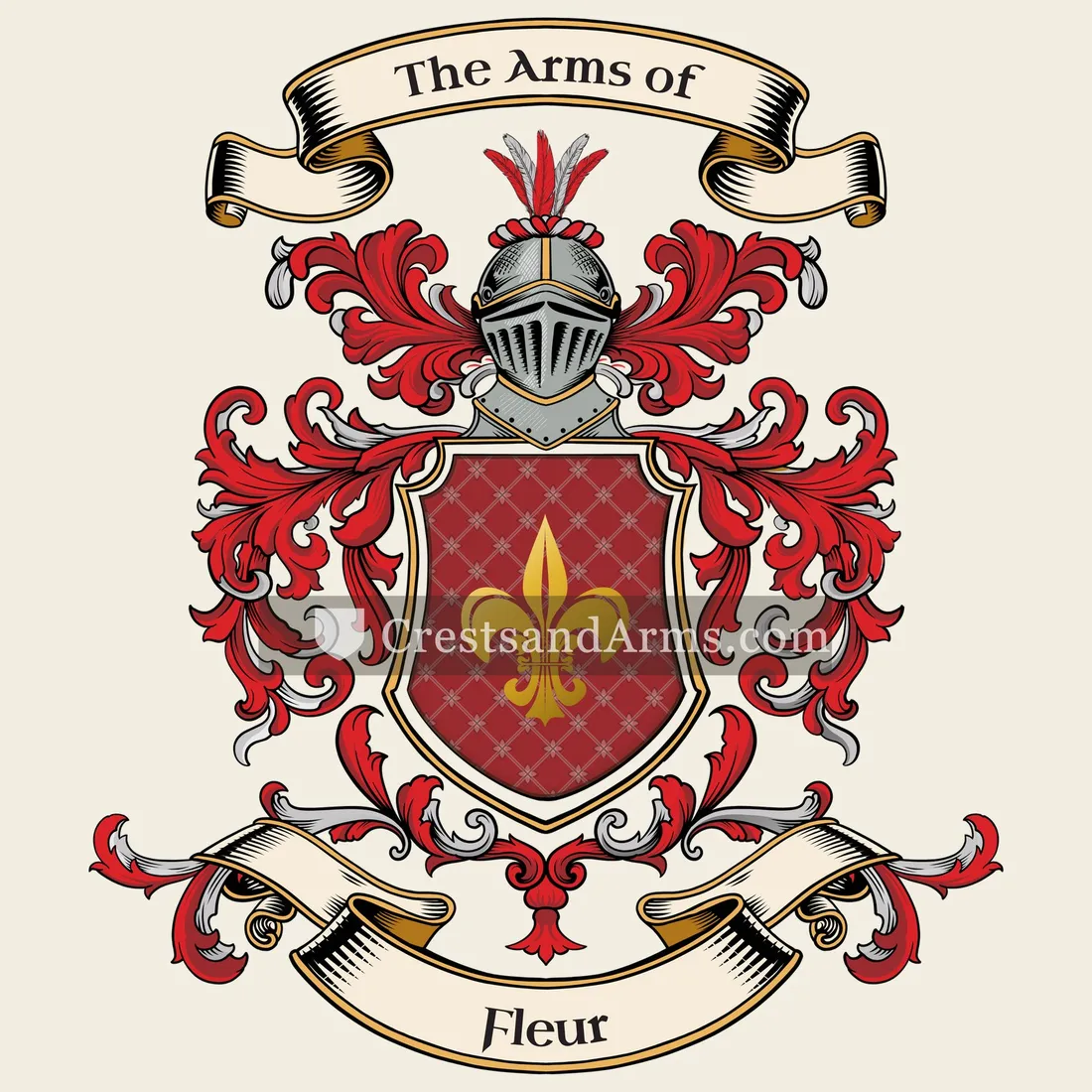
 lionCourage, strength and royalty
 lionCourage, strength and royalty


 fleur de lisPurity, light, and the sixth son

 saltireResolution, and St Andrew's cross
 serpentWisdom, healing and prudence