Map of Belgium showing where the Flinders arms are recorded
The Flinders arms were recorded in Belgium, c. 1737.
Arms such as these were typically recorded in Brabant.
Brabant lay at the heart of the Low Countries, where the trade routes met. Its towns were wealthy and its landowners many, and both kinds of family kept arms, which is why the region is so heavily represented.
This is where the arms were entered in the register. Families often moved to other parts of the country, so the same name can turn up in more than one region.
The body that granted and recorded arms in Belgium in this period.
Charles VI, Holy Roman Emperor
Sovereign of the period
Charles VI, Holy Roman Emperor
1711–1740
Reigning in Belgium when the Flinders arms are first recorded.
How Arms Worked in Belgium
In Belgium, a coat of arms is considered personal property that is passed down through the male line to legitimate descendants. Families often use the same shield design across generations to show their shared heritage. If a branch of the family wants to change the design, they must apply for an official update to their specific version of the arms.
Granting authority
The Conseil héraldique is the official body that regulates and approves all coats of arms in Belgium.
How they got arms
Families obtain their coats of arms through formal royal grants or by confirming their historical right to use existing designs.
Where arms were recorded
All approved coats of arms are officially recorded in the public registers of the Conseil héraldique since 1844.
The family's standing
Recorded among the armigerous families of Belgium.
Origin & History of the Flinders Family in Belgium
The history of the Flinders name in Belgium is rooted in the vibrant social landscape of the Duchy of Brabant during the early eighteenth century. By 1737, records confirm that members of the family were established within this region, which was then part of the Austrian Netherlands. During this era, Brabant served as a major crossroads for trade and cultural exchange between Northern and Western Europe. Families living in this area often navigated complex shifts in local governance and economic life as the region transitioned through various European power struggles. The presence of the Flinders name in Brabant suggests that these early ancestors were likely integrated into the local merchant or professional classes who benefited from the stability of the regional administrative centers. This period was defined by a steady growth in urban populations, and the family would have been part of a society that valued formal record-keeping and community ties. Their life in Brabant reflects a time when families were increasingly documented through parish registers and municipal tax records as they built their livelihoods in the heart of the Low Countries.
Meaning of the Flinders family crest colors & symbols
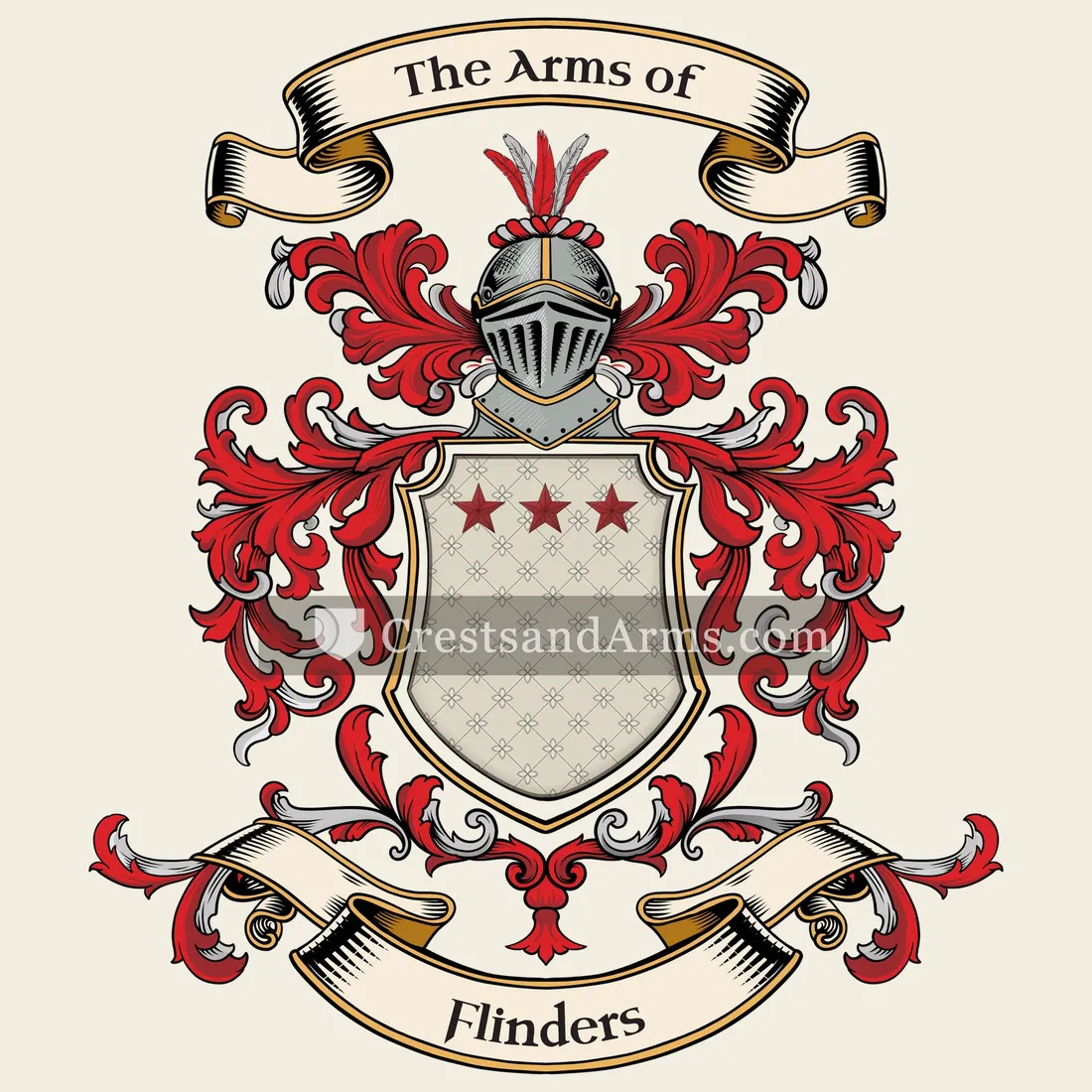
Symbols on this shield
mulletThe third son, and a divine quality from above
Colours
Silver (Argent)Means: Peace and sincerity
Red (Gules)Means: Military strength
Historical info
Source
Sir Bernard Burke, The General Armory of England, Scotland, Ireland and Wales, London: Harrison & Sons, 1884
Blazon (the actual original written record)
“Ar. three mullets in chief pierced gu”
Englandc. 1620
Digital archive packCoat of arms PNG, gold border print PDF, vector SVG and the certificate of authenticity. Sent to your email in minutes.
Map of England showing where the Flinders arms are recorded
The Flinders arms were recorded in England, c. 1620.
Arms such as these were typically recorded in York.
Yorkshire is the largest of the English counties, and it held more gentry families than any other. Land there was split among a great many households rather than a few, so a great many of them carried arms.
This is where the arms were entered in the register. Families often moved to other parts of the country, so the same name can turn up in more than one region.
The body that granted and recorded arms in England in this period.
James VI and I
Sovereign of the period
James VI and I
1603–1625
Reigning in Belgium when the Flinders arms are first recorded.
How Arms Worked in England
English heraldry allowed arms to be shared by all legitimate descendants of the original owner. These symbols were treated as personal property that moved through the generations to all children. While the eldest son kept the original design, other family members could use the same shield without needing to change it or register their own unique versions.
Granting authority
The College of Arms in London has regulated the use of coats of arms throughout England and Wales since 1484.
How they got arms
Families typically obtained their coats of arms through a formal grant from the Crown or by proving their ancient right to them.
Where arms were recorded
All official coats of arms are recorded in the registers kept at the College of Arms, which date back to the fifteenth century.
The family's standing
Recorded among the armigerous families of England.
Origin & History of the Flinders Family in England
The surname Flinders is a topographical name, meaning it was likely first used to describe people who lived near a specific local feature or landmark. By the early 17th century, the family had established a clear presence in the city of York, where records confirm their residence by 1620. During this era, York was a bustling center of trade and religious life, and families like the Flinders were often involved in the local merchant guilds or skilled crafts that defined the city’s economy. As the name spread from northern England, it likely evolved through local dialects and regional pronunciations. While the family remained rooted in the north for generations, their history reflects the broader movement of English families who transitioned from rural life into the growing urban centers of the Stuart period.
Meaning of the Flinders family crest colors & symbols
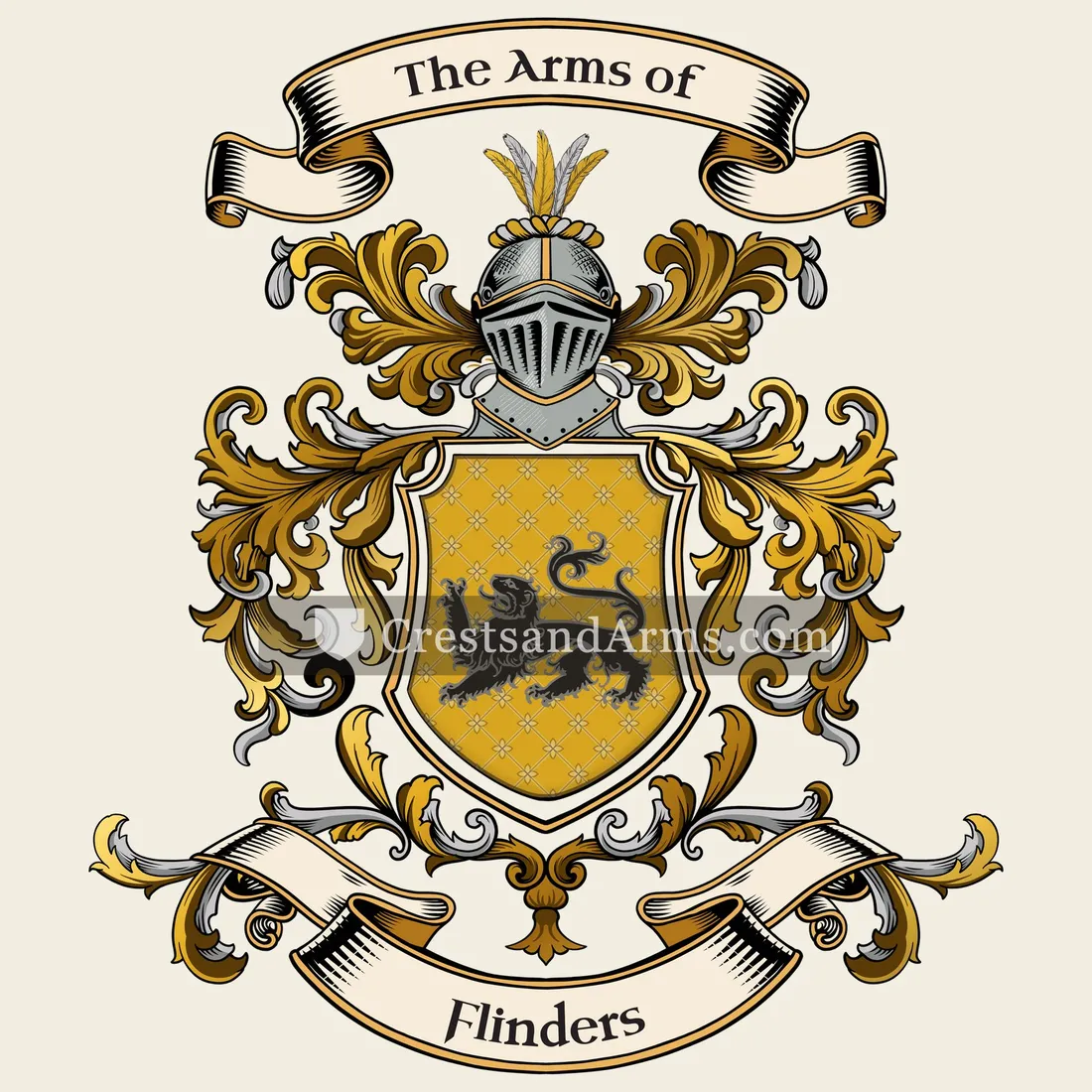
Symbols on this shield
lionCourage, strength and royalty
Colours
Gold (Or)Means: Generosity
Black (Sable)Means: Constancy
Historical info
Source
Sir Bernard Burke, The General Armory of England, Scotland, Ireland and Wales, London: Harrison & Sons, 1884
Blazon (the actual original written record)
“Or, a lion sa. armed and langued gu”
Francec. 1663
Digital archive packCoat of arms PNG, gold border print PDF, vector SVG and the certificate of authenticity. Sent to your email in minutes.
Map of France showing where the Flinders arms are recorded
The Flinders arms were recorded in France, c. 1663.
Arms such as these were typically recorded in Bretagne.
More families held coats of arms in Bretagne than anywhere else in France. The land was divided into many small estates rather than a few large ones, so far more households counted as gentry, and each needed a shield of its own to be told apart.
This is where the arms were entered in the register. Families often moved to other parts of the country, so the same name can turn up in more than one region.
The body that granted and recorded arms in France in this period.
Louis XIV of France
Sovereign of the period
Louis XIV of France
1643–1715
Reigning in Belgium when the Flinders arms are first recorded.
How Arms Worked in France
In France, a coat of arms was a mark of honor that passed down through the male line to all legitimate descendants. Families often used the same shield without changes to show their shared heritage. If a branch wanted to stand out, they could add a small mark to their shield to show their specific place in the family tree.
Granting authority
The Juge d'armes de France acted as the official authority that regulated and verified coats of arms across the country.
How they got arms
Families typically inherited their arms from ancestors, though they could also receive them through royal grants or by proving their noble status.
Where arms were recorded
Coats of arms were officially recorded in the Armorial Général de France, which began its main collection in the year 1696.
The family's standing
Recorded among the armigerous families of France.
Origin & History of the Flinders Family in France
The history of the Flinders name in France is deeply rooted in the coastal region of Bretagne, where records confirm the family was established by at least 1663. During this period, the name was often associated with families living near the rugged shoreline, suggesting that the lineage may have been connected to maritime trades or local land management in the northwestern provinces. Because the region of Bretagne maintained a distinct cultural and linguistic identity separate from the rest of the French kingdom, families like the Flinders often lived within tight-knit communities that relied heavily on the sea for their livelihood. While the name eventually spread across borders, its presence in seventeenth-century France highlights a history of resilience and adaptation within the unique social landscape of the Breton countryside.
Flinders Meaning & Related Branches
Root word
Flandrensis
Latin term referring to a person from the region of Flanders.
This name
FlindersA topographic or habitational surname denoting someone who originated from the Flemish region.
also spelled
Flandres
Flandris
Flandrys
Documented Sources
Sir Bernard Burke, The General Armory of England, Scotland, Ireland and Wales, London: Harrison & Sons, 1884
Archives: State Archives in Belgium (Rijksarchief te België), Parochieregisters van Brabant
Book: De Smet, A., Geschiedenis van de Nederlanden, 1968
Digital archive packCoat of arms PNG, gold border print PDF, vector SVG and the certificate of authenticity. Sent to your email in minutes.


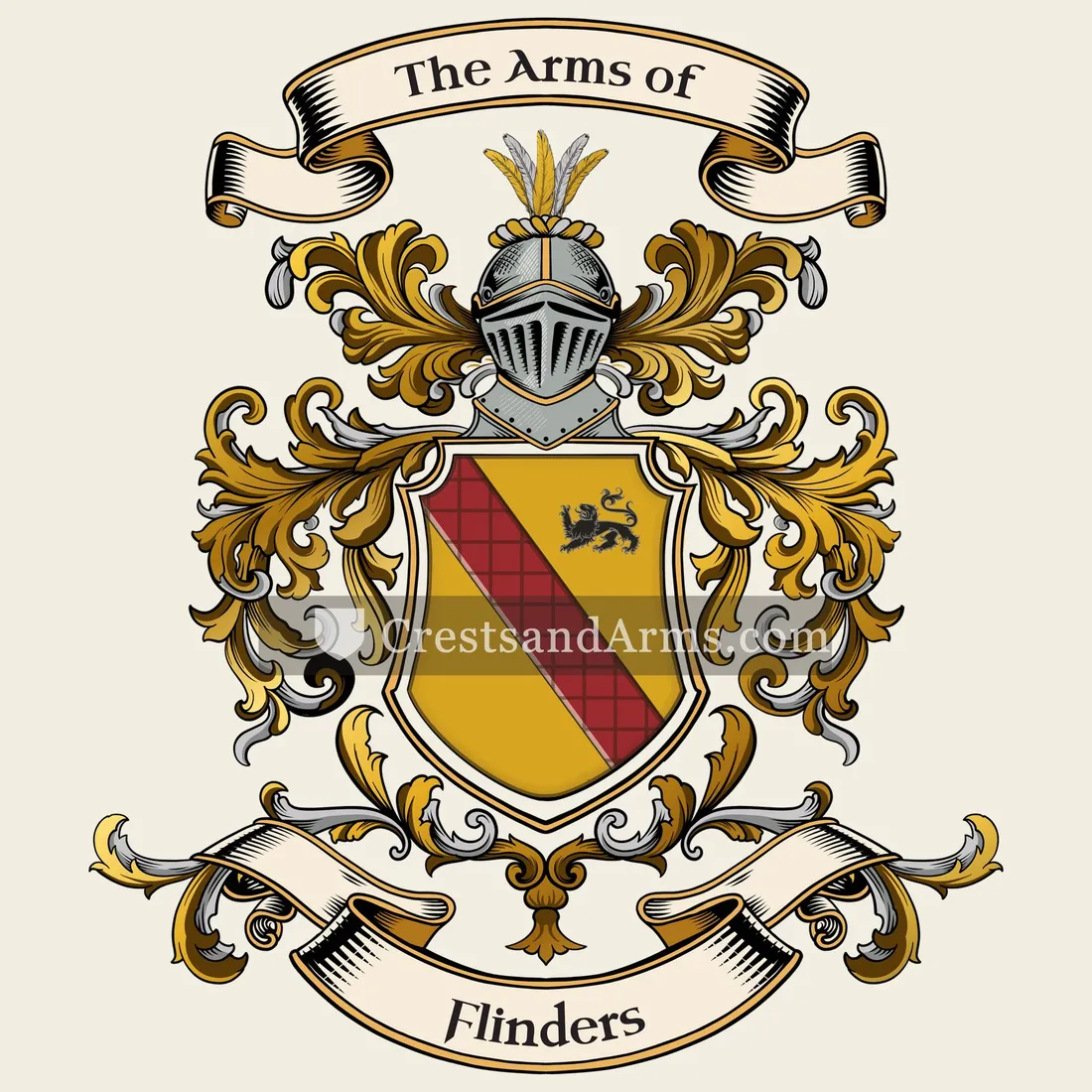
 bendDefence, and the scarf of a commander
 lionCourage, strength and royalty
 bendDefence, and the scarf of a commander
 lionCourage, strength and royalty


 mulletThe third son, and a divine quality from above