Map of Britain showing where the Flis arms are recorded
The Flis arms were recorded in Britain, c. 1661.
Arms such as these were typically recorded in Kent.
Kent sits between London and the short crossing to Europe, and the trade passing through made it wealthy. Merchant families bought land with that money, and it was landowners who took coats of arms.
This is where the arms were entered in the register. Families often moved to other parts of the country, so the same name can turn up in more than one region.
The body that granted and recorded arms in Britain in this period.
Charles II of England
Sovereign of the period
Charles II of England
1660–1685
Reigning in Britain when the Flis arms are first recorded.
How Arms Worked in Britain
English heraldry allowed arms to be shared by all legitimate descendants of the original owner. These symbols were treated as personal property that moved through the generations to all children. While the eldest son kept the original design, other family members could use the same shield without needing to change it or register their own unique versions.
Granting authority
The College of Arms in London has regulated the use of coats of arms throughout England and Wales since 1484.
How they got arms
Families typically obtained their coats of arms through a formal grant from the Crown or by proving their ancient right to them.
Where arms were recorded
All official coats of arms are recorded in the registers kept at the College of Arms, which date back to the fifteenth century.
The family's standing
Recorded among the armigerous families of Britain.
Origin & History of the Flis Family in Britain
The family name Flis is a rare surname with deep roots in the historical landscape of Kent, England. By the year 1661, records confirm that members of the family were already established within this southeastern county. During the seventeenth century, Kent served as a vital hub for trade and agriculture, placing the family in a region characterized by its proximity to the English Channel and its bustling market towns. While the name is often associated with later migrations from Central and Eastern Europe, its presence in seventeenth-century Kent suggests that early bearers were integrated into the local parish systems and rural economy of the time. These early individuals likely lived as tenant farmers or tradespeople, contributing to the quiet development of their local communities long before the name gained wider recognition. Through the study of parish registers and local tax assessments, historians can trace the steady persistence of the family as they navigated the social and economic shifts of Restoration-era England.
Coat of Arms & Family Crest Details
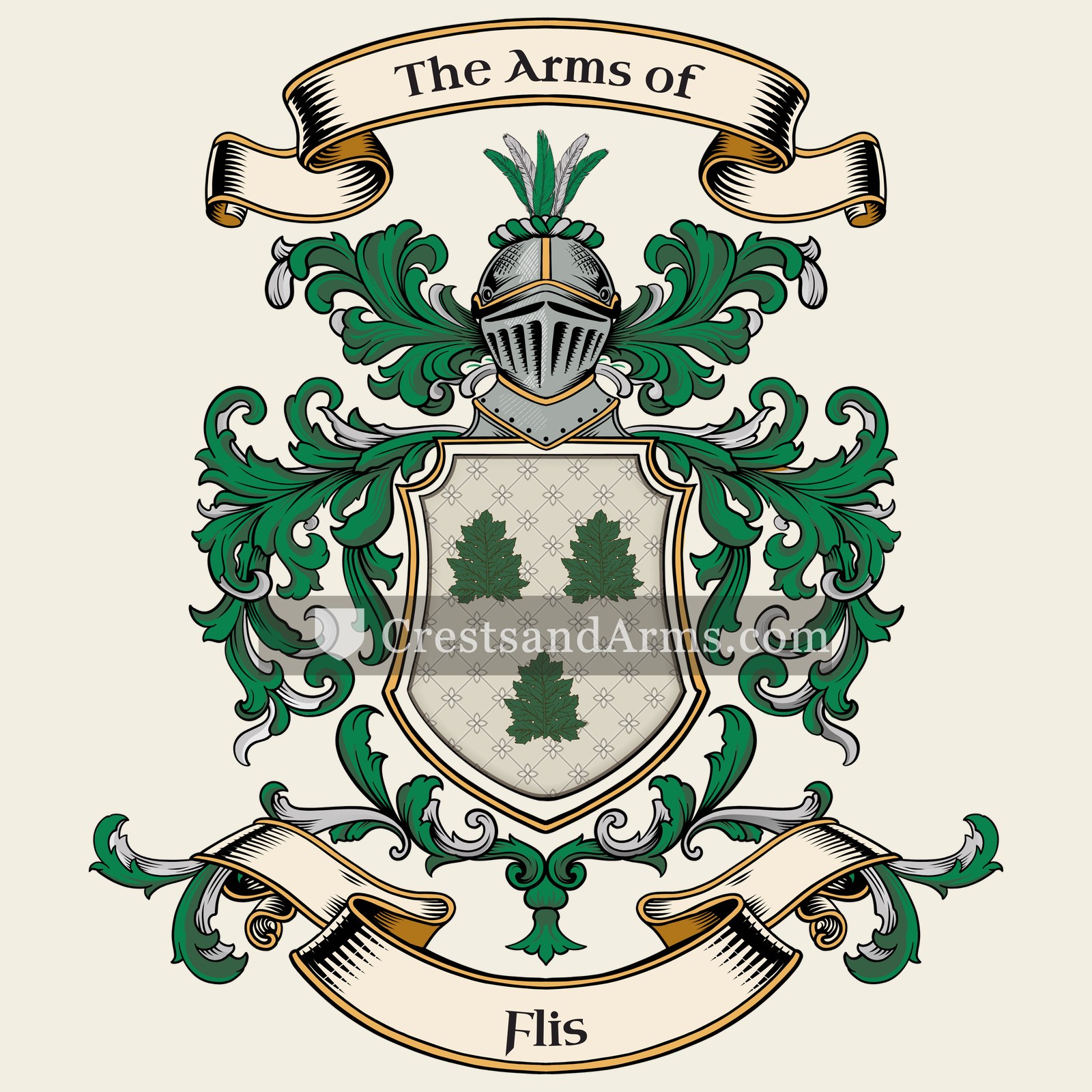
Symbols on this shield
leafHappiness and abundance
Colours
Silver (Argent)Means: Peace and sincerity
Green (Vert)Means: Hope
Historical info
Source
Sir Bernard Burke, The General Armory of England, Scotland, Ireland and Wales, London: Harrison & Sons, 1884
Blazon (the actual original written record)
“Ar. three laurel leaves slipped vert”
EdinburghColinton · Edinburgh, c. 1634
Digital archive packCoat of arms PNG, gold border print PDF, vector SVG and the certificate of authenticity. Sent to your email in minutes.
Map of Scotland showing where the Flis arms are recorded
The Flis arms were recorded in Edinburgh, c. 1634.
Edinburgh was the seat of Scotland's government, its courts and its heralds. Families with business there settled nearby, and being close to where arms were recorded is exactly why so many of them appear.
This is where the arms were entered in the register. Families often moved to other parts of the country, so the same name can turn up in more than one region.
The body that granted and recorded arms in Scotland in this period.
Charles I of England
Sovereign of the period
Charles I of England
1625–1649
Reigning in Britain when the Flis arms are first recorded.
How Arms Worked in Scotland
Scottish heraldry is unique because it treats a coat of arms as a piece of personal property protected by law. Only one person can own a specific design at any given time. When a family grows, the head keeps the original shield while other relatives must apply for their own distinct version with slight changes to prove their specific identity.
Granting authority
The Court of the Lord Lyon acts as the official body that regulates and controls all heraldic matters throughout Scotland.
How they got arms
Individuals obtain a legal right to their arms through a formal petition process that confirms their identity and family connection.
Where arms were recorded
All valid coats of arms are officially entered into the Public Register of All Arms and Bearings starting from 1672.
The family's standing
Recorded among the armigerous families of Edinburgh.
Origin & History of the Flis Family in Scotland
The history of the Flis family in Scotland begins with documented evidence of their presence in Edinburgh during the early seventeenth century. By 1634, members of the family were established within the capital city, living during a period of significant religious and political transition in Scotland. While the name is often associated with broader European roots, its appearance in Scottish records suggests that these early settlers were likely integrated into the urban merchant or trade classes that defined Edinburgh at the time. Life in the city during the 1630s required navigating the strict social structures of the Royal Burgh, where families like the Flis clan would have participated in the local economy and community life. Their presence in the historical record provides a rare glimpse into the lives of families who settled in Scotland’s urban centers long before the industrial shifts of later centuries.
Coat of Arms & Family Crest Details
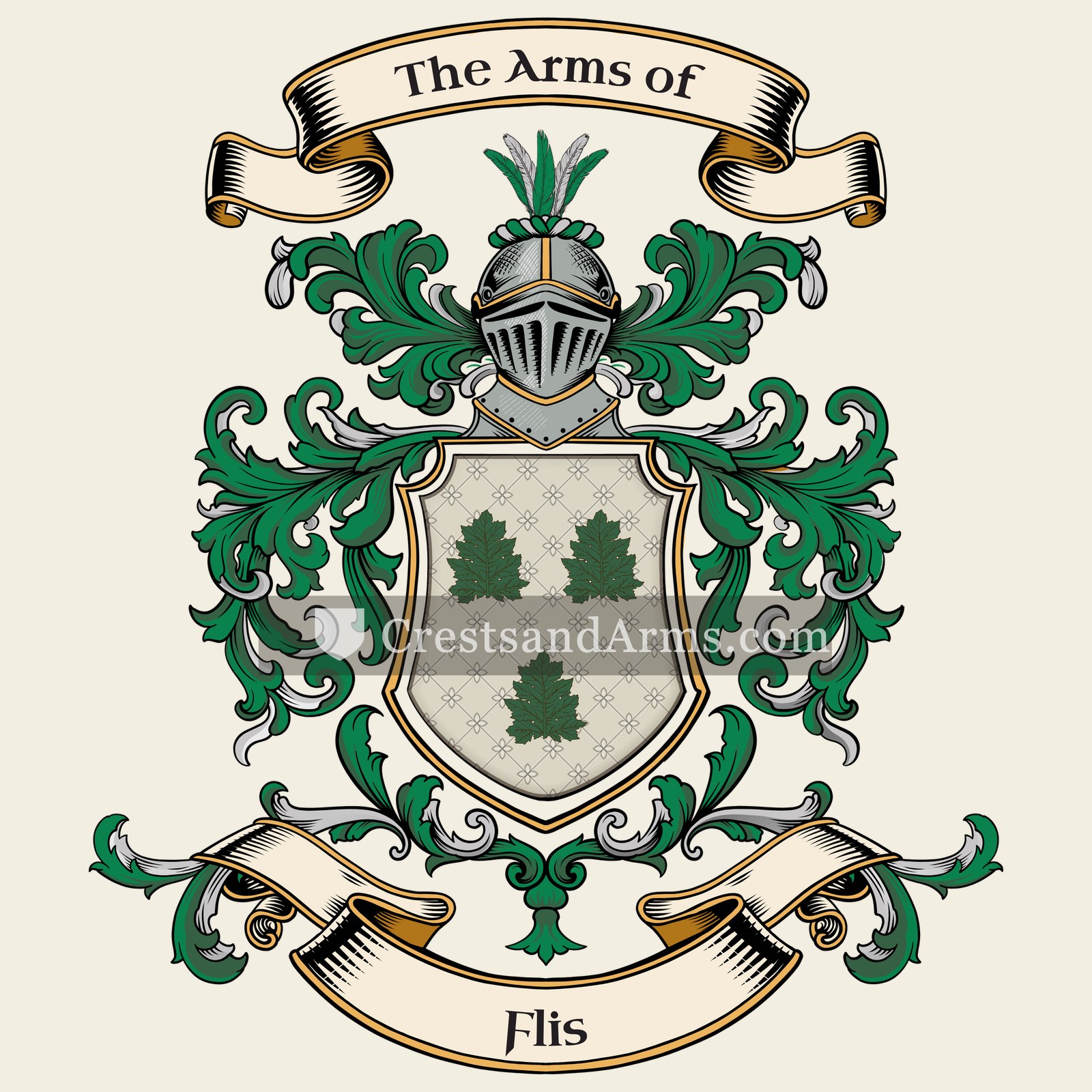
Symbols on this shield
leafHappiness and abundance
Colours
Silver (Argent)Means: Peace and sincerity
Historical info
Source
Sir Bernard Burke, The General Armory of England, Scotland, Ireland and Wales, London: Harrison & Sons, 1884
Blazon (the actual original written record)
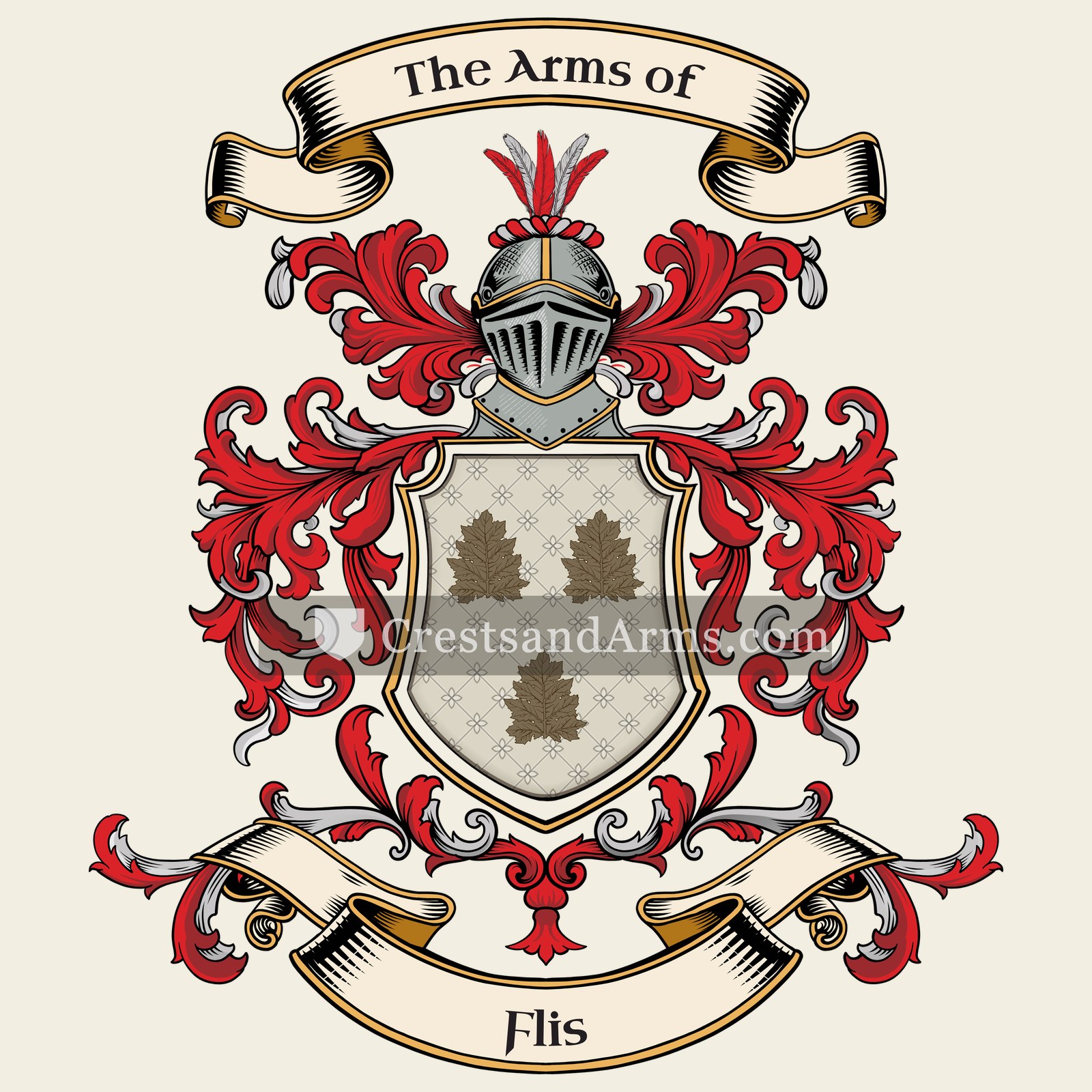
“Ar. three laurel leaves erect ppr”
YorkIngleby Manor · York, c. 1620
Digital archive packCoat of arms PNG, gold border print PDF, vector SVG and the certificate of authenticity. Sent to your email in minutes.
Map of England showing where the Flis arms are recorded
The Flis arms were recorded in York, c. 1620.
Yorkshire is the largest of the English counties, and it held more gentry families than any other. Land there was split among a great many households rather than a few, so a great many of them carried arms.
This is where the arms were entered in the register. Families often moved to other parts of the country, so the same name can turn up in more than one region.
The body that granted and recorded arms in England in this period.
James VI and I
Sovereign of the period
James VI and I
1603–1625
Reigning in Britain when the Flis arms are first recorded.
How Arms Worked in England
English heraldry allowed arms to be shared by all legitimate descendants of the original owner. These symbols were treated as personal property that moved through the generations to all children. While the eldest son kept the original design, other family members could use the same shield without needing to change it or register their own unique versions.
Granting authority
The College of Arms in London has regulated the use of coats of arms throughout England and Wales since 1484.
How they got arms
Families typically obtained their coats of arms through a formal grant from the Crown or by proving their ancient right to them.
Where arms were recorded
All official coats of arms are recorded in the registers kept at the College of Arms, which date back to the fifteenth century.
The family's standing
Recorded among the armigerous families of York.
Origin & History of the Flis Family in England
The history of the Flis family in England begins with documented evidence of their presence in the city of York as early as 1620. During the seventeenth century, York was a bustling center of trade and religious activity, providing a stable environment for families to establish their roots. The name itself likely originated as a descriptive term or a nickname, which was a common practice for identifying individuals within a growing urban population. As the family settled into the local community, they participated in the daily life of the city, likely working in the trades or crafts that defined York’s economy at the time. By embedding themselves in the social fabric of Northern England, the early members of the Flis family helped shape the local history of the region during a period of significant national change.
Related Branches & Arms
Root word
Flesch
Middle High German term for flesh or meat.
This name
FlisAn occupational surname for a butcher or someone who dealt in meat products.
also spelled
Fouli
Fouliss
Fouly
Folee
Fowles
Documented Sources
J. B. Rietstap, Armorial Général, Gouda: G. B. van Goor Zonen, 1884–87
Kent Archives, Archdeaconry Court of Canterbury Wills and Administrations, 1661
Kent Archives, Parish Registers of the Diocese of Canterbury, 1661
Digital archive packCoat of arms PNG, gold border print PDF, vector SVG and the certificate of authenticity. Sent to your email in minutes.


 leafHappiness and abundance
 leafHappiness and abundance