Map of Netherlands showing where the Floris arms are recorded
The Floris arms were recorded in Netherlands, c. 1815.
Arms such as these were typically recorded in Friesland.
Friesland was low, wet country on the northern coast of the Netherlands, farmed by families who had held the same land for centuries. Free landholders were unusually common there, and a free landholder could carry arms.
This is where the arms were entered in the register. Families often moved to other parts of the country, so the same name can turn up in more than one region.
Region
Friesland
First recorded
1815
Granting Authority for the Floris Arms
Hoge Raad van Adel
Photograph made by me · CC BY-SA 3.0
The body that granted and recorded arms in Netherlands in this period.
William I of the Netherlands
Sovereign of the period
William I of the Netherlands
1815–1840
Reigning in Netherlands when the Floris arms are first recorded.
How Arms Worked in Netherlands
In the Netherlands, coats of arms were often used by noble families and those who held specific public offices. These arms were passed down through the generations to legitimate descendants. Younger branches of a family usually kept the original design without needing to add special marks. This system ensured that the family identity remained clear and consistent over many years.
Granting authority
The Hoge Raad van Adel is the official body that regulates and manages noble titles and coats of arms in the Netherlands.
How they got arms
Families typically obtained their coats of arms through official royal grants or by proving their long-standing historical use of the symbols.
Where arms were recorded
Coats of arms are officially recorded in the registers held by the Hoge Raad van Adel, which began its work in 1814.
The family's standing
Recorded among the armigerous families of Netherlands.
Origin & History of the Floris Family in Netherlands
The name Floris originates from the Latin name Florentius, which means blooming or flourishing. In the Netherlands, the name evolved from a common given name into a hereditary surname during the centuries when families began adopting permanent last names. By the early 19th century, members of the Floris family were well-established in the northern province of Friesland. This region has a unique cultural history, and families living there often maintained strong ties to their local communities and agricultural traditions. The presence of the name in Friesland by 1815 aligns with the period when the Dutch government began requiring formal civil registration for all citizens. This transition helped solidify the spelling and usage of the name for future generations as the family integrated into the broader administrative structure of the Kingdom of the Netherlands.
Coat of Arms & Family Crest Details
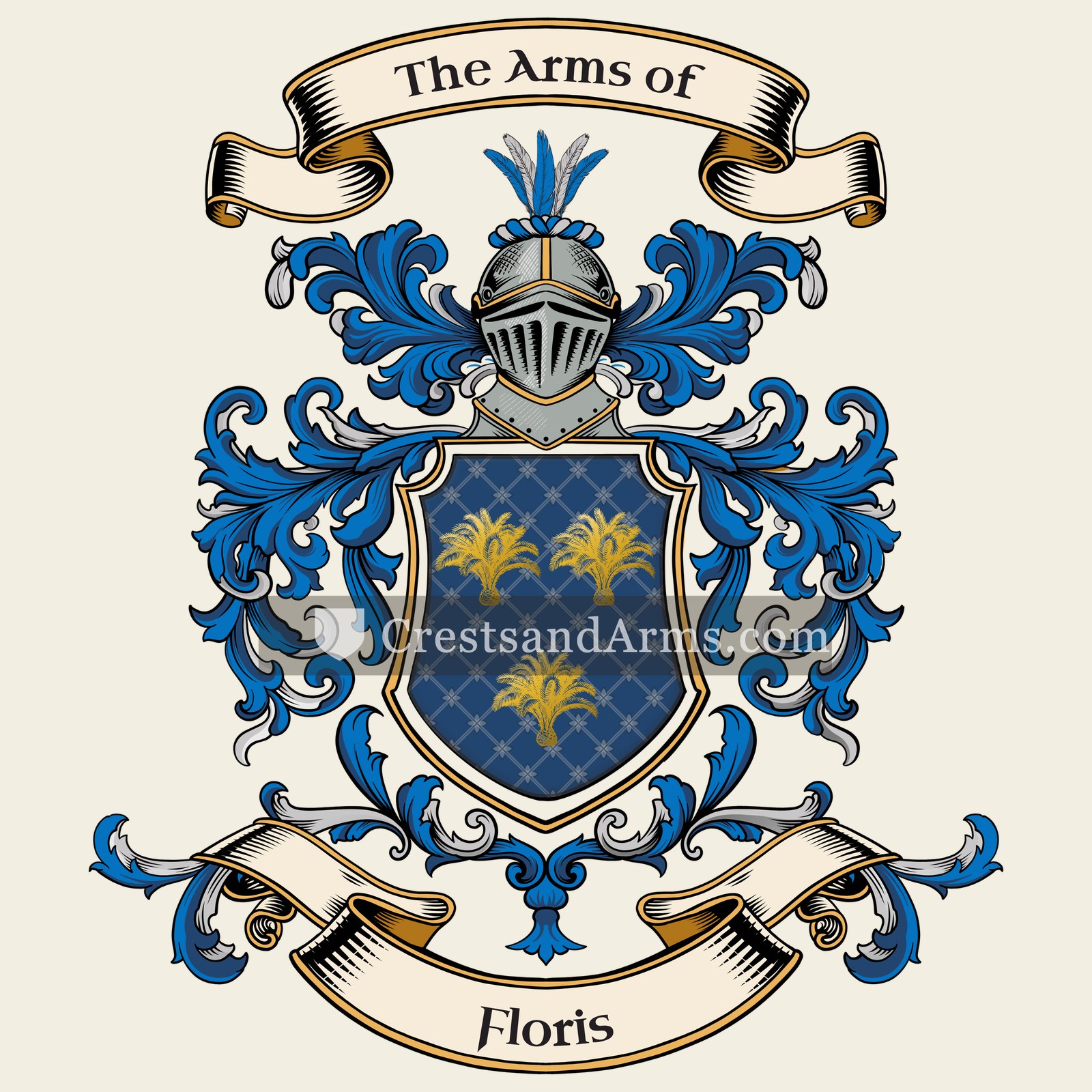
Symbols on this shield
palm treeVictory, and righteousness that flourishes
Colours
Blue (Azure)Means: Loyalty and truth
Gold (Or)Means: Generosity
Historical info
Source
J. B. Rietstap, Armorial Général, Gouda: G. B. van Goor Zonen, 1884–87
Blazon (the actual original written record)
“D'azur à trois palmiers d'or.”
DauphineDauphine, c. 1663
Digital archive packCoat of arms PNG, gold border print PDF, vector SVG and the certificate of authenticity. Sent to your email in minutes.
Map of France showing where the Floris arms are recorded
The Floris arms were recorded in Dauphine, c. 1663.
Dauphine lay in the mountains of south-eastern France, a country of small estates and scattered valleys. Its gentry were many and mostly modest, and even a small landholding was enough to justify arms.
This is where the arms were entered in the register. Families often moved to other parts of the country, so the same name can turn up in more than one region.
The body that granted and recorded arms in France in this period.
Louis XIV of France
Sovereign of the period
Louis XIV of France
1643–1715
Reigning in Netherlands when the Floris arms are first recorded.
How Arms Worked in France
In France, a coat of arms was a mark of honor that passed down through the male line to all legitimate descendants. Families often used the same shield without changes to show their shared heritage. If a branch wanted to stand out, they could add a small mark to their shield to show their specific place in the family tree.
Granting authority
The Juge d'armes de France acted as the official authority that regulated and verified coats of arms across the country.
How they got arms
Families typically inherited their arms from ancestors, though they could also receive them through royal grants or by proving their noble status.
Where arms were recorded
Coats of arms were officially recorded in the Armorial Général de France, which began its main collection in the year 1696.
The family's standing
Recorded among the armigerous families of Dauphine.
Origin & History of the Floris Family in France
The family name Floris traces its roots in France to the rugged and mountainous region of Dauphiné, where records confirm the presence of family members by the year 1663. The name itself is derived from the Latin word flos, which means flower, and it likely began as a descriptive nickname for a person known for their charm or perhaps their work as a gardener or florist. During the seventeenth century, families in this part of southeastern France often lived in close-knit rural communities nestled in the Alpine foothills. Life in Dauphiné was defined by the challenging landscape and the shifting political climate of the French monarchy. As the Floris family established themselves in this area, they became part of the local social fabric, likely working in trades that supported the agricultural and mercantile life of the province. By settling in this region, the early ancestors of the Floris name contributed to the long history of families who helped shape the culture and traditions of the French countryside during the early modern period.
Floris Meaning & Related Branches
Root word
Florentius
Derived from the Latin word florens meaning blooming or flowering.
This name
FlorisA Dutch given name and surname signifying one who is flourishing or prosperous.
also spelled
Floriss
Floriz
Flori
Related arms
Barbinsimilar arms
Malosimilar arms
Rue-du-Cansimilar arms
Floresvariant spelling
Documented Sources
J. B. Rietstap, Armorial Général, Gouda: G. B. van Goor Zonen, 1884–87
Tresoar (Fries Historisch en Letterkundig Centrum), Burgerlijke Stand van Friesland (Civil Registry of Friesland)
Nationaal Archief, Registers van de Burgerlijke Stand (Civil Registry Records)
Van der Schaar, J., Woordenboek van voornamen, 1964
Meertens, P.J., De betekenis van de Nederlandse familienamen, 1959
Digital archive packCoat of arms PNG, gold border print PDF, vector SVG and the certificate of authenticity. Sent to your email in minutes.


 mulletThe third son, and a divine quality from above
 swanGrace, light and the poet's art
 mulletThe third son, and a divine quality from above
 swanGrace, light and the poet's art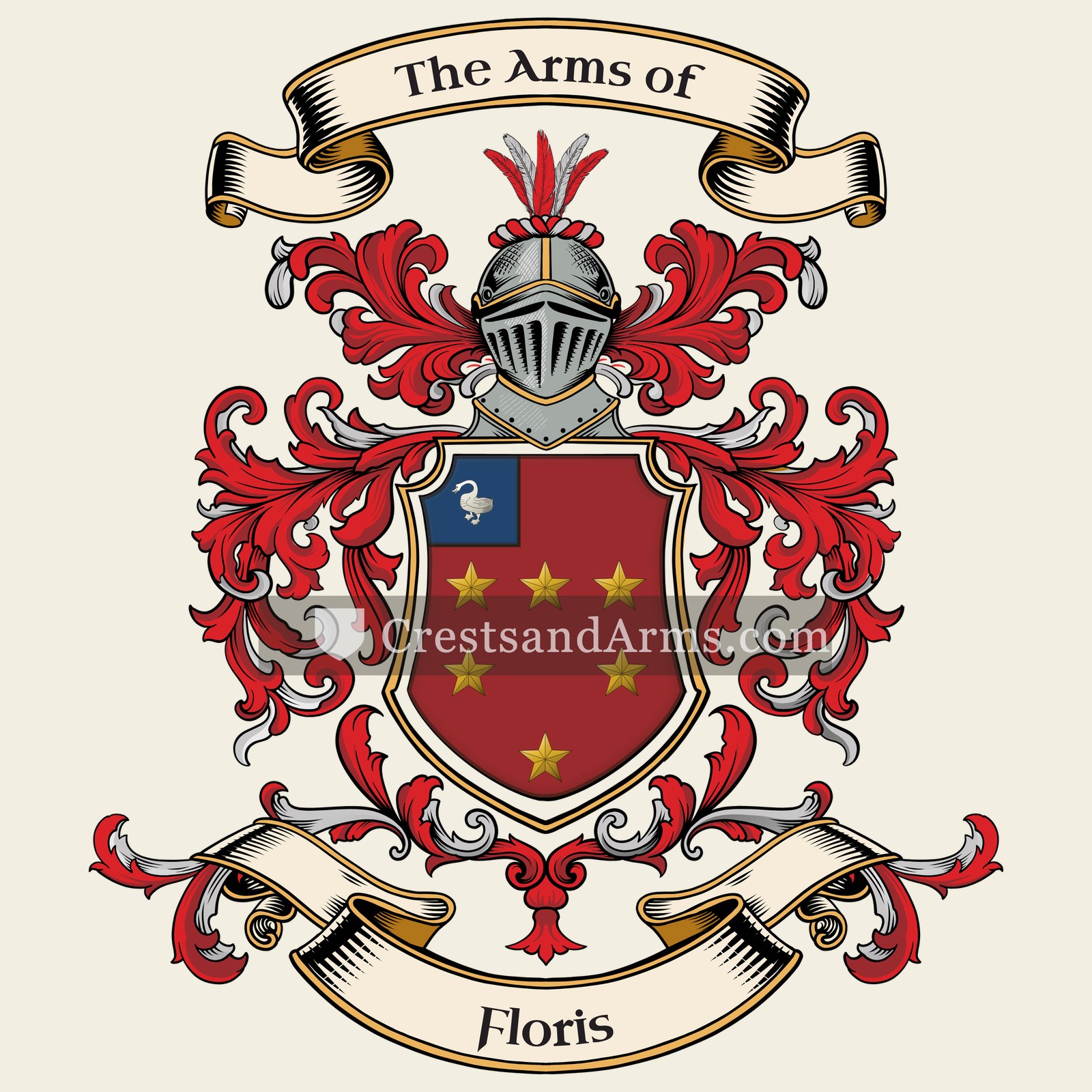


 palm treeVictory, and righteousness that flourishes