Map of Netherlands showing where the Flory arms are recorded
The Flory arms were recorded in Netherlands, c. 1815.
Arms such as these were typically recorded in Friesland.
Friesland was low, wet country on the northern coast of the Netherlands, farmed by families who had held the same land for centuries. Free landholders were unusually common there, and a free landholder could carry arms.
This is where the arms were entered in the register. Families often moved to other parts of the country, so the same name can turn up in more than one region.
Region
Friesland
First recorded
1815
Granting Authority for the Flory Arms
Hoge Raad van Adel
Photograph made by me · CC BY-SA 3.0
The body that granted and recorded arms in Netherlands in this period.
William I of the Netherlands
Sovereign of the period
William I of the Netherlands
1815–1840
Reigning in Netherlands when the Flory arms are first recorded.
How Arms Worked in Netherlands
In the Netherlands, coats of arms were often used by noble families and those who held specific public offices. These arms were passed down through the generations to legitimate descendants. Younger branches of a family usually kept the original design without needing to add special marks. This system ensured that the family identity remained clear and consistent over many years.
Granting authority
The Hoge Raad van Adel is the official body that regulates and manages noble titles and coats of arms in the Netherlands.
How they got arms
Families typically obtained their coats of arms through official royal grants or by proving their long-standing historical use of the symbols.
Where arms were recorded
Coats of arms are officially recorded in the registers held by the Hoge Raad van Adel, which began its work in 1814.
The family's standing
Recorded among the armigerous families of Netherlands.
Origin & History of the Flory Family in Netherlands
The history of the Flory name in the Netherlands is deeply connected to the northern province of Friesland, where records confirm the family was established by at least 1815. During this period, the Dutch population was transitioning toward standardized surnames due to the introduction of the civil registry under Napoleonic influence. The name Flory likely originated as a variation of personal names rooted in Germanic or Latin traditions, often linked to the word for flower or blooming. In the rural landscape of Friesland, families like the Florys were typically involved in agriculture or local trade, living in small, tight-knit communities that relied on the fertile land and proximity to the North Sea. As the nineteenth century progressed, the family became part of the broader social fabric of the region, contributing to the local economy and maintaining the distinct cultural identity that defines Frisian history.
Coat of Arms & Family Crest Details
Symbols on this shield
chiefAuthority, wisdom and dominion
lionCourage, strength and royalty
cinquefoilHope and joy
Colours
Red (Gules)Means: Military strength
Silver (Argent)Means: Peace and sincerity
Historical info
Source
J. B. Rietstap, Armorial Général, Gouda: G. B. van Goor Zonen, 1884–87
Blazon (the actual original written record)
“De gu. au lion d'arg.; au chef du même, ch. de trois quintefeuilles du champ.”
FranceCambr, c. 1663
Digital archive packCoat of arms PNG, gold border print PDF, vector SVG and the certificate of authenticity. Sent to your email in minutes.
Map of France showing where the Flory arms are recorded
The Flory arms were recorded in Cambr, c. 1663.
This is where the arms were entered in the register. Families often moved to other parts of the country, so the same name can turn up in more than one region.
The body that granted and recorded arms in France in this period.
Louis XIV of France
Sovereign of the period
Louis XIV of France
1643–1715
Reigning in Netherlands when the Flory arms are first recorded.
How Arms Worked in France
In France, a coat of arms was a mark of honor that passed down through the male line to all legitimate descendants. Families often used the same shield without changes to show their shared heritage. If a branch wanted to stand out, they could add a small mark to their shield to show their specific place in the family tree.
Granting authority
The Juge d'armes de France acted as the official authority that regulated and verified coats of arms across the country.
How they got arms
Families typically inherited their arms from ancestors, though they could also receive them through royal grants or by proving their noble status.
Where arms were recorded
Coats of arms were officially recorded in the Armorial Général de France, which began its main collection in the year 1696.
The family's standing
Recorded among the armigerous families of France.
Origin & History of the Flory Family in France
The surname Flory has deep roots in France, where it likely originated as a descriptive name derived from the Latin word *flos*, meaning flower. This name was often given to individuals who lived near fields of wildflowers or to those known for their pleasant and gentle nature. By the mid-seventeenth century, the family was well-established in the region of Cambrai, a historic city in northern France. Records confirm that members of the Flory family were present in Cambrai by 1663, living through a period when the city was transitioning from Spanish control to French rule under King Louis XIV. During this era, families with this name were often integrated into the local community as tradespeople or farmers, contributing to the agricultural and social life of the French countryside. Their presence in northern France during this time reflects the broader movement of families who helped shape the local culture and economy of the region.
Coat of Arms & Family Crest Details
Symbols on this shield
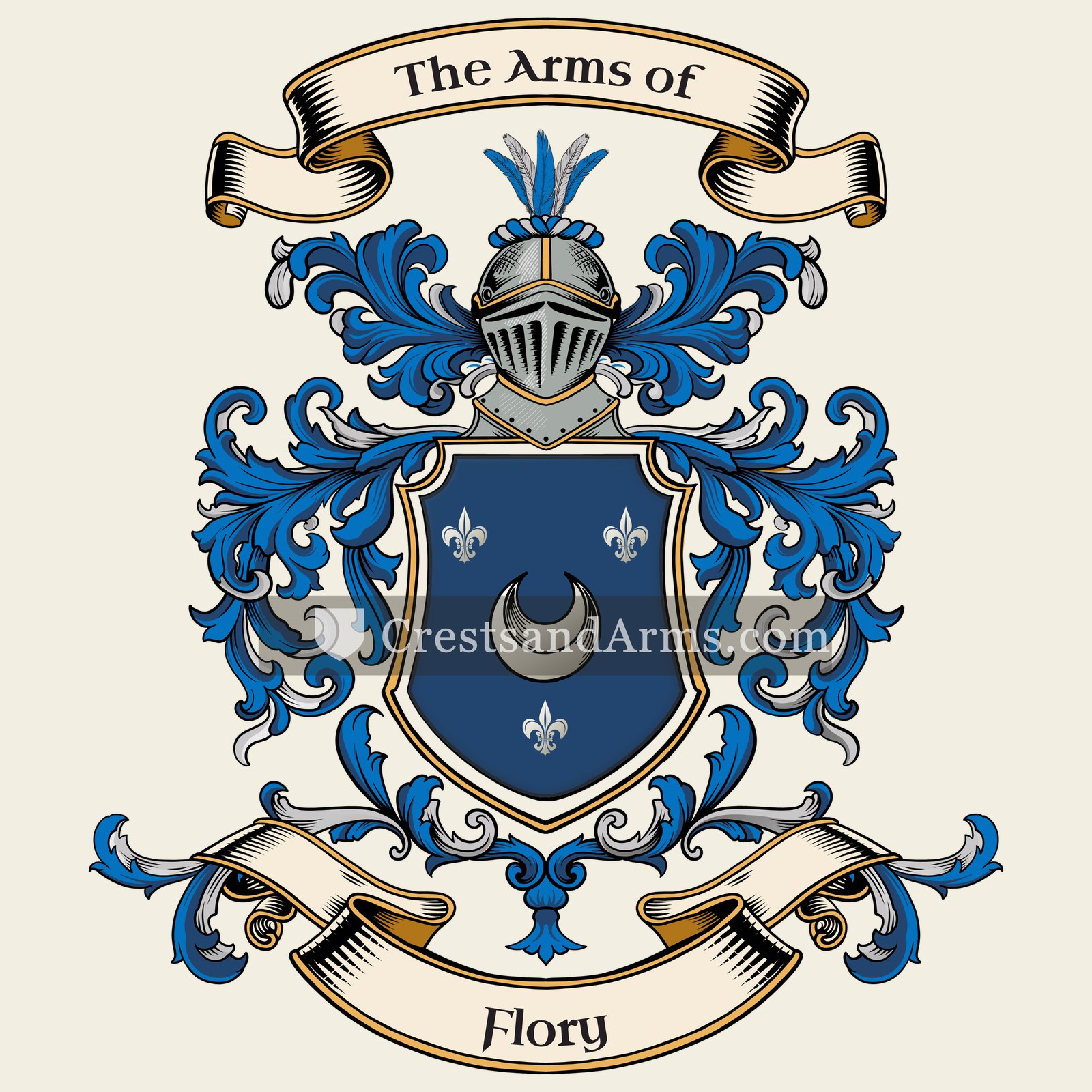
crescentHonour by the sovereign, and the second son
fleur de lisPurity, light, and the sixth son
Colours
Blue (Azure)Means: Loyalty and truth
Silver (Argent)Means: Peace and sincerity
Historical info
Source
Sir Bernard Burke, The General Armory of England, Scotland, Ireland and Wales, London: Harrison & Sons, 1884
Blazon (the actual original written record)
“Az. a crescent betw. three fleurs-de-lis ar. seeded or”
SomersetSomerset, c. 1620
Digital archive packCoat of arms PNG, gold border print PDF, vector SVG and the certificate of authenticity. Sent to your email in minutes.
Map of England showing where the Flory arms are recorded
The Flory arms were recorded in Somerset, c. 1620.
Somerset was rich farming country with a thick scattering of manor houses. Its gentry were numerous and long-settled, and a settled landed family almost always ended up with arms.
This is where the arms were entered in the register. Families often moved to other parts of the country, so the same name can turn up in more than one region.
The body that granted and recorded arms in England in this period.
James VI and I
Sovereign of the period
James VI and I
1603–1625
Reigning in Netherlands when the Flory arms are first recorded.
How Arms Worked in England
English heraldry allowed arms to be shared by all legitimate descendants of the original owner. These symbols were treated as personal property that moved through the generations to all children. While the eldest son kept the original design, other family members could use the same shield without needing to change it or register their own unique versions.
Granting authority
The College of Arms in London has regulated the use of coats of arms throughout England and Wales since 1484.
How they got arms
Families typically obtained their coats of arms through a formal grant from the Crown or by proving their ancient right to them.
Where arms were recorded
All official coats of arms are recorded in the registers kept at the College of Arms, which date back to the fifteenth century.
The family's standing
Recorded among the armigerous families of Somerset.
Origin & History of the Flory Family in England
The family name Flory has deep roots in the English county of Somerset, where records confirm members of the family were living by the year 1620. The name likely originated as a descriptive nickname or a locational surname, potentially derived from the Old French word *flori*, which means flowery or blooming. In the medieval period, such names were often given to people who lived near a patch of wildflowers or to individuals with a cheerful personality. By the early seventeenth century, the Flory family had established a presence in the rural landscapes of the West Country. They were likely involved in the agricultural life that defined the Somerset region at the time. Over generations, the family name became firmly attached to the local history of the area, reflecting the quiet persistence of families who worked the land and built their lives within the small villages of southwestern England.
Flory Meaning & Related Branches
Root word
Florius
Latin term derived from flos meaning flower or blooming.
This name
FloryA habitational or occupational name referring to someone who lived near flowers or worked as a gardener.
also spelled
Flori
Florie
Florya
Related arms
Florivariant spelling
Documented Sources
J. B. Rietstap, Armorial Général, Gouda: G. B. van Goor Zonen, 1884–87
Tresoar (Fries Historisch en Letterkundig Centrum), Burgerlijke Stand van Friesland
Netherlands Nationaal Archief, Registers van de Burgerlijke Stand
Van der Aa, A.J., Biographisch Woordenboek der Nederlanden, 1852
Digital archive packCoat of arms PNG, gold border print PDF, vector SVG and the certificate of authenticity. Sent to your email in minutes.


 owlWisdom and vigilance by night
 owlWisdom and vigilance by night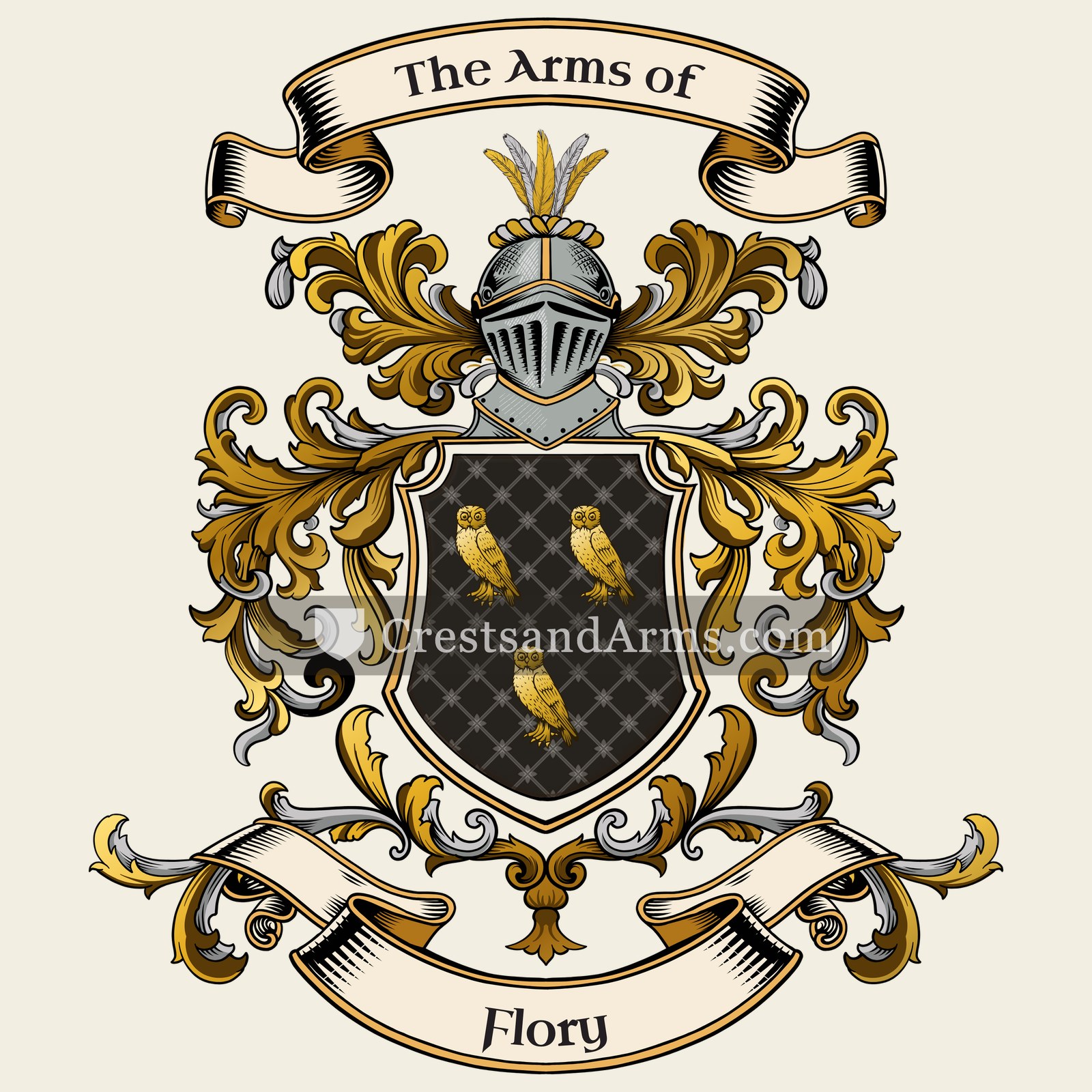


 chiefAuthority, wisdom and dominion
 lionCourage, strength and royalty
 cinquefoilHope and joy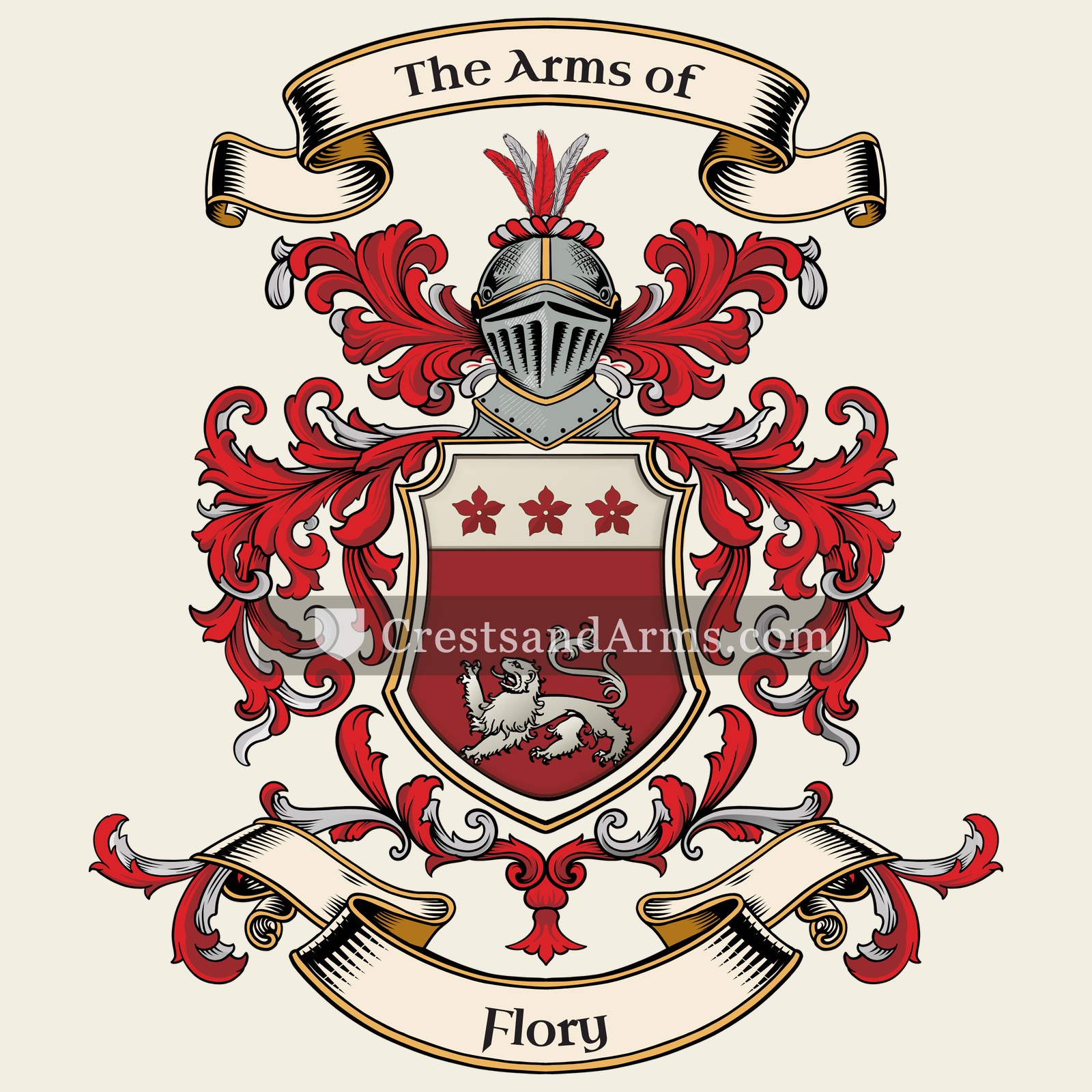


 crescentHonour by the sovereign, and the second son
 fleur de lisPurity, light, and the sixth son