Map of England showing where the Fludd arms are recorded
The Fludd arms were recorded in Kent, c. 1572.
Kent sits between London and the short crossing to Europe, and the trade passing through made it wealthy. Merchant families bought land with that money, and it was landowners who took coats of arms.
This is where the arms were entered in the register. Families often moved to other parts of the country, so the same name can turn up in more than one region.
The body that granted and recorded arms in England in this period.
Elizabeth I of England
Sovereign of the period
Elizabeth I of England
1558–1603
Reigning in England when the Fludd arms are first recorded.
How Arms Worked in England
English heraldry allowed arms to be shared by all legitimate descendants of the original owner. These symbols were treated as personal property that moved through the generations to all children. While the eldest son kept the original design, other family members could use the same shield without needing to change it or register their own unique versions.
Granting authority
The College of Arms in London has regulated the use of coats of arms throughout England and Wales since 1484.
How they got arms
Families typically obtained their coats of arms through a formal grant from the Crown or by proving their ancient right to them.
Where arms were recorded
All official coats of arms are recorded in the registers kept at the College of Arms, which date back to the fifteenth century.
The family's standing
Recorded among the armigerous families of Kent.
Origin & History of the Fludd Family in England
The family name Fludd is deeply rooted in the history of Kent, where members of the family established a prominent presence by the late sixteenth century. The name is considered a variant of the older English word flood, which likely served as a descriptive nickname for ancestors who lived near a river or a tidal area. By 1572, the family had become well-integrated into the social and professional life of Kent, with members serving in significant roles such as the military and the royal court. This period saw the family rise in status, moving from local landholders to figures of influence who participated in the intellectual and political movements of Elizabethan England. Their history reflects the broader patterns of English families who gained prominence through service to the crown and careful management of their estates in the southern counties.
Coat of Arms & Family Crest Details
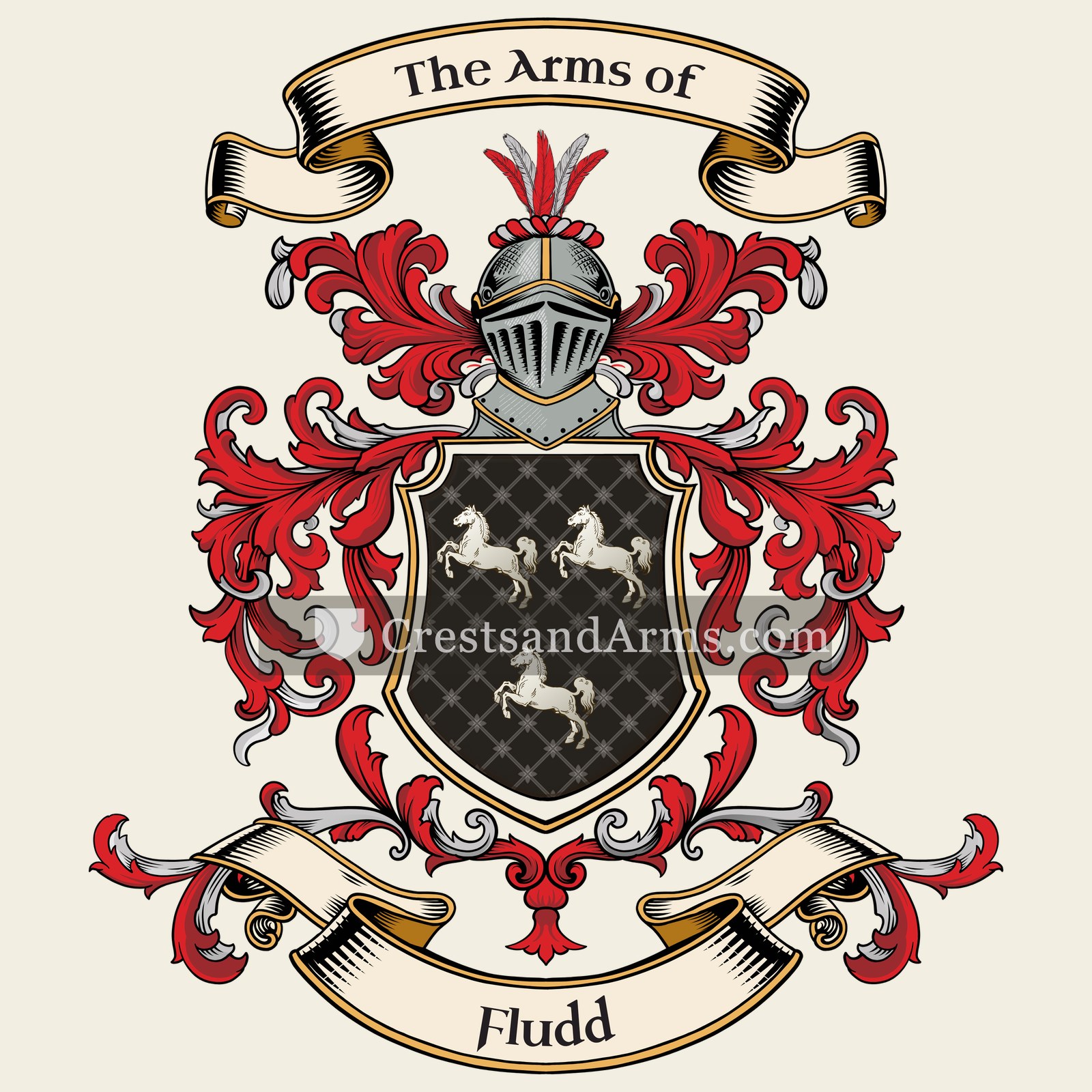
Symbols on this shield
horseReadiness to serve king and country
Colours
Black (Sable)Means: Constancy
Silver (Argent)Means: Peace and sincerity
Historical info
Source
Sir Bernard Burke, The General Armory of England, Scotland, Ireland and Wales, London: Harrison & Sons, 1884
Blazon (the actual original written record)
“Sa. three horses' heads erased ar”
Irelandc. 1645
Digital archive packCoat of arms PNG, gold border print PDF, vector SVG and the certificate of authenticity. Sent to your email in minutes.
Map of Ireland showing where the Fludd arms are recorded
The Fludd arms were recorded in Ireland, c. 1645.
Arms such as these were typically recorded in Dublin.
Dublin was the seat of government in Ireland and the place where grants were sought and recorded. Families with business at the castle or the courts settled nearby, and settling there put their arms on record.
This is where the arms were entered in the register. Families often moved to other parts of the country, so the same name can turn up in more than one region.
The body that granted and recorded arms in Ireland in this period.
Charles I of England
Sovereign of the period
Charles I of England
1625–1649
Reigning in England when the Fludd arms are first recorded.
How Arms Worked in Ireland
The Ulster King of Arms granted coats of arms to individuals who proved their social standing and good character. These symbols were typically inherited by all legitimate descendants of the original holder. If a family branch wanted a unique look, they could apply for a specific change to their design through the office to ensure their identity remained distinct.
Granting authority
The Ulster King of Arms acted as the official body that regulated and issued all coats of arms throughout Ireland.
How they got arms
Families obtained their arms through formal grants issued by the office after proving their eligibility and paying the required fees.
Where arms were recorded
All official grants were recorded in the registers held by the Ulster King of Arms starting from the year 1552.
The family's standing
Recorded among the armigerous families of Ireland.
Origin & History of the Fludd Family in Ireland
The history of the Fludd family in Ireland is deeply connected to the turbulent political shifts of the seventeenth century. While the name has roots in England and Wales, records confirm that members of the family were established in Dublin by 1645. During this period, Dublin served as a center for administrative and military activity, drawing individuals from across the British Isles to participate in the city's growing commerce and governance. The presence of the Fludd family in the capital suggests they were likely part of the professional or merchant classes who navigated the complex social landscape of the time. As the century progressed, these early settlers integrated into the local community, leaving a footprint in the city that persisted through generations of change. By settling in a major urban hub like Dublin, the family secured a place in the historical record during a time when Ireland was undergoing significant transformation.
Fludd Meaning & Related Branches
Root word
flod
Old English term referring to a flowing body of water or tide.
This name
FluddA topographic name for someone who lived near a river or a tidal stream.
also spelled
Flood
Flude
Related arms
Wynnesame arms
Evanssimilar arms
Floodvariant spelling
Fludevariant spelling
Documented Sources
Sir Bernard Burke, The General Armory of England, Scotland, Ireland and Wales, London: Harrison & Sons, 1884
Jansson, Maija, Proceedings in Parliament 1614 (House of Commons), 1988
The National Archives, State Papers Domestic, Elizabeth I, SP 12
Kent Archives, Canterbury Cathedral Archives, Dean and Chapter Records, DCc-Ch
Digital archive packCoat of arms PNG, gold border print PDF, vector SVG and the certificate of authenticity. Sent to your email in minutes.


 chevronProtection, and faithful service completed
 wolfReward from long service and hard work
 chevronProtection, and faithful service completed
 wolfReward from long service and hard work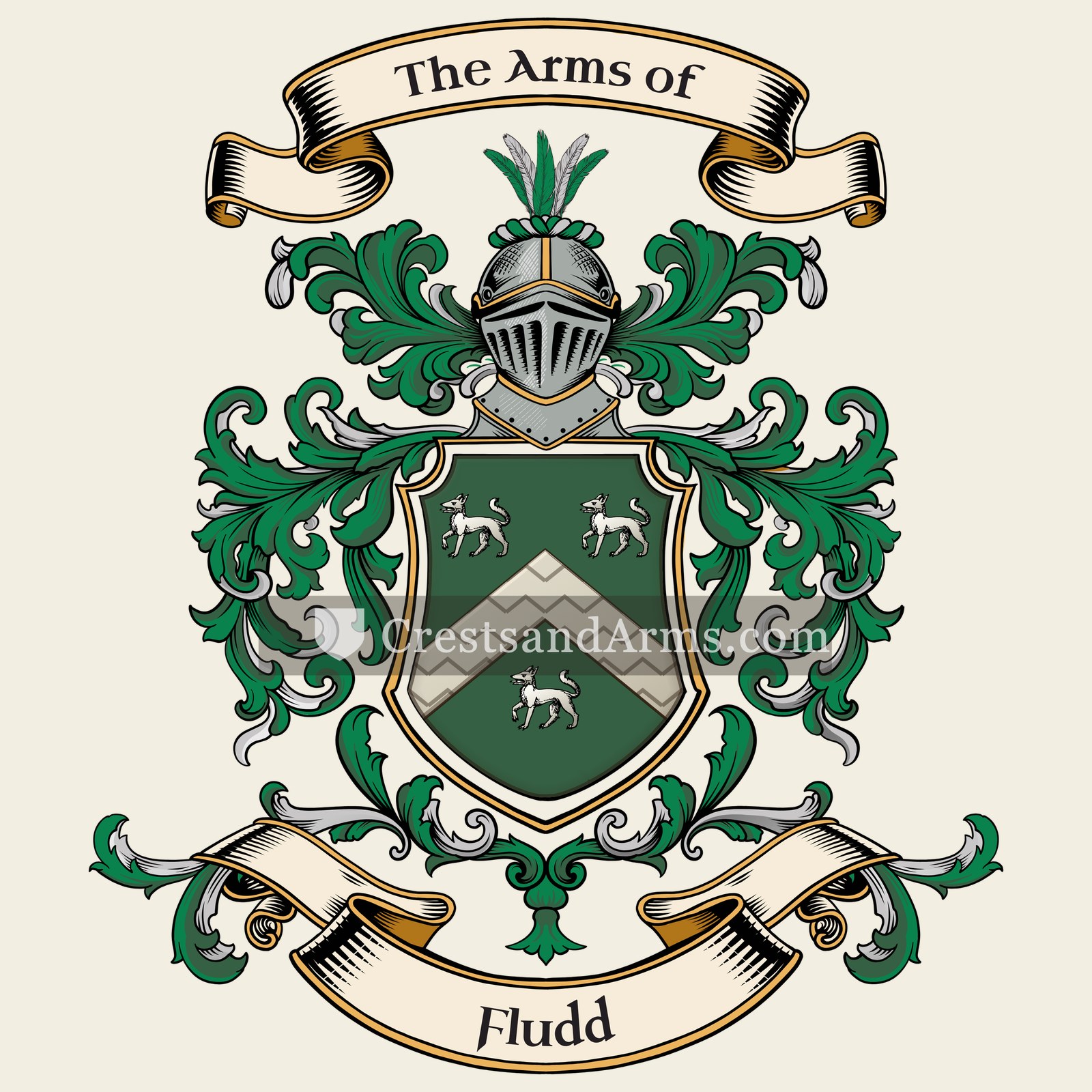


 horseReadiness to serve king and country