Map of Spain showing where the Font arms are recorded
The Font arms were recorded in Catalonia, c. 1722.
Catalonia lived by sea trade, and its merchant houses were as powerful as its landowners. Both sorts of family took arms, and Barcelona kept records of the houses entitled to bear them.
This is where the arms were entered in the register. Families often moved to other parts of the country, so the same name can turn up in more than one region.
The body that granted and recorded arms in Spain in this period.
Philip V of Spain
Sovereign of the period
Philip V of Spain
1714–1724
Reigning in Spain when the Font arms are first recorded.
How Arms Worked in Spain
In Spain, a coat of arms was considered a form of property that belonged to the entire family line. These arms were passed down from a father to all his children equally. Younger branches of the family usually kept the original design without needing to add any special marks to distinguish their specific line.
Granting authority
The Cronista Rey de Armas was the official body that regulated and granted coats of arms throughout Spain.
How they got arms
Families often obtained their arms through royal grants or by proving their noble status to the official heraldic authority.
Where arms were recorded
Coats of arms were officially recorded in the registers of the Cronista Rey de Armas starting in 1496.
The family's standing
Recorded among the armigerous families of Catalonia.
Origin & History of the Font Family in Spain
The surname Font is a classic example of a topographic name, which means it was originally chosen to describe the landscape where a family lived. In the Catalan language, the word "font" translates to a natural spring or a water source. During the Middle Ages, families often adopted this name because they resided near a prominent spring or a well that served as a vital community landmark. By the time records confirm the presence of the Font family in Catalonia in 1722, the name was already well-established across the region. Because water was essential for farming and daily survival, those living near a "font" held a significant position in their local geography. Over many generations, this descriptive label evolved into a permanent family name that was passed down from parents to children, marking their deep connection to the rugged terrain of northeastern Spain.
Coat of Arms & Family Crest Details
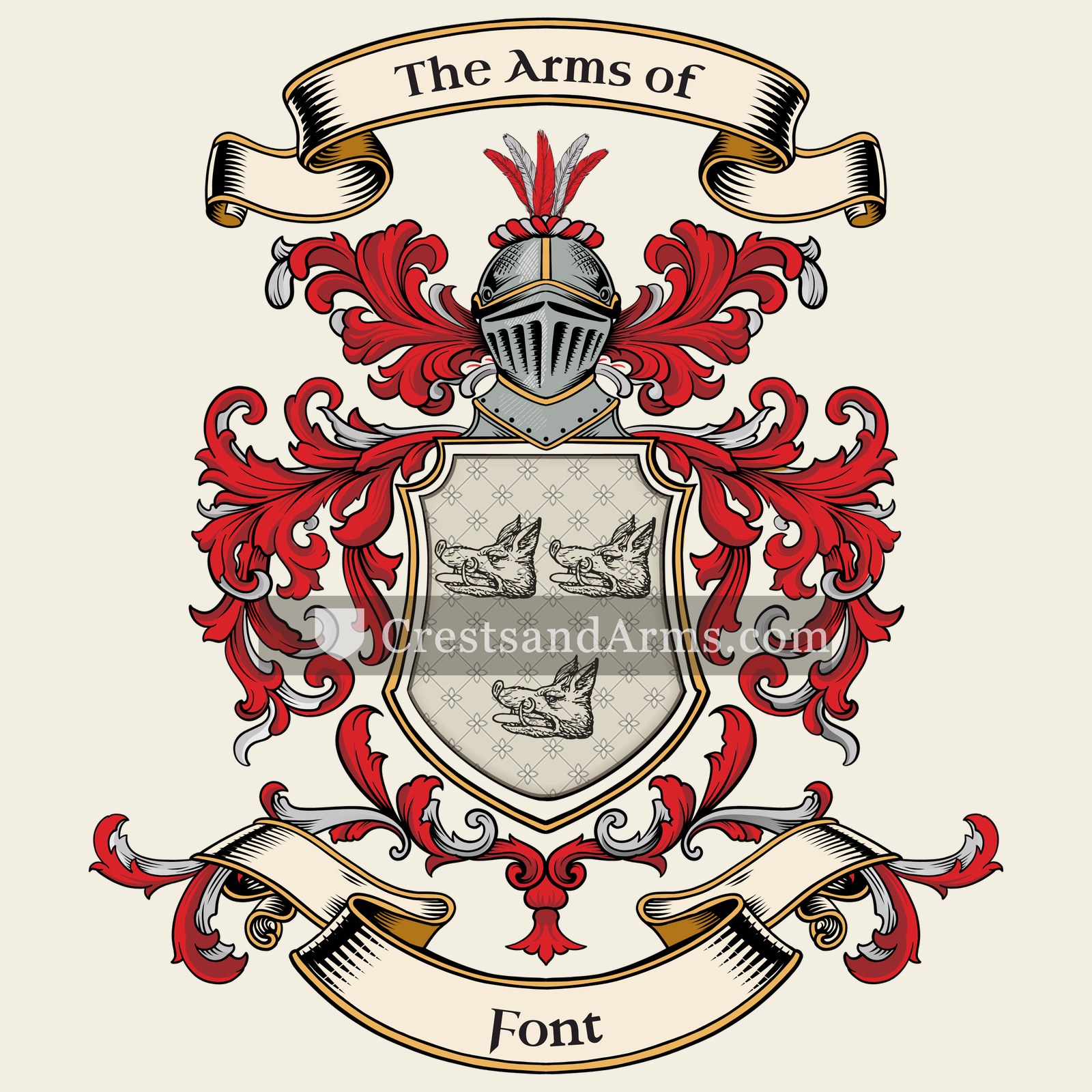
Symbols on this shield
boars headA fierce fighter who battles to the end
Colours
Silver (Argent)Means: Peace and sincerity
Black (Sable)Means: Constancy
Historical info
Source
J. B. Rietstap, Armorial Général, Gouda: G. B. van Goor Zonen, 1884–87
Blazon (the actual original written record)
“D'Arg. à trois hures de sanglier de sa.”
PicardiePicardie, c. 1663
Digital archive packCoat of arms PNG, gold border print PDF, vector SVG and the certificate of authenticity. Sent to your email in minutes.
Map of France showing where the Font arms are recorded
The Font arms were recorded in Picardie, c. 1663.
Picardie lay on the northern road into France and saw armies pass through it repeatedly. Its landowners were soldiers as often as farmers, and a soldier needed a shield he could be recognised by.
This is where the arms were entered in the register. Families often moved to other parts of the country, so the same name can turn up in more than one region.
The body that granted and recorded arms in France in this period.
Louis XIV of France
Sovereign of the period
Louis XIV of France
1643–1715
Reigning in Spain when the Font arms are first recorded.
How Arms Worked in France
In France, a coat of arms was a mark of honor that passed down through the male line to all legitimate descendants. Families often used the same shield without changes to show their shared heritage. If a branch wanted to stand out, they could add a small mark to their shield to show their specific place in the family tree.
Granting authority
The Juge d'armes de France acted as the official authority that regulated and verified coats of arms across the country.
How they got arms
Families typically inherited their arms from ancestors, though they could also receive them through royal grants or by proving their noble status.
Where arms were recorded
Coats of arms were officially recorded in the Armorial Général de France, which began its main collection in the year 1696.
The family's standing
Recorded among the armigerous families of Picardie.
Origin & History of the Font Family in France
The surname Font is a topographical name that originated in France, derived from the Old French word "font," which means a fountain or a spring. During the Middle Ages, families often adopted names based on the physical features of the land where they lived, so this name likely identified people who resided near a natural water source. By 1663, records confirm that members of the Font family were well-established in the Picardie region of northern France. This area was a significant agricultural and strategic hub during the seventeenth century, and families living there were often deeply connected to the local parish communities. As the family grew, they moved through the various social and economic shifts of the French provinces, carrying a name that served as a permanent reminder of their ancestral connection to the landscape.
Font Meaning & Related Branches
Root word
fons
Latin term referring to a spring, fountain, or source of water.
This name
FontA topographic surname for someone who lived near a natural spring or fountain.
also spelled
Fonte
Fontt
Fonts
Documented Sources
J. B. Rietstap, Armorial Général, Gouda: G. B. van Goor Zonen, 1884–87
Alcover, Antoni M. and Moll, Francesc de B., Diccionari català-valencià-balear, 1968
Moll, Francesc de B., Els llinatges catalans, 1959
Arxiu de la Corona d'Aragó, Registres de la Reial Audiència
Digital archive packCoat of arms PNG, gold border print PDF, vector SVG and the certificate of authenticity. Sent to your email in minutes.


 roundelA coin, and one who has been to the crusades
 roundelA coin, and one who has been to the crusades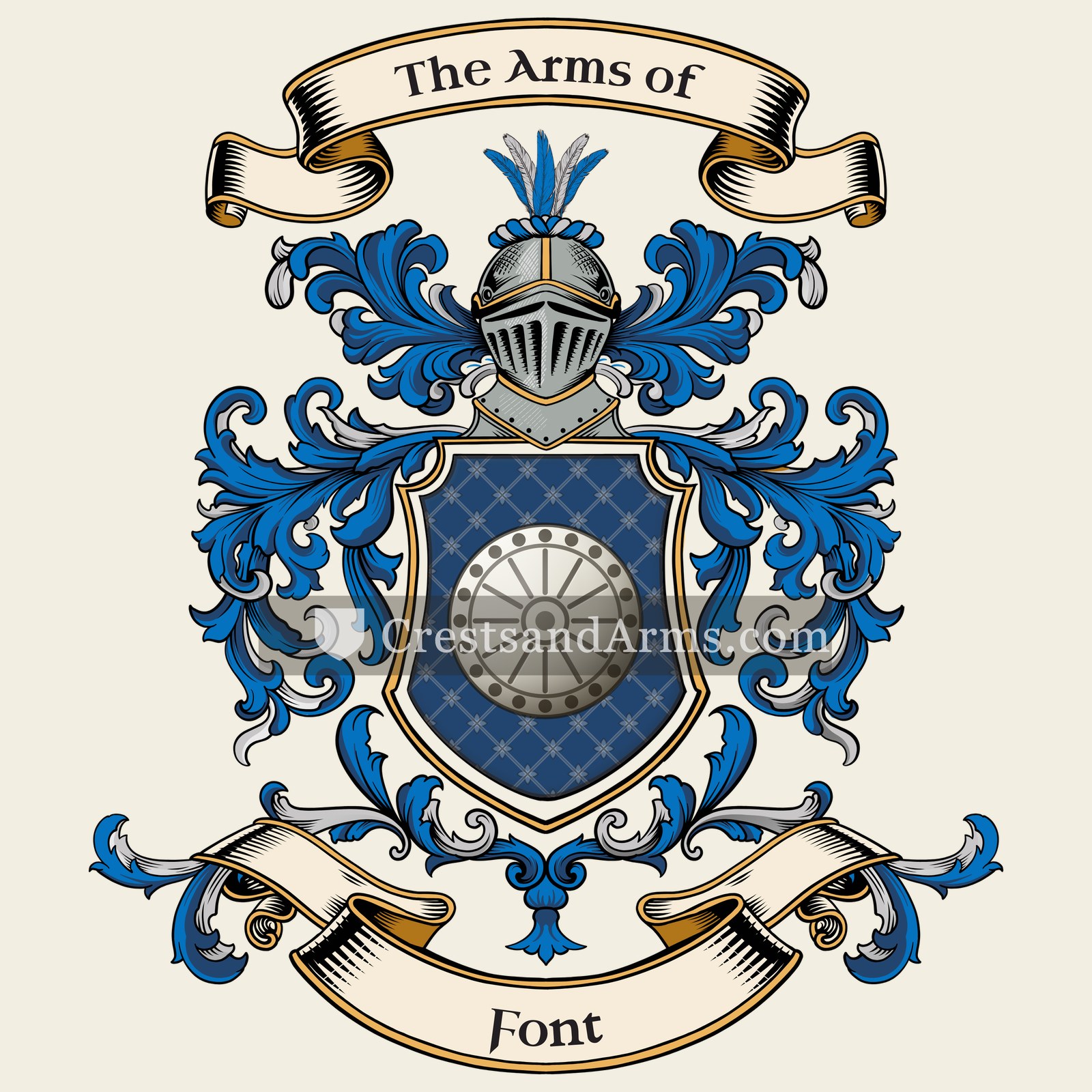


 boars headA fierce fighter who battles to the end