Map of Belgium showing where the Fontaine arms are recorded
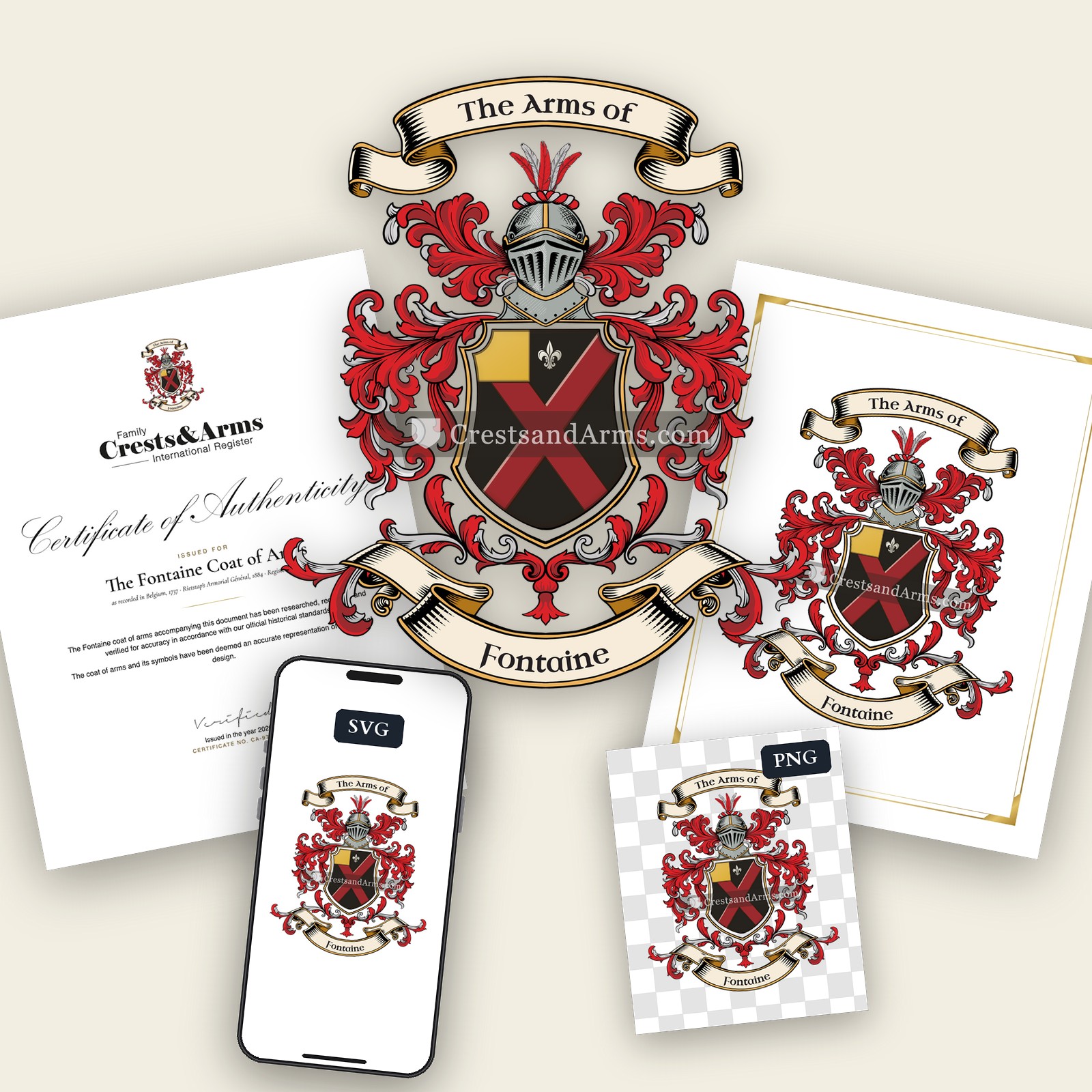
The Fontaine arms were recorded in Belgium, c. 1737.
Arms such as these were typically recorded in Brabant.
Brabant lay at the heart of the Low Countries, where the trade routes met. Its towns were wealthy and its landowners many, and both kinds of family kept arms, which is why the region is so heavily represented.
This is where the arms were entered in the register. Families often moved to other parts of the country, so the same name can turn up in more than one region.
The body that granted and recorded arms in Belgium in this period.
Charles VI, Holy Roman Emperor
Sovereign of the period
Charles VI, Holy Roman Emperor
1711–1740
Reigning in Belgium when the Fontaine arms are first recorded.
How Arms Worked in Belgium
In Belgium, a coat of arms is considered personal property that is passed down through the male line to legitimate descendants. Families often use the same shield design across generations to show their shared heritage. If a branch of the family wants to change the design, they must apply for an official update to their specific version of the arms.
Granting authority
The Conseil héraldique is the official body that regulates and approves all coats of arms in Belgium.
How they got arms
Families obtain their coats of arms through formal royal grants or by confirming their historical right to use existing designs.
Where arms were recorded
All approved coats of arms are officially recorded in the public registers of the Conseil héraldique since 1844.
The family's standing
Recorded among the armigerous families of Belgium.
Origin & History of the Fontaine Family in Belgium
The surname Fontaine is a classic example of a topographic name, which means it was originally given to people based on the landscape where they lived. In the French language, the word refers to a natural spring or a fountain. By the time the family was firmly established in the region of Brabant in 1737, the name had already been in use for centuries across the Low Countries. Families carrying this name often lived near local water sources, which were essential for farming and daily life in rural communities. As the family grew within the Belgian provinces, they became part of the local social fabric, often working as skilled tradespeople or landowners. Their presence in Brabant during the early eighteenth century reflects a period when many families were settling into permanent roles within their villages, helping to shape the agricultural and economic identity of the region.
Coat of Arms & Family Crest Details
Symbols on this shield
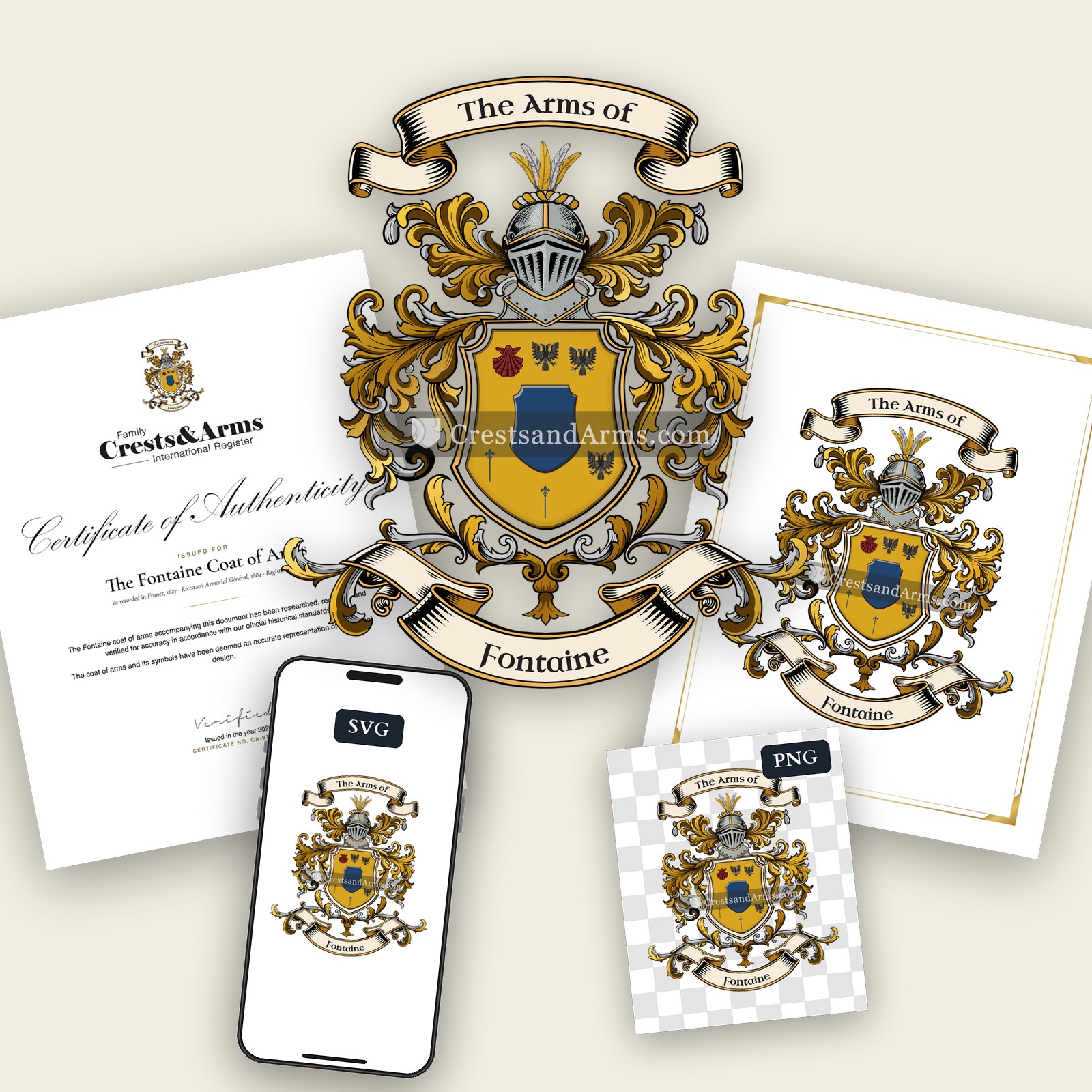
batonAuthority and office held under the crown
escallopThe pilgrim's shell, and a long journey made
eagleNobility, strength and a keen mind
Colours
Gold (Or)Means: Generosity
Blue (Azure)Means: Loyalty and truth
Red (Gules)Means: Military strength
Historical info
Source
J. B. Rietstap, Armorial Général, Gouda: G. B. van Goor Zonen, 1884–87
Blazon (the actual original written record)
“Coupé: A: parti: au I. éc. a. et d. c.-éc. en saut., de sa. à une tête de léopard d'or, et d'or à une fleur-de-lis de sa.; b. et c. de gu. à la barre d'arg.; sur le tout de ce contre-écartelé un écusson cour. à l'antique, tranché-pignonné d'or sur sa., l'or ch. d'un castor ramp., la tête, les pattes et la queue de sa., coll. de gu., bordé et bouclé d'or; au II. éc.: aux 1 et 4 de gu. à la fasce d'arg., ch. d'un léopard d'or; aux 2 et 3 d'azur à une tête et col de cerf au nat., celle du 3 cont.; — B: éc.: aux 1 et 4 d'or à la demi-aigle de sa., bq., m. et cour. du champ, mouv. du parti; aux 2 et 3 bandé de gu. et d'arg. — Sur le tout de l'écu, d'or à deux bourdons de pélerin d'azur, passés en saut., acc. au point du chef d'une coquille de gu.; et au-dessous de cet écusson un autre écusson, d'azur à trois alérions d'or, les deux du chef affr. Six cq. cour., excepté le 1 qui est sans couronne. C.: 1° une tête et col de cerf cont., au nat.; l. d'or et d'azur; 2° un vol, l'aile sen. aux armes de l'écartelé en sautoir de la division A, l'aile sen. de gu. à une barre d'arg.; 1. conformes aux émaux des ailes; 3° un lion iss. et cont. de gu., tenant un drapeau d'or, flottant à dextre; l. d'or et de gu.; 4° le lévrier, iss.; l.: à dextre d'or et de sa., à sen. d'arg. et de gu., 5° un buste d'homme barbu, cour. d'or, hab. de gu., bout. d'or, au rabat du même; l. d'or et de gu.; 6° une aigle ép. de sa., bq., m. et chaque tête cour. d'or; l. d'arg. et de gu. S.: deux lévriers reg. d'arg., coll. de gu., bordé et bouclé d'or.”
Francec. 1627
Digital archive packCoat of arms PNG, gold border print PDF, vector SVG and the certificate of authenticity. Sent to your email in minutes.
Map of France showing where the Fontaine arms are recorded
The Fontaine arms were recorded in France, c. 1627.
Arms such as these were typically recorded in Bretagne.
More families held coats of arms in Bretagne than anywhere else in France. The land was divided into many small estates rather than a few large ones, so far more households counted as gentry, and each needed a shield of its own to be told apart.
This is where the arms were entered in the register. Families often moved to other parts of the country, so the same name can turn up in more than one region.
The body that granted and recorded arms in France in this period.
Louis XIII of France
Sovereign of the period
Louis XIII of France
1617–1643
Reigning in Belgium when the Fontaine arms are first recorded.
How Arms Worked in France
In France, a coat of arms was a mark of honor that passed down through the male line to all legitimate descendants. Families often used the same shield without changes to show their shared heritage. If a branch wanted to stand out, they could add a small mark to their shield to show their specific place in the family tree.
Granting authority
The Juge d'armes de France acted as the official authority that regulated and verified coats of arms across the country.
How they got arms
Families typically inherited their arms from ancestors, though they could also receive them through royal grants or by proving their noble status.
Where arms were recorded
Coats of arms were officially recorded in the Armorial Général de France, which began its main collection in the year 1696.
The family's standing
Recorded among the armigerous families of France.
Origin & History of the Fontaine Family in France
The surname Fontaine is a classic example of a topographic name, which was given to families who lived near a prominent natural feature. In the French language, the word refers to a fountain or a natural spring. During the Middle Ages, people often identified their neighbors by the landmarks near their homes, so a family living by a local water source would naturally become known as the Fontaine family. By the time records confirm the presence of the family in the Brittany region of France in 1627, the name had already been established for generations across various French provinces. Because springs were essential for daily life, farming, and travel, the name appeared independently in many different areas rather than originating from a single ancestor. This means that early members of the Fontaine family in Brittany were part of a widespread tradition of naming people after the geography of their local landscape.
Coat of Arms & Family Crest Details
Symbols on this shield
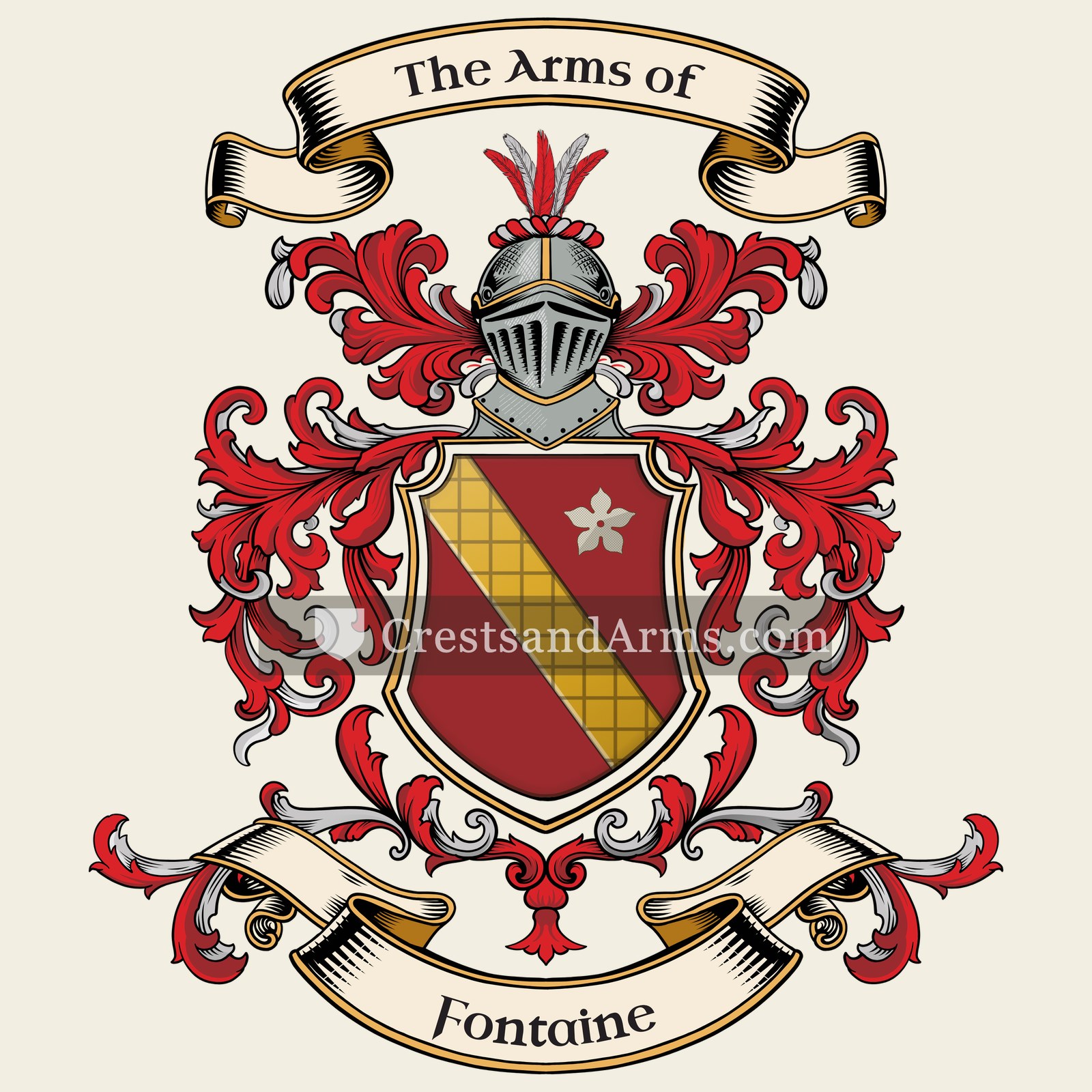
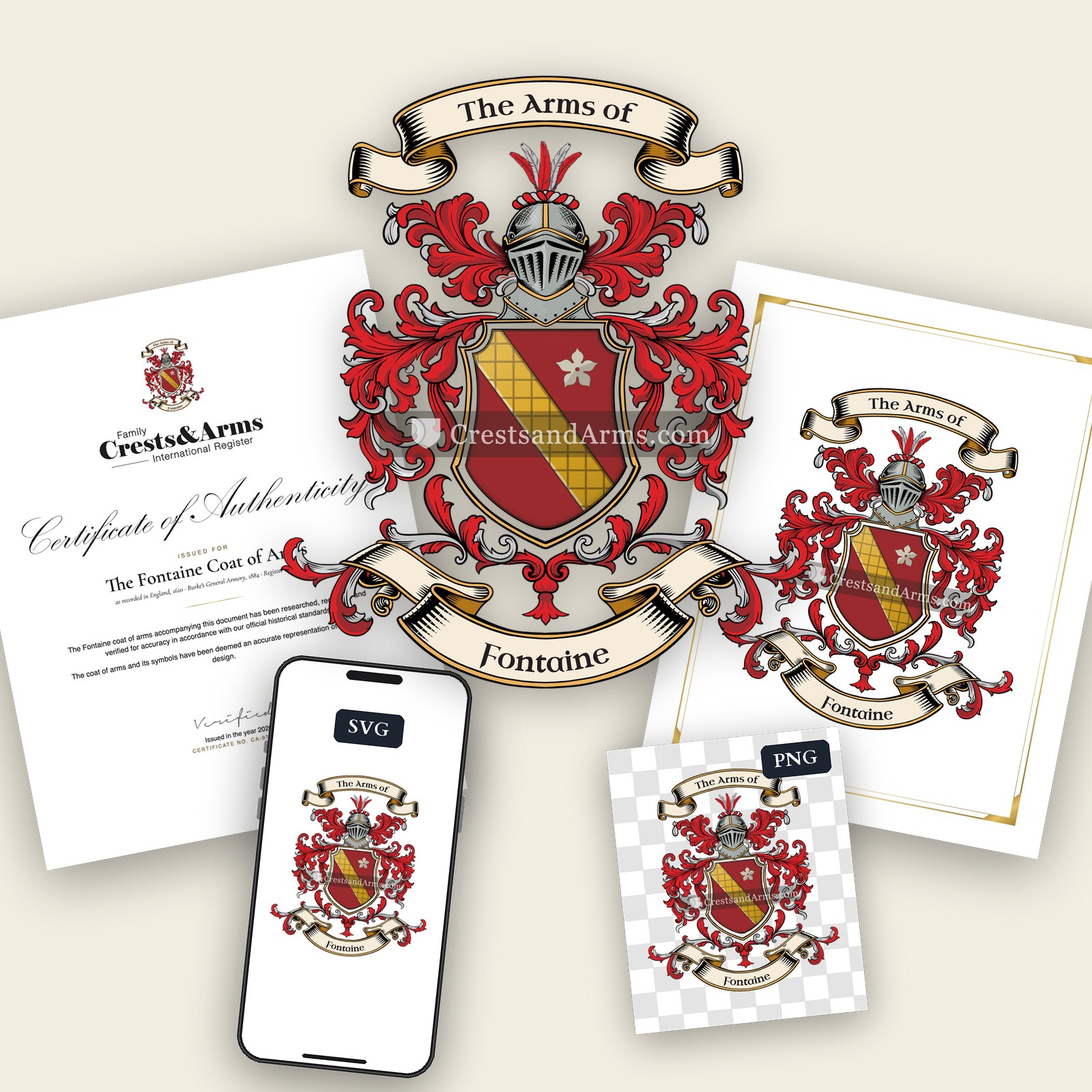
bendDefence, and the scarf of a commander
cinquefoilHope and joy
Colours
Red (Gules)Means: Military strength
Gold (Or)Means: Generosity
ErmineMeans: Dignity
Historical info
Source
Sir Bernard Burke, The General Armory of England, Scotland, Ireland and Wales, London: Harrison & Sons, 1884
Blazon (the actual original written record)
“Gu. a bend or, in the sinister chief a cinquefoil erm”
EnglandLondon, c. 1620
Digital archive packCoat of arms PNG, gold border print PDF, vector SVG and the certificate of authenticity. Sent to your email in minutes.
Map of England showing where the Fontaine arms are recorded
The Fontaine arms were recorded in London, c. 1620.
This is where the arms were entered in the register. Families often moved to other parts of the country, so the same name can turn up in more than one region.
The body that granted and recorded arms in England in this period.
James VI and I
Sovereign of the period
James VI and I
1603–1625
Reigning in Belgium when the Fontaine arms are first recorded.
How Arms Worked in England
English heraldry allowed arms to be shared by all legitimate descendants of the original owner. These symbols were treated as personal property that moved through the generations to all children. While the eldest son kept the original design, other family members could use the same shield without needing to change it or register their own unique versions.
Granting authority
The College of Arms in London has regulated the use of coats of arms throughout England and Wales since 1484.
How they got arms
Families typically obtained their coats of arms through a formal grant from the Crown or by proving their ancient right to them.
Where arms were recorded
All official coats of arms are recorded in the registers kept at the College of Arms, which date back to the fifteenth century.
The family's standing
Recorded among the armigerous families of England.
Origin & History of the Fontaine Family in England
The history of the Fontaine name in England is deeply connected to the movement of people across the English Channel during the seventeenth century. While the name is French in origin, meaning fountain or spring, it became established in London by 1620 as families sought new opportunities or fled religious tensions on the continent. These early settlers often integrated into the bustling trade networks of the city, working as merchants, artisans, or skilled craftsmen. Because London was a major hub for international commerce at the time, the Fontaine family likely found a place within the diverse immigrant communities that helped shape the city's economy. Over time, the family name became a permanent part of the English landscape, reflecting the broader history of migration that defined the era.
Fontaine Meaning & Related Branches
Root word
fons
Latin word meaning a spring, fountain, or source of water.
This name
FontaineA topographic name for someone who lived near a natural spring or fountain.
also spelled
Fontayne
Fontain
Fontane
Fontainne
Fonten
Related arms
Ardembourg de Gibiecqsimilar arms
Bagneuxsimilar arms
Chemetsimilar arms
Fountainevariant spelling
Documented Sources
J. B. Rietstap, Armorial Général, Gouda: G. B. van Goor Zonen, 1884–87
Dauzat, Albert. Dictionnaire étymologique des noms de famille et prénoms de France. 1951
Debrabandere, Frans. Woordenboek van de familienamen in België en Noord-Frankrijk. 1993
State Archives in Belgium (Rijksarchief in België), Parochieregisters van Brabant
Digital archive packCoat of arms PNG, gold border print PDF, vector SVG and the certificate of authenticity. Sent to your email in minutes.


 saltireResolution, and St Andrew's cross
 fleur de lisPurity, light, and the sixth son
 saltireResolution, and St Andrew's cross
 fleur de lisPurity, light, and the sixth son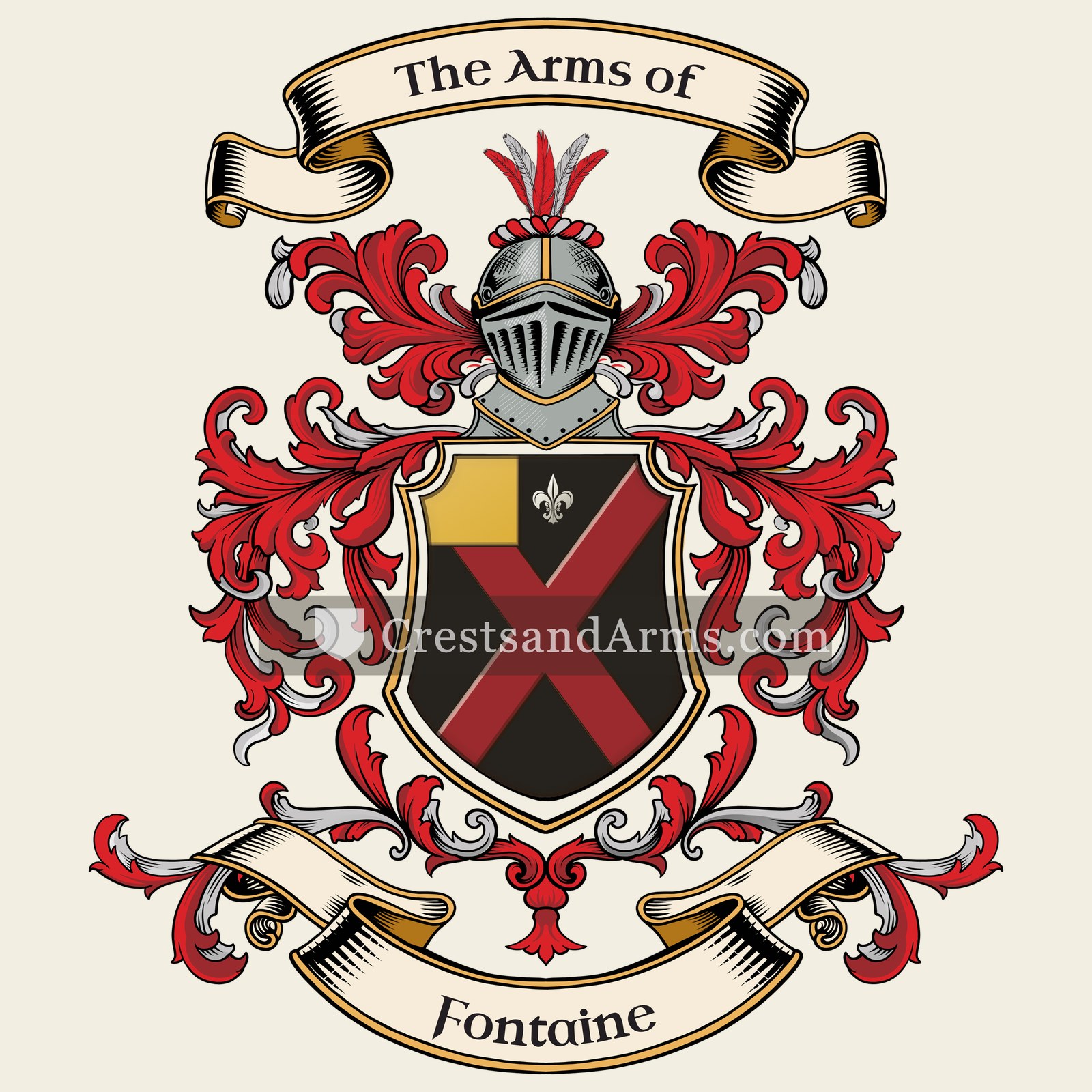


 batonAuthority and office held under the crown
 escallopThe pilgrim's shell, and a long journey made
 eagleNobility, strength and a keen mind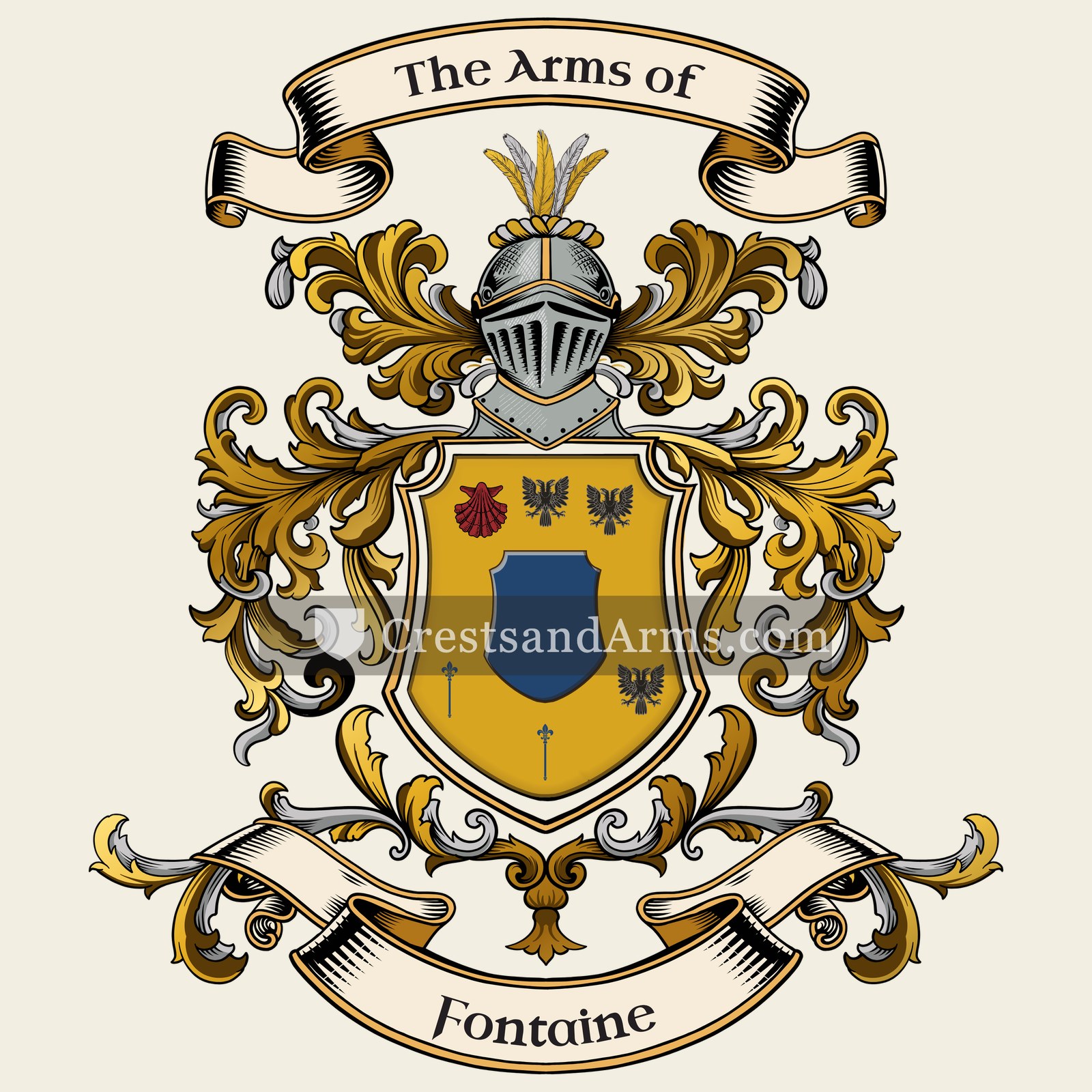


 bendDefence, and the scarf of a commander
 cinquefoilHope and joy