Map of Belgium showing where the Fournier arms are recorded
The Fournier arms were recorded in Brabant, c. 1737.
Brabant lay at the heart of the Low Countries, where the trade routes met. Its towns were wealthy and its landowners many, and both kinds of family kept arms, which is why the region is so heavily represented.
This is where the arms were entered in the register. Families often moved to other parts of the country, so the same name can turn up in more than one region.
The body that granted and recorded arms in Belgium in this period.
Charles VI, Holy Roman Emperor
Sovereign of the period
Charles VI, Holy Roman Emperor
1711–1740
Reigning in Belgium when the Fournier arms are first recorded.
How Arms Worked in Belgium
In Belgium, a coat of arms is considered personal property that is passed down through the male line to legitimate descendants. Families often use the same shield design across generations to show their shared heritage. If a branch of the family wants to change the design, they must apply for an official update to their specific version of the arms.
Granting authority
The Conseil héraldique is the official body that regulates and approves all coats of arms in Belgium.
How they got arms
Families obtain their coats of arms through formal royal grants or by confirming their historical right to use existing designs.
Where arms were recorded
All approved coats of arms are officially recorded in the public registers of the Conseil héraldique since 1844.
The family's standing
Recorded among the armigerous families of Brabant.
Origin & History of the Fournier Family in Belgium
The surname Fournier is an occupational name that originated in France, derived from the Old French word *fournier*, which refers to a person who operated a communal oven or a baker. By the early 18th century, members of the Fournier family had established a notable presence in the region of Brabant, which is now part of modern-day Belgium. During this era, the social and economic structure of Brabant relied heavily on local tradespeople to sustain growing village populations. As bakers, the early ancestors of the Fournier line played a vital role in the daily life of their communities by managing the essential production of bread. Their migration into this territory reflects the broader movement of skilled laborers across European borders during the 1700s. These families often integrated into the local parish systems, where their names were recorded in baptismal and marriage registers that document their transition into the social fabric of the Low Countries.
Coat of Arms & Family Crest Details
Symbols on this shield
chevronProtection, and faithful service completed
roseThe seventh son, and beauty with grace
lionCourage, strength and royalty
Colours
Gold (Or)Means: Generosity
Blue (Azure)Means: Loyalty and truth
Red (Gules)Means: Military strength
Historical info
Source
J. B. Rietstap, Armorial Général, Gouda: G. B. van Goor Zonen, 1884–87
Blazon (the actual original written record)
“D'or au chev. d'azur, acc. en chef de deux roses de gu. et en p. d'un lion du même.”
LorraineLorraine, c. 1566
Digital archive packCoat of arms PNG, gold border print PDF, vector SVG and the certificate of authenticity. Sent to your email in minutes.
Map of France showing where the Fournier arms are recorded
The Fournier arms were recorded in Lorraine, c. 1566.
Lorraine sat on the border between France and the German lands, and border country bred soldiers. Families here held small estates and served in arms, and a fighting man was exactly the sort who carried a shield of his own.
This is where the arms were entered in the register. Families often moved to other parts of the country, so the same name can turn up in more than one region.
The body that granted and recorded arms in France in this period.
Charles IX of France
Sovereign of the period
Charles IX of France
1560–1574
Reigning in Belgium when the Fournier arms are first recorded.
How Arms Worked in France
In France, a coat of arms was a mark of honor that passed down through the male line to all legitimate descendants. Families often used the same shield without changes to show their shared heritage. If a branch wanted to stand out, they could add a small mark to their shield to show their specific place in the family tree.
Granting authority
The Juge d'armes de France acted as the official authority that regulated and verified coats of arms across the country.
How they got arms
Families typically inherited their arms from ancestors, though they could also receive them through royal grants or by proving their noble status.
Where arms were recorded
Coats of arms were officially recorded in the Armorial Général de France, which began its main collection in the year 1696.
The family's standing
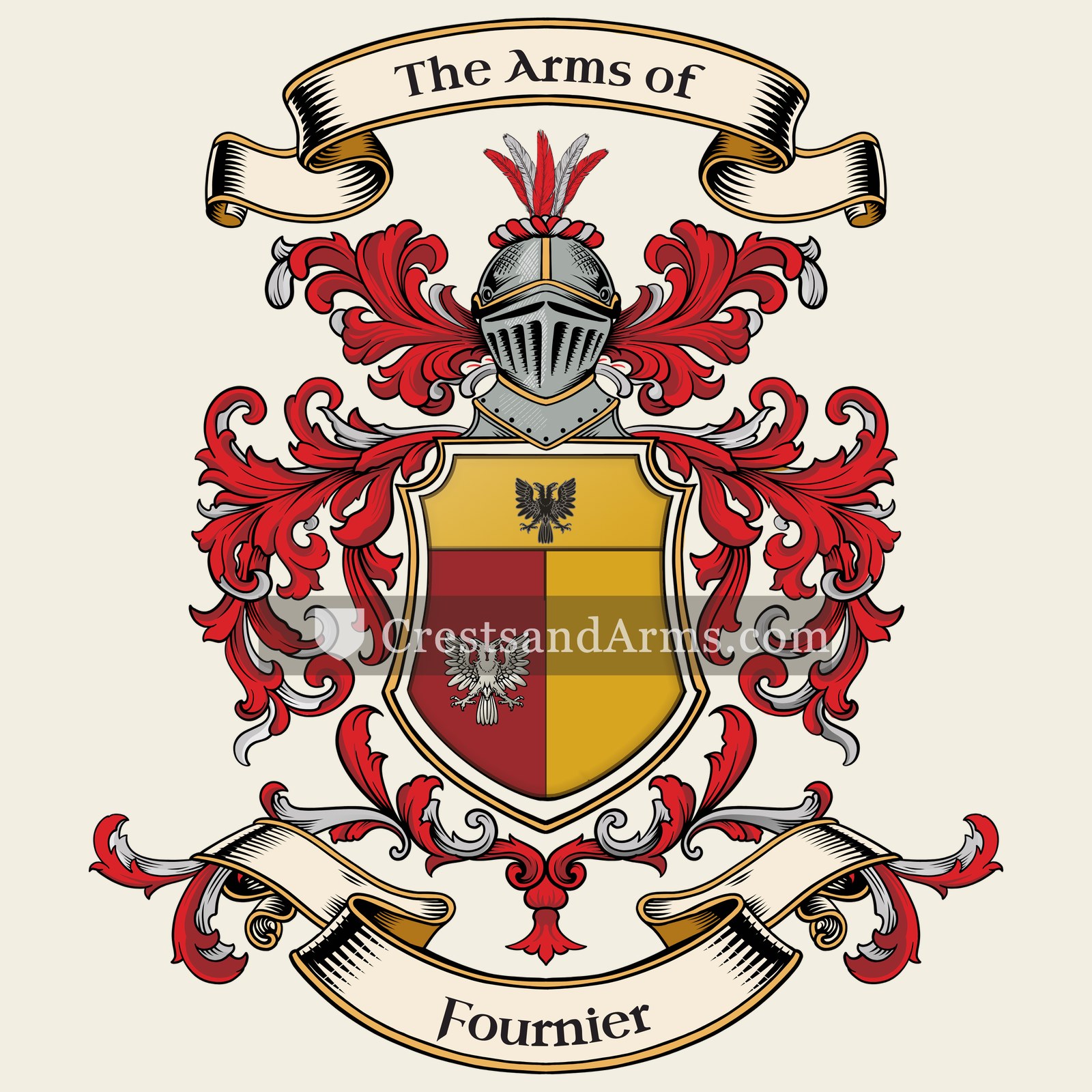
Recorded among the armigerous families of Lorraine.
Origin & History of the Fournier Family in France
The surname Fournier is a classic example of an occupational name that emerged during the Middle Ages in France. It comes from the Old French word *fournier*, which refers to a person who operated a communal oven. In many medieval French villages, the oven was a central point of daily life where residents brought their dough to be baked into bread. Because the baker held such an essential role in the community, the name became a common way to identify families across various regions. By the time records place the family in the Lorraine region in 1566, the name was already well-established as a marker of a family line that had historically provided this vital service to their neighbors. Over time, as people began to use fixed surnames to distinguish themselves, the name Fournier spread from its humble origins in the village bakery to become one of the most recognizable family names in French history.
Coat of Arms & Family Crest Details
Symbols on this shield
paleMilitary strength, and a fortified defence
chiefAuthority, wisdom and dominion
eagleNobility, strength and a keen mind
Colours
Red (Gules)Means: Military strength
Gold (Or)Means: Generosity
Black (Sable)Means: Constancy
Silver (Argent)Means: Peace and sincerity
Historical info
Source
J. B. Rietstap, Armorial Général, Gouda: G. B. van Goor Zonen, 1884–87
Blazon (the actual original written record)
“Parti: au 1 de gu. à la demi-aigle d'arg., mouv. du parti; au 2 palé d'or et de gu., de quatre pièces. Au chef de l'écu d'or, br. sur le parti et ch. d'une aigle iss. de sa.”
SwitzerlandFribourg, c. 1745
Digital archive packCoat of arms PNG, gold border print PDF, vector SVG and the certificate of authenticity. Sent to your email in minutes.
Map of Switzerland showing where the Fournier arms are recorded
The Fournier arms were recorded in Fribourg, c. 1745.
This is where the arms were entered in the register. Families often moved to other parts of the country, so the same name can turn up in more than one region.
The body that granted and recorded arms in Switzerland in this period.
How Arms Worked in Switzerland
In Switzerland, coats of arms were not restricted to the nobility and were often adopted by common citizens and families. These symbols were passed down through generations to show family identity. When branches of a family grew, they often changed small details of the design to distinguish their own line from the original group.
Granting authority
Cantonal and civic authorities managed the use of coats of arms within their specific regions and local jurisdictions.
How they got arms
Families typically assumed their own coats of arms based on local custom rather than receiving them from a central monarch.
Where arms were recorded
Arms were recorded in various cantonal and civic registers starting from the fourteenth century throughout the Swiss region.
The family's standing
Recorded among the armigerous families of Switzerland.
Origin & History of the Fournier Family in Switzerland
The surname Fournier is rooted in the French word for a baker, which identifies the original trade of the family members who first carried the name. In Switzerland, the family established a significant presence in the canton of Fribourg by the middle of the eighteenth century. During this era, the name was closely linked to the local economy and the essential craft of bread production in growing Swiss towns. As the family settled into the region, they became integrated into the social and administrative life of Fribourg. Their presence in local records from 1745 reflects a time when families were often defined by their professional contributions to their communities. Over the following generations, the Fournier name remained a fixture in the Swiss landscape, representing a long history of labor and community involvement in the heart of the country.
Fournier Meaning & Related Branches
Root word
furnarius
Latin term for a baker or someone who works with ovens.
This name
FournierAn occupational surname for a person who operated a bread oven or bakery.
also spelled
Fournie
Fourniere
Foornyay
Fournyer
Related arms
Bernard-Maillardsimilar arms
Chaumondsimilar arms
Gargantsimilar arms
Golbérysimilar arms
Documented Sources
J. B. Rietstap, Armorial Général, Gouda: G. B. van Goor Zonen, 1884–87
Dauzat, Albert, Dictionnaire étymologique des noms de famille et prénoms de France, 1951
Debrabandere, Frans, Woordenboek van de familienamen in België en Noord-Frankrijk, 2003
State Archives in Belgium (Rijksarchief in België), Parochieregisters van Brabant
Digital archive packCoat of arms PNG, gold border print PDF, vector SVG and the certificate of authenticity. Sent to your email in minutes.


 chiefAuthority, wisdom and dominion
 griffinValour and vigilance, guarding great treasure
 chiefAuthority, wisdom and dominion
 griffinValour and vigilance, guarding great treasure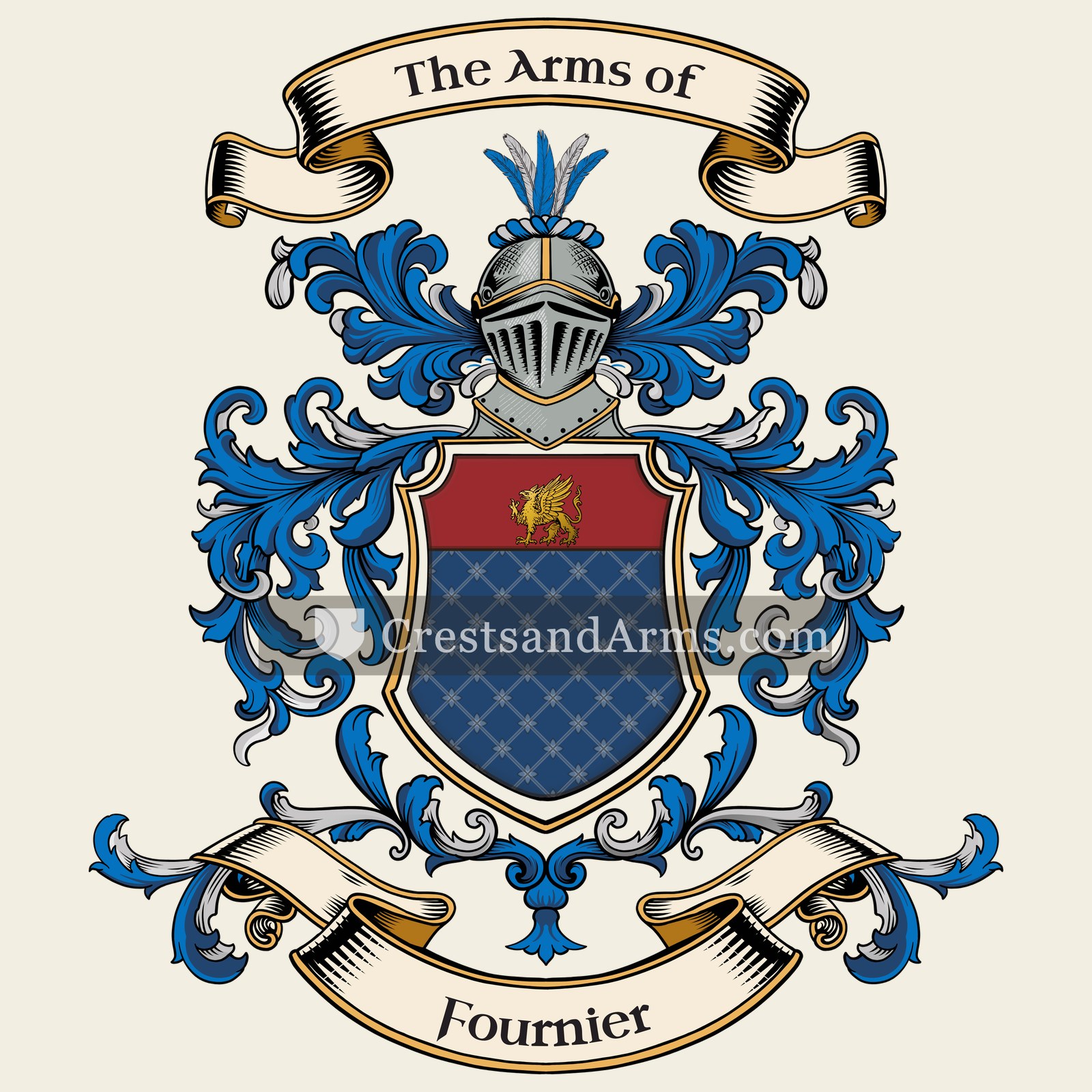


 chevronProtection, and faithful service completed
 roseThe seventh son, and beauty with grace
 lionCourage, strength and royalty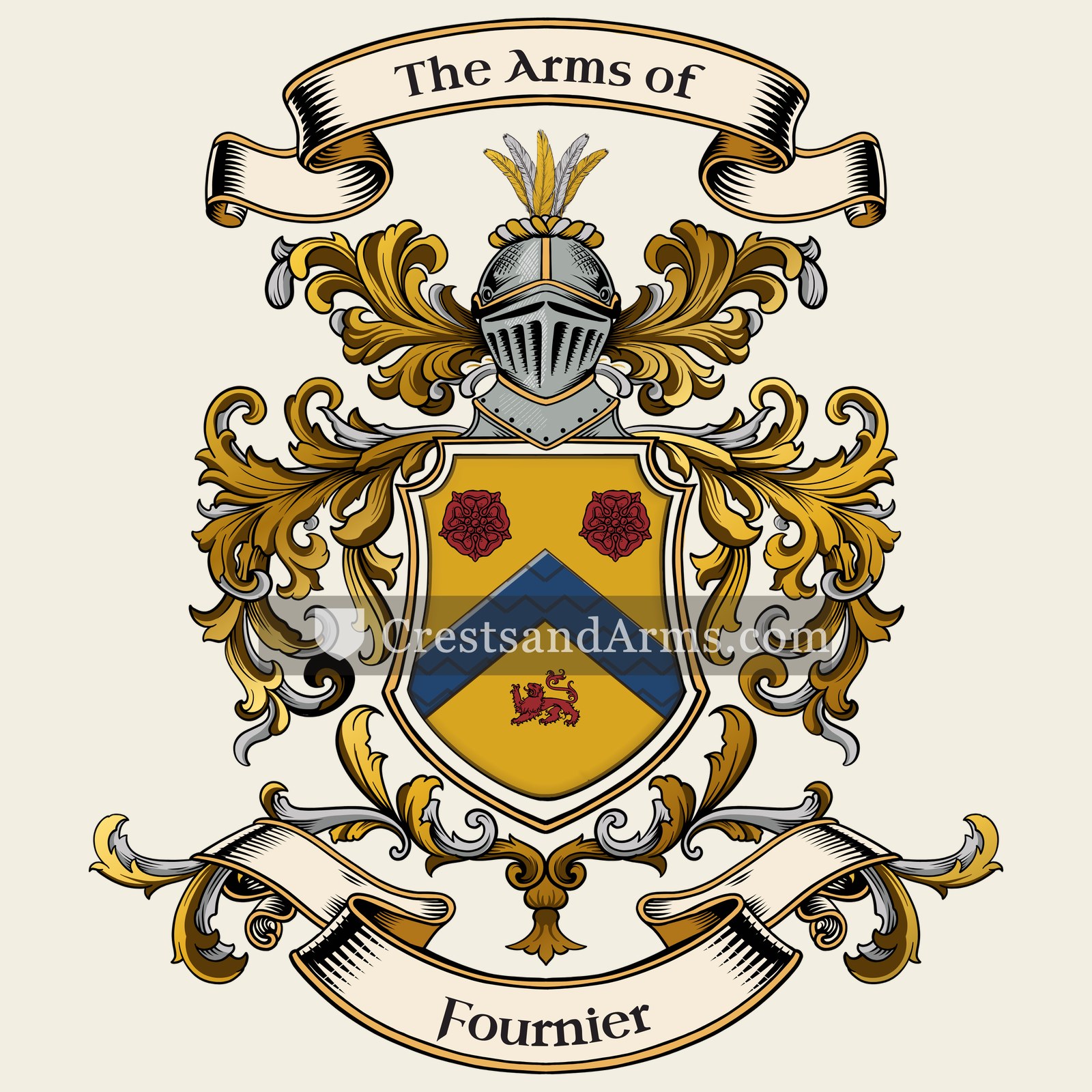


 paleMilitary strength, and a fortified defence
 eagleNobility, strength and a keen mind