Map of Netherlands showing where the Franc arms are recorded
The Franc arms were recorded in Amsterdam, c. 1815.
This is where the arms were entered in the register. Families often moved to other parts of the country, so the same name can turn up in more than one region.
Region
Amsterdam
Town
Amsterdam
First recorded
1815
Granting Authority for the Franc Arms
Hoge Raad van Adel
Photograph made by me · CC BY-SA 3.0
The body that granted and recorded arms in Netherlands in this period.
William I of the Netherlands
Sovereign of the period
William I of the Netherlands
1815–1840
Reigning in Netherlands when the Franc arms are first recorded.
How Arms Worked in Netherlands
In the Netherlands, coats of arms were often used by noble families and those who held specific public offices. These arms were passed down through the generations to legitimate descendants. Younger branches of a family usually kept the original design without needing to add special marks. This system ensured that the family identity remained clear and consistent over many years.
Granting authority
The Hoge Raad van Adel is the official body that regulates and manages noble titles and coats of arms in the Netherlands.
How they got arms
Families typically obtained their coats of arms through official royal grants or by proving their long-standing historical use of the symbols.
Where arms were recorded
Coats of arms are officially recorded in the registers held by the Hoge Raad van Adel, which began its work in 1814.
The family's standing
Recorded among the armigerous families of Netherlands.
Origin & History of the Franc Family in Netherlands
The family name Franc carries a history deeply rooted in the urban development of the Netherlands during the early nineteenth century. By 1815, members of the Franc family were already established residents of Amsterdam, a city that was rapidly transforming following the end of the Napoleonic era. During this period, the Dutch government implemented new civil registration laws that required families to formally document their surnames for tax and census purposes. Because the name Franc shares linguistic ties to terms for freedom or currency, it likely reflected the social status or the professional life of early ancestors who navigated the bustling trade networks of the Dutch capital. These early family members lived through a time of great national change as the Netherlands transitioned into a unified kingdom, and their presence in Amsterdam suggests they were part of the growing middle class that helped sustain the city as a major center for commerce and culture.
Coat of Arms & Family Crest Details
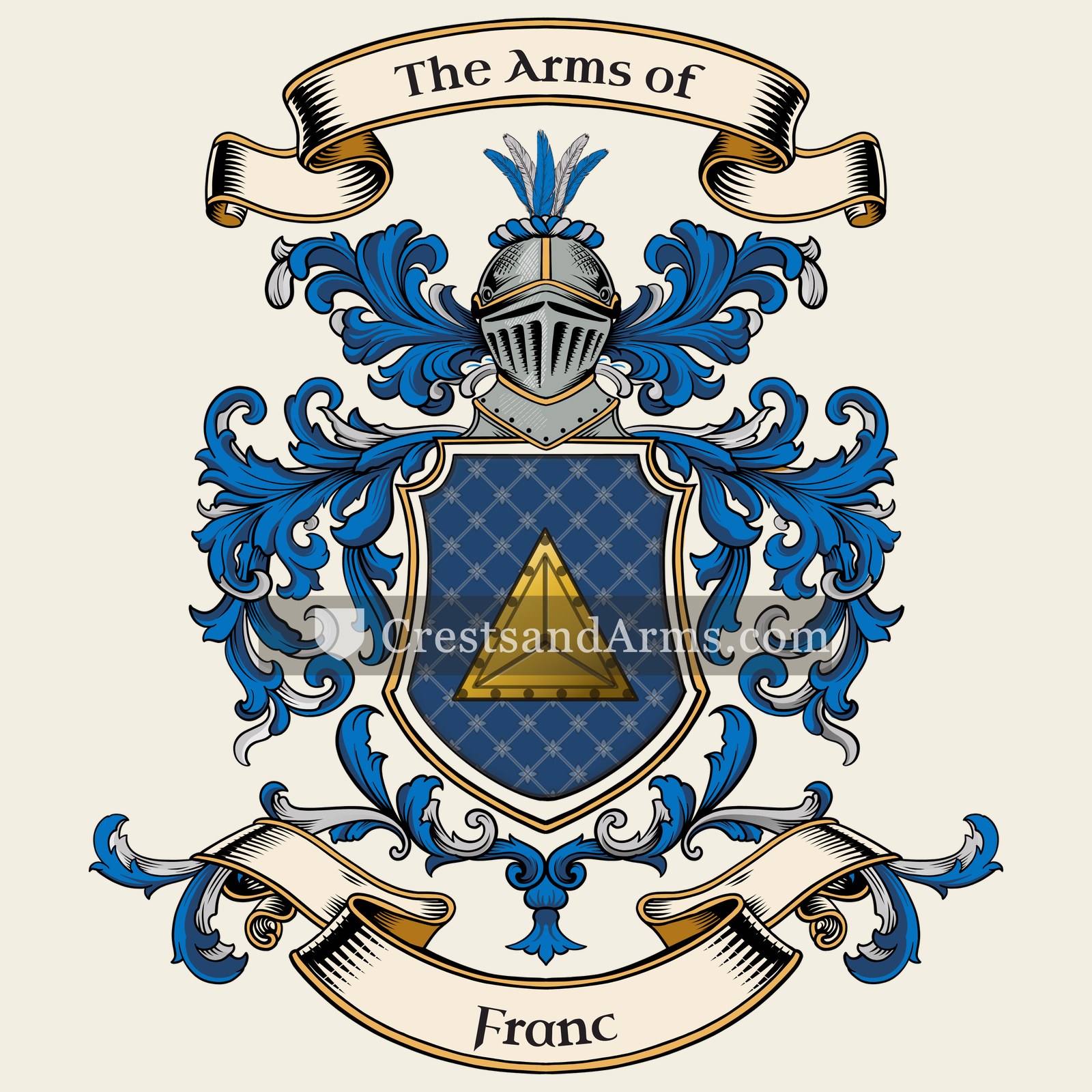
Symbols on this shield
chiefAuthority, wisdom and dominion
cross symbolChristian faith and service
towerGrandeur and solidity, and a stronghold defended
Colours
Blue (Azure)Means: Loyalty and truth
Gold (Or)Means: Generosity
Red (Gules)Means: Military strength
Historical info
Source
J. B. Rietstap, Armorial Général, Gouda: G. B. van Goor Zonen, 1884–87
Blazon (the actual original written record)
“D'azur à deux tours d'or; au chef du même, ch. d'une croix treflée de gu.”
ProvenceProvence, c. 1663
Digital archive packCoat of arms PNG, gold border print PDF, vector SVG and the certificate of authenticity. Sent to your email in minutes.
Map of France showing where the Franc arms are recorded
The Franc arms were recorded in Provence, c. 1663.
Provence was old country, with towns dating to the Romans and families who traced their land back nearly as far. Its gentry were many and long-settled, and long settlement is what fills a register.
This is where the arms were entered in the register. Families often moved to other parts of the country, so the same name can turn up in more than one region.
The body that granted and recorded arms in France in this period.
Louis XIV of France
Sovereign of the period
Louis XIV of France
1643–1715
Reigning in Netherlands when the Franc arms are first recorded.
How Arms Worked in France
In France, a coat of arms was a mark of honor that passed down through the male line to all legitimate descendants. Families often used the same shield without changes to show their shared heritage. If a branch wanted to stand out, they could add a small mark to their shield to show their specific place in the family tree.
Granting authority
The Juge d'armes de France acted as the official authority that regulated and verified coats of arms across the country.
How they got arms
Families typically inherited their arms from ancestors, though they could also receive them through royal grants or by proving their noble status.
Where arms were recorded
Coats of arms were officially recorded in the Armorial Général de France, which began its main collection in the year 1696.
The family's standing
Recorded among the armigerous families of Provence.
Origin & History of the Franc Family in France
The surname Franc carries a deep connection to the social and linguistic landscape of medieval France. The name itself is derived from the Old French word *franc*, which originally meant free or exempt from taxes and servitude. During the Middle Ages, this term was often used to describe people who held a status of liberty or those who lived in specific regions that enjoyed special legal privileges. By the time members of the family were documented in Provence in 1663, the name had become a well-established identifier for individuals who likely held a distinct social standing within their local community. Living in the Provence region, these early family members would have navigated a society shaped by the influence of the French Crown and the unique cultural traditions of the Mediterranean coast. Their presence in the historical record during the seventeenth century suggests that the family was part of the foundational fabric of the region, participating in the agricultural and civic life that defined life in southern France at that time.
Coat of Arms & Family Crest Details
Symbols on this shield
triangleThe Trinity, and stability
Colours
Blue (Azure)Means: Loyalty and truth
Gold (Or)Means: Generosity
Historical info
Source
J. B. Rietstap, Armorial Général, Gouda: G. B. van Goor Zonen, 1884–87
Blazon (the actual original written record)
“D'azur à un triangle d'or en relief.”
SwitzerlandGenève, c. 1745
Digital archive packCoat of arms PNG, gold border print PDF, vector SVG and the certificate of authenticity. Sent to your email in minutes.
Map of Switzerland showing where the Franc arms are recorded
The Franc arms were recorded in Genève, c. 1745.
This is where the arms were entered in the register. Families often moved to other parts of the country, so the same name can turn up in more than one region.
The body that granted and recorded arms in Switzerland in this period.
How Arms Worked in Switzerland
In Switzerland, coats of arms were not restricted to the nobility and were often adopted by common citizens and families. These symbols were passed down through generations to show family identity. When branches of a family grew, they often changed small details of the design to distinguish their own line from the original group.
Granting authority
Cantonal and civic authorities managed the use of coats of arms within their specific regions and local jurisdictions.
How they got arms
Families typically assumed their own coats of arms based on local custom rather than receiving them from a central monarch.
Where arms were recorded
Arms were recorded in various cantonal and civic registers starting from the fourteenth century throughout the Swiss region.
The family's standing
Recorded among the armigerous families of Switzerland.
Origin & History of the Franc Family in Switzerland
The family name Franc traces its roots in Switzerland to the vibrant cultural landscape of Geneva, where records confirm members of the family were established by 1745. During this period, Geneva was a bustling center of trade and intellectual exchange, often attracting families who sought to contribute to the city’s growing reputation as a hub for watchmaking and banking. The name itself is thought to be linked to the historical term for a free person, reflecting a status of independence that was highly valued in the Swiss cantons. As the family integrated into the local community, they likely participated in the civic life of the city, navigating the complex social structures that defined eighteenth-century Geneva. By settling in this region, the Franc family became part of the long tradition of Swiss families who helped shape the identity of their home through generations of steady work and community involvement.
Franc Meaning & Related Branches
Root word
Francus
Latin term referring to a member of the Frankish people.
This name
FrancDerived from the Germanic tribe, historically signifying a free man.
also spelled
Frank
Related arms
Frankvariant spelling
Documented Sources
J. B. Rietstap, Armorial Général, Gouda: G. B. van Goor Zonen, 1884–87
Stadsarchief Amsterdam, Bevolkingsregister 1815
Nationaal Archief, Burgerlijke Stand en Bevolking
Fokkens, A., De geschiedenis van Amsterdam: Een overzicht, 2005
Van Driel, L., Naamgeving en identiteit in de negentiende eeuw, 2012
Digital archive packCoat of arms PNG, gold border print PDF, vector SVG and the certificate of authenticity. Sent to your email in minutes.


 chevronProtection, and faithful service completed
 martletA younger son, who must win his own land
 trefoilPerpetuity, and the Trinity
 chevronProtection, and faithful service completed
 martletA younger son, who must win his own land
 trefoilPerpetuity, and the Trinity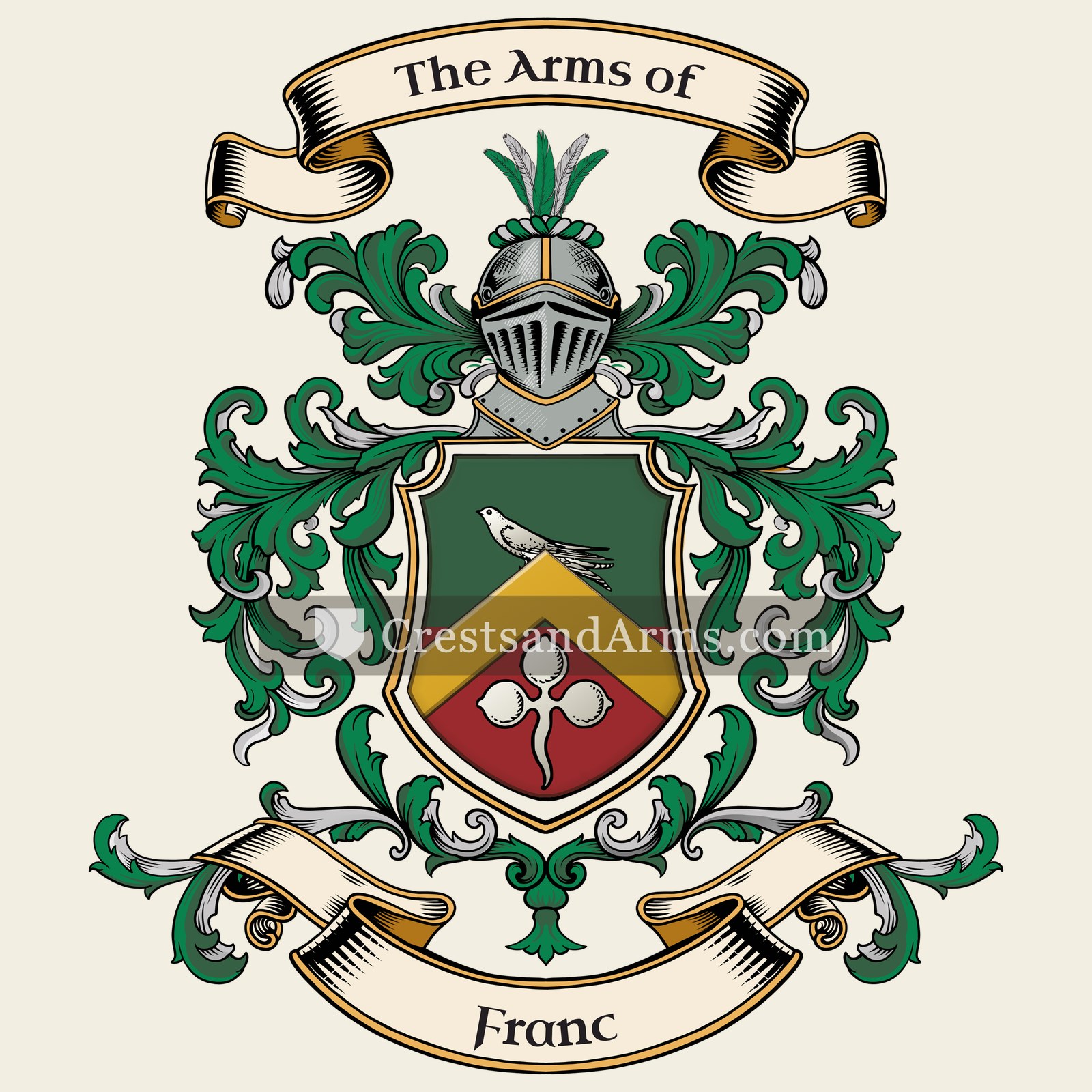


 chiefAuthority, wisdom and dominion
 cross symbolChristian faith and service
 towerGrandeur and solidity, and a stronghold defended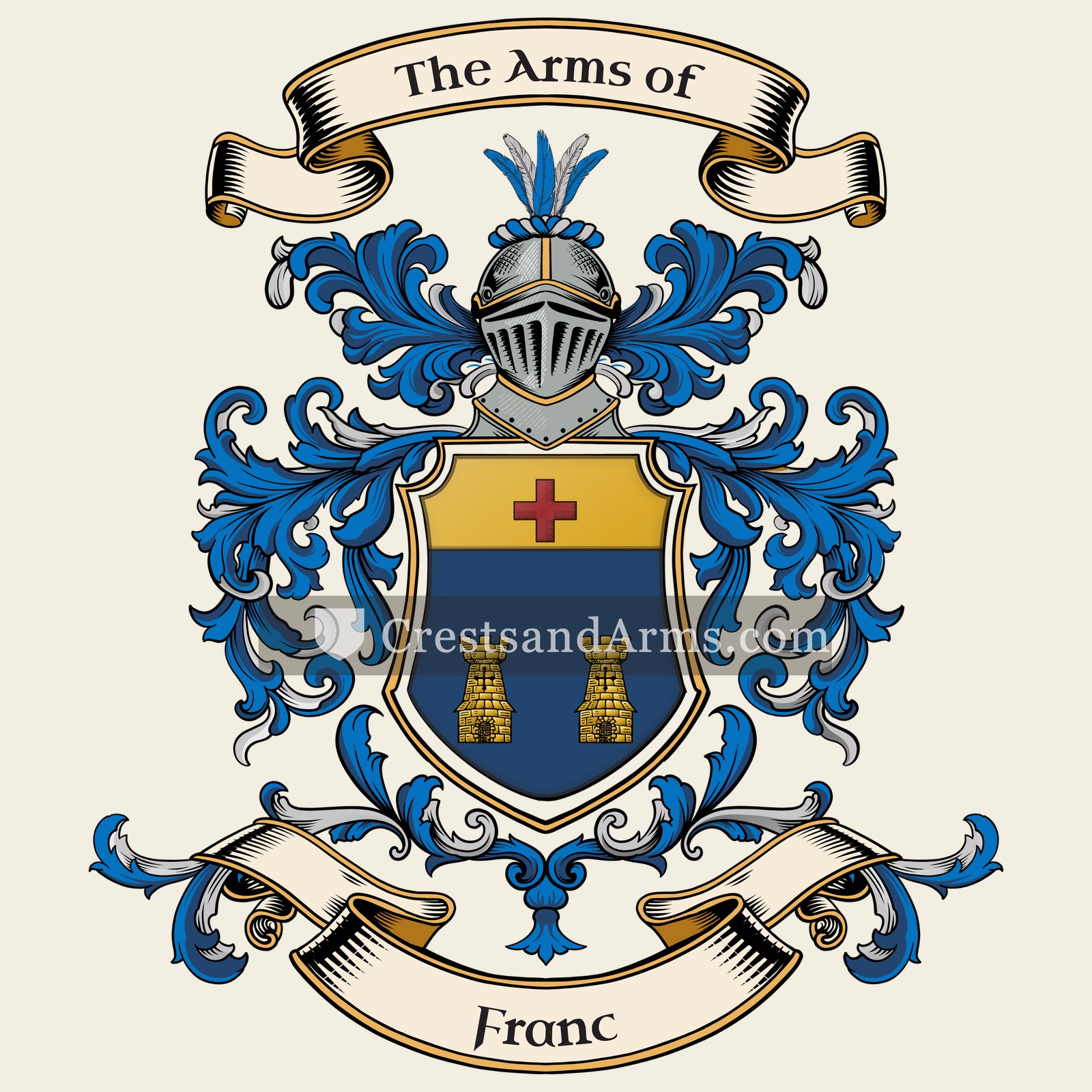


 triangleThe Trinity, and stability