Map of France showing where the Franck arms are recorded
The Franck arms were recorded in Strasbourg, c. 1663.
This is where the arms were entered in the register. Families often moved to other parts of the country, so the same name can turn up in more than one region.
The body that granted and recorded arms in France in this period.
Louis XIV of France
Sovereign of the period
Louis XIV of France
1643–1715
Reigning in France when the Franck arms are first recorded.
How Arms Worked in France
In France, a coat of arms was a mark of honor that passed down through the male line to all legitimate descendants. Families often used the same shield without changes to show their shared heritage. If a branch wanted to stand out, they could add a small mark to their shield to show their specific place in the family tree.
Granting authority
The Juge d'armes de France acted as the official authority that regulated and verified coats of arms across the country.
How they got arms
Families typically inherited their arms from ancestors, though they could also receive them through royal grants or by proving their noble status.
Where arms were recorded
Coats of arms were officially recorded in the Armorial Général de France, which began its main collection in the year 1696.
The family's standing
Recorded among the armigerous families of France.
Origin & History of the Franck Family in France
The family name Franck has deep roots in the Alsace region, particularly within the city of Strasbourg. By the year 1663, the family was already well-established in this area, which served as a vital crossroads between French and Germanic cultures. During this period, Strasbourg was a center of trade and intellectual exchange, and families like the Francks often played roles in the local merchant or craft guilds that defined urban life. The name itself is linked to the historical Frankish tribes, reflecting a long lineage that predates the formal borders of modern nations. Because Alsace frequently shifted between different political powers during the seventeenth century, the Franck family likely navigated a complex environment where they had to adapt to changing laws and languages while maintaining their local identity. Their presence in the city records from 1663 suggests they were settled citizens who contributed to the social and economic fabric of the region during a time of significant transition.
Coat of Arms & Family Crest Details
Symbols on this shield
fessThe military belt, and readiness to serve
knightChivalry and service in arms
Colours
Black (Sable)Means: Constancy
Gold (Or)Means: Generosity
Historical info
Source
J. B. Rietstap, Armorial Général, Gouda: G. B. van Goor Zonen, 1884–87
Blazon (the actual original written record)
“Coupé: au 1 parti de sa. et d'or; à un homme iss., hab. de l'un en l'autre, brandissant une hache d'arg. au-dessus de sa tête; au 2 fascé contrefascé d'or et de sa. de quatre pièces. C.: l'homme du 1, iss.”
GermanyNördlingen Bav, c. 1765
Digital archive packCoat of arms PNG, gold border print PDF, vector SVG and the certificate of authenticity. Sent to your email in minutes.
Map of Germany showing where the Franck arms are recorded
The Franck arms were recorded in Nördlingen Bav, c. 1765.
This is where the arms were entered in the register. Families often moved to other parts of the country, so the same name can turn up in more than one region.
The body that granted and recorded arms in Germany in this period.
Francis I, Holy Roman Emperor
Sovereign of the period
Francis I, Holy Roman Emperor
1745–1765
Reigning in France when the Franck arms are first recorded.
How Arms Worked in Germany
In the Holy Roman Empire, coats of arms were often granted to individuals by the Emperor or his representatives. These arms were then passed down through the generations to all legitimate descendants of the original holder. Younger branches of a family usually kept the same shield design without needing to change it, as the arms belonged to the entire lineage.
Granting authority
The Holy Roman Emperor held the sole power to grant new coats of arms throughout his vast imperial territories.
How they got arms
Families typically obtained their coats of arms through a formal imperial grant or by proving their noble status to the authorities.
Where arms were recorded
These grants were officially recorded in the Imperial Chancery registers, which began keeping formal records of such honors during the Middle Ages.
The family's standing
Recorded among the armigerous families of Germany.
Origin & History of the Franck Family in Germany
The surname Franck is deeply rooted in the Germanic linguistic tradition, stemming from the medieval period when it functioned as an ethnic descriptor for people of Frankish origin. During the Middle Ages, the name became a common way to distinguish individuals who had migrated from the Frankish territories into other parts of the German-speaking lands. By the eighteenth century, the family had established a notable presence in the imperial city of Nördlingen. Records from 1765 confirm that members of the Franck family were active participants in the social and economic life of this Bavarian town. At that time, Nördlingen was a center for trade and craftsmanship, and families like the Francks often contributed to the local guild systems that defined the city’s prosperity. Their presence in such a historic urban center suggests that they were integrated into the established middle class, living through the transition from the late Holy Roman Empire into the modern era.
Coat of Arms & Family Crest Details
Symbols on this shield
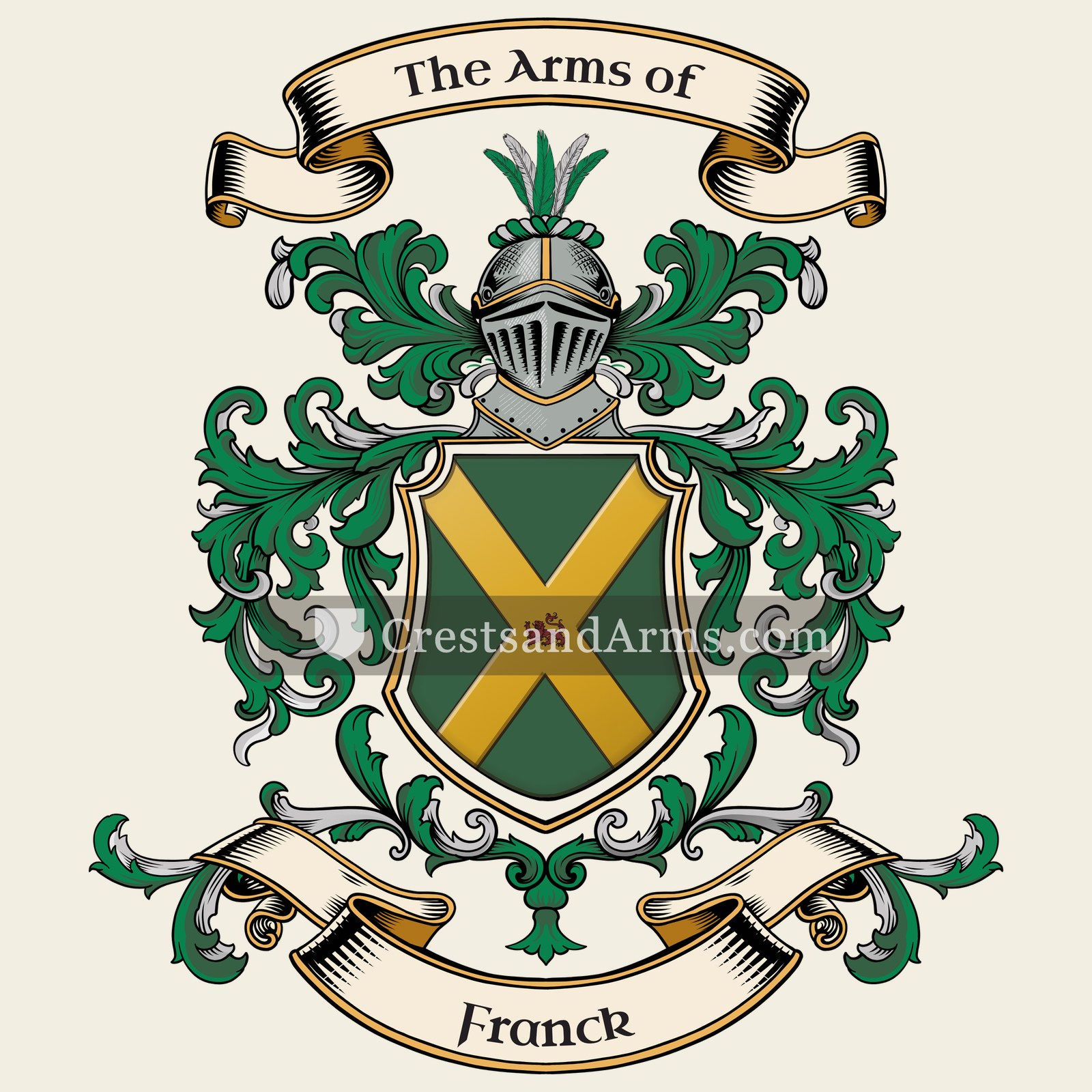
saltireResolution, and St Andrew's cross
lionCourage, strength and royalty
Colours
Green (Vert)Means: Hope
Gold (Or)Means: Generosity
Red (Gules)Means: Military strength
Historical info
Source
Sir Bernard Burke, The General Armory of England, Scotland, Ireland and Wales, London: Harrison & Sons, 1884
Blazon (the actual original written record)
“Vert on a saltire engr. or, a lion's head erased gu”
Englandc. 1620
Digital archive packCoat of arms PNG, gold border print PDF, vector SVG and the certificate of authenticity. Sent to your email in minutes.
Map of England showing where the Franck arms are recorded
The Franck arms were recorded in England, c. 1620.
Arms such as these were typically recorded in York.
Yorkshire is the largest of the English counties, and it held more gentry families than any other. Land there was split among a great many households rather than a few, so a great many of them carried arms.
This is where the arms were entered in the register. Families often moved to other parts of the country, so the same name can turn up in more than one region.
The body that granted and recorded arms in England in this period.
James VI and I
Sovereign of the period
James VI and I
1603–1625
Reigning in France when the Franck arms are first recorded.
How Arms Worked in England
English heraldry allowed arms to be shared by all legitimate descendants of the original owner. These symbols were treated as personal property that moved through the generations to all children. While the eldest son kept the original design, other family members could use the same shield without needing to change it or register their own unique versions.
Granting authority
The College of Arms in London has regulated the use of coats of arms throughout England and Wales since 1484.
How they got arms
Families typically obtained their coats of arms through a formal grant from the Crown or by proving their ancient right to them.
Where arms were recorded
All official coats of arms are recorded in the registers kept at the College of Arms, which date back to the fifteenth century.
The family's standing
Recorded among the armigerous families of England.
Origin & History of the Franck Family in England
The surname Franck carries a deep history rooted in the movement of people across medieval Europe, eventually establishing a notable presence in England. The name itself is derived from the Germanic word for free, reflecting a status that distinguished early bearers from those bound to the land under feudal systems. By the time the family appeared in the historical records of York in 1620, they were part of a growing class of merchants and tradespeople who helped shape the city’s economic life. During this period, York served as a vital northern hub where families with the name Franck integrated into local governance and parish life. These early ancestors likely navigated the social shifts of the seventeenth century by utilizing their reputation for independence and reliability. Their presence in the city archives suggests that they were well-established members of the community who contributed to the local culture of the North of England long before the modern era.
Franck Meaning & Related Branches
Root word
Francus
A Latin term referring to a member of the Frankish tribe.
This name
FranckDerived from the Germanic tribe name, signifying a free man or someone of Frankish descent.
also spelled
Frank
Franke
Related arms
Vischersimilar arms
Frankvariant spelling
Frankevariant spelling
Documented Sources
J. B. Rietstap, Armorial Général, Gouda: G. B. van Goor Zonen, 1884–87
Archives de la ville et de l'Eurométropole de Strasbourg, Registres paroissiaux et d'état civil
Livet, Georges, Histoire de Strasbourg des origines à nos jours, 1980
Rapp, Francis, Le Diocèse de Strasbourg, 1982
Digital archive packCoat of arms PNG, gold border print PDF, vector SVG and the certificate of authenticity. Sent to your email in minutes.


 fessThe military belt, and readiness to serve
 horseshoeGood fortune and protection from harm
 fessThe military belt, and readiness to serve
 horseshoeGood fortune and protection from harm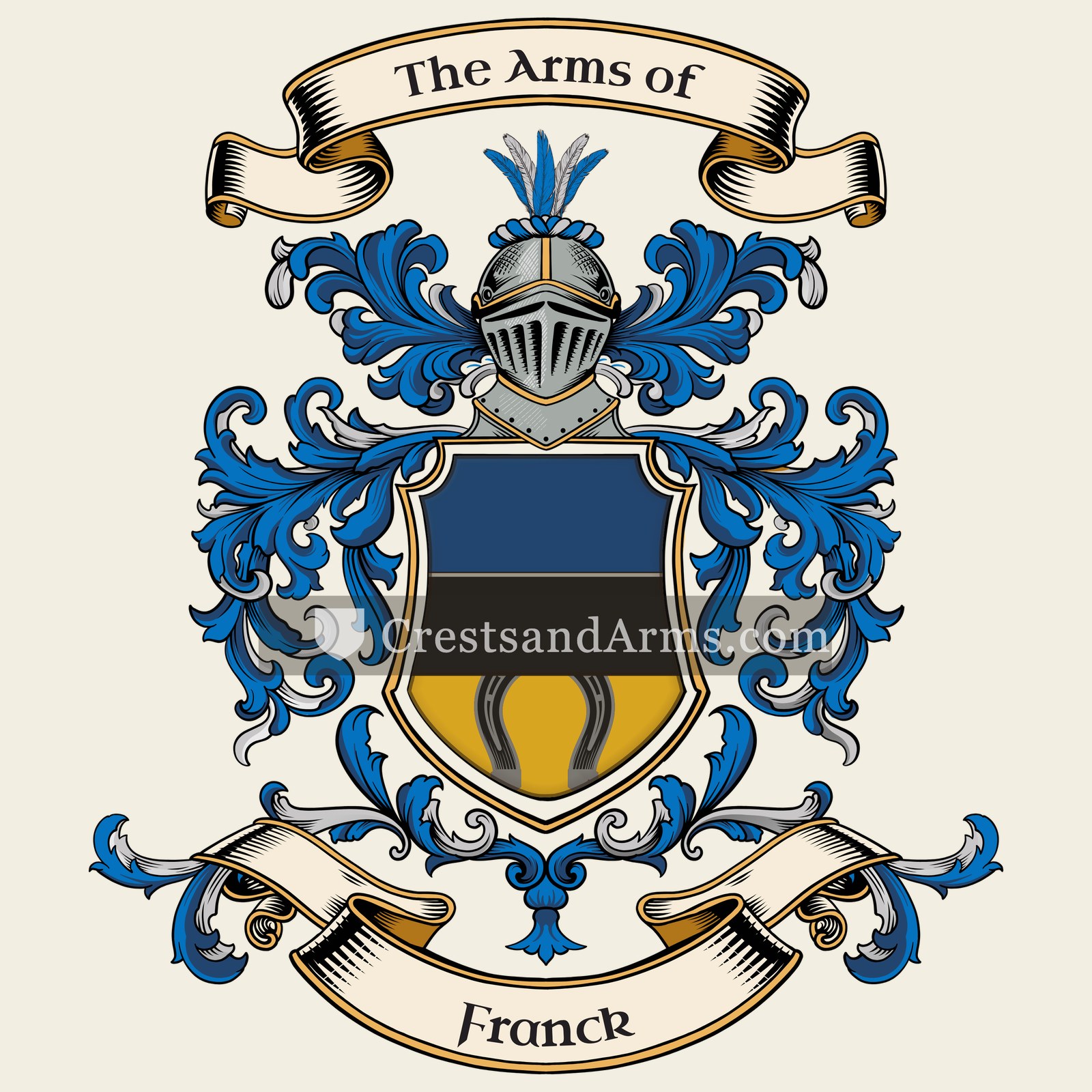


 knightChivalry and service in arms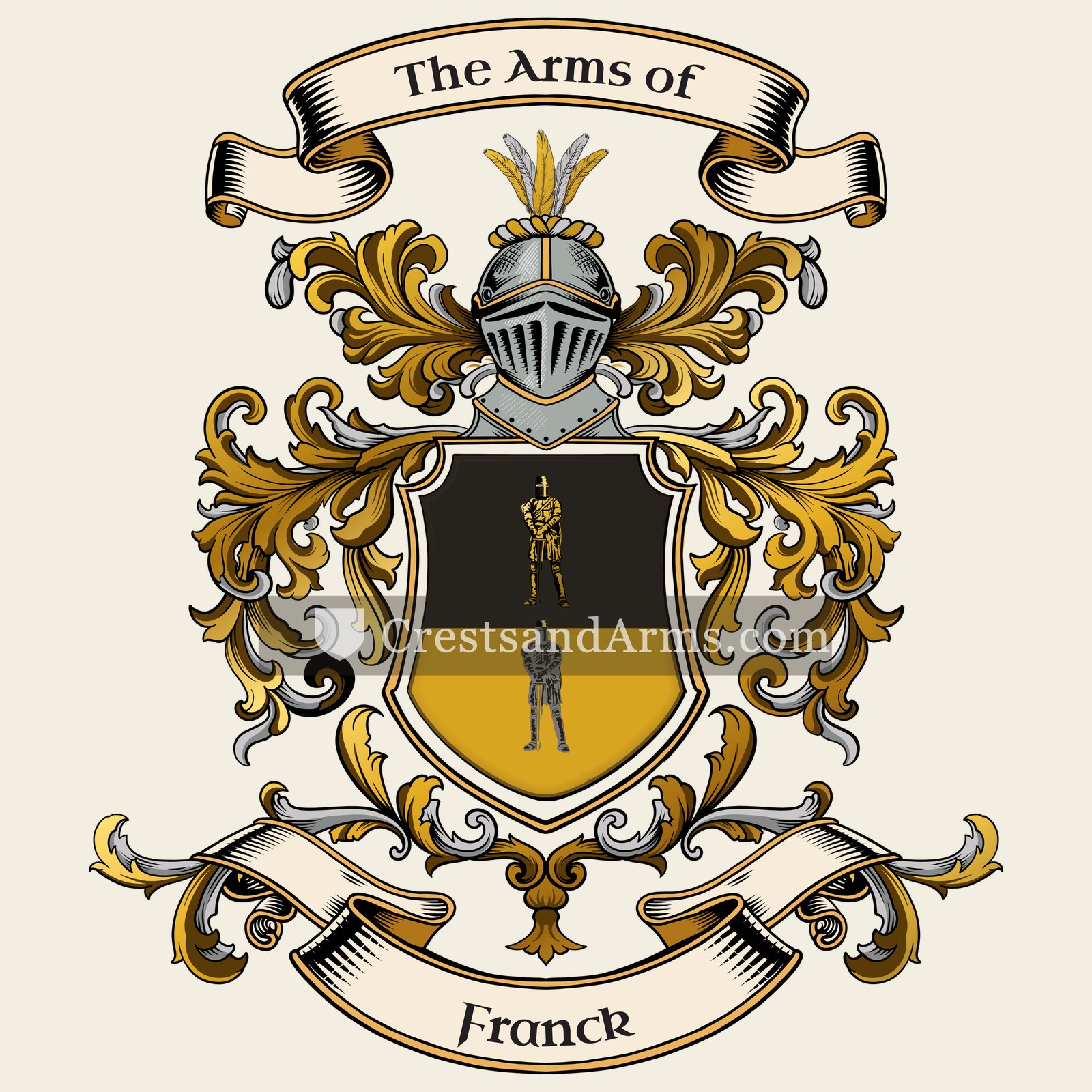


 saltireResolution, and St Andrew's cross
 lionCourage, strength and royalty