Map of Spain showing where the Franco arms are recorded
The Franco arms were recorded in Biscaye, c. 1722.
This is where the arms were entered in the register. Families often moved to other parts of the country, so the same name can turn up in more than one region.
The body that granted and recorded arms in Spain in this period.
Philip V of Spain
Sovereign of the period
Philip V of Spain
1714–1724
Reigning in Spain when the Franco arms are first recorded.
How Arms Worked in Spain
In Spain, a coat of arms was considered a form of property that belonged to the entire family line. These arms were passed down from a father to all his children equally. Younger branches of the family usually kept the original design without needing to add any special marks to distinguish their specific line.
Granting authority
The Cronista Rey de Armas was the official body that regulated and granted coats of arms throughout Spain.
How they got arms
Families often obtained their arms through royal grants or by proving their noble status to the official heraldic authority.
Where arms were recorded
Coats of arms were officially recorded in the registers of the Cronista Rey de Armas starting in 1496.
The family's standing
Recorded among the armigerous families of Spain.
Origin & History of the Franco Family in Spain
The surname Franco has deep roots in the northern regions of Spain, particularly within the rugged landscape of Biscay. By the early eighteenth century, the family was already well-established in this area, where they lived among the Basque-speaking communities that defined the local culture. The name itself is derived from the Latin word *francus*, which historically meant free or exempt. During the Middle Ages, this term was often used to describe individuals who were granted special legal status or freedom from certain taxes, often as a reward for settling in newly conquered territories or serving the crown. As the family grew in Biscay, they became part of the local social fabric, likely working as landowners or tradespeople who benefited from the unique regional laws known as *fueros*. These laws provided a level of autonomy that allowed families in the north to maintain strong local identities while contributing to the broader development of the Spanish state.
Coat of Arms & Family Crest Details
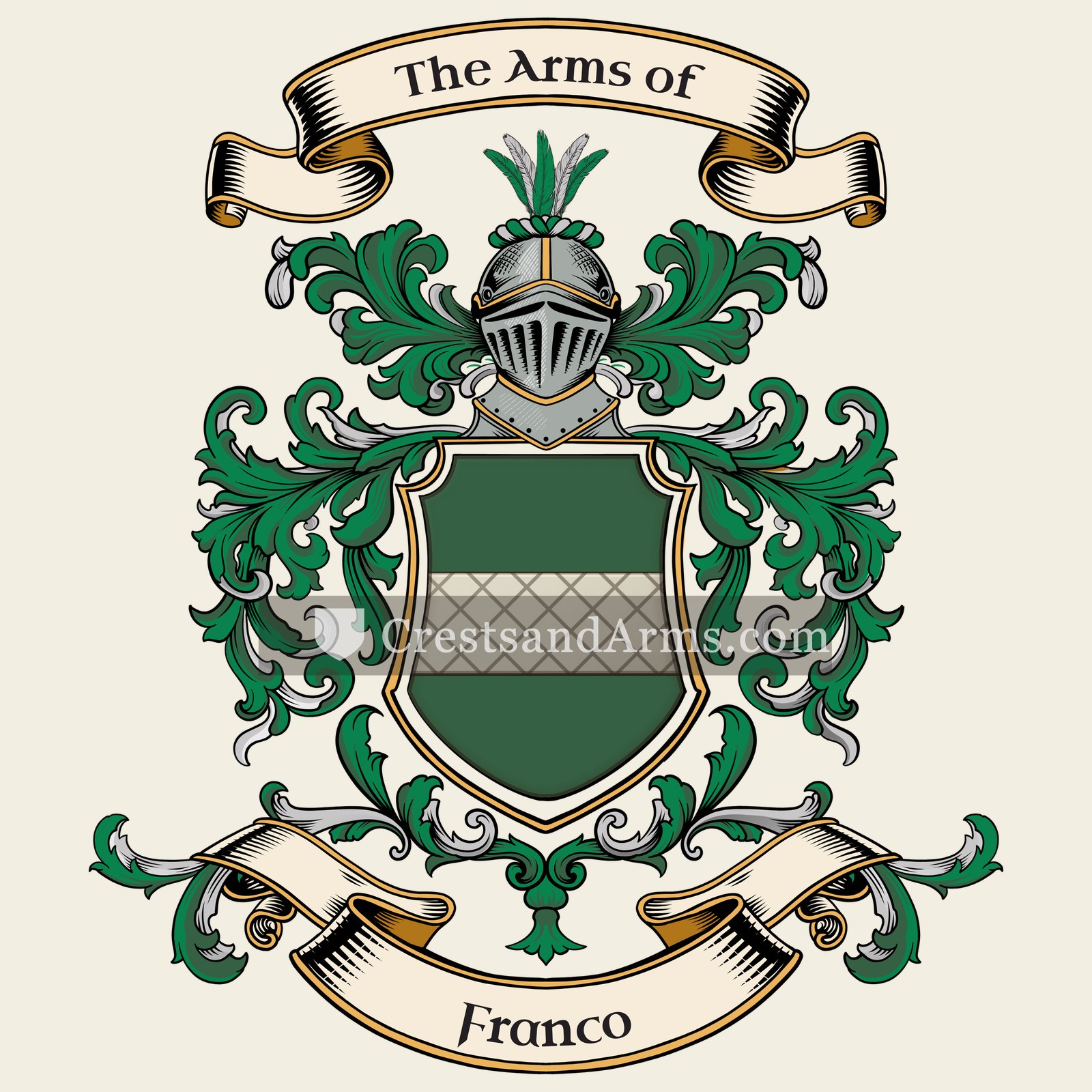
Symbols on this shield
fessThe military belt, and readiness to serve
Colours
Green (Vert)Means: Hope
Silver (Argent)Means: Peace and sincerity
Historical info
Source
J. B. Rietstap, Armorial Général, Gouda: G. B. van Goor Zonen, 1884–87
Blazon (the actual original written record)
“De sin. à la fasce d'arg.”
VeniceVenice, c. 1775
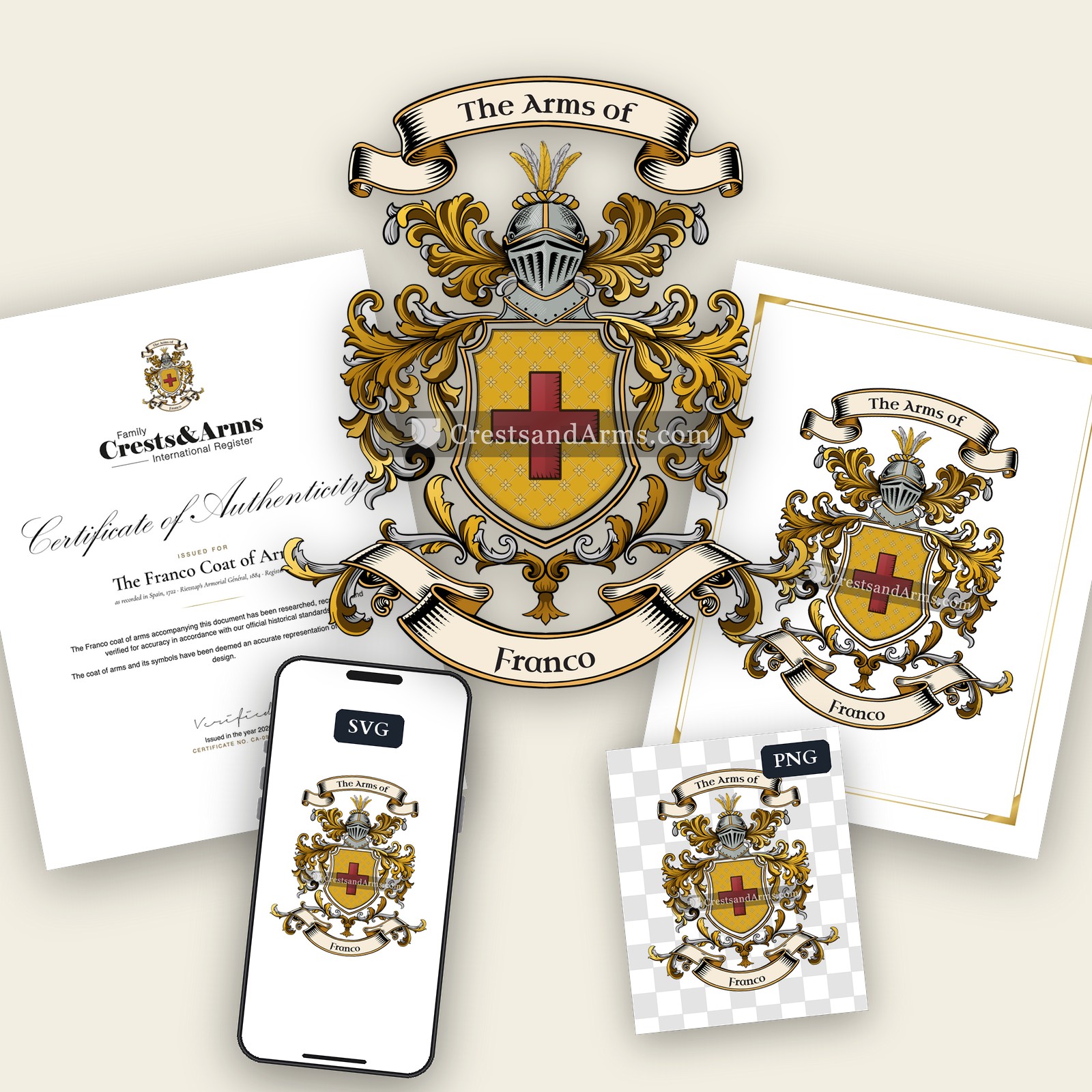
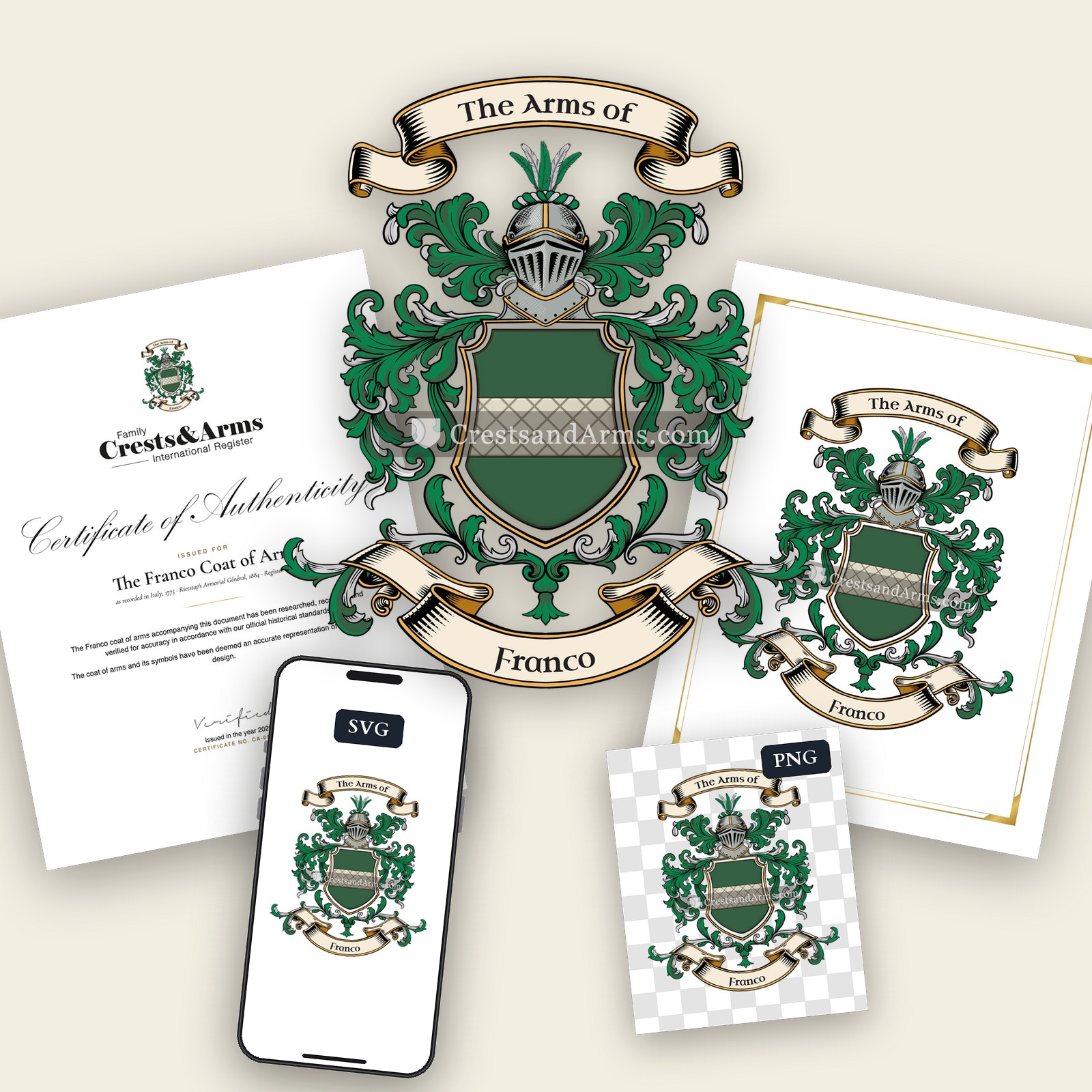
Digital archive packCoat of arms PNG, gold border print PDF, vector SVG and the certificate of authenticity. Sent to your email in minutes.
Map of Italy showing where the Franco arms are recorded
The Franco arms were recorded in Venice, c. 1775.
Venice ran on trade, and its great families were merchants before they were anything else. The city kept a formal list of its noble houses, and a name on that list carried arms as a matter of record.
This is where the arms were entered in the register. Families often moved to other parts of the country, so the same name can turn up in more than one region.
The body that granted and recorded arms in Italy in this period.
Alvise Giovanni Mocenigo
Sovereign of the period
Alvise Giovanni Mocenigo
1763–1778
Reigning in Spain when the Franco arms are first recorded.
How Arms Worked in Italy
In the Italian states, coats of arms were often used by noble families to show their status and history. These symbols were passed down through the generations to all legitimate male descendants. Younger branches of a family usually kept the original design but sometimes added small changes to distinguish their specific line from the main branch.
Granting authority
Various local rulers and city governments controlled the use of coats of arms across the different Italian states.
How they got arms
Families often assumed their own arms or received them as official grants from local lords, popes, or city councils.
Where arms were recorded
Arms were recorded in local city archives or private family books rather than in one single national register.
The family's standing
Recorded among the armigerous families of Venice.
Origin & History of the Franco Family in Italy
The name Franco has deep roots in the Italian peninsula, where it originally functioned as a descriptor for people who were considered free or associated with the Frankish people. By the time the family established a notable presence in Venice during the late 18th century, the name had evolved from a simple status indicator into a recognized surname used by families integrated into the city’s complex social and commercial life. Venice in 1775 was a bustling hub of trade and diplomacy, and families like the Francos often played roles in the administrative or merchant classes that kept the Republic functioning. Because Venice was a crossroads for Mediterranean travel, the name likely gained stability through these urban networks, allowing the family to maintain a consistent identity within the city’s rigorous record-keeping systems. This transition from a general term for freedom to a formal family name reflects the broader shift in Italian society as people began to use hereditary surnames to define their place in the community.
Franco Meaning & Related Branches
Root word
Francus
A term referring to a member of the Frankish tribe.
This name
FrancoDerived from the Latin word for free, denoting a person of free status.
also spelled
Franko
Francoeur
Related arms
Avanzisimilar arms
Documented Sources
J. B. Rietstap, Armorial Général, Gouda: G. B. van Goor Zonen, 1884–87
Mendizábal, J. M., Historia de Vizcaya, 1985
Faure, R., Diccionario de apellidos españoles, 2009
Archivo Histórico Eclesiástico de Bizkaia, Libros Sacramentales (Bautismos)
Archivo General de Simancas, Registro del Sello de Corte
Digital archive packCoat of arms PNG, gold border print PDF, vector SVG and the certificate of authenticity. Sent to your email in minutes.


 cross symbolChristian faith and service
 cross symbolChristian faith and service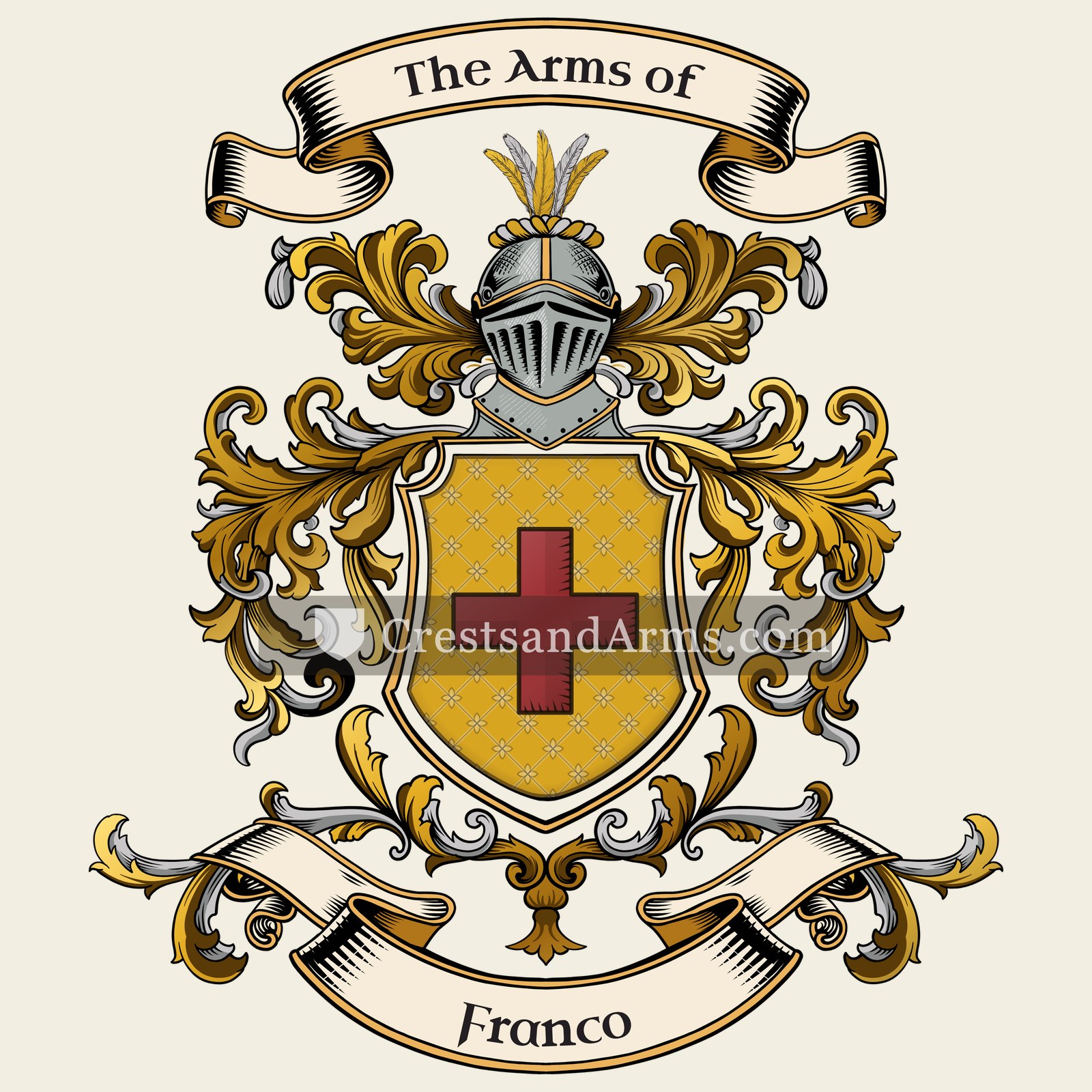


 fessThe military belt, and readiness to serve