Map of France showing where the François arms are recorded
The François arms were recorded in Lorraine, c. 1582.
Lorraine sat on the border between France and the German lands, and border country bred soldiers. Families here held small estates and served in arms, and a fighting man was exactly the sort who carried a shield of his own.
This is where the arms were entered in the register. Families often moved to other parts of the country, so the same name can turn up in more than one region.
The body that granted and recorded arms in France in this period.
Henry III of France
Sovereign of the period
Henry III of France
1574–1589
Reigning in France when the François arms are first recorded.
How Arms Worked in France
In France, a coat of arms was a mark of honor that passed down through the male line to all legitimate descendants. Families often used the same shield without changes to show their shared heritage. If a branch wanted to stand out, they could add a small mark to their shield to show their specific place in the family tree.
Granting authority
The Juge d'armes de France acted as the official authority that regulated and verified coats of arms across the country.
How they got arms
Families typically inherited their arms from ancestors, though they could also receive them through royal grants or by proving their noble status.
Where arms were recorded
Coats of arms were officially recorded in the Armorial Général de France, which began its main collection in the year 1696.
The family's standing
Recorded among the armigerous families of Lorraine.
Origin & History of the François Family in France
The family name François originates from the medieval period in France, evolving from the Latin term *Franciscus*, which was used to describe people of Frankish descent or those who traveled from the Frankish territories. By the late sixteenth century, the name was firmly established in the Lorraine region, a historically significant area located at the crossroads of French and Germanic cultures. In 1582, records confirm that members of the family were active residents in this province, living through a time when Lorraine functioned as a duchy with its own distinct political identity. During this era, the name served as a link to the broader cultural shifts occurring across the kingdom, reflecting the transition from regional identities to a more unified national language. As the family grew within the borders of Lorraine, they participated in the local social and economic life that defined the French frontier before the region was fully incorporated into the centralized French state.
Coat of Arms & Family Crest Details
Symbols on this shield
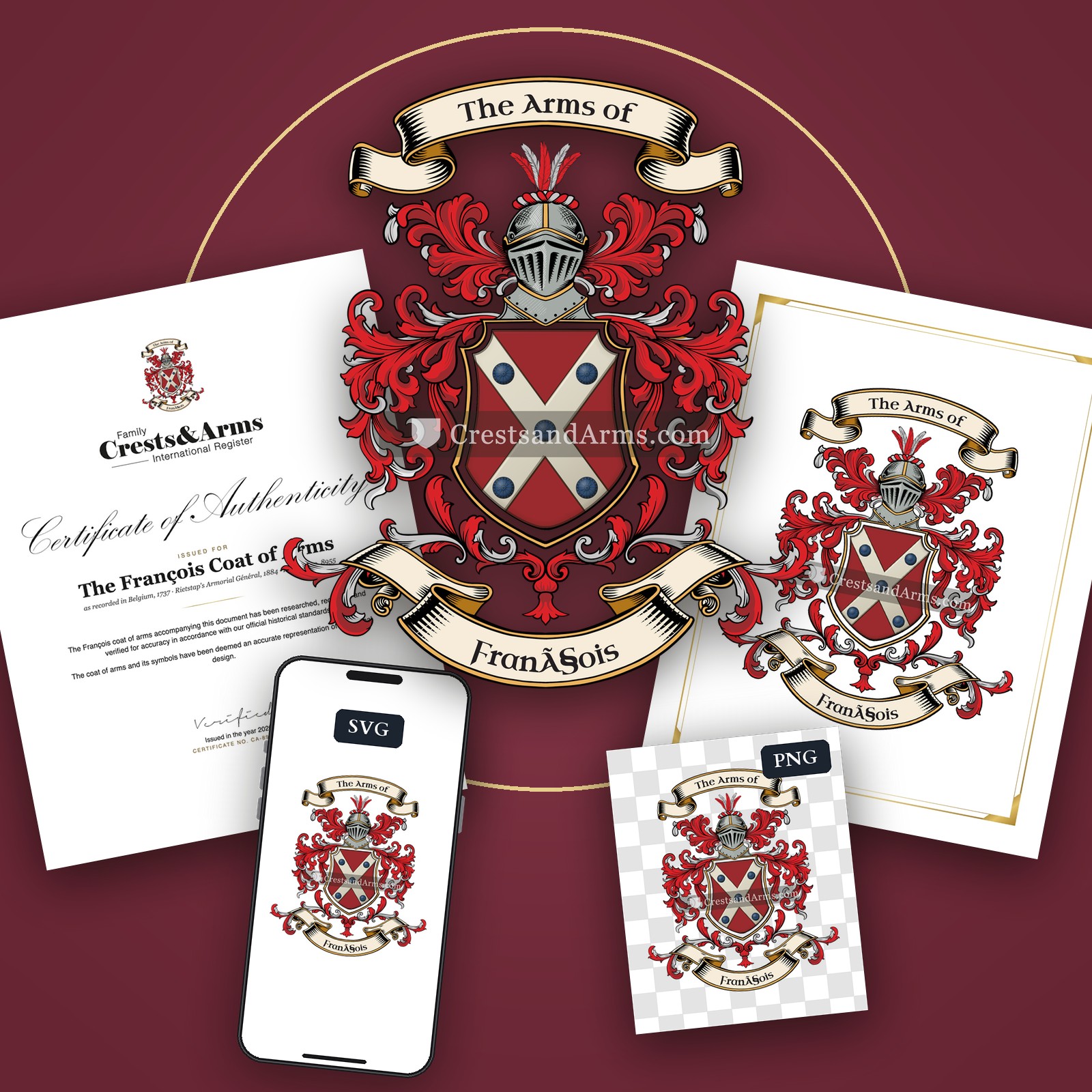
saltireResolution, and St Andrew's cross
roundelA coin, and one who has been to the crusades
Colours
Red (Gules)Means: Military strength
Silver (Argent)Means: Peace and sincerity
Blue (Azure)Means: Loyalty and truth
Historical info
Source
J. B. Rietstap, Armorial Général, Gouda: G. B. van Goor Zonen, 1884–87
Blazon (the actual original written record)
“De gu. au saut. d'arg., ch. de cinq tourt. d'azur.”
BrabantBrabant, c. 1737
Digital archive packCoat of arms PNG, gold border print PDF, vector SVG and the certificate of authenticity. Sent to your email in minutes.
Map of Belgium showing where the François arms are recorded
The François arms were recorded in Brabant, c. 1737.
Brabant lay at the heart of the Low Countries, where the trade routes met. Its towns were wealthy and its landowners many, and both kinds of family kept arms, which is why the region is so heavily represented.
This is where the arms were entered in the register. Families often moved to other parts of the country, so the same name can turn up in more than one region.
The body that granted and recorded arms in Belgium in this period.
Charles VI, Holy Roman Emperor
Sovereign of the period
Charles VI, Holy Roman Emperor
1711–1740
Reigning in France when the François arms are first recorded.
How Arms Worked in Belgium
In Belgium, a coat of arms is considered personal property that is passed down through the male line to legitimate descendants. Families often use the same shield design across generations to show their shared heritage. If a branch of the family wants to change the design, they must apply for an official update to their specific version of the arms.
Granting authority
The Conseil héraldique is the official body that regulates and approves all coats of arms in Belgium.
How they got arms
Families obtain their coats of arms through formal royal grants or by confirming their historical right to use existing designs.
Where arms were recorded
All approved coats of arms are officially recorded in the public registers of the Conseil héraldique since 1844.
The family's standing
Recorded among the armigerous families of Brabant.
Origin & History of the François Family in Belgium
The family name François has deep roots in the historical region of Brabant, where records confirm members of the family were established by 1737. During this era, the name functioned as a patronymic, derived from the Latin name Franciscus, which signifies a person of French origin or one who traveled from France. In the social landscape of eighteenth-century Belgium, families with this name were often integrated into the local merchant or artisan classes that thrived in the bustling towns of the Low Countries. Because the region was a crossroads for trade and cultural exchange between Germanic and Romance-speaking populations, the name served as a marker of identity that bridged these linguistic borders. Over time, the family became part of the local fabric of Brabant, contributing to the agricultural and civic life of the province as the region transitioned through various periods of political change.
Coat of Arms & Family Crest Details
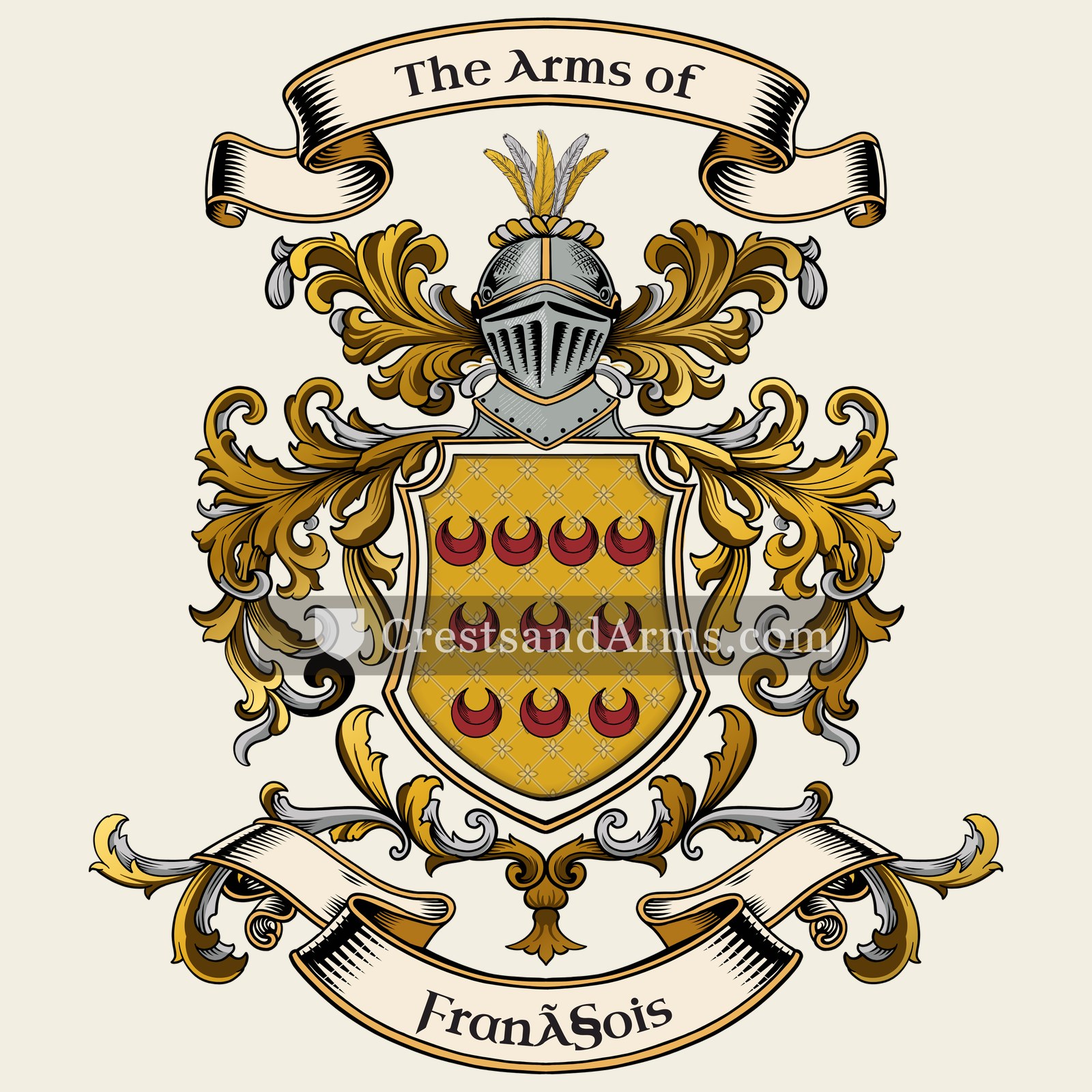
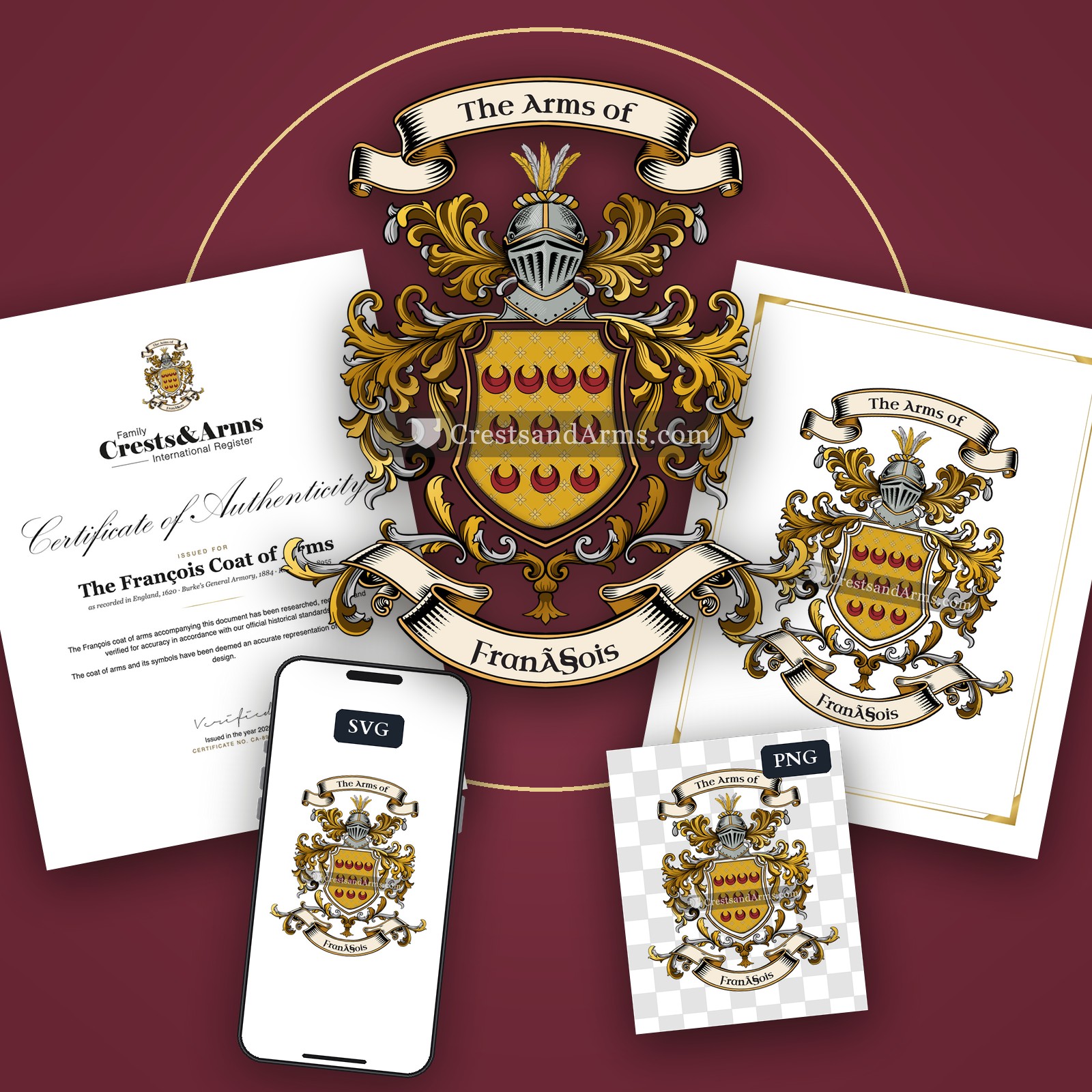
Symbols on this shield
crescentHonour by the sovereign, and the second son
Colours
Gold (Or)Means: Generosity
Red (Gules)Means: Military strength
Historical info
Source
Sir Bernard Burke, The General Armory of England, Scotland, Ireland and Wales, London: Harrison & Sons, 1884
Blazon (the actual original written record)
“Or, ten crescents gu. on each a hawk's bell ar”
Englandc. 1620
Digital archive packCoat of arms PNG, gold border print PDF, vector SVG and the certificate of authenticity. Sent to your email in minutes.
Map of England showing where the François arms are recorded
The François arms were recorded in England, c. 1620.
Arms such as these were typically recorded in York.
Yorkshire is the largest of the English counties, and it held more gentry families than any other. Land there was split among a great many households rather than a few, so a great many of them carried arms.
This is where the arms were entered in the register. Families often moved to other parts of the country, so the same name can turn up in more than one region.
The body that granted and recorded arms in England in this period.
James VI and I
Sovereign of the period
James VI and I
1603–1625
Reigning in France when the François arms are first recorded.
How Arms Worked in England
English heraldry allowed arms to be shared by all legitimate descendants of the original owner. These symbols were treated as personal property that moved through the generations to all children. While the eldest son kept the original design, other family members could use the same shield without needing to change it or register their own unique versions.
Granting authority
The College of Arms in London has regulated the use of coats of arms throughout England and Wales since 1484.
How they got arms
Families typically obtained their coats of arms through a formal grant from the Crown or by proving their ancient right to them.
Where arms were recorded
All official coats of arms are recorded in the registers kept at the College of Arms, which date back to the fifteenth century.
The family's standing
Recorded among the armigerous families of England.
Origin & History of the François Family in England
The surname François serves as a direct linguistic link to the historical movement of people from France into the British Isles. While the name is inherently French in origin, its presence in England reflects the complex social and religious shifts of the seventeenth century. By the year 1620, records confirm that members of the family had established a foothold in the city of York. This period was marked by the arrival of various continental immigrants who were often drawn to northern trade hubs for economic opportunity or to find refuge from political instability. Settling in a historic city like York suggests that these early family members were likely integrated into the urban merchant or artisan classes of the time. Their presence highlights how families with foreign roots gradually adapted to English life while maintaining a name that clearly identified their ancestral connection to the French-speaking world.
François Meaning & Related Branches
Root word
Francus
A Latin term referring to a member of the Frankish tribe.
This name
FrançoisDerived from the Germanic tribe name, it signifies a free man.
also spelled
Francoy
Franswa
Francis
Francoye
Related arms
Vautrinsame arms
Aubaud du Perronrecorded with François, same area
Gouyonrecorded with François, same area
Montigny de Kerespertzrecorded with François, same area
Documented Sources
J. B. Rietstap, Armorial Général, Gouda: G. B. van Goor Zonen, 1884–87
Dauzat, Albert, Dictionnaire étymologique des noms et prénoms de France, 1951
Lebel, Paul, Les noms de personnes en France, 1946
Archives départementales de Meurthe-et-Moselle, Série B: Cours et juridictions
Digital archive packCoat of arms PNG, gold border print PDF, vector SVG and the certificate of authenticity. Sent to your email in minutes.


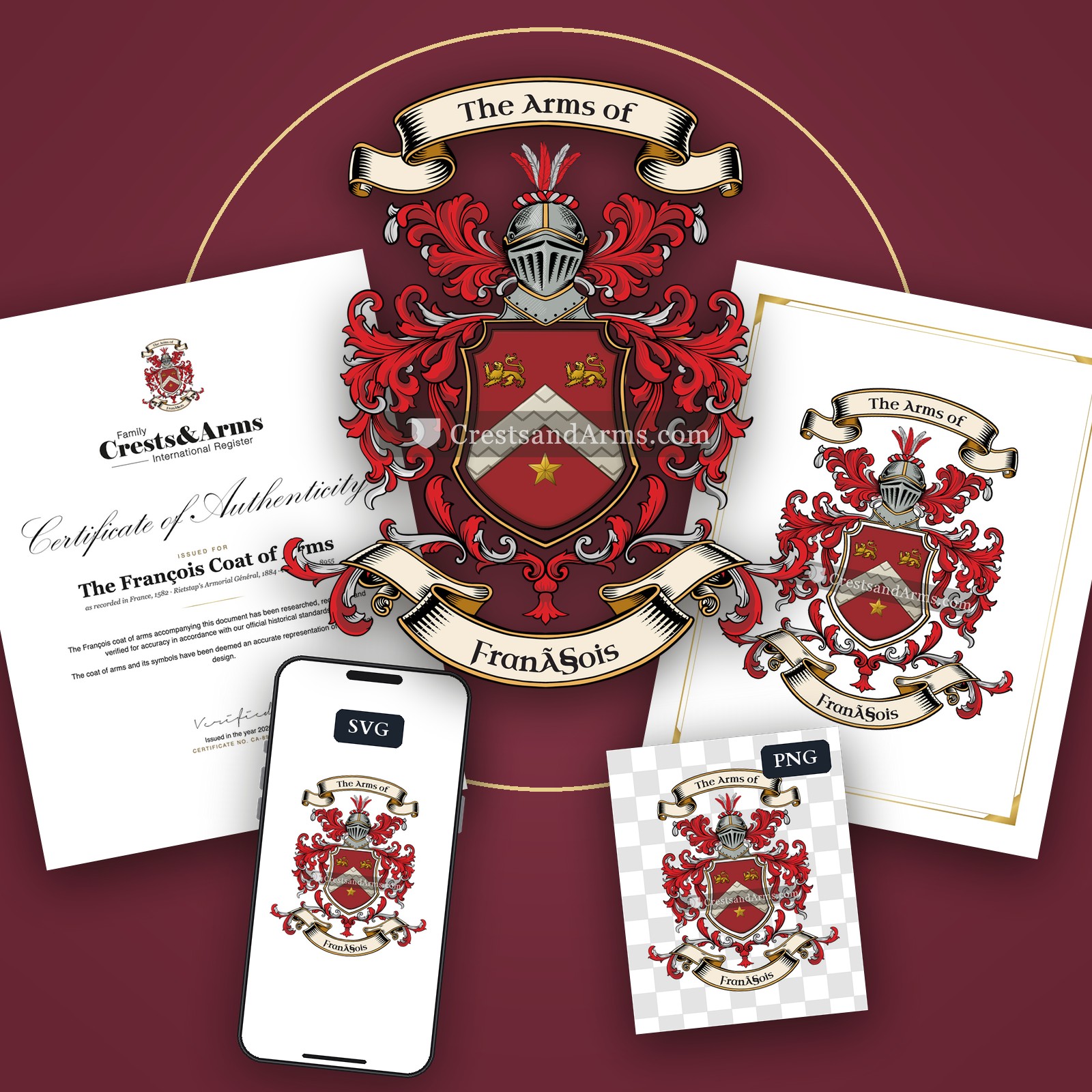
 chevronProtection, and faithful service completed
 lionCourage, strength and royalty
 mulletThe third son, and a divine quality from above
 chevronProtection, and faithful service completed
 lionCourage, strength and royalty
 mulletThe third son, and a divine quality from above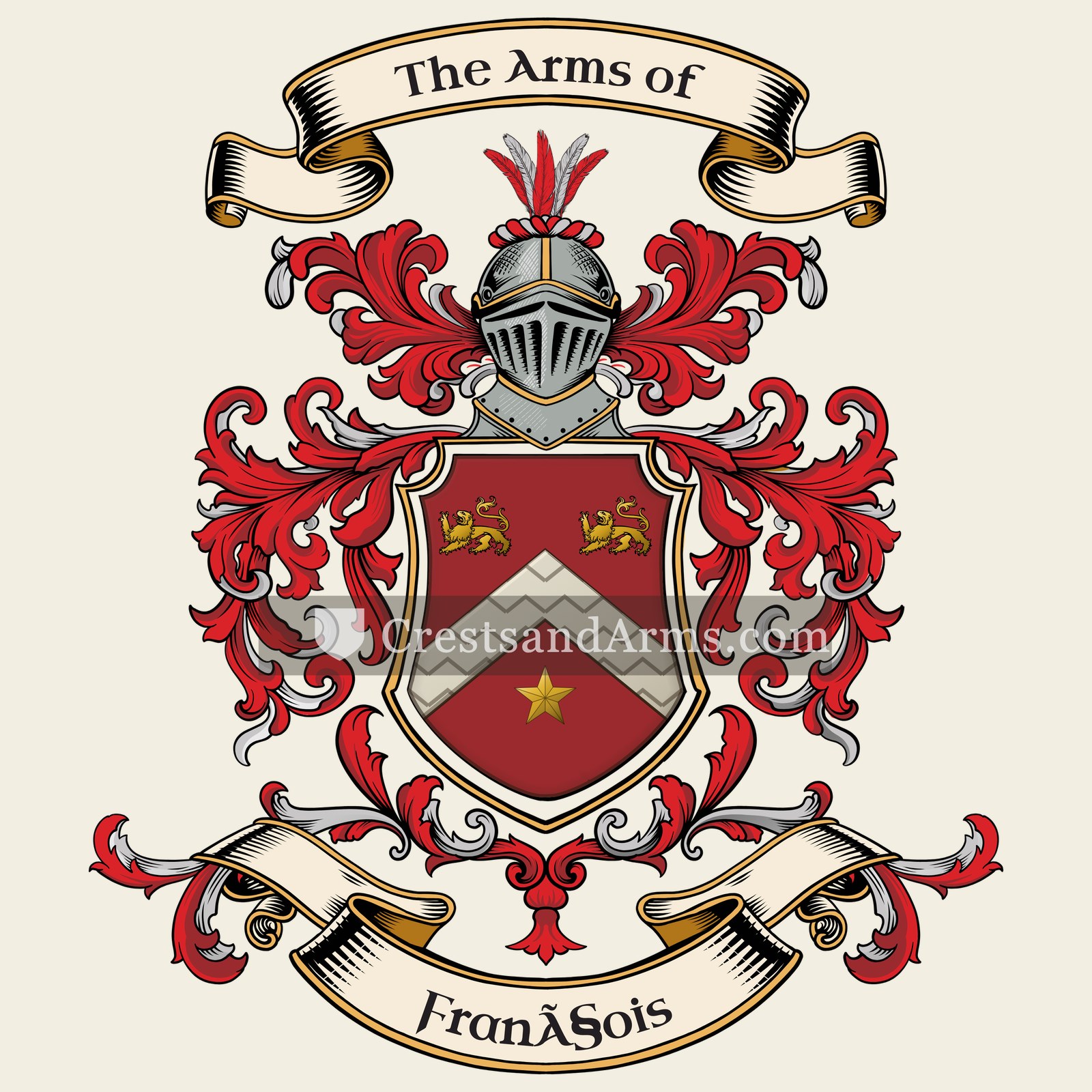


 saltireResolution, and St Andrew's cross
 roundelA coin, and one who has been to the crusades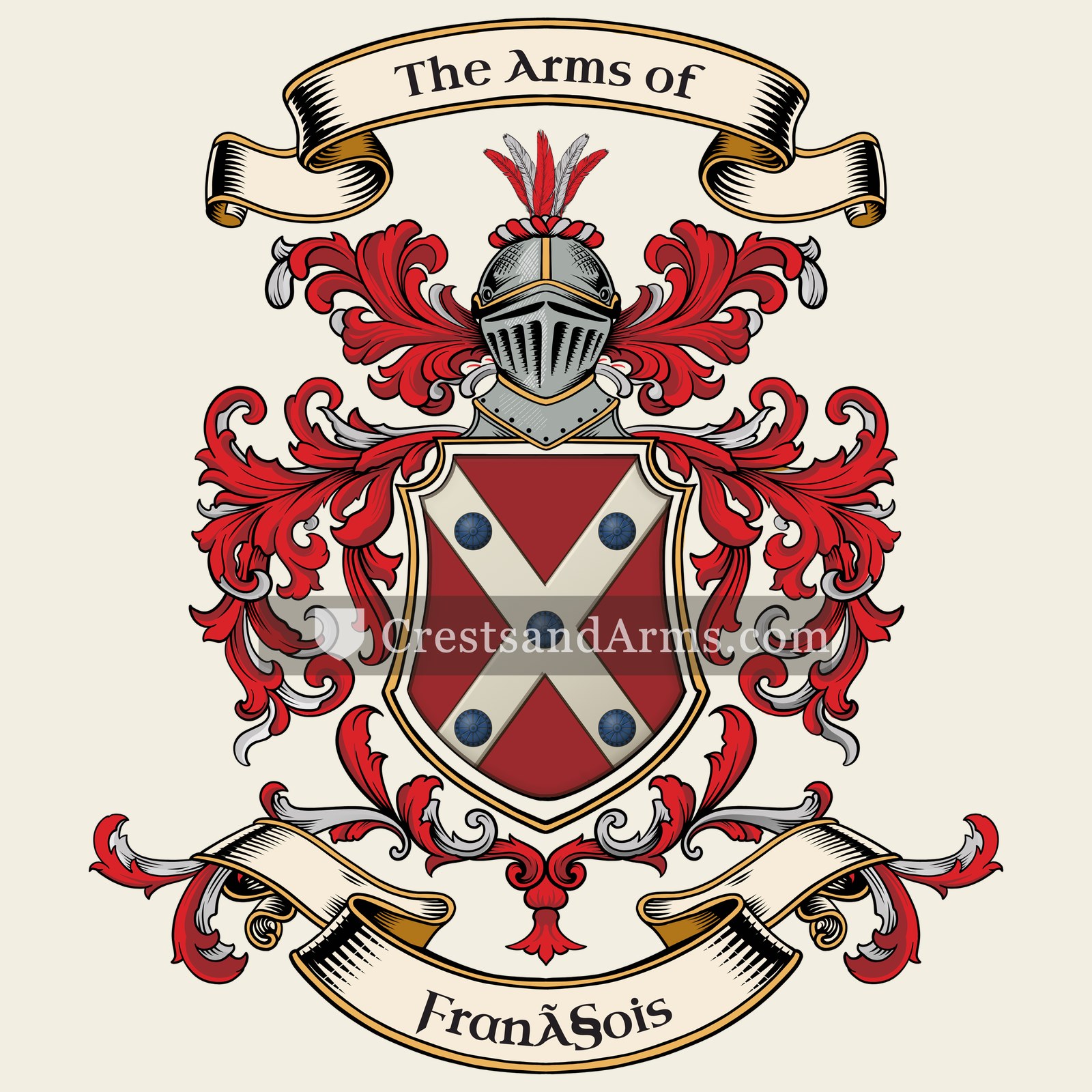


 crescentHonour by the sovereign, and the second son