Map of Austria showing where the Frankenstein arms are recorded
The Frankenstein arms were recorded in Austria, c. 1772.
Arms such as these were typically recorded in Tyrol.
Tyrol was mountain country in western Austria, where the valleys were held by families who had been there a very long time. Old tenure counted for more than money, and old families carried arms.
This is where the arms were entered in the register. Families often moved to other parts of the country, so the same name can turn up in more than one region.
Region
Tyrol
First recorded
1772
Granting Authority for the Frankenstein Arms
Imperial and Royal chancery
Sodacan · CC BY-SA 3.0
The body that granted and recorded arms in Austria in this period.
Joseph II, Holy Roman Emperor
Sovereign of the period
Joseph II, Holy Roman Emperor
1765–1790
Reigning in Austria when the Frankenstein arms are first recorded.
How Arms Worked in Austria
Austrian coats of arms were often linked directly to noble titles granted by the Emperor. These symbols belonged to the entire family line rather than just one individual. When a family grew, new branches kept the original design without needing to change it. This system allowed all members of a noble house to share the same identity across many generations.
Granting authority
The Imperial and Royal chancery managed all heraldic matters and controlled the official granting of arms throughout the Austrian lands.
How they got arms
Families typically received their arms through a formal imperial decree that often accompanied the elevation of a person to noble status.
Where arms were recorded
Official records of these grants were kept in the Imperial Register of Nobility which began its formal documentation process in 1453.
The family's standing
Recorded among the armigerous families of Austria.
Origin & History of the Frankenstein Family in Austria
The family name Frankenstein has deep roots in the rugged landscape of the Austrian Tyrol, where members of the family were documented as early as 1772. The name itself is derived from the German words for stone and rock, suggesting that the family likely originated from a specific geographic location or a fortified site built upon rocky terrain. During the eighteenth century, the Tyrol region served as a vital crossroads for trade and travel between the Italian peninsula and the German states. Families in this area often held positions of local responsibility or managed land for the regional nobility. By the late 1700s, the Frankenstein family had established a presence in these mountain communities, integrating into the social and economic fabric of the Alpine valleys. Their history reflects the broader movement of families who settled in the high altitudes of Austria, where they adapted to the challenges of mountain life while contributing to the local administration and agricultural development of the region.
Coat of Arms & Family Crest Details
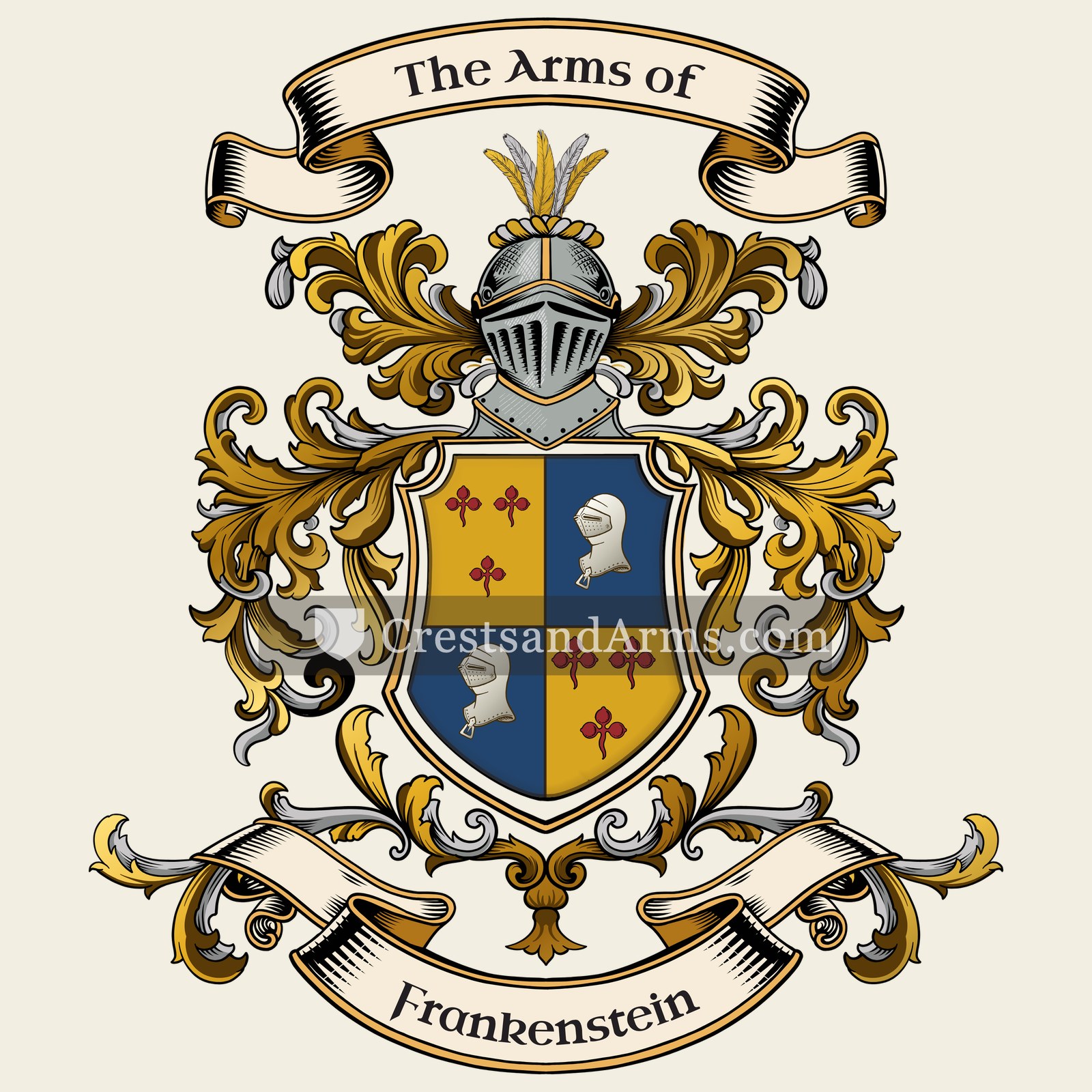
Symbols on this shield
trefoilPerpetuity, and the Trinity
Colours
Silver (Argent)Means: Peace and sincerity
Gold (Or)Means: Generosity
Red (Gules)Means: Military strength
Historical info
Source
J. B. Rietstap, Armorial Général, Gouda: G. B. van Goor Zonen, 1884–87
Blazon (the actual original written record)
“Ec.: aux 1 et 4 les armes précédentes; aux 2 et 3 d'or à trois trèfles de gu., en pairle, les tiges aboutées (Klee). Deux cq. cour. C.: 1º un vol cont., aux armes du 1; 2º un vol à l'antique de sa., ch. d'un écusson aux armes du 2.”
Francec. 1663
Digital archive packCoat of arms PNG, gold border print PDF, vector SVG and the certificate of authenticity. Sent to your email in minutes.
Map of France showing where the Frankenstein arms are recorded
The Frankenstein arms were recorded in France, c. 1663.
Arms such as these were typically recorded in Bretagne.
More families held coats of arms in Bretagne than anywhere else in France. The land was divided into many small estates rather than a few large ones, so far more households counted as gentry, and each needed a shield of its own to be told apart.
This is where the arms were entered in the register. Families often moved to other parts of the country, so the same name can turn up in more than one region.
The body that granted and recorded arms in France in this period.
Louis XIV of France
Sovereign of the period
Louis XIV of France
1643–1715
Reigning in Austria when the Frankenstein arms are first recorded.
How Arms Worked in France
In France, a coat of arms was a mark of honor that passed down through the male line to all legitimate descendants. Families often used the same shield without changes to show their shared heritage. If a branch wanted to stand out, they could add a small mark to their shield to show their specific place in the family tree.
Granting authority
The Juge d'armes de France acted as the official authority that regulated and verified coats of arms across the country.
How they got arms
Families typically inherited their arms from ancestors, though they could also receive them through royal grants or by proving their noble status.
Where arms were recorded
Coats of arms were officially recorded in the Armorial Général de France, which began its main collection in the year 1696.
The family's standing
Recorded among the armigerous families of France.
Origin & History of the Frankenstein Family in France
The history of the Frankenstein name in France begins with the arrival of family members in the region of Bretagne during the mid-seventeenth century. By 1663, these individuals had established a presence in the local community, likely drawn to the area by the shifting political and social landscapes of the time. While the name is often associated with later literary fame, its early roots in France suggest a family that integrated into the provincial life of the Atlantic coast. These early settlers navigated the complexities of seventeenth-century French society, leaving behind traces in official registers that confirm their residence. Their presence in Bretagne marks a significant chapter in the family narrative, showing how they adapted to a new environment while maintaining their identity in a region known for its strong cultural traditions.
Coat of Arms & Family Crest Details
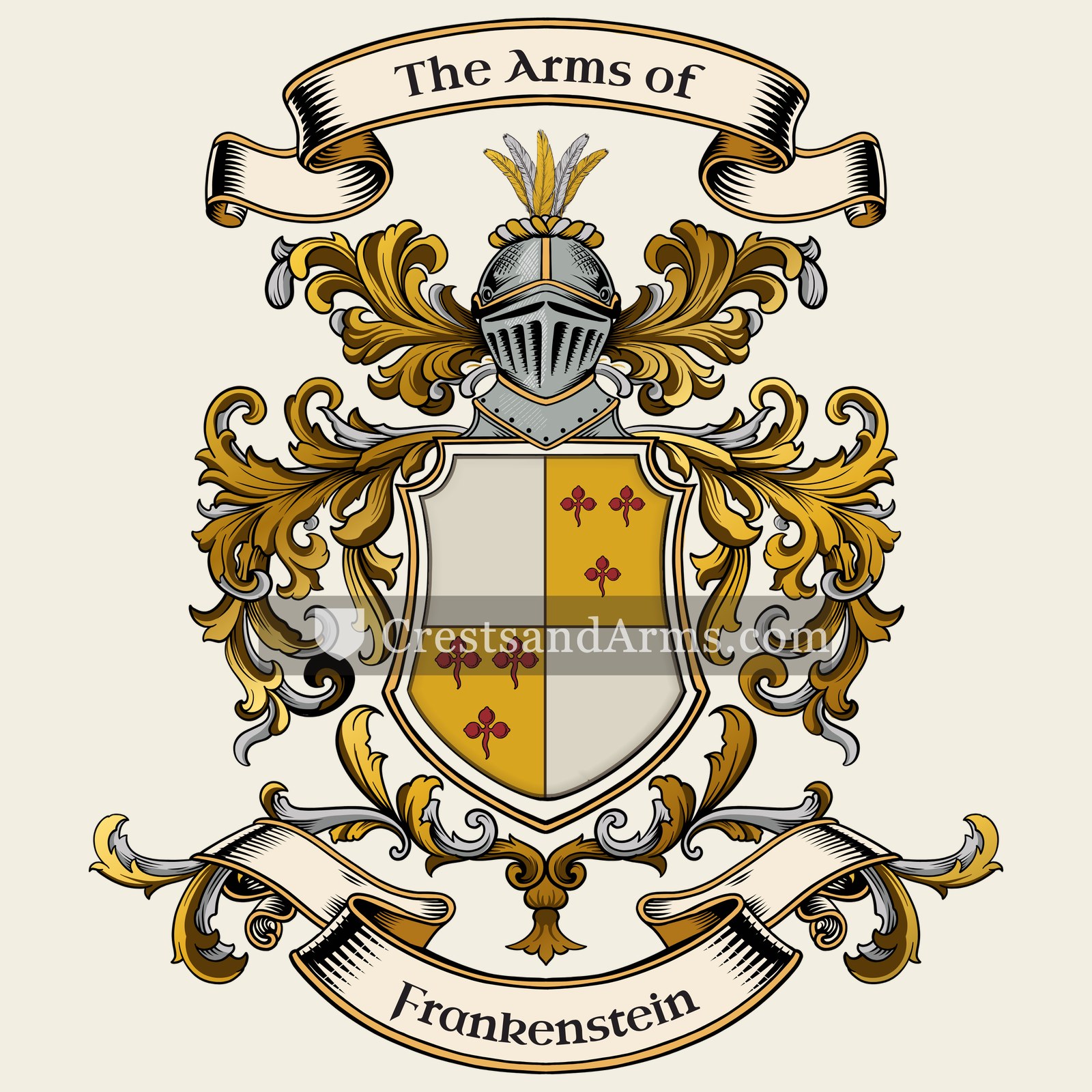
Symbols on this shield
trefoilPerpetuity, and the Trinity
helmetWisdom and security in defence
Colours
Gold (Or)Means: Generosity
Blue (Azure)Means: Loyalty and truth
Red (Gules)Means: Military strength
Silver (Argent)Means: Peace and sincerity
Historical info
Source
J. B. Rietstap, Armorial Général, Gouda: G. B. van Goor Zonen, 1884–87
Blazon (the actual original written record)
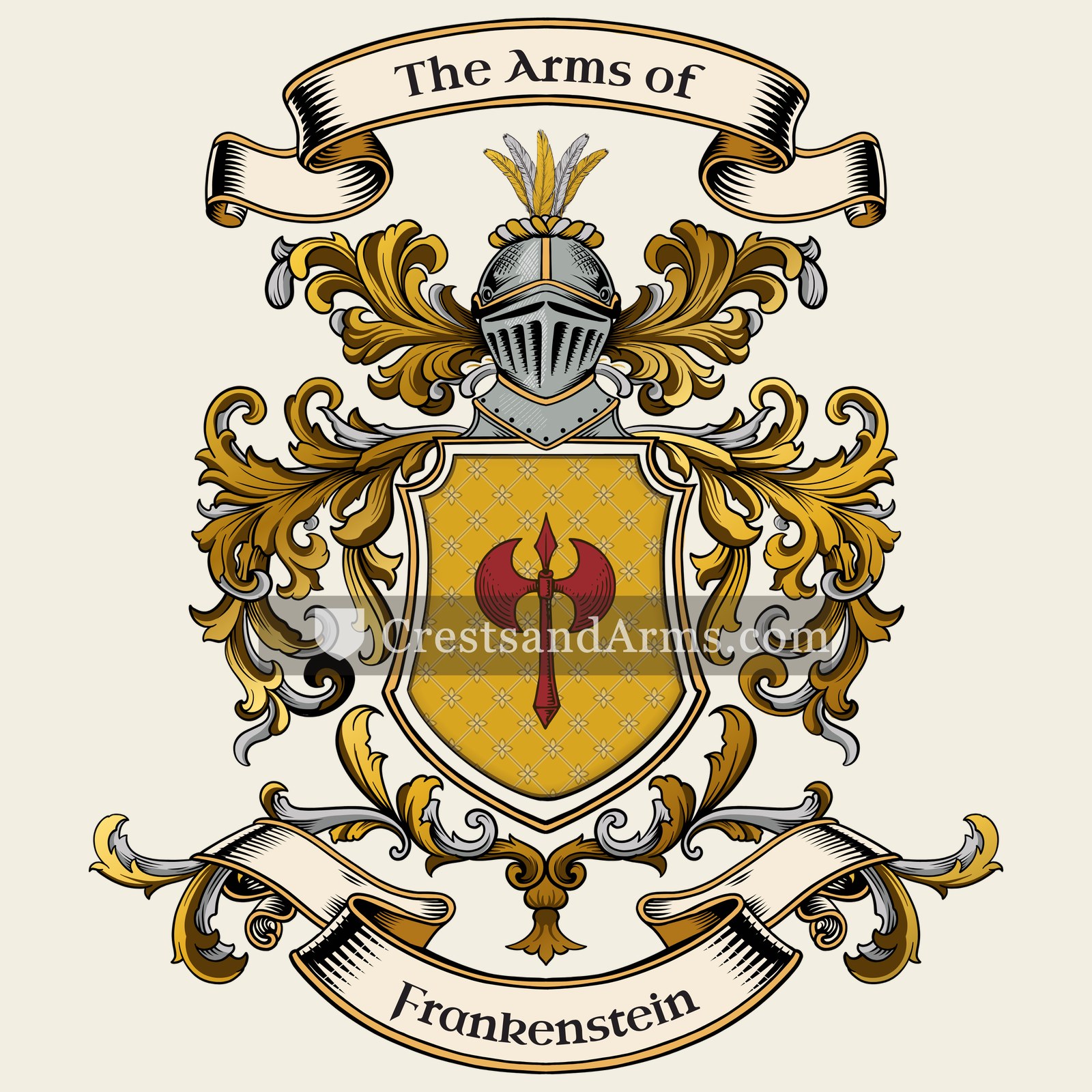
“Parti d'un trait, coupé de deux autres, qui font six quartiers: aux 1 et 6 d'or à trois trèfles de gu., mis en pairle, les tiges aboutées (Klee); aux 2 et 5 d'azur à un casque d'arg., taré de profil, portant en cimier un cygne iss. du même, les ailes ouv. de gu., chaque aile ch. de deux fasces, l'une de sa. et l'autre d'or; aux 3 et 4 d'or à la fasce de gu., acc. de trois roses du même, rangées en chef (les 2, 3, 4 et 5 quartiers contiennent les armes modifiées de la fam. et de Sachsenhausen). Sur le tout d'or à une hache démanchée de gu., cont. et posée en bande (Frankenstein). Trois cq. cour. C.: 1º une tête et col de paon cont. d'azur, br. sur un vol cont., coupé de sa. semé de trèfles d'arg., sur or à trois trèfles de gu., en pairle, les tiges aboutées (Klee); 2º un vol aux armes du surtout (Frankenstein); 3º le cygne iss. du 2 (Sachsenhausen). L.: à dextre d'or et de gu., à sen. d'arg. et d'azur.”
BavariaBavaria, c. 1670
Digital archive packCoat of arms PNG, gold border print PDF, vector SVG and the certificate of authenticity. Sent to your email in minutes.
Map of Germany showing where the Frankenstein arms are recorded
The Frankenstein arms were recorded in Bavaria, c. 1670.
Bavaria was a country of old landed families and walled market towns. Estates passed down the same line for centuries, and both the landowners and the leading townsmen kept arms, which is why so many Bavarian names sit in the registers.
This is where the arms were entered in the register. Families often moved to other parts of the country, so the same name can turn up in more than one region.
The body that granted and recorded arms in Germany in this period.
Leopold I, Holy Roman Emperor
Sovereign of the period
Leopold I, Holy Roman Emperor
1658–1705
Reigning in Austria when the Frankenstein arms are first recorded.
How Arms Worked in Germany
In the Holy Roman Empire, coats of arms were often granted to individuals by the Emperor or his representatives. These arms were then passed down through the generations to all legitimate descendants of the original holder. Younger branches of a family usually kept the same shield design without needing to change it, as the arms belonged to the entire lineage.
Granting authority
The Holy Roman Emperor held the sole power to grant new coats of arms throughout his vast imperial territories.
How they got arms
Families typically obtained their coats of arms through a formal imperial grant or by proving their noble status to the authorities.
Where arms were recorded
These grants were officially recorded in the Imperial Chancery registers, which began keeping formal records of such honors during the Middle Ages.
The family's standing
Recorded among the armigerous families of Bavaria.
Origin & History of the Frankenstein Family in Germany
The name Frankenstein originates from the German language, where it combines the words for the Franconian people and a stone or rock. By the year 1670, records confirm that members of the family were well-established in the region of Bavaria. During this period, the family was part of the local social structure in southern Germany, living in a landscape defined by small villages and agricultural traditions. Families with this name often settled near limestone formations or rocky outcrops that were common in the Bavarian countryside. As the seventeenth century progressed, these individuals became part of the local community records, which tracked their births, marriages, and daily contributions to the economy of the region. Their history reflects the broader movement of people across the German states during a time when surnames were becoming more permanent and tied to specific geographic locations.
Frankenstein Meaning & Related Branches
Root word
Franken-stein
A Germanic tribe member and a stone or rocky outcrop.
This name
FrankensteinRefers to a person originating from a rocky location associated with the Franks.
also spelled
Frankensteyn
Frankenstine
Frankenstyn
Related arms
Franckensteinvariant spelling
Documented Sources
J. B. Rietstap, Armorial Général, Gouda: G. B. van Goor Zonen, 1884–87


 axeThe execution of military duty
 axeThe execution of military duty


 trefoilPerpetuity, and the Trinity


 helmetWisdom and security in defence