Map of Spain showing where the Franko arms are recorded
The Franko arms were recorded in Biscaye, c. 1722.
This is where the arms were entered in the register. Families often moved to other parts of the country, so the same name can turn up in more than one region.
The body that granted and recorded arms in Spain in this period.
Philip V of Spain
Sovereign of the period
Philip V of Spain
1714–1724
Reigning in Spain when the Franko arms are first recorded.
How Arms Worked in Spain
In Spain, a coat of arms was considered a form of property that belonged to the entire family line. These arms were passed down from a father to all his children equally. Younger branches of the family usually kept the original design without needing to add any special marks to distinguish their specific line.
Granting authority
The Cronista Rey de Armas was the official body that regulated and granted coats of arms throughout Spain.
How they got arms
Families often obtained their arms through royal grants or by proving their noble status to the official heraldic authority.
Where arms were recorded
Coats of arms were officially recorded in the registers of the Cronista Rey de Armas starting in 1496.
The family's standing
Recorded among the armigerous families of Spain.
Origin & History of the Franko Family in Spain
The history of the Franko family name in Spain is deeply rooted in the rugged landscapes of the Basque Country. By the early eighteenth century, records confirm that members of the family were established in the province of Biscay. During this era, families in this region often lived in small, rural homesteads known as baserriak, which served as both homes and centers for agricultural life. The name likely evolved as a way to identify individuals who were considered free men or those who had migrated from regions associated with the Frankish people. Because the Basque region maintained unique legal traditions and local autonomy, the Franko family would have been part of a society that placed great importance on ancestral land and community ties. Their presence in Biscay by 1722 suggests they were well-integrated into the local social structure of northern Spain long before the name spread to other parts of the country.
Coat of Arms & Family Crest Details
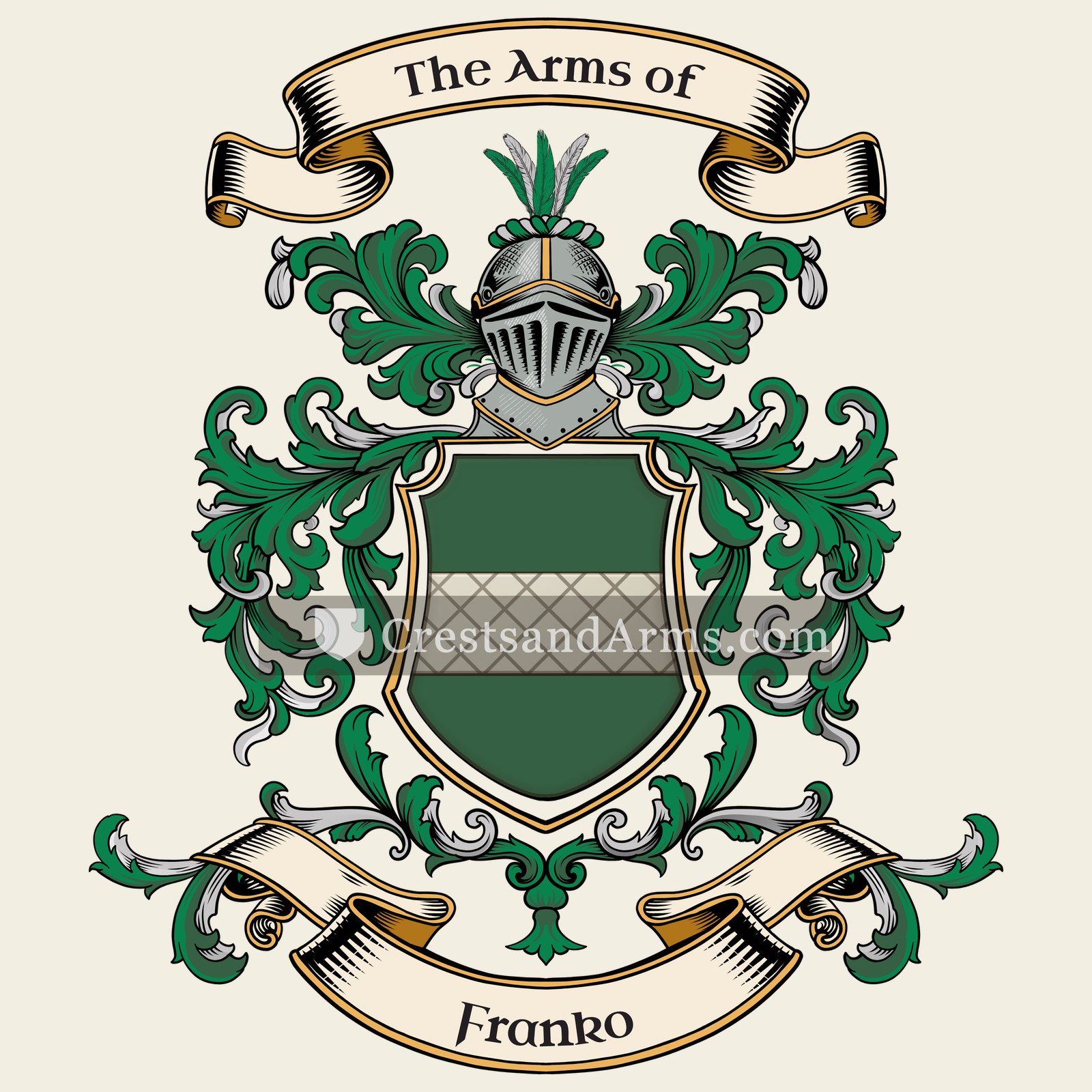
Symbols on this shield
fessThe military belt, and readiness to serve
Colours
Green (Vert)Means: Hope
Silver (Argent)Means: Peace and sincerity
Historical info
Source
J. B. Rietstap, Armorial Général, Gouda: G. B. van Goor Zonen, 1884–87
Blazon (the actual original written record)
“De sin. à la fasce d'arg.”
VeniceVenice, c. 1775
Digital archive packCoat of arms PNG, gold border print PDF, vector SVG and the certificate of authenticity. Sent to your email in minutes.
Map of Italy showing where the Franko arms are recorded
The Franko arms were recorded in Venice, c. 1775.
Venice ran on trade, and its great families were merchants before they were anything else. The city kept a formal list of its noble houses, and a name on that list carried arms as a matter of record.
This is where the arms were entered in the register. Families often moved to other parts of the country, so the same name can turn up in more than one region.
The body that granted and recorded arms in Italy in this period.
Alvise Giovanni Mocenigo
Sovereign of the period
Alvise Giovanni Mocenigo
1763–1778
Reigning in Spain when the Franko arms are first recorded.
How Arms Worked in Italy
In the Italian states, coats of arms were often used by noble families to show their status and history. These symbols were passed down through the generations to all legitimate male descendants. Younger branches of a family usually kept the original design but sometimes added small changes to distinguish their specific line from the main branch.
Granting authority
Various local rulers and city governments controlled the use of coats of arms across the different Italian states.
How they got arms
Families often assumed their own arms or received them as official grants from local lords, popes, or city councils.
Where arms were recorded
Arms were recorded in local city archives or private family books rather than in one single national register.
The family's standing
Recorded among the armigerous families of Venice.
Origin & History of the Franko Family in Italy
The name Franko carries a rich history that reflects the complex social landscape of eighteenth-century Italy. By the year 1775, records confirm that members of the Franko family were established residents of Venice, a city that served as a vital crossroads for trade and cultural exchange between Europe and the East. During this period, Venice was a hub for families who navigated the intricate bureaucracy of the Venetian Republic to secure their status as merchants or professionals. The name itself is often linked to the historical term "Frank," which was used across the Mediterranean to describe people of Western European origin. As the family settled into the urban fabric of Venice, they became part of a diverse population that helped maintain the city's influence as a center of commerce. Their presence in the city during the late 1700s suggests they were integrated into the local economy, living through the final decades of the Republic before the major political shifts that would soon transform the Italian peninsula.
Franko Meaning & Related Branches
Root word
Francus
A Latin term referring to a member of the Frankish tribe.
This name
FrankoDerived from a Germanic ethnonym meaning free man or a member of the Franks.
also spelled
Franko
Francoeur
Documented Sources
J. B. Rietstap, Armorial Général, Gouda: G. B. van Goor Zonen, 1884–87
Caro Baroja, Julio. Los vascos. 1971
Gorrochategui Churruca, Joaquín. Estudio sobre la onomástica indígena de Aquitania. 1984
Archivo Histórico Eclesiástico de Bizkaia, Libros Sacramentales de la anteiglesia de [Localidad específica de Biscay]
Archivo de la Real Chancillería de Valladolid, Pleitos de Hidalguía
Digital archive packCoat of arms PNG, gold border print PDF, vector SVG and the certificate of authenticity. Sent to your email in minutes.


 cross symbolChristian faith and service
 cross symbolChristian faith and service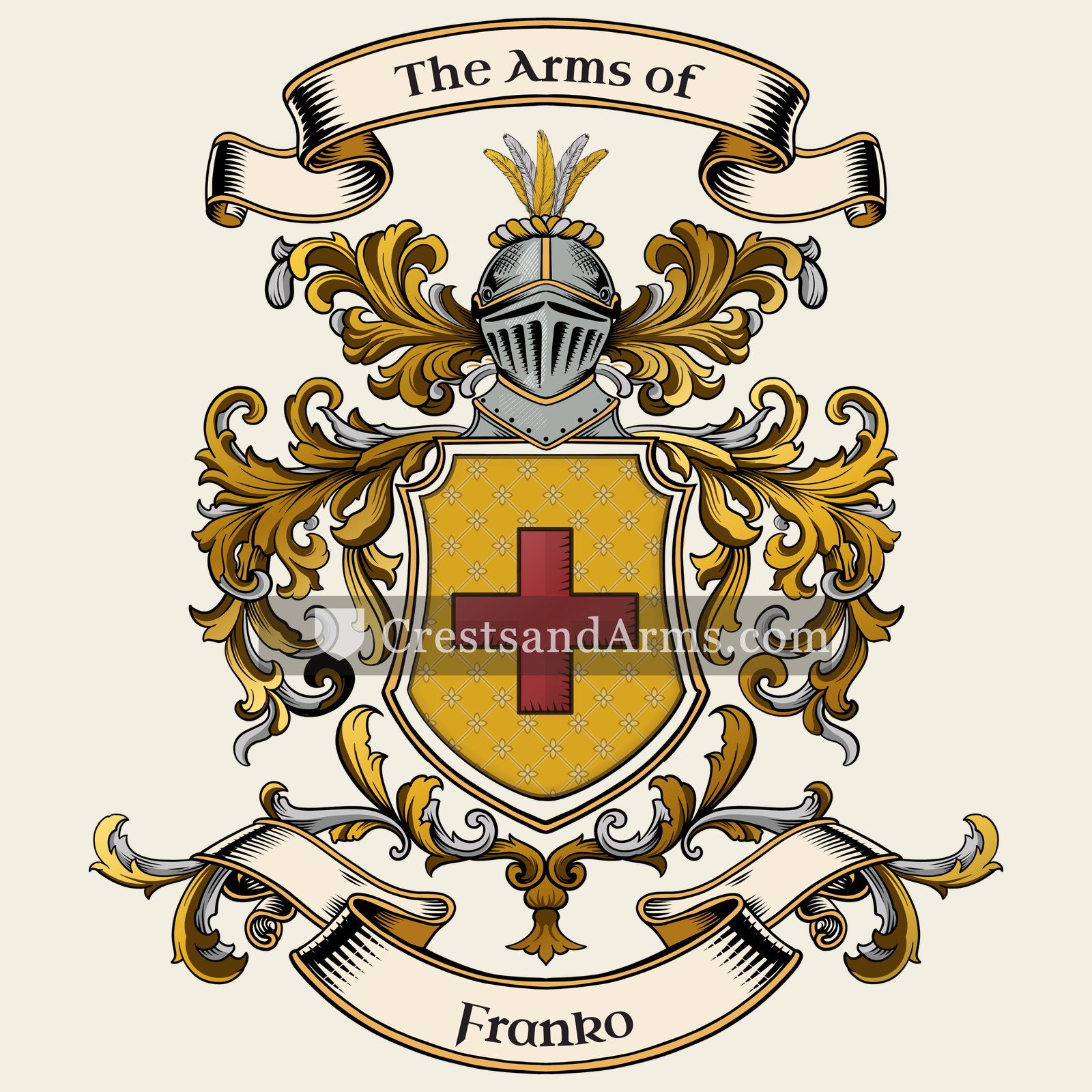


 fessThe military belt, and readiness to serve