A record of documented arms, meaning and origin, researched for the Frantzen family lines. Documented in 2 countries.
Reg. 8048 · Belgian, D–F
Coat of Arms & Family Crest Details
Symbols on this shield
chiefAuthority, wisdom and dominion
grapesPlenty, and the labour of the vine
lionCourage, strength and royalty
Colours
Silver (Argent)Means: Peace and sincerity
Red (Gules)Means: Military strength
Historical info
Source
J. B. Rietstap, Armorial Général, Gouda: G. B. van Goor Zonen, 1884–87
Blazon (the actual original written record)
“D'arg. à trois grappes de raisins, pamprées au nat., les tiges en haut; au chef de gu., ch. d'un tigre pass. d'arg., tacheté de sa., cour. d'or. Brl. d'arg. et de gu. C.: le tigre, iss. L. d'arg. et de gu.”
BelgiumGand, c. 1756
Digital archive packCoat of arms PNG, gold border print PDF, vector SVG and the certificate of authenticity. Sent to your email in minutes.
Map of Belgium showing where the Frantzen arms are recorded
The Frantzen arms were recorded in Gand, c. 1756.
This is where the arms were entered in the register. Families often moved to other parts of the country, so the same name can turn up in more than one region.
The body that granted and recorded arms in Belgium in this period.
Francis I, Holy Roman Emperor
Sovereign of the period
Francis I, Holy Roman Emperor
1745–1765
Reigning in Belgium when the Frantzen arms are first recorded.
How Arms Worked in Belgium
In Belgium, a coat of arms is considered personal property that is passed down through the male line to legitimate descendants. Families often use the same shield design across generations to show their shared heritage. If a branch of the family wants to change the design, they must apply for an official update to their specific version of the arms.
Granting authority
The Conseil héraldique is the official body that regulates and approves all coats of arms in Belgium.
How they got arms
Families obtain their coats of arms through formal royal grants or by confirming their historical right to use existing designs.
Where arms were recorded
All approved coats of arms are officially recorded in the public registers of the Conseil héraldique since 1844.
The family's standing
Recorded among the armigerous families of Belgium.
Origin & History of the Frantzen Family in Belgium
The family name Frantzen traces its roots in Belgium to the vibrant city of Ghent, where records confirm members of the family were established by 1756. During the eighteenth century, Ghent served as a major center for the textile industry and international trade, which likely influenced the family’s daily life and economic activities. The name itself is a patronymic, meaning it originated as a way to identify individuals as the children or descendants of a man named Franz. As the family settled into the urban landscape of Flanders, they became part of the local social fabric during a time of significant cultural and political transition under the Austrian Netherlands. By maintaining a presence in such a prominent trade hub, the early Frantzen family members were likely integrated into the professional guilds and civic structures that defined life in Ghent during the mid-eighteenth century.
Coat of Arms & Family Crest Details
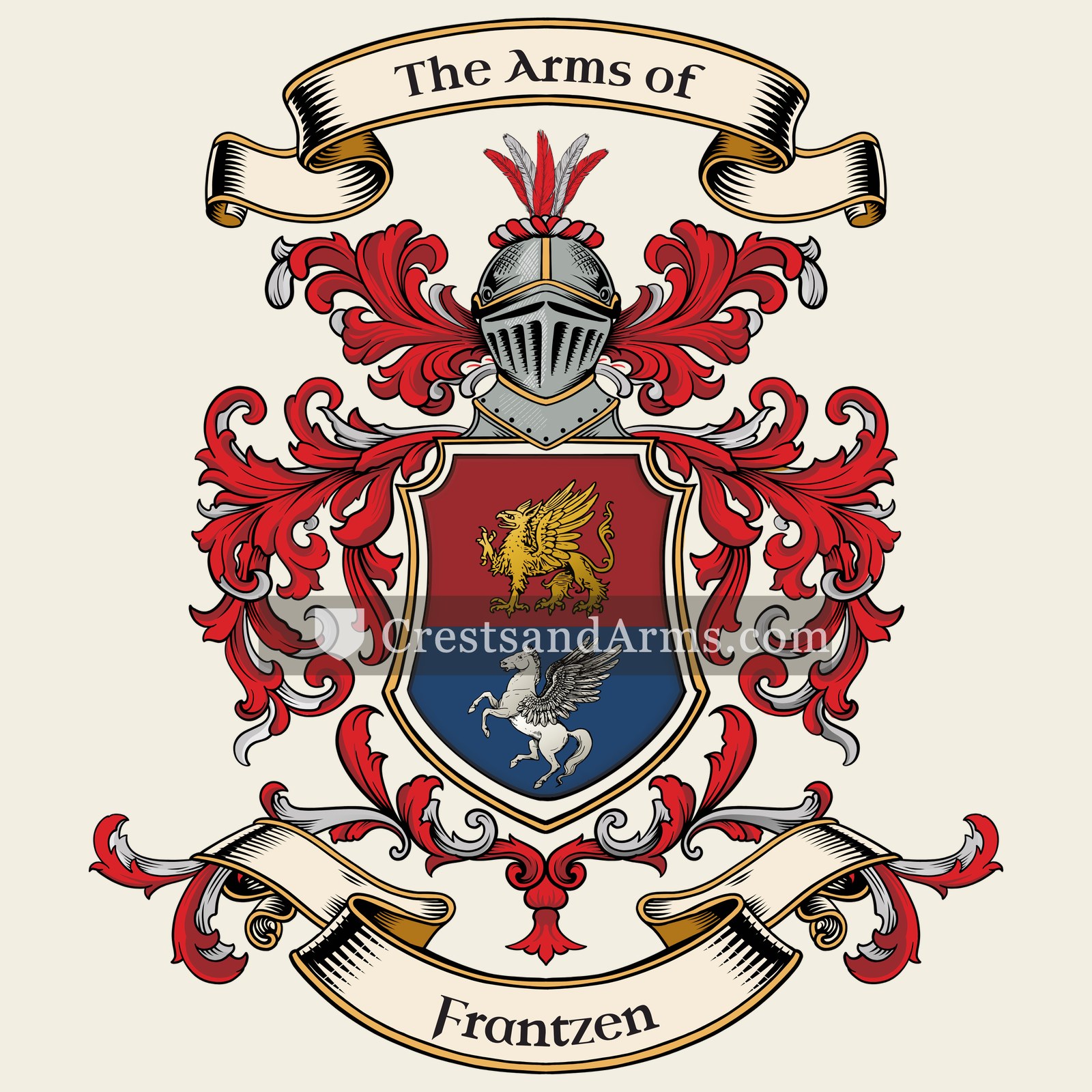
Symbols on this shield
griffinValour and vigilance, guarding great treasure
pegasusFame, eloquence and swift renown
Colours
Red (Gules)Means: Military strength
Blue (Azure)Means: Loyalty and truth
Gold (Or)Means: Generosity
Silver (Argent)Means: Peace and sincerity
Historical info
Source
J. B. Rietstap, Armorial Général, Gouda: G. B. van Goor Zonen, 1884–87
Blazon (the actual original written record)
“Coupé: au 1 de gu. au griffon d'or; au 2 d'azur au Pégase ruant d'arg. Bri. d'azur, d'or et de gu. C.: un vol, d'arg. et d'or. L.: à dextre d'or, d'azur et de gu.; à sen. d'arg., de gu. et d'azur.”
AustriaTransylvanie, c. 1686
Digital archive packCoat of arms PNG, gold border print PDF, vector SVG and the certificate of authenticity. Sent to your email in minutes.
Map of Austria showing where the Frantzen arms are recorded
The Frantzen arms were recorded in Transylvanie, c. 1686.
Arms such as these were typically recorded in Tyrol.
Tyrol was mountain country in western Austria, where the valleys were held by families who had been there a very long time. Old tenure counted for more than money, and old families carried arms.
This is where the arms were entered in the register. Families often moved to other parts of the country, so the same name can turn up in more than one region.
Region
Tyrol
Town
Transylvanie
First recorded
1686
Granting Authority for the Frantzen Arms
Imperial and Royal chancery
Sodacan · CC BY-SA 3.0
The body that granted and recorded arms in Austria in this period.
Leopold I, Holy Roman Emperor
Sovereign of the period
Leopold I, Holy Roman Emperor
1658–1705
Reigning in Belgium when the Frantzen arms are first recorded.
How Arms Worked in Austria
Austrian coats of arms were often linked directly to noble titles granted by the Emperor. These symbols belonged to the entire family line rather than just one individual. When a family grew, new branches kept the original design without needing to change it. This system allowed all members of a noble house to share the same identity across many generations.
Granting authority
The Imperial and Royal chancery managed all heraldic matters and controlled the official granting of arms throughout the Austrian lands.
How they got arms
Families typically received their arms through a formal imperial decree that often accompanied the elevation of a person to noble status.
Where arms were recorded
Official records of these grants were kept in the Imperial Register of Nobility which began its formal documentation process in 1453.
The family's standing
Recorded among the armigerous families of Austria.
Origin & History of the Frantzen Family in Austria
The family name Frantzen traces its roots in Austria to the mountainous region of Tyrol, where members of the family were documented as early as 1686. During this period, the name functioned as a patronymic, meaning it was derived from the given name Franz, which was a popular choice due to the influence of Saint Francis of Assisi across the Holy Roman Empire. In the rugged landscape of the Tyrolean Alps, families like the Frantzens often lived in small, isolated communities where they worked as farmers, craftsmen, or local officials. Because the region served as a vital crossroads for trade between Italy and the German lands, the family likely benefited from the movement of merchants and travelers through the mountain passes. Over time, the name became firmly established in local parish records, reflecting the family's deep integration into the social and religious fabric of the Austrian countryside.
Frantzen Meaning & Related Branches
Root word
Franciscus
Latin name meaning a Frenchman or a free man.
This name
FrantzenA patronymic surname meaning son of Franz, a German diminutive of Francis.
also spelled
Franzen
Documented Sources
J. B. Rietstap, Armorial Général, Gouda: G. B. van Goor Zonen, 1884–87
State Archives in Belgium (Rijksarchief te Gent), Parish Registers (Parochieregisters), 1756
De Potter, Frans, Gent van den vroegsten tijd tot heden, 1883
Digital archive packCoat of arms PNG, gold border print PDF, vector SVG and the certificate of authenticity. Sent to your email in minutes.


 chiefAuthority, wisdom and dominion
 grapesPlenty, and the labour of the vine
 lionCourage, strength and royalty
 chiefAuthority, wisdom and dominion
 grapesPlenty, and the labour of the vine
 lionCourage, strength and royalty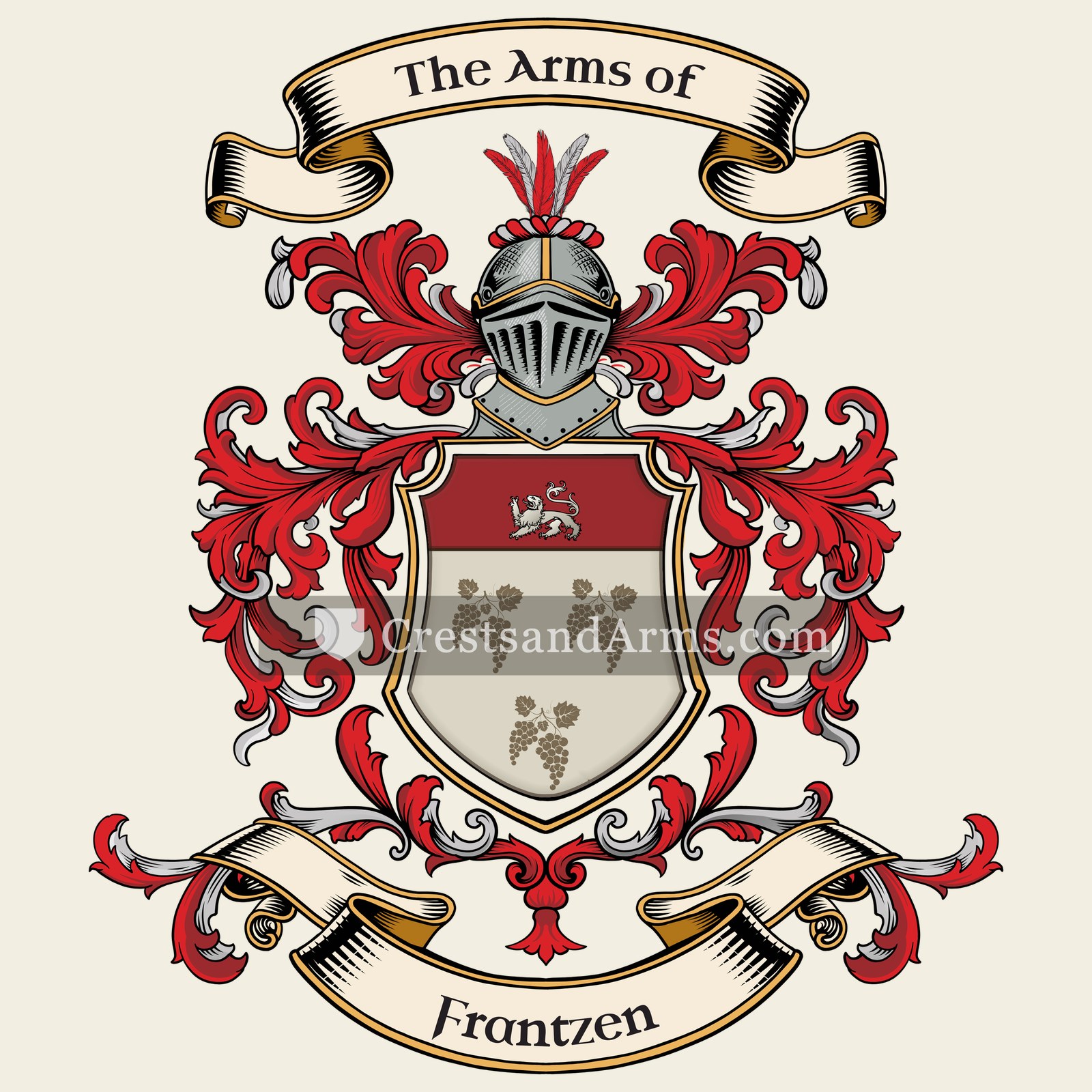


 griffinValour and vigilance, guarding great treasure
 pegasusFame, eloquence and swift renown