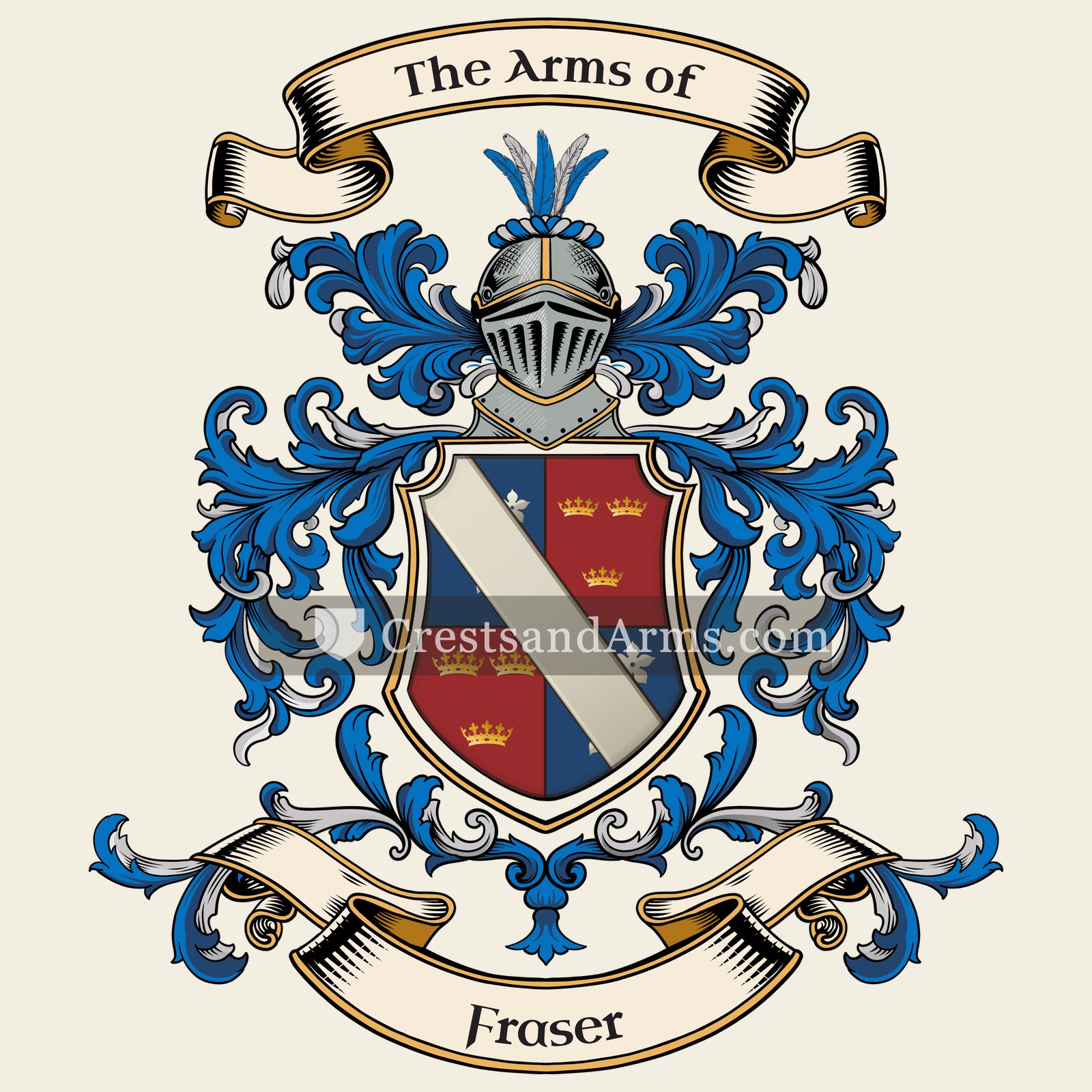
A record of documented arms, meaning and origin, researched for the Fraser family lines. Documented in 3 countries.
Reg. 6566 · Finnish, D–F
Coat of Arms & Family Crest Details
Symbols on this shield
cinquefoilHope and joy
lionCourage, strength and royalty
Colours
Blue (Azure)Means: Loyalty and truth
Gold (Or)Means: Generosity
Silver (Argent)Means: Peace and sincerity
Red (Gules)Means: Military strength
Historical info
Source
J. B. Rietstap, Armorial Général, Gouda: G. B. van Goor Zonen, 1884–87
Blazon (the actual original written record)
“d'azur à trois quintefeuilles d'arg. (Fraser); au 2 d'or au lion de gu.: à la cotice de sa., br. sur le lion (Abernethy); au 3 d'arg. à trois piles de gu. (Wishart). C.: une autruche, tenant en son bec un fer-à-cheval, le tout au nat. T.: deux anges, hab. de dalmatiques d'or. D.: IN GOD IS ALL.”
Finlandc. 1445
Digital archive packCoat of arms PNG, gold border print PDF, vector SVG and the certificate of authenticity. Sent to your email in minutes.
Map of Finland showing where the Fraser arms are recorded
The Fraser arms were recorded in Finland, c. 1445.
Arms such as these were typically recorded in Uusimaa.
Uusimaa was the Finnish coast facing Sweden, and the part of the country most closely tied to Stockholm. Its landowners and officers served the Swedish crown, and that service is what put their arms on record.
This is where the arms were entered in the register. Families often moved to other parts of the country, so the same name can turn up in more than one region.
The body that granted and recorded arms in Finland in this period.
How Arms Worked in Finland
Nobility in Finland held the exclusive right to register their coats of arms with the House of Nobility. These symbols were tied to the family name and were inherited by all members of the noble house. If a family branch moved or changed status, they kept their original design to maintain their identity within the official records.
Granting authority
The Finnish House of Nobility served as the official body that managed and protected all noble coats of arms.
How they got arms
Families received their arms through formal letters of nobility or by having their existing ancestral symbols confirmed by the House.
Where arms were recorded
All approved coats of arms were officially recorded in the Finnish House of Nobility Armorial starting in 1818.
The family's standing
Recorded among the armigerous families of Finland.
Origin & History of the Fraser Family in Finland
The history of the Fraser family in Finland begins with the arrival of Scottish settlers who integrated into the local society during the Middle Ages. Records confirm that members of the family were established in the Uusimaa region by 1445. At this time, Finland was part of the Kingdom of Sweden, and the Frasers were often associated with the land-owning class and local administration. They adapted to the Finnish environment by adopting the customs and languages of the region while maintaining their distinct family identity. Over time, the name became part of the local historical landscape as these early settlers participated in the growth of rural communities and trade networks. Their presence in Uusimaa serves as a bridge between the migration patterns of Northern Europe and the development of Finnish society during the fifteenth century.
Coat of Arms & Family Crest Details
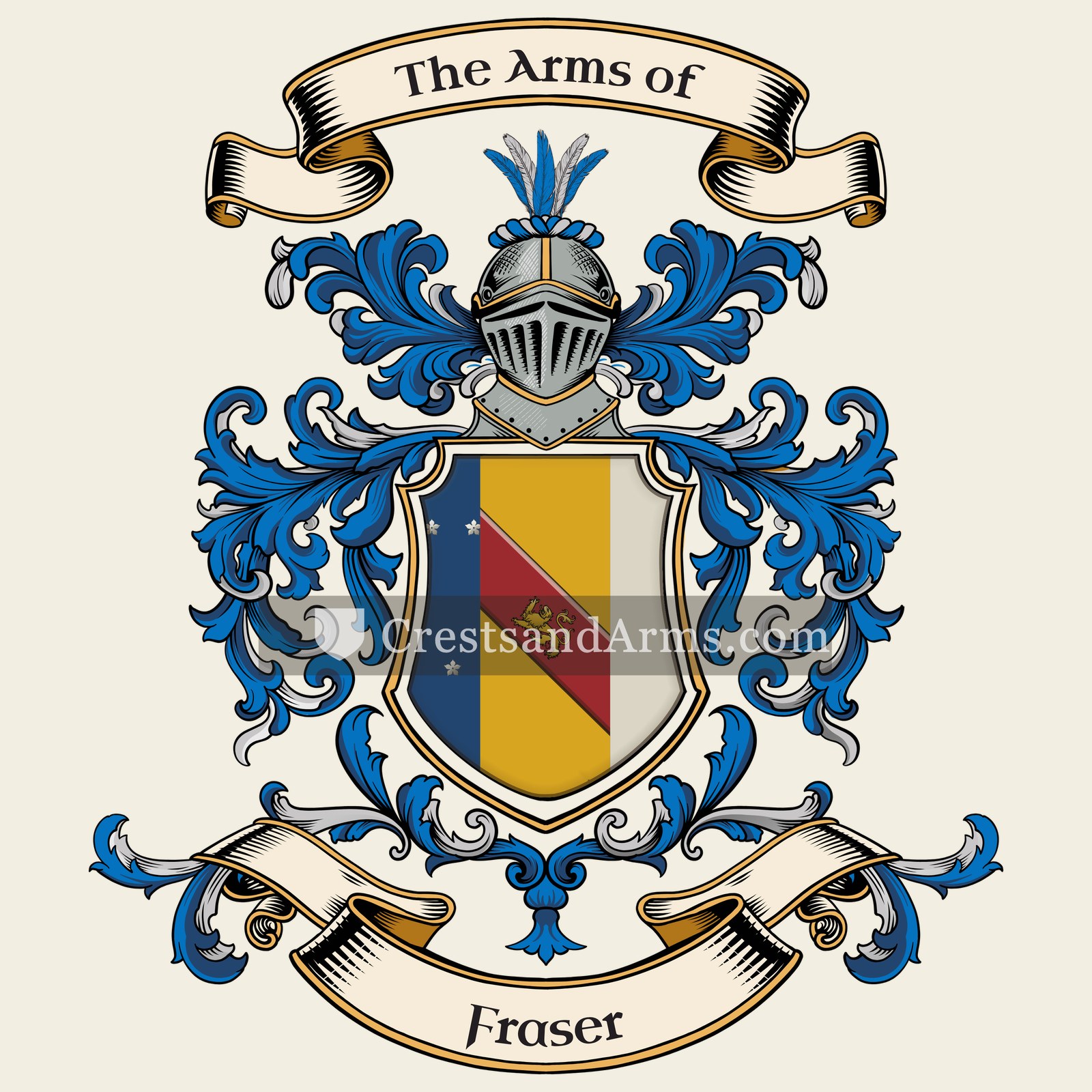
Symbols on this shield
fessThe military belt, and readiness to serve
cinquefoilHope and joy
crownSovereignty, authority and just reward
Colours
Blue (Azure)Means: Loyalty and truth
Silver (Argent)Means: Peace and sincerity
Red (Gules)Means: Military strength
Historical info
Source
Sir Bernard Burke, The General Armory of England, Scotland, Ireland and Wales, London: Harrison & Sons, 1884
Blazon (the actual original written record)
“Quarterly, 1st and 4th, az. a fess betw. three frases ar.; 2nd and 3rd, ar. three antique crowns gu”
InvernessPhilip Fraser · Inverness, c. 1692
Digital archive packCoat of arms PNG, gold border print PDF, vector SVG and the certificate of authenticity. Sent to your email in minutes.
Map of Scotland showing where the Fraser arms are recorded
The Fraser arms were recorded in Inverness, c. 1692.
Inverness was the largest Highland county, clan country of glens and long sea lochs. Chiefs recorded arms to mark the head of a family, and cadet branches recorded their own to show their place.
This is where the arms were entered in the register. Families often moved to other parts of the country, so the same name can turn up in more than one region.
The body that granted and recorded arms in Scotland in this period.
Mary II of England
Sovereign of the period
Mary II of England
1689–1694
Reigning in Finland when the Fraser arms are first recorded.
How Arms Worked in Scotland
Scottish heraldry is unique because it treats a coat of arms as a piece of personal property protected by law. Only one person can own a specific design at any given time. When a family grows, the head keeps the original shield while other relatives must apply for their own distinct version with slight changes to prove their specific identity.
Granting authority
The Court of the Lord Lyon acts as the official body that regulates and controls all heraldic matters throughout Scotland.
How they got arms
Individuals obtain a legal right to their arms through a formal petition process that confirms their identity and family connection.
Where arms were recorded
All valid coats of arms are officially entered into the Public Register of All Arms and Bearings starting from 1672.
The family's standing
Recorded among the armigerous families of Inverness.
Origin & History of the Fraser Family in Scotland
The Fraser family name has deep roots in the history of Scotland, particularly within the rugged landscapes of the Highlands. While the name is of French origin, the family established a powerful presence in the Inverness region by the late 17th century. By 1692, the Frasers were already well-integrated into the social and political fabric of the area, often playing significant roles in local governance and regional conflicts. Their influence grew as they formed strong alliances and managed vast estates, which allowed them to maintain a lasting legacy in the North. Over the generations, the family became synonymous with the culture and traditions of the Scottish Highlands, moving from their early roles as landowners to becoming central figures in the complex history of the clans.
Coat of Arms & Family Crest Details
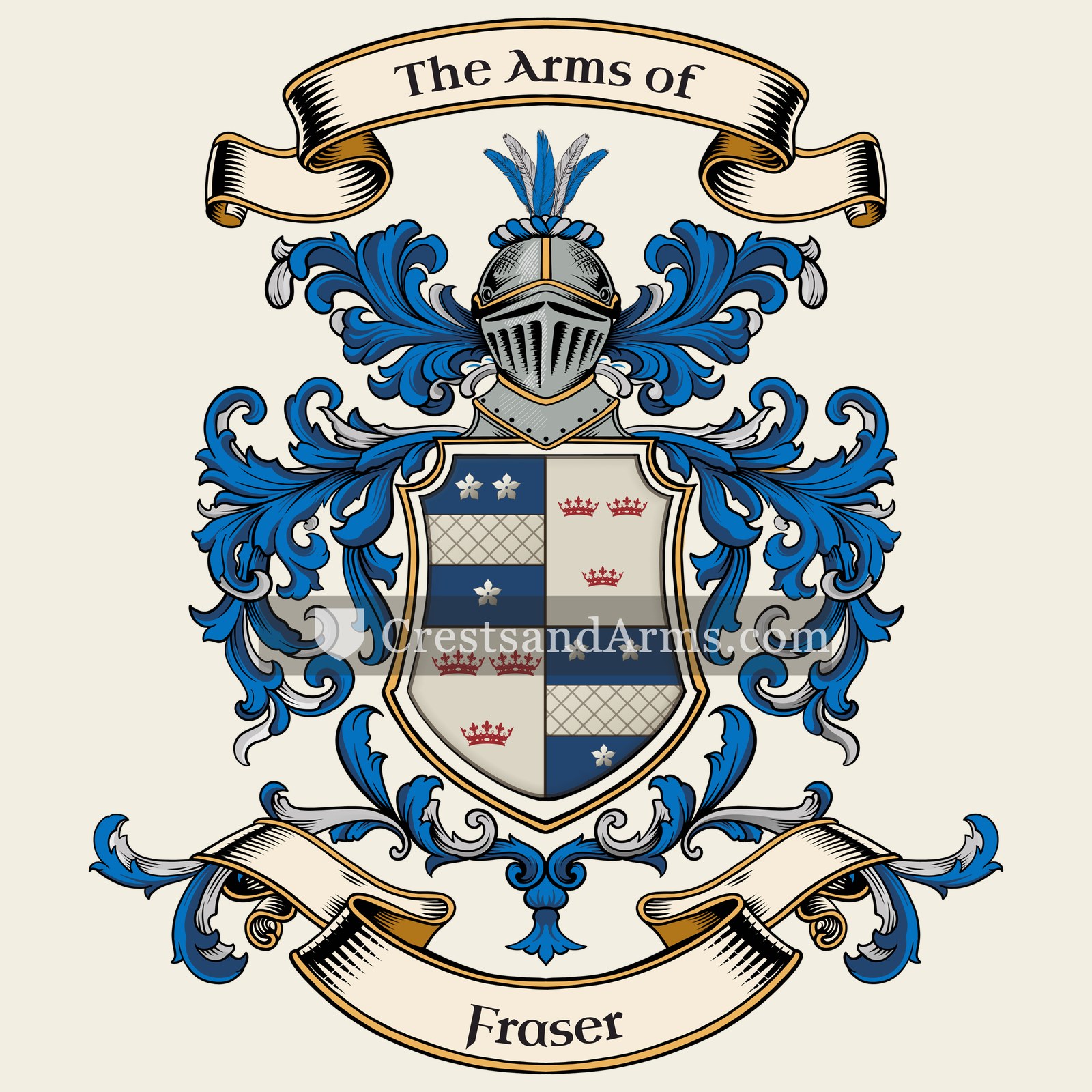
Symbols on this shield
bendDefence, and the scarf of a commander
cinquefoilHope and joy
crownSovereignty, authority and just reward
Colours
Blue (Azure)Means: Loyalty and truth
Red (Gules)Means: Military strength
Silver (Argent)Means: Peace and sincerity
Gold (Or)Means: Generosity
Historical info
Source
Sir Bernard Burke, The General Armory of England, Scotland, Ireland and Wales, London: Harrison & Sons, 1884
Blazon (the actual original written record)
“Quarterly, 1st and 4th, az. a bend engr. betw. three frases ar.; 2nd and 3rd, gu. three antique crowns or”
Englandc. 1798
Digital archive packCoat of arms PNG, gold border print PDF, vector SVG and the certificate of authenticity. Sent to your email in minutes.
Map of England showing where the Fraser arms are recorded
The Fraser arms were recorded in England, c. 1798.
Arms such as these were typically recorded in York.
Yorkshire is the largest of the English counties, and it held more gentry families than any other. Land there was split among a great many households rather than a few, so a great many of them carried arms.
This is where the arms were entered in the register. Families often moved to other parts of the country, so the same name can turn up in more than one region.
The body that granted and recorded arms in England in this period.
George III of Great Britain
Sovereign of the period
George III of Great Britain
1760–1801
Reigning in Finland when the Fraser arms are first recorded.
How Arms Worked in England
English heraldry allowed arms to be shared by all legitimate descendants of the original owner. These symbols were treated as personal property that moved through the generations to all children. While the eldest son kept the original design, other family members could use the same shield without needing to change it or register their own unique versions.
Granting authority
The College of Arms in London has regulated the use of coats of arms throughout England and Wales since 1484.
How they got arms
Families typically obtained their coats of arms through a formal grant from the Crown or by proving their ancient right to them.
Where arms were recorded
All official coats of arms are recorded in the registers kept at the College of Arms, which date back to the fifteenth century.
The family's standing
Recorded among the armigerous families of England.
Origin & History of the Fraser Family in England
The history of the Fraser name in England is deeply connected to the movement of people across the border from Scotland during the eighteenth century. While the name has ancient roots, the presence of the family in York by 1798 highlights a period of significant internal migration as individuals sought new economic opportunities in growing English cities. During this era, families often moved to urban centers to work in trade, manufacturing, or the expanding professional sectors. The Frasers who settled in York were part of this broader trend of families establishing roots in new regions while maintaining their distinct cultural identity. By the end of the 1700s, the name had become part of the local fabric of northern England, reflecting the steady integration of Scottish families into the social and economic life of English communities.
Fraser Meaning & Related Branches
Root word
fraise
Old French word for strawberry
This name
FraserOriginally a nickname for someone who grew or sold strawberries or lived near a strawberry patch.
also spelled
Frasier
Frazer
Frayser
Fraysier
Related arms
Haysimilar arms
Hay d'Alderstonesimilar arms
Hay de Haystounsimilar arms
Cruickshankrecorded with Fraser, same area
Documented Sources
J. B. Rietstap, Armorial Général, Gouda: G. B. van Goor Zonen, 1884–87
Anthoni, Eric, Finlands medeltida frälse och 1500-talsadel, 1970
National Archives of Finland, Riksarkivets huvudarkiv, Diplomatarium Fennicum
Digital archive packCoat of arms PNG, gold border print PDF, vector SVG and the certificate of authenticity. Sent to your email in minutes.


 cinquefoilHope and joy
 lionCourage, strength and royalty
 cinquefoilHope and joy
 lionCourage, strength and royalty

 fessThe military belt, and readiness to serve
 crownSovereignty, authority and just reward


 bendDefence, and the scarf of a commander