Map of Austria showing where the Frati arms are recorded
The Frati arms were recorded in Gratz Styrie, c. 1530.
This is where the arms were entered in the register. Families often moved to other parts of the country, so the same name can turn up in more than one region.
Region
Gratz
Town
Gratz Styrie
First recorded
1530
Granting Authority for the Frati Arms
Imperial and Royal chancery
Sodacan · CC BY-SA 3.0
The body that granted and recorded arms in Austria in this period.
Charles V
Sovereign of the period
Charles V
1519–1556
Reigning in Austria when the Frati arms are first recorded.
How Arms Worked in Austria
Austrian coats of arms were often linked directly to noble titles granted by the Emperor. These symbols belonged to the entire family line rather than just one individual. When a family grew, new branches kept the original design without needing to change it. This system allowed all members of a noble house to share the same identity across many generations.
Granting authority
The Imperial and Royal chancery managed all heraldic matters and controlled the official granting of arms throughout the Austrian lands.
How they got arms
Families typically received their arms through a formal imperial decree that often accompanied the elevation of a person to noble status.
Where arms were recorded
Official records of these grants were kept in the Imperial Register of Nobility which began its formal documentation process in 1453.
The family's standing
Recorded among the armigerous families of Austria.
Origin & History of the Frati Family in Austria
The family name Frati carries a deep connection to the cultural and religious landscape of medieval Europe. The name is derived from the Italian word for brothers, which was often used to describe members of religious orders or communities. By the year 1530, records confirm that members of the family were established in the city of Gratz. During this period, Gratz served as a vital crossroads for trade and intellectual exchange between the Italian peninsula and the lands of the Holy Roman Empire. The presence of the Frati family in this region suggests they were likely involved in the movement of goods or professional services that defined the urban growth of the sixteenth century. As they settled into their new environment, the family integrated into the local social fabric while maintaining the identity associated with their origins. Their history reflects the broader patterns of migration and professional development that shaped many families during the Renaissance era.
Frati Meaning & Related Branches
Root word
Frater
Latin term meaning brother or member of a religious order.
This name
FratiRefers to a person associated with a monastery or a member of a religious brotherhood.
also spelled
Frayd
Documented Sources
J. B. Rietstap, Armorial Général, Gouda: G. B. van Goor Zonen, 1884–87
Krones, Franz von. Die Geschichte der Stadt Graz. 1881


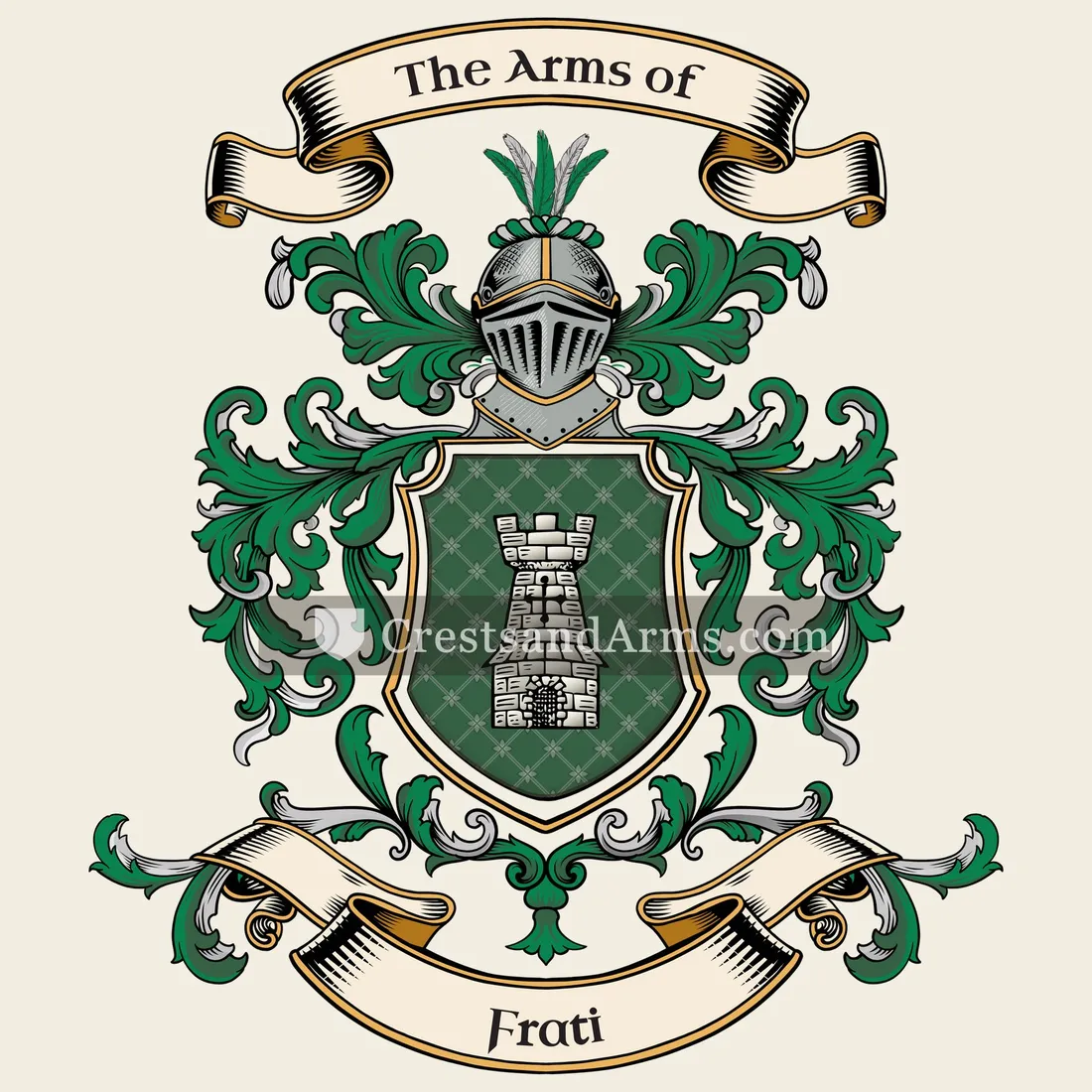
 towerGrandeur and solidity, and a stronghold defended
 towerGrandeur and solidity, and a stronghold defended