Map of Germany showing where the Freese arms are recorded
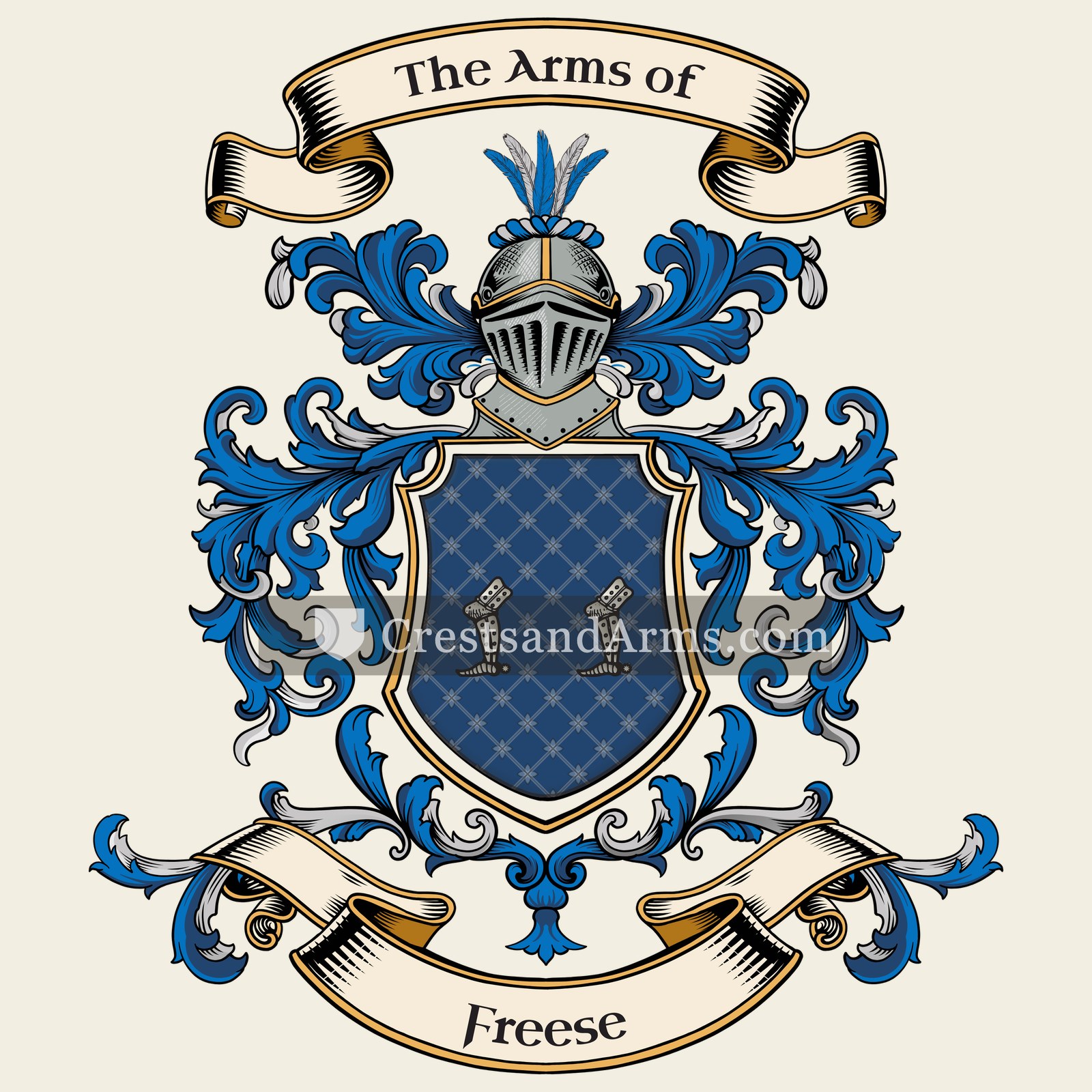
The Freese arms were recorded in Hambourg, c. 1765.
This is where the arms were entered in the register. Families often moved to other parts of the country, so the same name can turn up in more than one region.
The body that granted and recorded arms in Germany in this period.
Francis I, Holy Roman Emperor
Sovereign of the period
Francis I, Holy Roman Emperor
1745–1765
Reigning in Germany when the Freese arms are first recorded.
How Arms Worked in Germany
In the Holy Roman Empire, coats of arms were often granted to individuals by the Emperor or his representatives. These arms were then passed down through the generations to all legitimate descendants of the original holder. Younger branches of a family usually kept the same shield design without needing to change it, as the arms belonged to the entire lineage.
Granting authority
The Holy Roman Emperor held the sole power to grant new coats of arms throughout his vast imperial territories.
How they got arms
Families typically obtained their coats of arms through a formal imperial grant or by proving their noble status to the authorities.
Where arms were recorded
These grants were officially recorded in the Imperial Chancery registers, which began keeping formal records of such honors during the Middle Ages.
The family's standing
Recorded among the armigerous families of Germany.
Origin & History of the Freese Family in Germany
The surname Freese is rooted in the northern regions of Germany and is closely linked to the historical identity of the Frisian people. The name functions as a descriptive label, historically identifying individuals who originated from the coastal areas along the North Sea. By the mid-eighteenth century, the family had established a presence in the bustling port city of Hamburg. As a major center for trade and maritime activity, Hamburg served as a hub where families like the Freeses could participate in the city’s growing commercial life. Living in such a significant urban environment suggests that early ancestors were likely involved in the merchant guilds or skilled trades that defined the city’s economy during the 1760s. This transition from regional Frisian roots to the urban landscape of Hamburg highlights the family's participation in the broader social and economic shifts occurring in northern Germany during the Enlightenment era.
Freese Meaning & Related Branches
Root word
Friso
An ancient Germanic tribal name referring to the Frisian people.
This name
FreeseA topographic or ethnic surname identifying someone who originated from the Frisia region.
also spelled
Freese
Freze
Frees
Documented Sources
J. B. Rietstap, Armorial Général, Gouda: G. B. van Goor Zonen, 1884–87
Bahlow, Hans, Deutsches Namenlexikon: Familien- und Vornamen nach Ursprung und Sinn erklärt, 1967


 legStrength and swiftness
 legStrength and swiftness