A record of documented arms, meaning and origin, researched for the Freiburger family lines. Documented in 3 countries.
Reg. 4238 · French, D–F
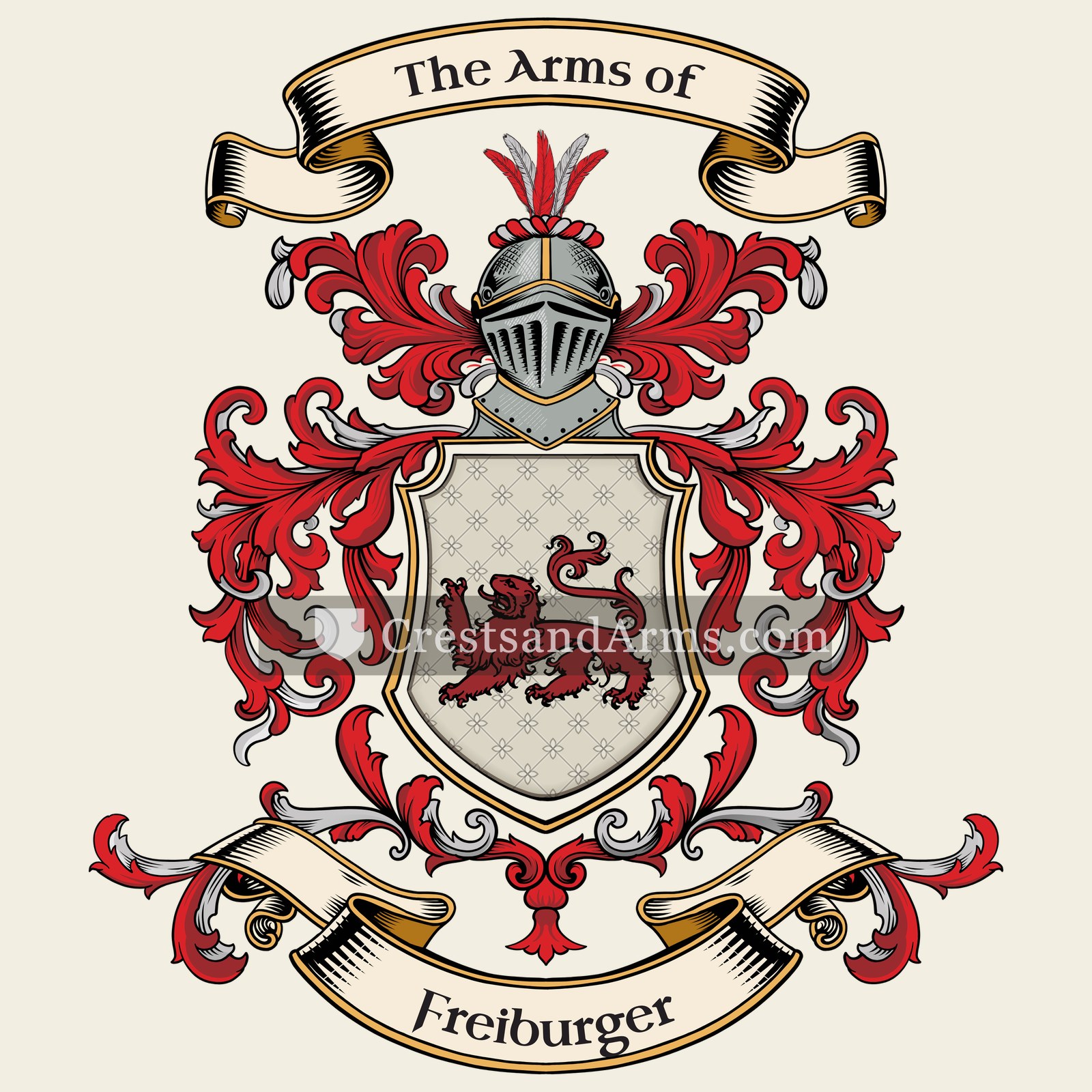
Coat of Arms & Family Crest Details
Symbols on this shield
lionCourage, strength and royalty
Colours
Silver (Argent)Means: Peace and sincerity
Red (Gules)Means: Military strength
Historical info
Source
J. B. Rietstap, Armorial Général, Gouda: G. B. van Goor Zonen, 1884–87
Blazon (the actual original written record)
“D'arg. au lion de gu., portant au col un collier et une médaille d'or.”
FranceStrasbourg, c. 1663
Where the Freiburger Arms Were Recorded
Strasbourg
Map of France showing where the Freiburger arms are recorded
The Freiburger arms were recorded in Strasbourg, c. 1663.
This is where the arms were entered in the register. Families often moved to other parts of the country, so the same name can turn up in more than one region.
The body that granted and recorded arms in France in this period.
Louis XIV of France
Sovereign of the period
Louis XIV of France
1643–1715
Reigning in France when the Freiburger arms are first recorded.
How Arms Worked in France
In France, a coat of arms was a mark of honor that passed down through the male line to all legitimate descendants. Families often used the same shield without changes to show their shared heritage. If a branch wanted to stand out, they could add a small mark to their shield to show their specific place in the family tree.
Granting authority
The Juge d'armes de France acted as the official authority that regulated and verified coats of arms across the country.
How they got arms
Families typically inherited their arms from ancestors, though they could also receive them through royal grants or by proving their noble status.
Where arms were recorded
Coats of arms were officially recorded in the Armorial Général de France, which began its main collection in the year 1696.
The family's standing
Recorded among the armigerous families of France.
Origin & History of the Freiburger Family in France
The family name Freiburger originates from the German word for a citizen of a free city, and its presence in the French region of Alsace is deeply tied to the complex history of Strasbourg. By 1663, members of the family were already established in this city, which served as a vital crossroads between French and Germanic cultures. During this era, Strasbourg was a center of trade and intellectual exchange that attracted families seeking stability and economic opportunity. The name itself reflects a status of independence, suggesting that early ancestors were likely tradespeople or merchants who enjoyed specific legal privileges within the city walls. As the region transitioned through various political shifts during the seventeenth century, the Freiburger family integrated into the local urban fabric, contributing to the unique cultural identity that defines the borderlands of eastern France.
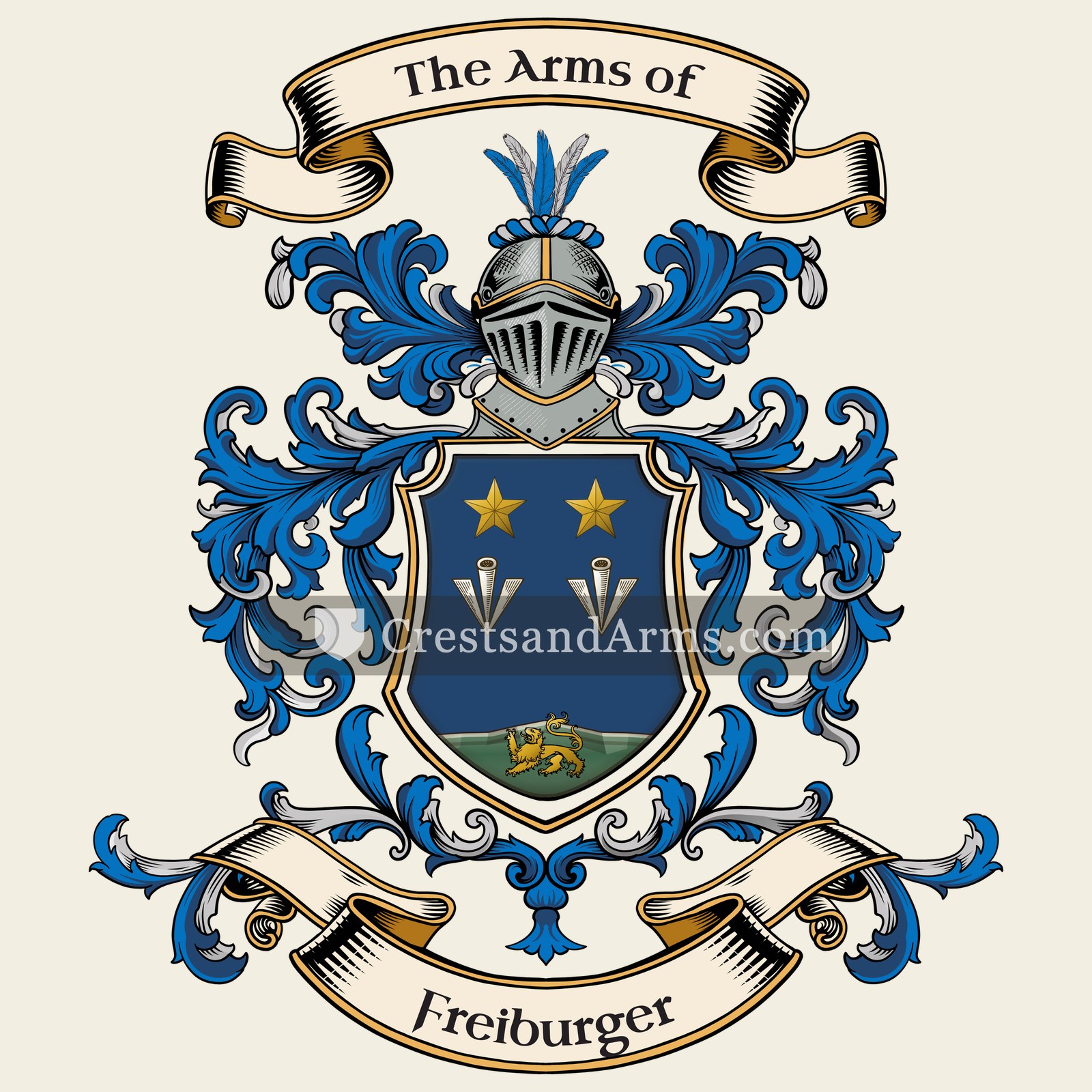
Coat of Arms & Family Crest Details
Symbols on this shield
mountThe ground held, and steadfastness upon it
paleMilitary strength, and a fortified defence
lionCourage, strength and royalty
mulletThe third son, and a divine quality from above
arrowReadiness for battle, and affliction endured
Colours
Blue (Azure)Means: Loyalty and truth
Green (Vert)Means: Hope
Gold (Or)Means: Generosity
Silver (Argent)Means: Peace and sincerity
Historical info
Source
J. B. Rietstap, Armorial Général, Gouda: G. B. van Goor Zonen, 1884–87
Blazon (the actual original written record)
“D'azur à un corps de logis crén., flanqué de deux tours carrées, le tout d'arg., maçonné de sa., soutenu d'un tertre de sin., les tours couvertes de toits pointus de gu.; ledit corps de logis sommé d'un lion ramp. d'or, tenant un faisceau de trois flèches d'arg.; l'édifice acc. en chef de deux étoiles d'or et accosté de deux flèches d'arg., en pals. Brl. de gu. et d'arg. C.: le lion de l'écu, iss. L. d'arg. et de gu.”
SwitzerlandBâle, c. 1745
Where the Freiburger Arms Were Recorded
Bâle
Map of Switzerland showing where the Freiburger arms are recorded
The Freiburger arms were recorded in Bâle, c. 1745.
This is where the arms were entered in the register. Families often moved to other parts of the country, so the same name can turn up in more than one region.
The body that granted and recorded arms in Switzerland in this period.
How Arms Worked in Switzerland
In Switzerland, coats of arms were not restricted to the nobility and were often adopted by common citizens and families. These symbols were passed down through generations to show family identity. When branches of a family grew, they often changed small details of the design to distinguish their own line from the original group.
Granting authority
Cantonal and civic authorities managed the use of coats of arms within their specific regions and local jurisdictions.
How they got arms
Families typically assumed their own coats of arms based on local custom rather than receiving them from a central monarch.
Where arms were recorded
Arms were recorded in various cantonal and civic registers starting from the fourteenth century throughout the Swiss region.
The family's standing
Recorded among the armigerous families of Switzerland.
Origin & History of the Freiburger Family in Switzerland
The surname Freiburger is a topographic name that identifies an individual as someone who originated from the city of Freiburg. In the context of Swiss history, this name often reflects the movement of people across the porous borders of the Upper Rhine region during the eighteenth century. By 1745, records confirm that members of the Freiburger family were established in the city of Bâle. During this period, Bâle served as a major center for trade and craftsmanship, attracting skilled workers from neighboring German territories who sought new economic opportunities. Families like the Freiburgers often integrated into the local urban structure by joining specific guilds or participating in the bustling mercantile life of the city. Their presence in Bâle highlights the long tradition of migration and cultural exchange that defined the Swiss borderlands long before modern national boundaries were strictly enforced.
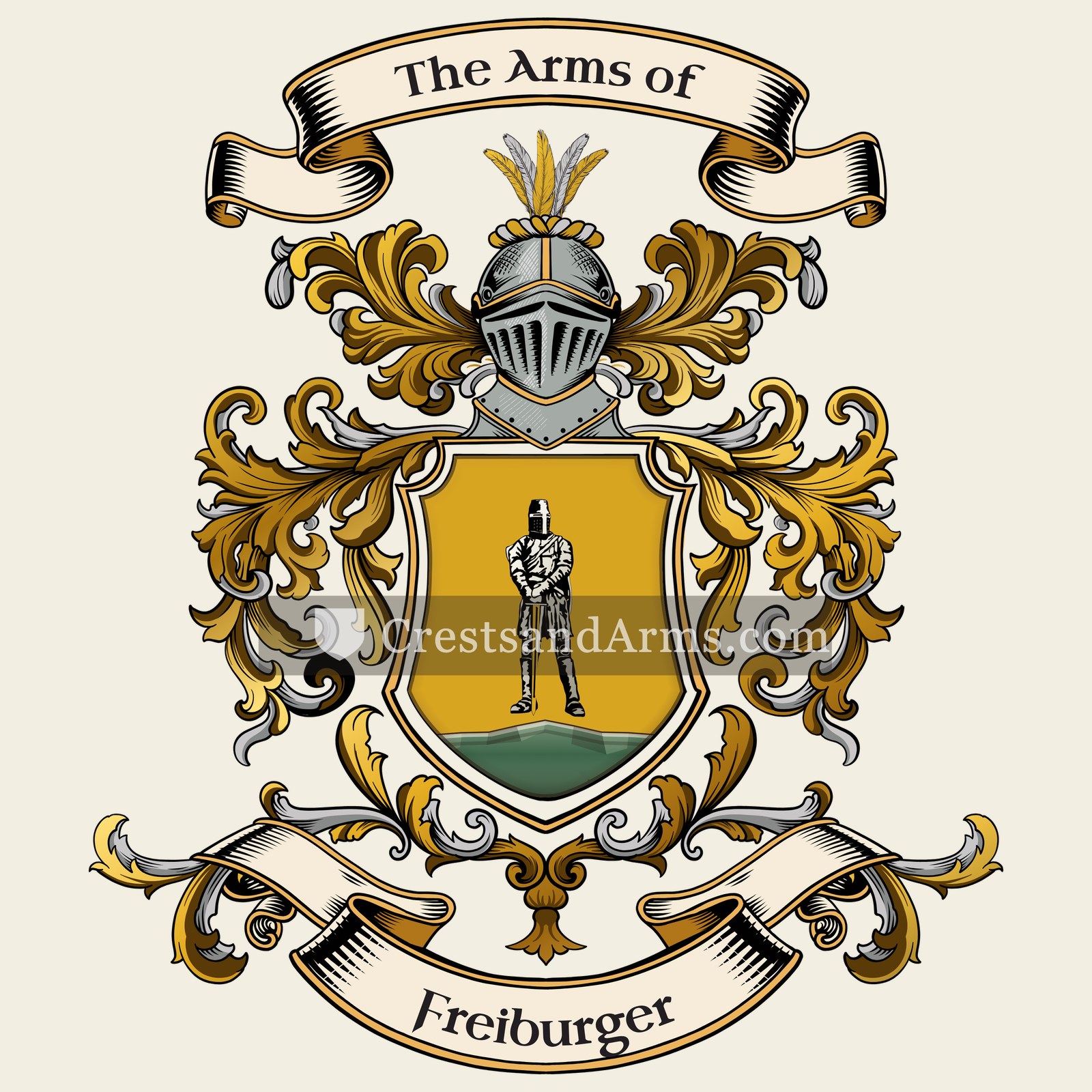
Coat of Arms & Family Crest Details
Symbols on this shield
mountThe ground held, and steadfastness upon it
knightChivalry and service in arms
Colours
Gold (Or)Means: Generosity
Green (Vert)Means: Hope
Silver (Argent)Means: Peace and sincerity
Historical info
Source
J. B. Rietstap, Armorial Général, Gouda: G. B. van Goor Zonen, 1884–87
Blazon (the actual original written record)
“D'or à un chevalier iss., arm. de toutes pièces, dans l'action de tirer son épée, tenant son bouclier derrière son dos, la visière levée, mouv. d'un tertre de sin. C.: le chevalier, iss.”
AustriaGratz Styrie, c. 1772
Where the Freiburger Arms Were Recorded
Gratz
Map of Austria showing where the Freiburger arms are recorded
The Freiburger arms were recorded in Gratz Styrie, c. 1772.
This is where the arms were entered in the register. Families often moved to other parts of the country, so the same name can turn up in more than one region.
Region
Gratz
Town
Gratz Styrie
First recorded
1772
Granting Authority for the Freiburger Arms
Imperial and Royal chancery
Sodacan · CC BY-SA 3.0
The body that granted and recorded arms in Austria in this period.
Joseph II, Holy Roman Emperor
Sovereign of the period
Joseph II, Holy Roman Emperor
1765–1790
Reigning in France when the Freiburger arms are first recorded.
How Arms Worked in Austria
Austrian coats of arms were often linked directly to noble titles granted by the Emperor. These symbols belonged to the entire family line rather than just one individual. When a family grew, new branches kept the original design without needing to change it. This system allowed all members of a noble house to share the same identity across many generations.
Granting authority
The Imperial and Royal chancery managed all heraldic matters and controlled the official granting of arms throughout the Austrian lands.
How they got arms
Families typically received their arms through a formal imperial decree that often accompanied the elevation of a person to noble status.
Where arms were recorded
Official records of these grants were kept in the Imperial Register of Nobility which began its formal documentation process in 1453.
The family's standing
Recorded among the armigerous families of Austria.
Origin & History of the Freiburger Family in Austria
The surname Freiburger is a topographic name that historically identified individuals who originated from a "Freiburg," or a "free town." In the context of the Austrian Empire, the name suggests that the family’s ancestors were likely associated with a settlement granted special legal or economic privileges by a local ruler. By the year 1772, records confirm that members of the Freiburger family were established in Graz, which was a vital administrative and cultural center within the Habsburg monarchy. During this period, Graz served as a hub for trade and craftsmanship, and families like the Freiburgers often held roles that required literacy or specialized skills to navigate the city’s complex legal and merchant systems. As the family integrated into the social fabric of Styria, their presence in the city archives reflects the broader movement of people seeking opportunities in growing urban centers during the late eighteenth century.
Related Branches & Arms
Root word
Freiburg
A fortified settlement or town that is free from certain taxes.
This name
FreiburgerRefers to an individual who originated from the city of Freiburg.
also spelled
Freiburger
Friburger
Frayburger
Documented Sources
J. B. Rietstap, Armorial Général, Gouda: G. B. van Goor Zonen, 1884–87
Archives départementales du Bas-Rhin, Registres paroissiaux de Strasbourg
Kintz, Jean-Pierre, La vie à Strasbourg au XVIIe siècle, 1983
Livet, Georges, Histoire de Strasbourg des origines à nos jours, 1980
Digital archive packCoat of arms PNG, gold border print PDF, vector SVG and the certificate of authenticity. Sent to your email in minutes.


 lionCourage, strength and royalty
 lionCourage, strength and royalty

 mountThe ground held, and steadfastness upon it
 paleMilitary strength, and a fortified defence
 mulletThe third son, and a divine quality from above
 arrowReadiness for battle, and affliction endured
 knightChivalry and service in arms