Map of Belgium showing where the Fremin arms are recorded
The Fremin arms were recorded in Brabant, c. 1737.
Brabant lay at the heart of the Low Countries, where the trade routes met. Its towns were wealthy and its landowners many, and both kinds of family kept arms, which is why the region is so heavily represented.
This is where the arms were entered in the register. Families often moved to other parts of the country, so the same name can turn up in more than one region.
The body that granted and recorded arms in Belgium in this period.
Charles VI, Holy Roman Emperor
Sovereign of the period
Charles VI, Holy Roman Emperor
1711–1740
Reigning in Belgium when the Fremin arms are first recorded.
How Arms Worked in Belgium
In Belgium, a coat of arms is considered personal property that is passed down through the male line to legitimate descendants. Families often use the same shield design across generations to show their shared heritage. If a branch of the family wants to change the design, they must apply for an official update to their specific version of the arms.
Granting authority
The Conseil héraldique is the official body that regulates and approves all coats of arms in Belgium.
How they got arms
Families obtain their coats of arms through formal royal grants or by confirming their historical right to use existing designs.
Where arms were recorded
All approved coats of arms are officially recorded in the public registers of the Conseil héraldique since 1844.
The family's standing
Recorded among the armigerous families of Brabant.
Origin & History of the Fremin Family in Belgium
The family name Fremin carries deep roots within the historical landscape of the Duchy of Brabant, a region that now forms the heart of modern Belgium. By the year 1737, records confirm that members of the Fremin family were firmly established in this area, living during a time when the Southern Netherlands were under the rule of the Austrian Habsburgs. The name likely evolved from regional naming traditions common to the borderlands between French and Dutch-speaking populations, reflecting the linguistic diversity of the Brabant region. During the eighteenth century, families like the Fremins often played vital roles in local community life, working within the agricultural or artisanal networks that supported the bustling towns and rural parishes of the era. Their presence in Brabant suggests a long-standing connection to the social and economic development of the region, as they navigated the shifting political borders and cultural transitions that defined Belgian history throughout the Enlightenment period.
Coat of Arms & Family Crest Details
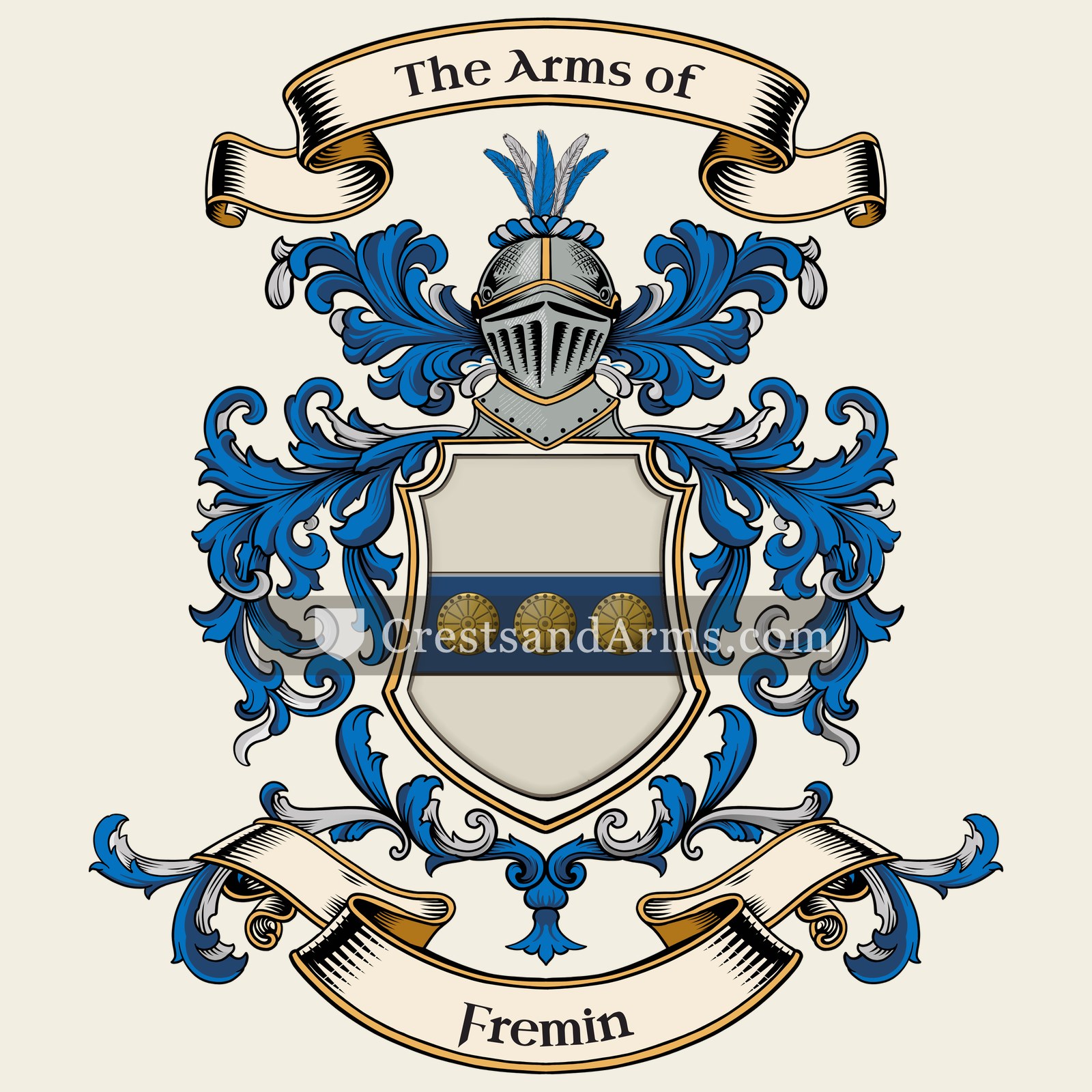
Symbols on this shield
fessThe military belt, and readiness to serve
roundelA coin, and one who has been to the crusades
Colours
Silver (Argent)Means: Peace and sincerity
Blue (Azure)Means: Loyalty and truth
Gold (Or)Means: Generosity
Historical info
Source
J. B. Rietstap, Armorial Général, Gouda: G. B. van Goor Zonen, 1884–87
Blazon (the actual original written record)
“D'arg. à la fasce d'azur, ch. de trois bes. d'or.”
NormandieNormandie, c. 1663
Digital archive packCoat of arms PNG, gold border print PDF, vector SVG and the certificate of authenticity. Sent to your email in minutes.
Map of France showing where the Fremin arms are recorded
The Fremin arms were recorded in Normandie, c. 1663.
Normandie held a dense crowd of knightly families on some of the best farmland in France. Its men had fought and settled abroad for generations, and a family that sent sons to war needed a shield they could be recognised by.
This is where the arms were entered in the register. Families often moved to other parts of the country, so the same name can turn up in more than one region.
The body that granted and recorded arms in France in this period.
Louis XIV of France
Sovereign of the period
Louis XIV of France
1643–1715
Reigning in Belgium when the Fremin arms are first recorded.
How Arms Worked in France
In France, a coat of arms was a mark of honor that passed down through the male line to all legitimate descendants. Families often used the same shield without changes to show their shared heritage. If a branch wanted to stand out, they could add a small mark to their shield to show their specific place in the family tree.
Granting authority
The Juge d'armes de France acted as the official authority that regulated and verified coats of arms across the country.
How they got arms
Families typically inherited their arms from ancestors, though they could also receive them through royal grants or by proving their noble status.
Where arms were recorded
Coats of arms were officially recorded in the Armorial Général de France, which began its main collection in the year 1696.
The family's standing
Recorded among the armigerous families of Normandie.
Origin & History of the Fremin Family in France
The family name Fremin traces its roots to the northern regions of France, with significant historical ties to the province of Normandie. By the year 1663, records confirm that members of the Fremin family were firmly established within this coastal territory. During the seventeenth century, Normandie was a hub of agricultural and maritime activity, and families like the Fremins often lived as independent farmers or skilled tradespeople. The name itself is thought to be a variation of the ancient Germanic name Frigimund, which evolved through the French language over several centuries. As the family grew, they became part of the local social fabric, participating in the parish life and community governance that defined rural French society during the reign of King Louis XIV. This period was a time of great expansion for many French families, and the presence of the Fremins in Normandie reflects the deep connection between the family and the historical development of the region.
Fremin Meaning & Related Branches
Root word
Firminus
Derived from the Latin word firmus meaning steadfast or firm.
This name
FreminA patronymic surname indicating descent from an ancestor named Firmin, signifying a steadfast or resolute individual.
also spelled
Fremyn
Related arms
Fremynvariant spelling
Documented Sources
J. B. Rietstap, Armorial Général, Gouda: G. B. van Goor Zonen, 1884–87
Archives: State Archives in Belgium (Rijksarchief in België), Parochieregisters van Brabant
Archives: State Archives in Belgium (Rijksarchief in België), Registers van de Burgerlijke Stand
Book: De Smet, A., Geschiedenis van Brabant, 1970
Book: Van der Essen, L., Étude sur le développement historique de la Belgique, 1920
Digital archive packCoat of arms PNG, gold border print PDF, vector SVG and the certificate of authenticity. Sent to your email in minutes.


 lionCourage, strength and royalty
 lionCourage, strength and royalty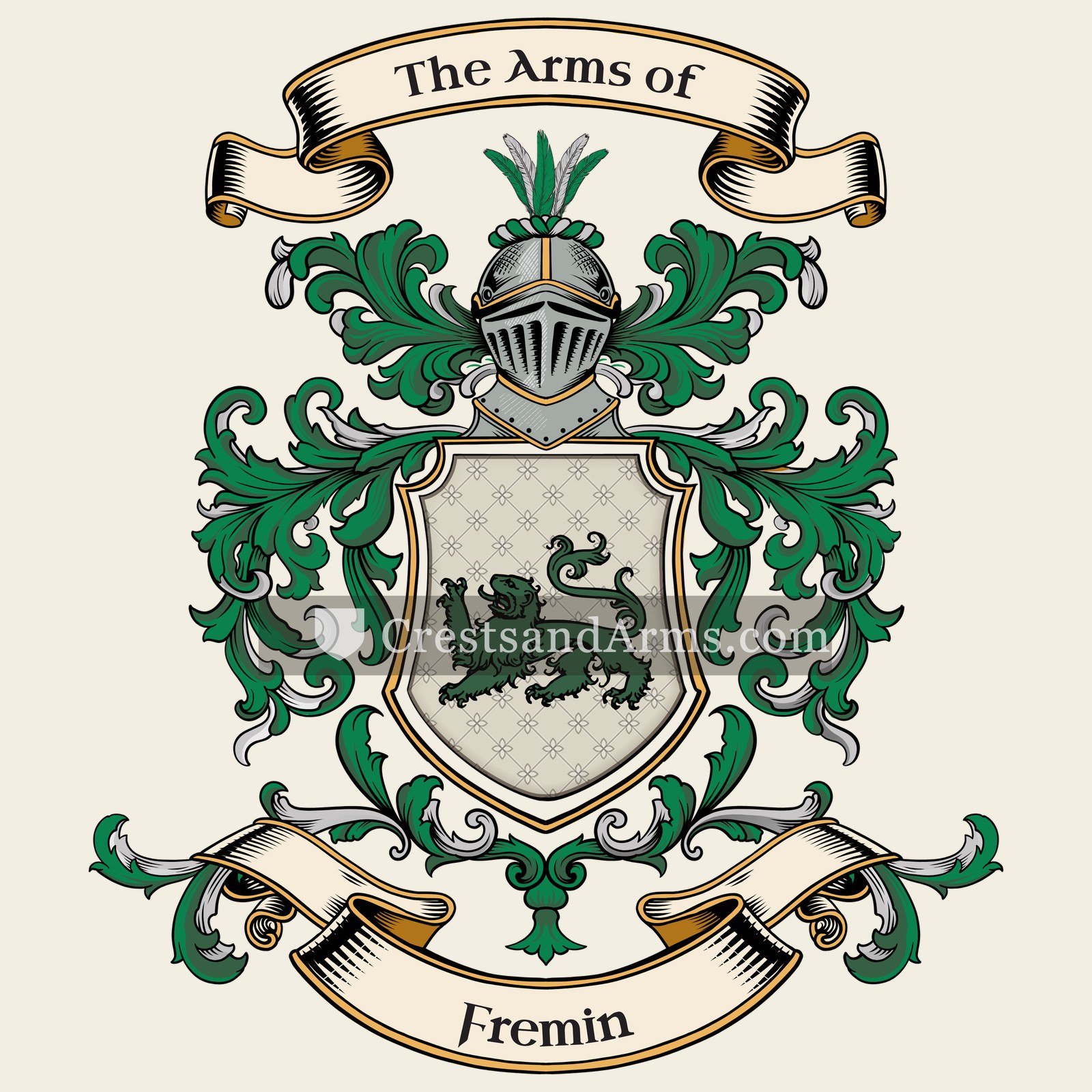


 fessThe military belt, and readiness to serve
 roundelA coin, and one who has been to the crusades