Map of France showing where the Fuchs arms are recorded
The Fuchs arms were recorded in Strasbourg, c. 1663.
This is where the arms were entered in the register. Families often moved to other parts of the country, so the same name can turn up in more than one region.
The body that granted and recorded arms in France in this period.
Louis XIV of France
Sovereign of the period
Louis XIV of France
1643–1715
Reigning in France when the Fuchs arms are first recorded.
How Arms Worked in France
In France, a coat of arms was a mark of honor that passed down through the male line to all legitimate descendants. Families often used the same shield without changes to show their shared heritage. If a branch wanted to stand out, they could add a small mark to their shield to show their specific place in the family tree.
Granting authority
The Juge d'armes de France acted as the official authority that regulated and verified coats of arms across the country.
How they got arms
Families typically inherited their arms from ancestors, though they could also receive them through royal grants or by proving their noble status.
Where arms were recorded
Coats of arms were officially recorded in the Armorial Général de France, which began its main collection in the year 1696.
The family's standing
Recorded among the armigerous families of France.
Origin & History of the Fuchs Family in France
The surname Fuchs is a German word meaning fox, and it became a common way to describe people who were clever or had reddish hair. By the time the family was recorded in Strasbourg in 1663, the city was a unique crossroads between German and French cultures. Because Strasbourg shifted between these two national influences throughout history, families living there often navigated a blend of languages and customs. The early members of the Fuchs family in this region were likely part of the local merchant or artisan classes who helped shape the city’s identity during the seventeenth century. As the area became more integrated into the French kingdom, the family name remained a steady link to their roots in the Alsace region. This history reflects how families in border territories maintained their heritage while adapting to the changing political landscape of Europe.
Coat of Arms & Family Crest Details
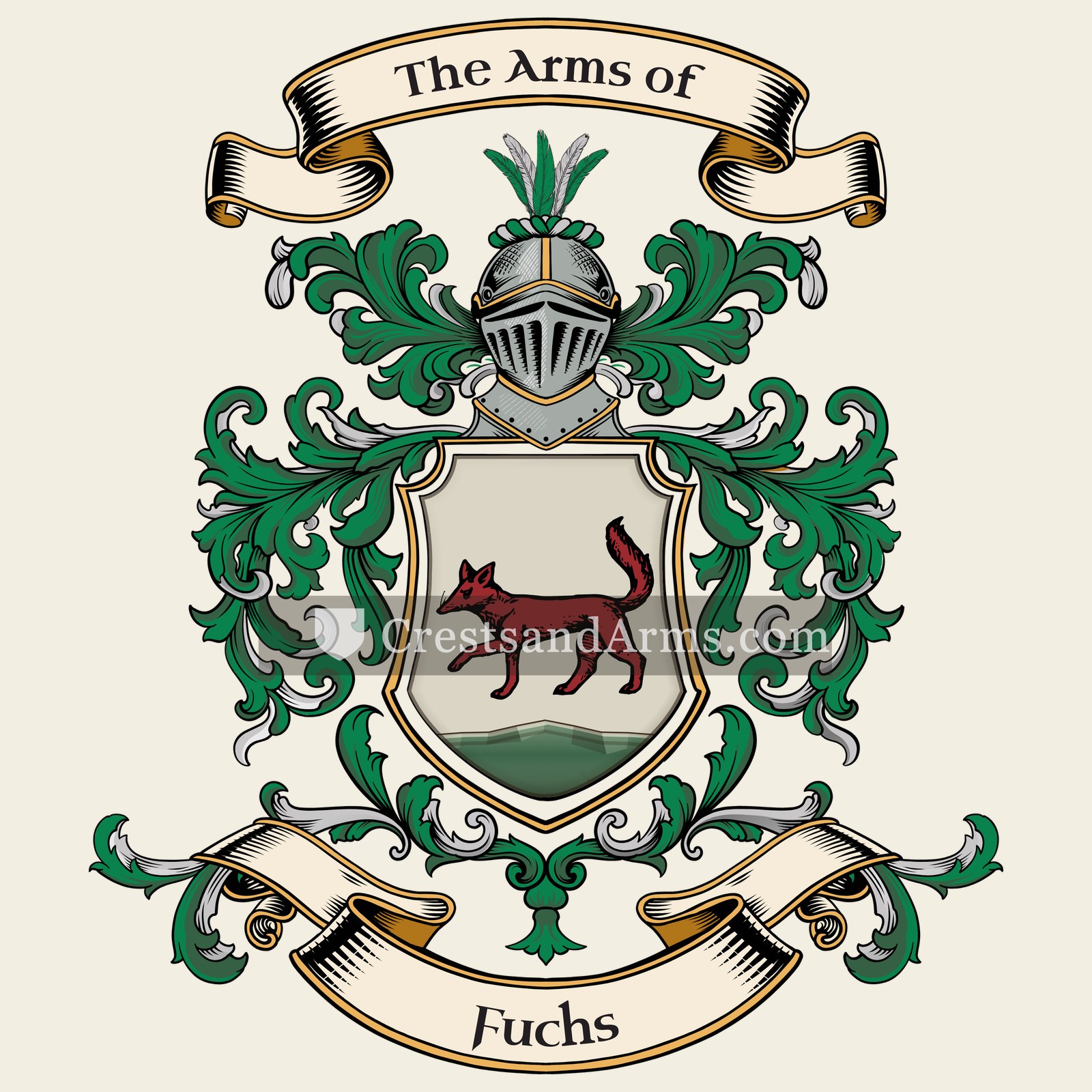
Symbols on this shield
eagleNobility, strength and a keen mind
foxWit and wisdom in defence
Colours
Gold (Or)Means: Generosity
Blue (Azure)Means: Loyalty and truth
Black (Sable)Means: Constancy
Historical info
Source
J. B. Rietstap, Armorial Général, Gouda: G. B. van Goor Zonen, 1884–87
Blazon (the actual original written record)
“Parti: au 1 d'or à la demi-aigle de sa., bq. et m. d'or, mouv. du parti; au 2 d'azur à un renard ramp. au nat. Cq. cour. C.: le renard, iss., entre un vol de sa. L. d'or et d'azur.”
Germanyc. 1684
Digital archive packCoat of arms PNG, gold border print PDF, vector SVG and the certificate of authenticity. Sent to your email in minutes.
Map of Germany showing where the Fuchs arms are recorded
The Fuchs arms were recorded in Germany, c. 1684.
Arms such as these were typically recorded in Bavaria.
Bavaria was a country of old landed families and walled market towns. Estates passed down the same line for centuries, and both the landowners and the leading townsmen kept arms, which is why so many Bavarian names sit in the registers.
This is where the arms were entered in the register. Families often moved to other parts of the country, so the same name can turn up in more than one region.
The body that granted and recorded arms in Germany in this period.
Leopold I, Holy Roman Emperor
Sovereign of the period
Leopold I, Holy Roman Emperor
1658–1705
Reigning in France when the Fuchs arms are first recorded.
How Arms Worked in Germany
In the Holy Roman Empire, coats of arms were often granted to individuals by the Emperor or his representatives. These arms were then passed down through the generations to all legitimate descendants of the original holder. Younger branches of a family usually kept the same shield design without needing to change it, as the arms belonged to the entire lineage.
Granting authority
The Holy Roman Emperor held the sole power to grant new coats of arms throughout his vast imperial territories.
How they got arms
Families typically obtained their coats of arms through a formal imperial grant or by proving their noble status to the authorities.
Where arms were recorded
These grants were officially recorded in the Imperial Chancery registers, which began keeping formal records of such honors during the Middle Ages.
The family's standing
Recorded among the armigerous families of Germany.
Origin & History of the Fuchs Family in Germany
The surname Fuchs is a classic example of a German occupational or descriptive name that emerged during the Middle Ages. Derived from the Middle High German word for fox, the name was originally a nickname given to people who were known for their cleverness or perhaps their reddish hair. By the time records appear in Bavaria in 1684, the name was already well-established across German-speaking lands. Families bearing this name were often involved in agriculture or trade, living in the rural villages and growing towns of southern Germany. Because the fox was a common animal in the local forests, the name became a natural identifier for families living in these regions. Over many generations, the name was passed down from parents to children, eventually becoming a permanent family identifier as record-keeping became more formal in the late 17th century.
Coat of Arms & Family Crest Details
Symbols on this shield
mountThe ground held, and steadfastness upon it
foxWit and wisdom in defence
Colours
Silver (Argent)Means: Peace and sincerity
Green (Vert)Means: Hope
Red (Gules)Means: Military strength
Historical info
Source
J. B. Rietstap, Armorial Général, Gouda: G. B. van Goor Zonen, 1884–87
Blazon (the actual original written record)
“D'arg. à un renard ramp. de gu., soutenu d'un tertre de trois coupeaux de sin. C.: un renard ramp. de gu.”
SwitzerlandBaden Argovie, c. 1745
Digital archive packCoat of arms PNG, gold border print PDF, vector SVG and the certificate of authenticity. Sent to your email in minutes.
Map of Switzerland showing where the Fuchs arms are recorded
The Fuchs arms were recorded in Baden Argovie, c. 1745.
This is where the arms were entered in the register. Families often moved to other parts of the country, so the same name can turn up in more than one region.
The body that granted and recorded arms in Switzerland in this period.
How Arms Worked in Switzerland
In Switzerland, coats of arms were not restricted to the nobility and were often adopted by common citizens and families. These symbols were passed down through generations to show family identity. When branches of a family grew, they often changed small details of the design to distinguish their own line from the original group.
Granting authority
Cantonal and civic authorities managed the use of coats of arms within their specific regions and local jurisdictions.
How they got arms
Families typically assumed their own coats of arms based on local custom rather than receiving them from a central monarch.
Where arms were recorded
Arms were recorded in various cantonal and civic registers starting from the fourteenth century throughout the Swiss region.
The family's standing
Recorded among the armigerous families of Switzerland.
Origin & History of the Fuchs Family in Switzerland
The surname Fuchs is a classic example of a name derived from a nickname, as the word translates directly to fox in German. In the context of Switzerland and the surrounding regions, families carrying this name often emerged from rural communities where individuals were identified by their physical traits or personality characteristics. By the time members of the family were documented in the Baden region in 1745, the name had already become well-established across German-speaking territories. These early ancestors were likely part of the agrarian society that defined the Swiss landscape during the eighteenth century. They lived through a period of significant social transition, moving between local parishes and contributing to the development of regional trade and craftsmanship. Because the name was common, it appeared frequently in local tax records and parish registers, which helped track the movement of these families as they settled into new towns and established their livelihoods.
Fuchs Meaning & Related Branches
Root word
Vulpes
The Latin word for the animal known as a fox.
This name
FuchsAn occupational or descriptive surname referring to a person with fox-like traits or a fox hunter.
also spelled
Fux
Fooks
Fox
Related arms
Buchssimilar arms
Carolath-Beuthensimilar arms
Freymann von und auf Hohen-Randecksimilar arms
Fuxvariant spelling
Documented Sources
J. B. Rietstap, Armorial Général, Gouda: G. B. van Goor Zonen, 1884–87
Archives de la Ville et de l'Eurométropole de Strasbourg, Registres paroissiaux de Strasbourg (1663)
Livet, Georges, L'intendance d'Alsace sous Louis XIV, 1648-1715, 1956
Rapp, Francis, Le diocèse de Strasbourg, 1982
Digital archive packCoat of arms PNG, gold border print PDF, vector SVG and the certificate of authenticity. Sent to your email in minutes.


 foxWit and wisdom in defence
 foxWit and wisdom in defence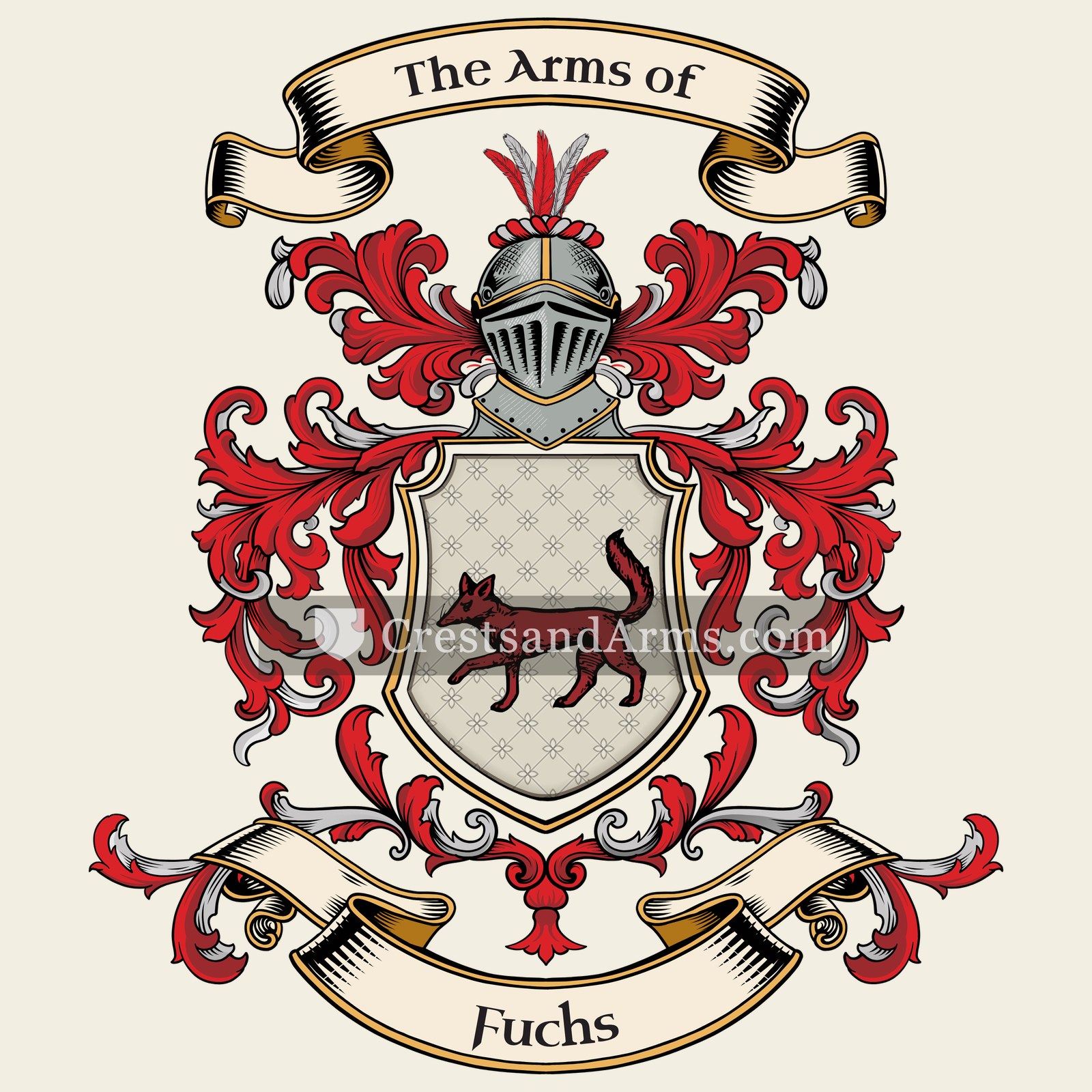


 eagleNobility, strength and a keen mind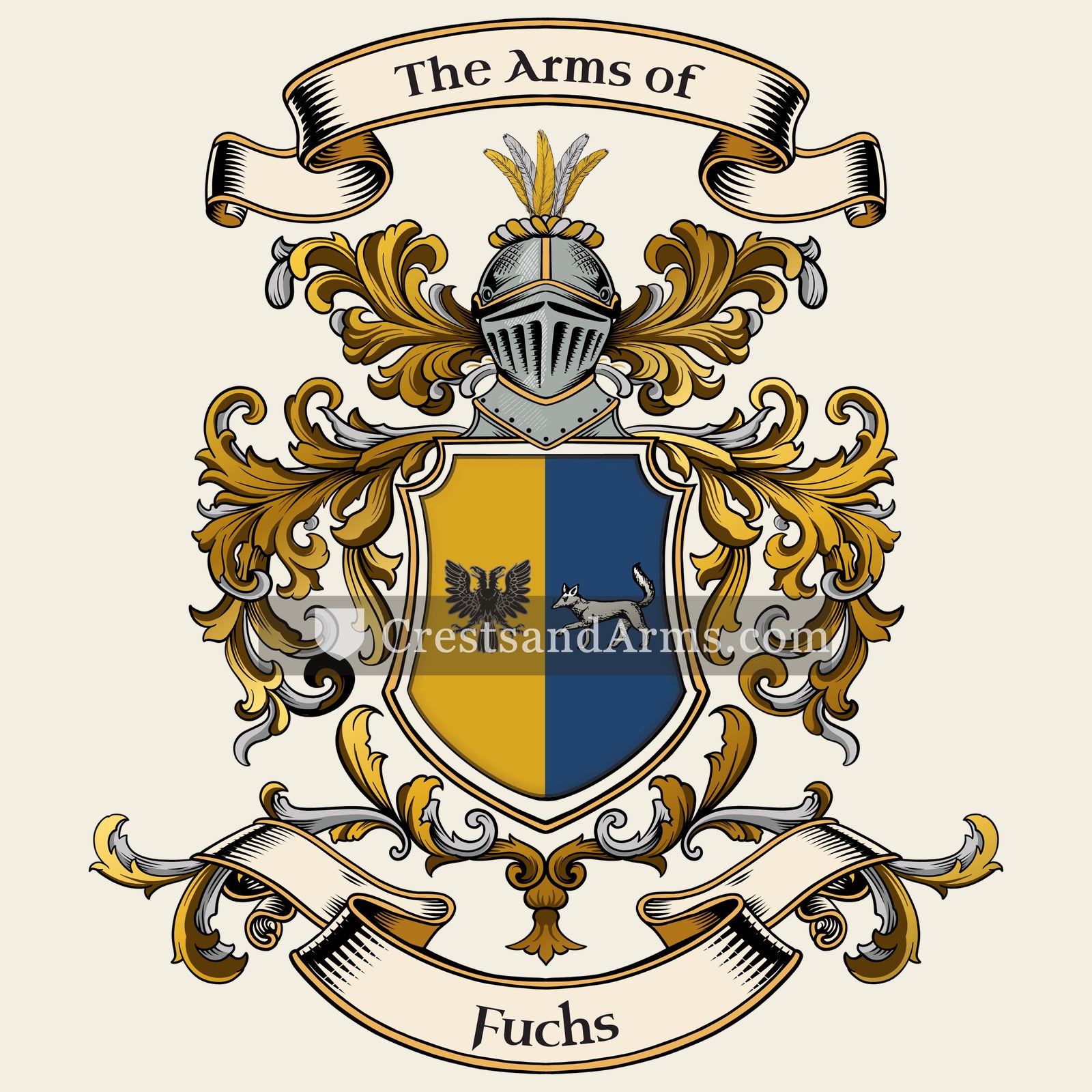


 mountThe ground held, and steadfastness upon it