Map of Britain showing where the Fulfer arms are recorded
The Fulfer arms were recorded in Devonshire, c. 1700.
This is where the arms were entered in the register. Families often moved to other parts of the country, so the same name can turn up in more than one region.
The body that granted and recorded arms in Britain in this period.
William III of England
Sovereign of the period
William III of England
1694–1702
Reigning in Britain when the Fulfer arms are first recorded.
How Arms Worked in Britain
English heraldry allowed arms to be shared by all legitimate descendants of the original owner. These symbols were treated as personal property that moved through the generations to all children. While the eldest son kept the original design, other family members could use the same shield without needing to change it or register their own unique versions.
Granting authority
The College of Arms in London has regulated the use of coats of arms throughout England and Wales since 1484.
How they got arms
Families typically obtained their coats of arms through a formal grant from the Crown or by proving their ancient right to them.
Where arms were recorded
All official coats of arms are recorded in the registers kept at the College of Arms, which date back to the fifteenth century.
The family's standing
Recorded among the armigerous families of Devonshire.
Origin & History of the Fulfer Family in Britain
The family name Fulfer is deeply rooted in the rural landscape of Devonshire, where records confirm the family was well-established by the year 1700. During this period, the name was likely associated with the agricultural traditions of the West Country, where families often lived in small, tight-knit village communities. The name itself is thought to have evolved from local dialects, possibly serving as a descriptive term for a person’s trade or their specific location within the rolling hills of the Devon countryside. As the family grew, they became part of the local fabric of the region, participating in the parish life and farming practices that defined life in southwestern England during the eighteenth century. By remaining in the same geographic area for generations, the early members of the Fulfer family helped preserve their local identity, leaving behind a legacy tied to the land and the history of Devonshire.
Meaning of the Fulfer family crest colors & symbols
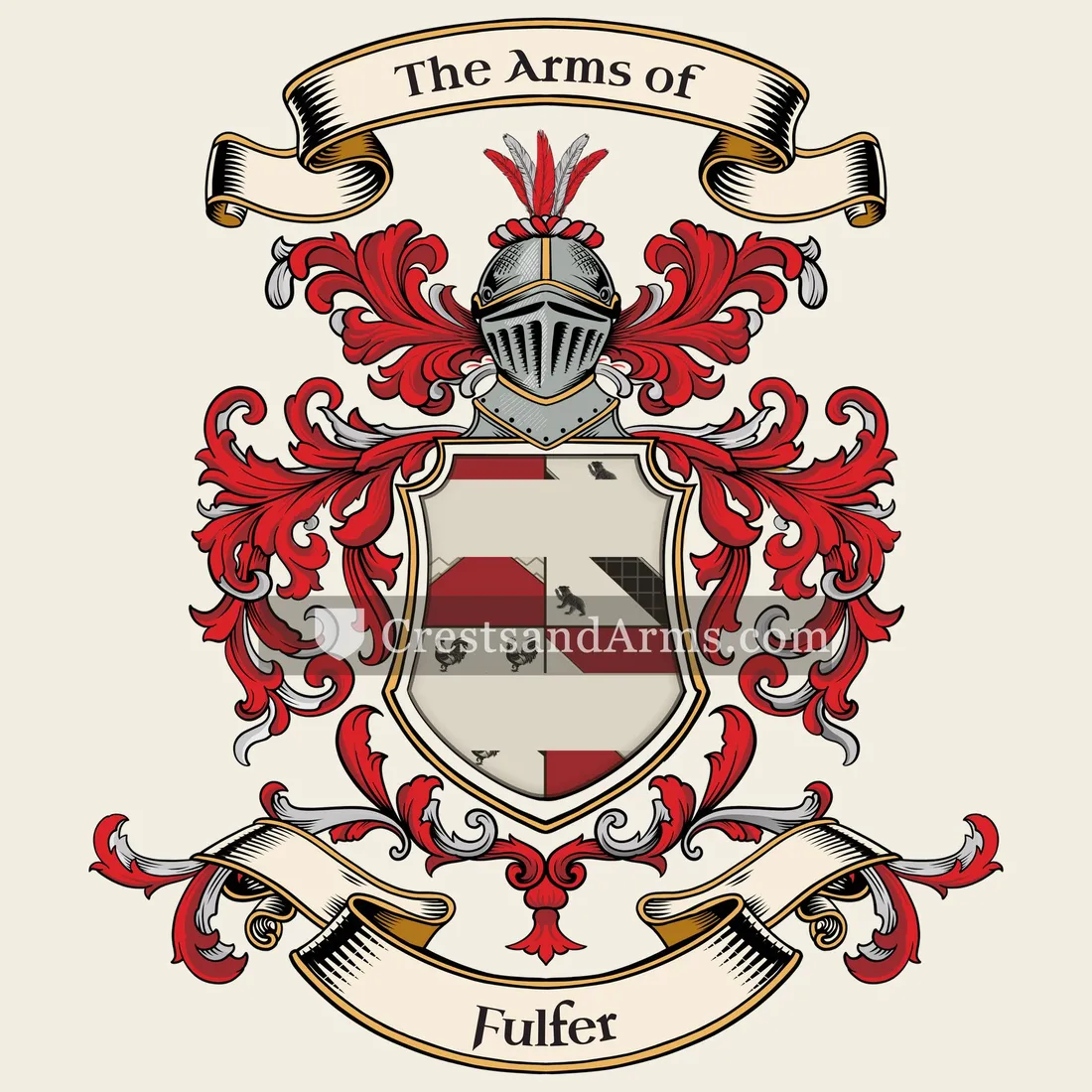
Symbols on this shield
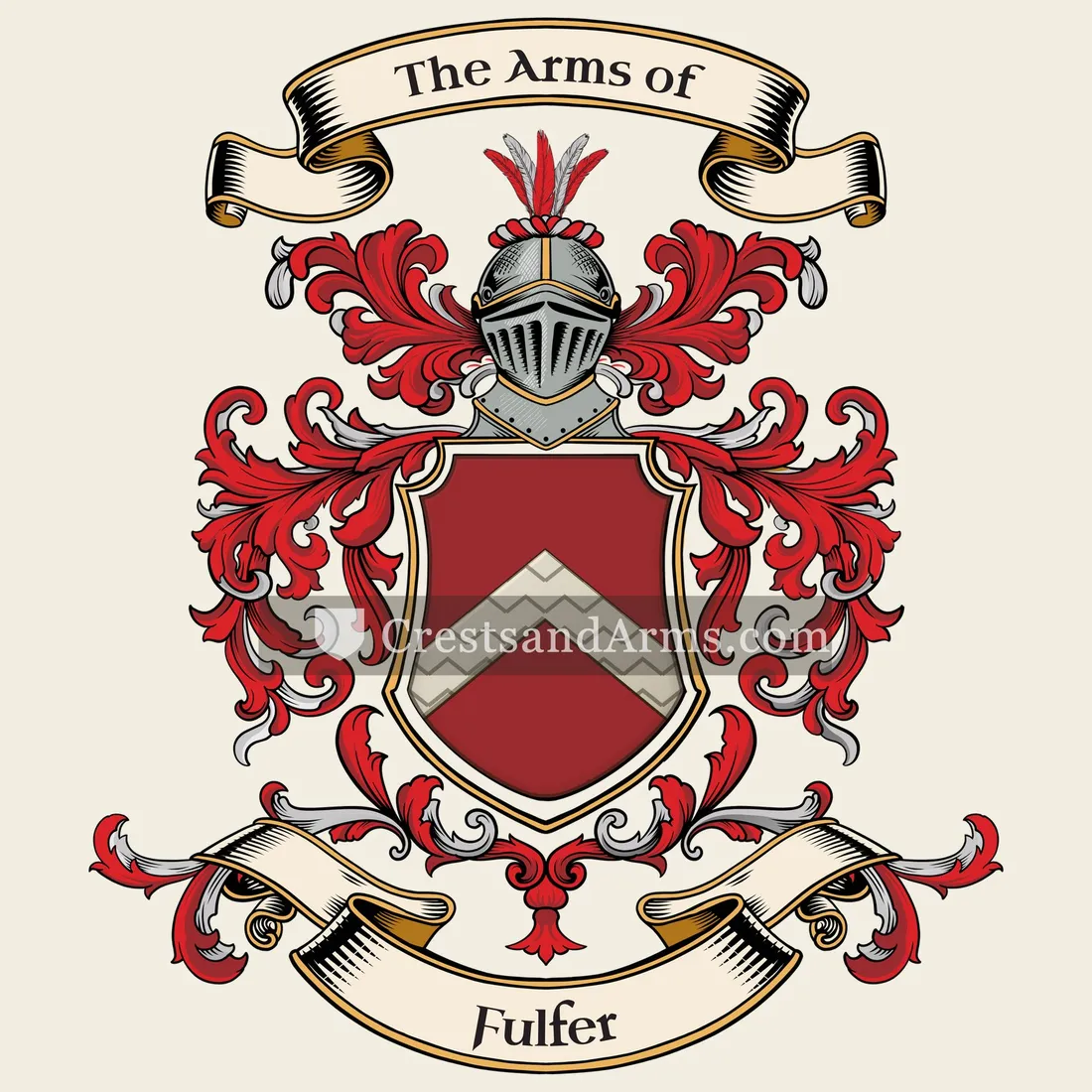
chevronProtection, and faithful service completed
bendDefence, and the scarf of a commander
cross symbolChristian faith and service
bearStrength, cunning and protection of kin
cockCourage, vigilance and readiness for battle
Colours
Red (Gules)Means: Military strength
Silver (Argent)Means: Peace and sincerity
Black (Sable)Means: Constancy
Historical info
Source
Sir Bernard Burke, The General Armory of England, Scotland, Ireland and Wales, London: Harrison & Sons, 1884
Blazon (the actual original written record)
“Quarterly, 1st, for Fulford, gu. a chev. ar.; 2nd, for Fitzurse, ar. a bend betw. three bears' heads erased sa.; 3rd, for Moreton, ar. a chev. betw. three moorcocks sa.; 4th, for Bilston, or, on a bend gu. three crosses formée ar.; 5th, for Bozom, gu. three birdbolts ar.; 6th, for St. George, ar. a lion ramp. gu. a chief az.; 7th, for Cantilupe, az. three leopards' faces jessant-de-lis or; 8th, for St. Albyn, erm. on a cross gu. five bezants; 9th, for Challons, gu. two bars and an orle of martlets ar”
DevonGreat Fulford · Devon, c. 1620
Digital archive packCoat of arms PNG, gold border print PDF, vector SVG and the certificate of authenticity. Sent to your email in minutes.
Map of England showing where the Fulfer arms are recorded
The Fulfer arms were recorded in Devon, c. 1620.
Devon was a county of small manors and seafaring families. Its gentry were spread thickly across the countryside, and money made at sea often bought an estate, which in turn brought a coat of arms.
This is where the arms were entered in the register. Families often moved to other parts of the country, so the same name can turn up in more than one region.
The body that granted and recorded arms in England in this period.
James VI and I
Sovereign of the period
James VI and I
1603–1625
Reigning in Britain when the Fulfer arms are first recorded.
How Arms Worked in England
English heraldry allowed arms to be shared by all legitimate descendants of the original owner. These symbols were treated as personal property that moved through the generations to all children. While the eldest son kept the original design, other family members could use the same shield without needing to change it or register their own unique versions.
Granting authority
The College of Arms in London has regulated the use of coats of arms throughout England and Wales since 1484.
How they got arms
Families typically obtained their coats of arms through a formal grant from the Crown or by proving their ancient right to them.
Where arms were recorded
All official coats of arms are recorded in the registers kept at the College of Arms, which date back to the fifteenth century.
The family's standing
Recorded among the armigerous families of Devon.
Origin & History of the Fulfer Family in England
The family name Fulfer is deeply rooted in the rural landscapes of Devon, England, where records confirm the family was well-established by the early 17th century. During this period, Devon was a hub of maritime activity and agricultural development, providing a stable environment for families to settle and grow. The name likely evolved from local dialects or occupational descriptions common to the West Country, reflecting the daily lives of people living in the region during the reign of King James I. As the family put down roots in the English countryside, they became part of the local fabric, participating in the parish life and community structures that defined life in 1620. This early presence in Devon suggests that the ancestors of the Fulfer line were likely involved in the traditional trades or farming practices that sustained the coastal and inland villages of the era.
Fulfer Meaning & Related Branches
Root word
Fulcher
Derived from the Germanic elements for people and army.
This name
FulferA patronymic surname meaning son of the people's army leader.
also spelled
Fulforde
Fulfordd
Fullford
Fulleford
Folforde
Documented Sources
J. B. Rietstap, Armorial Général, Gouda: G. B. van Goor Zonen, 1884–87
Devon Archives and Local Studies Service, Parish Registers of Devon, 1700
Hoskins, W.G., Devon, 1954
Reaney, P.H., A Dictionary of British Surnames, 1958
Digital archive packCoat of arms PNG, gold border print PDF, vector SVG and the certificate of authenticity. Sent to your email in minutes.


 chevronProtection, and faithful service completed
 chevronProtection, and faithful service completed


 bendDefence, and the scarf of a commander
 cross symbolChristian faith and service
 bearStrength, cunning and protection of kin
 cockCourage, vigilance and readiness for battle