A record of documented arms, meaning and origin, researched for the Funck family lines. Documented in 3 countries.
Reg. 7174 · Swedish, D–F
Coat of Arms & Family Crest Details
Symbols on this shield
fessThe military belt, and readiness to serve
chequyConstancy, and the counting-board
cross symbolChristian faith and service
mountThe ground held, and steadfastness upon it
mulletThe third son, and a divine quality from above
escallopThe pilgrim's shell, and a long journey made
Colours
Gold (Or)Means: Generosity
Blue (Azure)Means: Loyalty and truth
Silver (Argent)Means: Peace and sincerity
Red (Gules)Means: Military strength
Historical info
Source
J. B. Rietstap, Armorial Général, Gouda: G. B. van Goor Zonen, 1884–87
Blazon (the actual original written record)
“Ec.: aux 1 et 4 d'or à la fasce échiq. de sa. et d'or, acc. de trois croisettes pattées de gu.; aux 2 et 3 d'azur à la barre d'or, acc. de deux coquilles d'arg. Sur le tout d'azur à un mont d'or, surm. d'une étoile (5) d'arg. Deux cq. cour. C.: 1º deux sapins arr. de sin., passés en saut., surm. d'une étoile (5) d'arg.; 2º une fleur-de-lis d'arg., entre un vol coupé alt. d'or et d'azur. S.: deux griffons reg. d'or.”
Swedenc. 1723
Digital archive packCoat of arms PNG, gold border print PDF, vector SVG and the certificate of authenticity. Sent to your email in minutes.
Map of Sweden showing where the Funck arms are recorded
The Funck arms were recorded in Sweden, c. 1723.
Arms such as these were typically recorded in Stockholm.
Stockholm held the Swedish court and the House of Nobility, where every noble family's arms were entered and kept. Families ennobled for service registered there, which is why so many are recorded around the city.
This is where the arms were entered in the register. Families often moved to other parts of the country, so the same name can turn up in more than one region.
The body that granted and recorded arms in Sweden in this period.
Frederick I of Sweden
Sovereign of the period
Frederick I of Sweden
1720–1751
Reigning in Sweden when the Funck arms are first recorded.
How Arms Worked in Sweden
In Sweden, a coat of arms belonged to a noble family as a whole rather than just one individual. These arms were passed down through the generations to all legitimate descendants. Younger branches of the family used the same shield without needing to change it. This system ensured that the entire lineage shared the same identity and status under the law.
Granting authority
The Riddarhuset, or House of Nobility, regulated all noble coats of arms in Sweden under royal authority.
How they got arms
Families received their coats of arms through royal grants of nobility which were then officially registered with the House.
Where arms were recorded
Coats of arms were officially recorded in the Swedish House of Nobility register starting in the year 1626.
The family's standing
Recorded among the armigerous families of Sweden.
Origin & History of the Funck Family in Sweden
The Funck family established a significant presence in Sweden during the early eighteenth century, with records confirming their residence in Stockholm by 1723. The name itself is of German origin and was brought to Sweden by individuals who sought new opportunities in trade and civil service. During this era, Stockholm was a growing hub for commerce, and members of the Funck family integrated quickly into the urban social structure. They often pursued careers as merchants or government officials, which allowed them to build influence within the capital city. By settling in Stockholm, the family became part of the professional class that helped shape the administrative and economic life of the Swedish kingdom during the Age of Liberty. Their transition from foreign arrivals to established residents highlights the movement of skilled people across Northern Europe during the early modern period.
Coat of Arms & Family Crest Details
Symbols on this shield
fireZeal and purification
Colours
Silver (Argent)Means: Peace and sincerity
Red (Gules)Means: Military strength
Historical info
Source
J. B. Rietstap, Armorial Général, Gouda: G. B. van Goor Zonen, 1884–87
Blazon (the actual original written record)
“D'arg. à cinq flammes de gu., 2 et 3. Cq. cour. C.: trois flammes mal-ordonnées de gu., entre un vol d'arg. et de gu.”
CourlandPrusse orientale · Courland, c. 1862
Digital archive packCoat of arms PNG, gold border print PDF, vector SVG and the certificate of authenticity. Sent to your email in minutes.
Map of Poland showing where the Funck arms are recorded
The Funck arms were recorded in Courland, c. 1862.
Courland was Baltic coast country held in large estates by a small number of families. They kept their land for generations and served as officers abroad, and both landholding and service brought arms with them.
This is where the arms were entered in the register. Families often moved to other parts of the country, so the same name can turn up in more than one region.
Region
Courland
Town
Prusse orientale
First recorded
1862
Granting Authority for the Funck Arms
Ennoblement by the Sejm
Author: Olek Remesz · CC BY-SA 3.0
The body that granted and recorded arms in Poland in this period.
How Arms Worked in Poland
Polish noble families shared a single coat of arms across many different surnames, creating large clans rather than individual designs. These symbols were held collectively by all members of the clan regardless of their specific family name. When a new family joined the nobility, they were adopted into an existing clan and began using that group's established shield.
Granting authority
The Sejm, which was the Polish parliament, held the power to grant noble status and the right to bear arms.
How they got arms
Families typically received their coat of arms through a formal act of ennoblement granted by the Sejm for distinguished service.
Where arms were recorded
These grants were officially recorded in the Crown Metrica, which served as the central archive for state documents starting in the sixteenth century.
The family's standing
Recorded among the armigerous families of Courland.
Origin & History of the Funck Family in Poland
The history of the Funck family in the region of Courland is deeply connected to the movement of German-speaking populations into the Baltic territories during the nineteenth century. While the name has roots in Germanic linguistic traditions, families bearing this surname established a firm presence in the administrative and social structures of Courland by the mid-1800s. During this era, the region was part of the Russian Empire, and many families with this name served as landowners, merchants, or local officials who helped manage the complex agricultural economy of the Baltic provinces. Because Courland functioned as a crossroads for trade and cultural exchange between Poland, Prussia, and Russia, the Funck family likely navigated a society where multiple languages and traditions overlapped. By 1862, the family was well-integrated into the local record-keeping systems, reflecting a history of stability and professional involvement in the development of the region before the major political shifts of the twentieth century.
Coat of Arms & Family Crest Details
Symbols on this shield
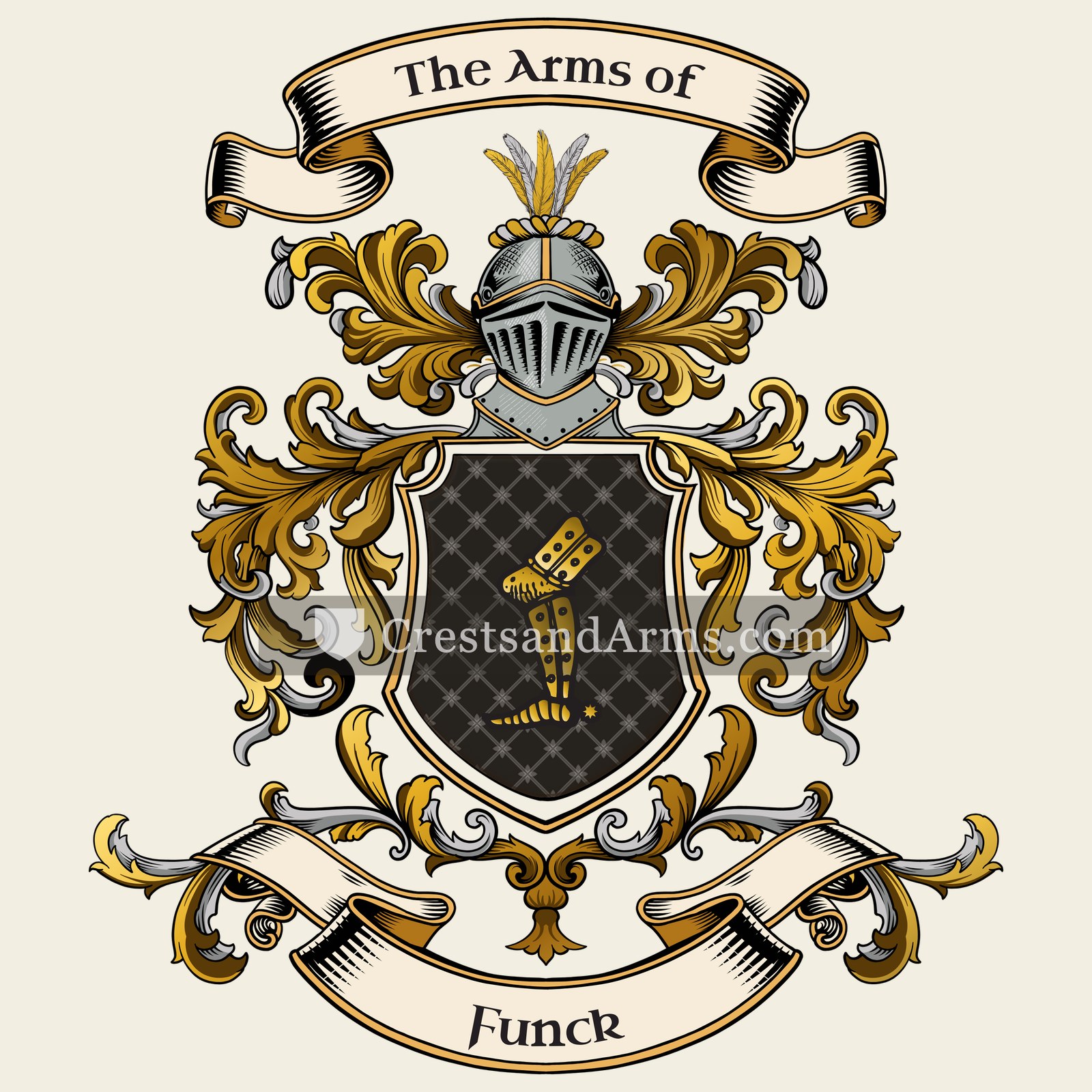
legStrength and swiftness
Colours
Black (Sable)Means: Constancy
Gold (Or)Means: Generosity
Historical info
Source
J. B. Rietstap, Armorial Général, Gouda: G. B. van Goor Zonen, 1884–87
Blazon (the actual original written record)
“De sa. à une jambe de biche d'or, le sabot en bas.”
GermanySchwäbisch-Hall Wurt, c. 1765
Digital archive packCoat of arms PNG, gold border print PDF, vector SVG and the certificate of authenticity. Sent to your email in minutes.
Map of Germany showing where the Funck arms are recorded
The Funck arms were recorded in Schwäbisch-Hall Wurt, c. 1765.
This is where the arms were entered in the register. Families often moved to other parts of the country, so the same name can turn up in more than one region.
The body that granted and recorded arms in Germany in this period.
Francis I, Holy Roman Emperor
Sovereign of the period
Francis I, Holy Roman Emperor
1745–1765
Reigning in Sweden when the Funck arms are first recorded.
How Arms Worked in Germany
In the Holy Roman Empire, coats of arms were often granted to individuals by the Emperor or his representatives. These arms were then passed down through the generations to all legitimate descendants of the original holder. Younger branches of a family usually kept the same shield design without needing to change it, as the arms belonged to the entire lineage.
Granting authority
The Holy Roman Emperor held the sole power to grant new coats of arms throughout his vast imperial territories.
How they got arms
Families typically obtained their coats of arms through a formal imperial grant or by proving their noble status to the authorities.
Where arms were recorded
These grants were officially recorded in the Imperial Chancery registers, which began keeping formal records of such honors during the Middle Ages.
The family's standing
Recorded among the armigerous families of Germany.
Origin & History of the Funck Family in Germany
The surname Funck is a classic example of a German occupational or descriptive name that traces its roots back to the Middle Ages. In the German language, the term "Funke" refers to a spark, and it was often used as a nickname for a person with a fiery temperament or someone who worked with fire, such as a blacksmith. By the time members of the family were documented in the historic salt-mining town of Schwäbisch Hall in 1765, the name had been established for centuries across various German-speaking regions. These early ancestors lived in a period of significant social transition, where families were often identified by their trade or their specific personality traits within their local communities. As the family settled in Schwäbisch Hall, they became part of a long tradition of artisans and tradespeople who helped define the economic life of the region. This evolution from a simple nickname into a formal family name reflects the broader history of how German citizens adopted permanent surnames during the late medieval and early modern periods.
Funck Meaning & Related Branches
Root word
funke
Middle High German term for a spark or a glowing coal.
This name
FunckAn occupational or descriptive name referring to a blacksmith or a person with a fiery temperament.
also spelled
Funk
Related arms
Funkvariant spelling
Nolderecorded with Funck, same area
Rechenberg dit Lintenrecorded with Funck, same area
Documented Sources
J. B. Rietstap, Armorial Général, Gouda: G. B. van Goor Zonen, 1884–87
Elgenstierna, Gustaf. Den introducerade svenska adelns ättartavlor. 1926
Stockholm City Archives (Stockholms stadsarkiv), Mantalslängder för Stockholms stad
Digital archive packCoat of arms PNG, gold border print PDF, vector SVG and the certificate of authenticity. Sent to your email in minutes.


 fessThe military belt, and readiness to serve
 chequyConstancy, and the counting-board
 cross symbolChristian faith and service
 mountThe ground held, and steadfastness upon it
 mulletThe third son, and a divine quality from above
 escallopThe pilgrim's shell, and a long journey made
 fessThe military belt, and readiness to serve
 chequyConstancy, and the counting-board
 cross symbolChristian faith and service
 mountThe ground held, and steadfastness upon it
 mulletThe third son, and a divine quality from above
 escallopThe pilgrim's shell, and a long journey made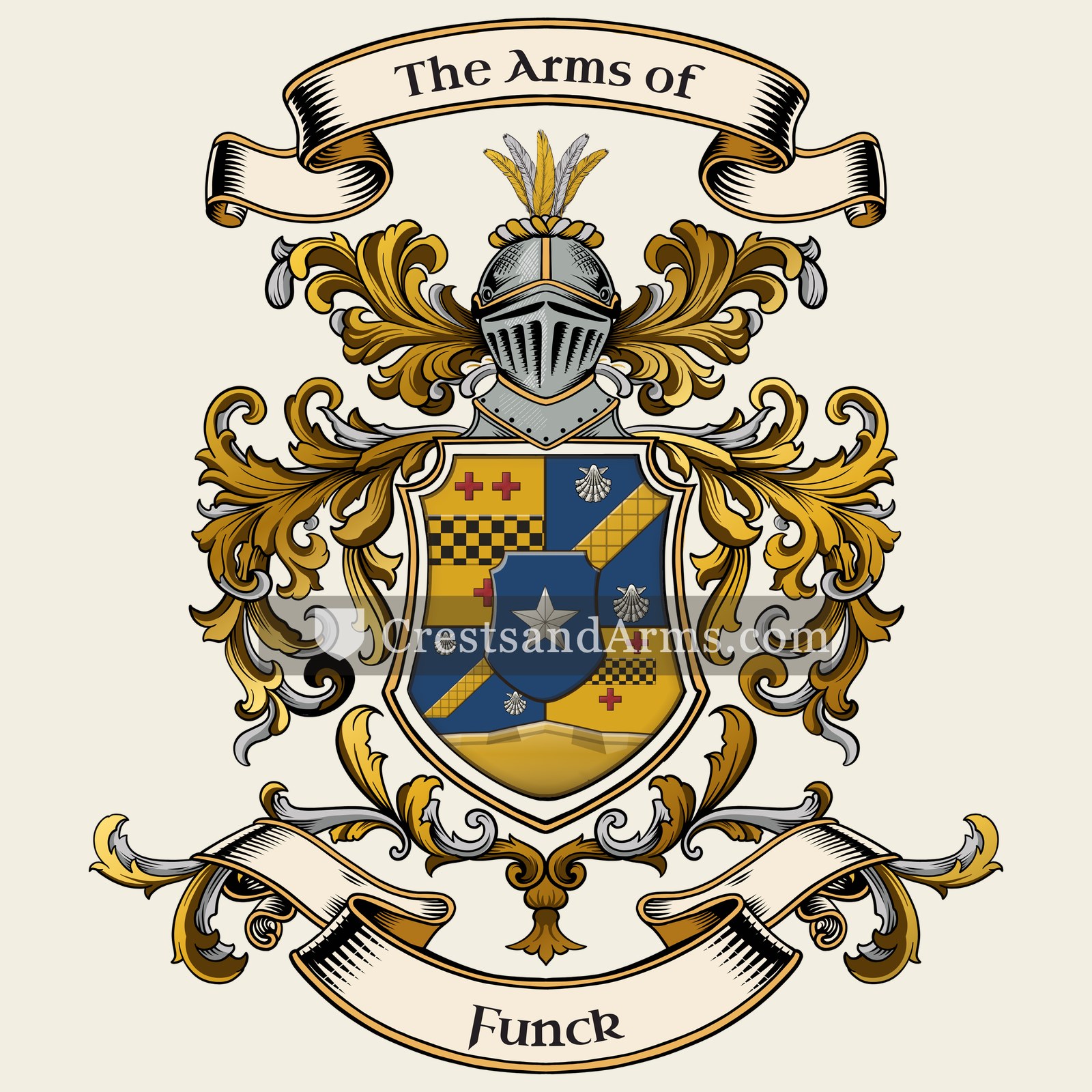


 fireZeal and purification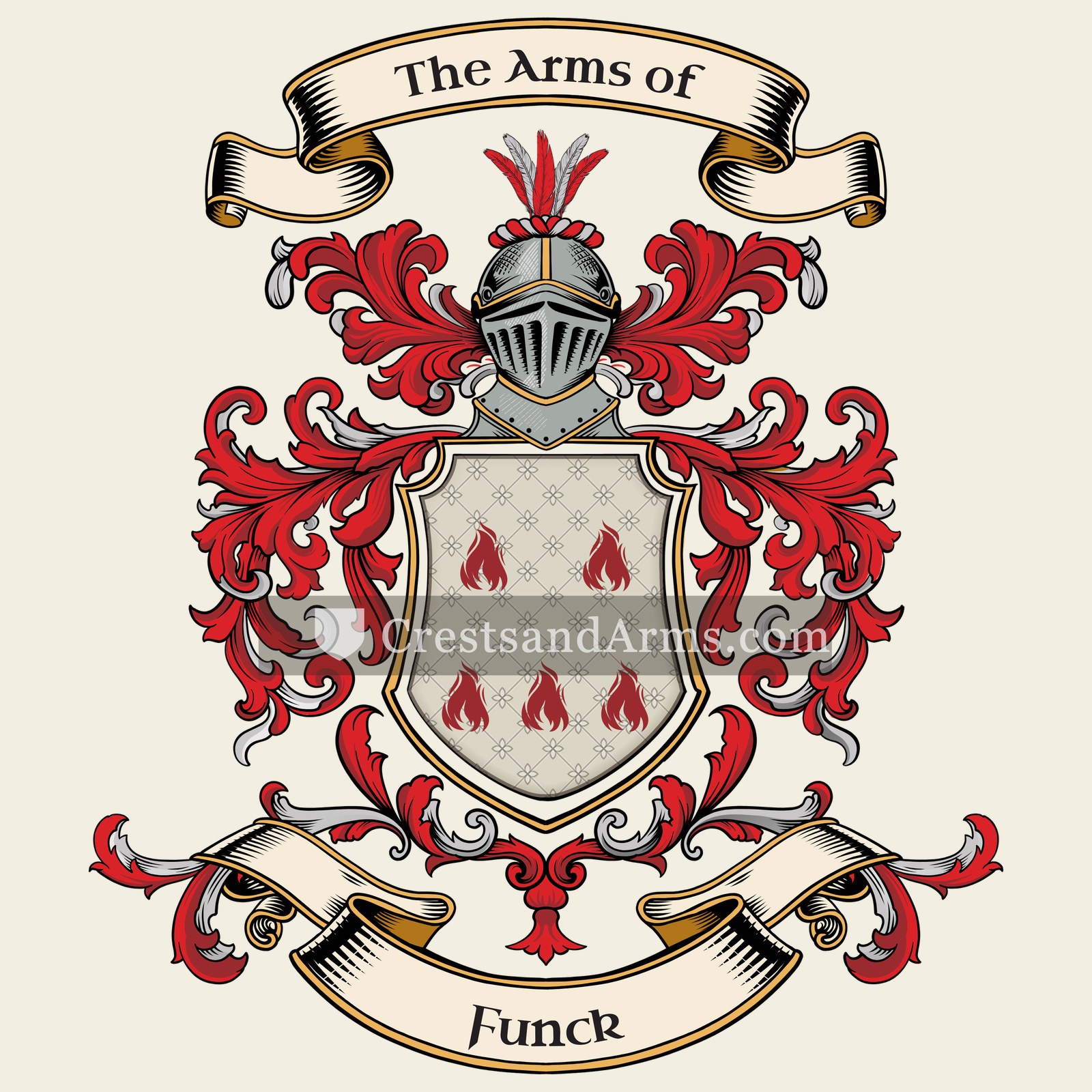

 legStrength and swiftness