Map of France showing where the Fynn arms are recorded
The Fynn arms were recorded in Bourbonnais, c. 1663.
This is where the arms were entered in the register. Families often moved to other parts of the country, so the same name can turn up in more than one region.
The body that granted and recorded arms in France in this period.
Louis XIV of France
Sovereign of the period
Louis XIV of France
1643–1715
Reigning in France when the Fynn arms are first recorded.
How Arms Worked in France
In France, a coat of arms was a mark of honor that passed down through the male line to all legitimate descendants. Families often used the same shield without changes to show their shared heritage. If a branch wanted to stand out, they could add a small mark to their shield to show their specific place in the family tree.
Granting authority
The Juge d'armes de France acted as the official authority that regulated and verified coats of arms across the country.
How they got arms
Families typically inherited their arms from ancestors, though they could also receive them through royal grants or by proving their noble status.
Where arms were recorded
Coats of arms were officially recorded in the Armorial Général de France, which began its main collection in the year 1696.
The family's standing
Recorded among the armigerous families of France.
Origin & History of the Fynn Family in France
The history of the Fynn family in France is deeply rooted in the central region of Bourbonnais, where records confirm their presence as early as 1663. During this period, the family lived in a landscape defined by agricultural traditions and the complex social structures of the Ancien Régime. Families in this area often held ties to the land through local parish communities, which served as the primary centers for recording births, marriages, and deaths. Given the geographic location of Bourbonnais, the Fynn family likely navigated the shifting political climate of the seventeenth century while maintaining their status as local residents. Their presence in these official parish registers suggests they were integrated into the fabric of rural French society, living through a time of significant transition as the monarchy centralized its power under Louis XIV. By studying these early administrative records, we gain a clear window into how the family established their roots and contributed to the local history of the region.
Coat of Arms & Family Crest Details
Symbols on this shield
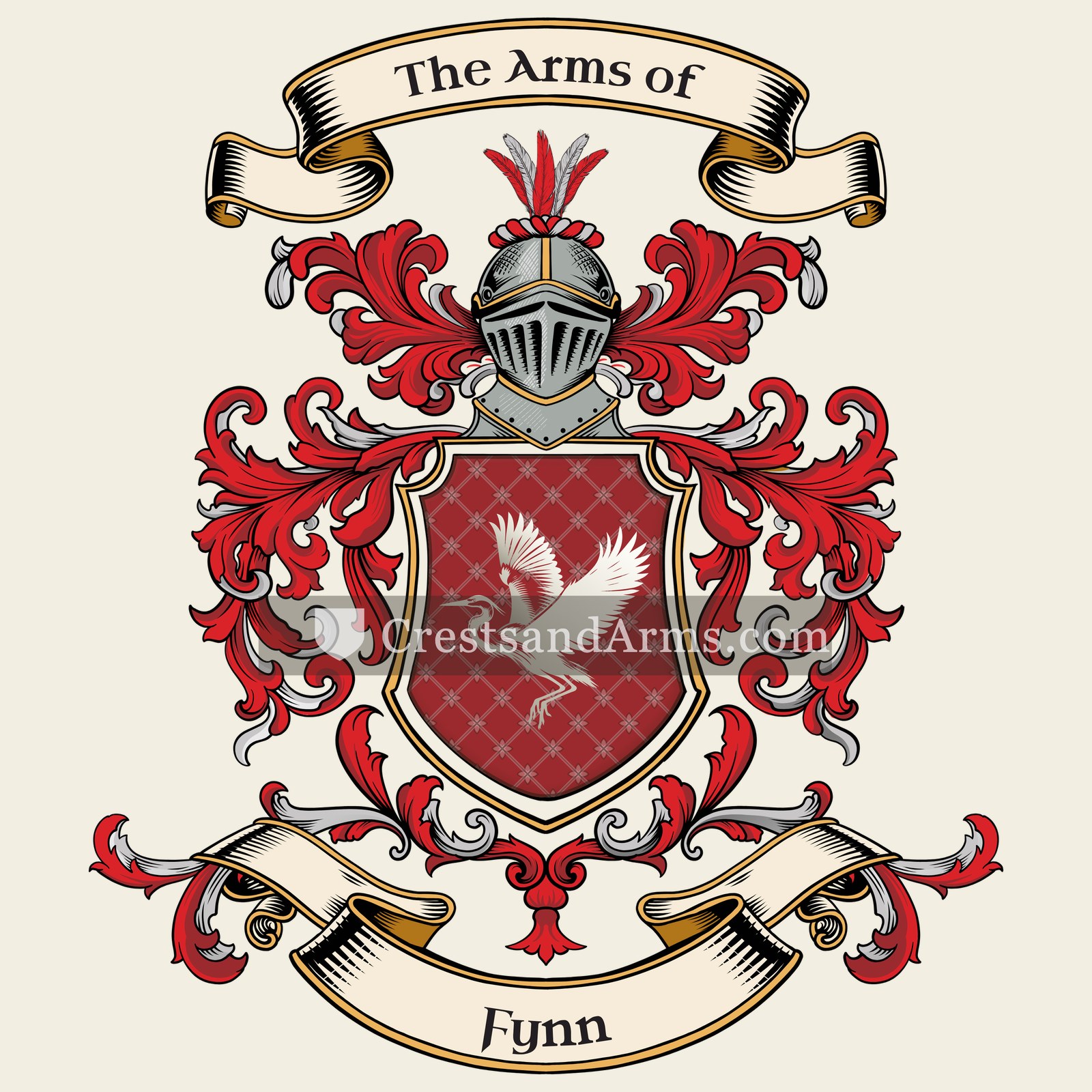
heronPatience and quiet watchfulness
Colours
Red (Gules)Means: Military strength
Silver (Argent)Means: Peace and sincerity
Historical info
Source
Sir Bernard Burke, The General Armory of England, Scotland, Ireland and Wales, London: Harrison & Sons, 1884
Blazon (the actual original written record)
“Gu. a crane without the head ar”
Scotlandc. 1748
Digital archive packCoat of arms PNG, gold border print PDF, vector SVG and the certificate of authenticity. Sent to your email in minutes.
Map of Scotland showing where the Fynn arms are recorded
The Fynn arms were recorded in Scotland, c. 1748.
Arms such as these were typically recorded in Edinburgh.
Edinburgh was the seat of Scotland's government, its courts and its heralds. Families with business there settled nearby, and being close to where arms were recorded is exactly why so many of them appear.
This is where the arms were entered in the register. Families often moved to other parts of the country, so the same name can turn up in more than one region.
The body that granted and recorded arms in Scotland in this period.
George II of Great Britain
Sovereign of the period
George II of Great Britain
1727–1760
Reigning in France when the Fynn arms are first recorded.
How Arms Worked in Scotland
Scottish heraldry is unique because it treats a coat of arms as a piece of personal property protected by law. Only one person can own a specific design at any given time. When a family grows, the head keeps the original shield while other relatives must apply for their own distinct version with slight changes to prove their specific identity.
Granting authority
The Court of the Lord Lyon acts as the official body that regulates and controls all heraldic matters throughout Scotland.
How they got arms
Individuals obtain a legal right to their arms through a formal petition process that confirms their identity and family connection.
Where arms were recorded
All valid coats of arms are officially entered into the Public Register of All Arms and Bearings starting from 1672.
The family's standing
Recorded among the armigerous families of Scotland.
Origin & History of the Fynn Family in Scotland
The surname Fynn has deep roots in the Scottish Lowlands, with historical records confirming that members of the family were well-established in Edinburgh by 1748. During this era, the city was a bustling center of the Scottish Enlightenment, and families like the Fynns were often part of the growing urban middle class that included merchants, tradesmen, and skilled craftsmen. The name itself is thought to be an anglicized version of older Gaelic or Norse origins, reflecting the diverse cultural influences that shaped Scotland over many centuries. By the mid-18th century, the Fynn family would have lived through a time of significant social change, as Edinburgh expanded beyond its ancient medieval walls to accommodate a rising population. Their presence in the city during this period suggests they were active participants in the civic life of the capital as it transformed into a modern hub of commerce and intellectual thought.
Fynn Meaning & Related Branches
Root word
Finn
Old Irish term meaning fair or white-haired.
This name
FynnA surname of Irish origin denoting a person with a fair complexion or light hair.
also spelled
Fyn
Finn
Fynn
Fynes
Fynnee
Documented Sources
J. B. Rietstap, Armorial Général, Gouda: G. B. van Goor Zonen, 1884–87
Archives Départementales de l'Allier, Registres paroissiaux et d'état civil de l'Allier
Baudiau, Jacques-François, Le Morvan ou essai géographique, topographique et historique sur cette contrée, 1867
Nicollet, Jean, Histoire du Bourbonnais, 1978
Digital archive packCoat of arms PNG, gold border print PDF, vector SVG and the certificate of authenticity. Sent to your email in minutes.


 fessThe military belt, and readiness to serve
 fessThe military belt, and readiness to serve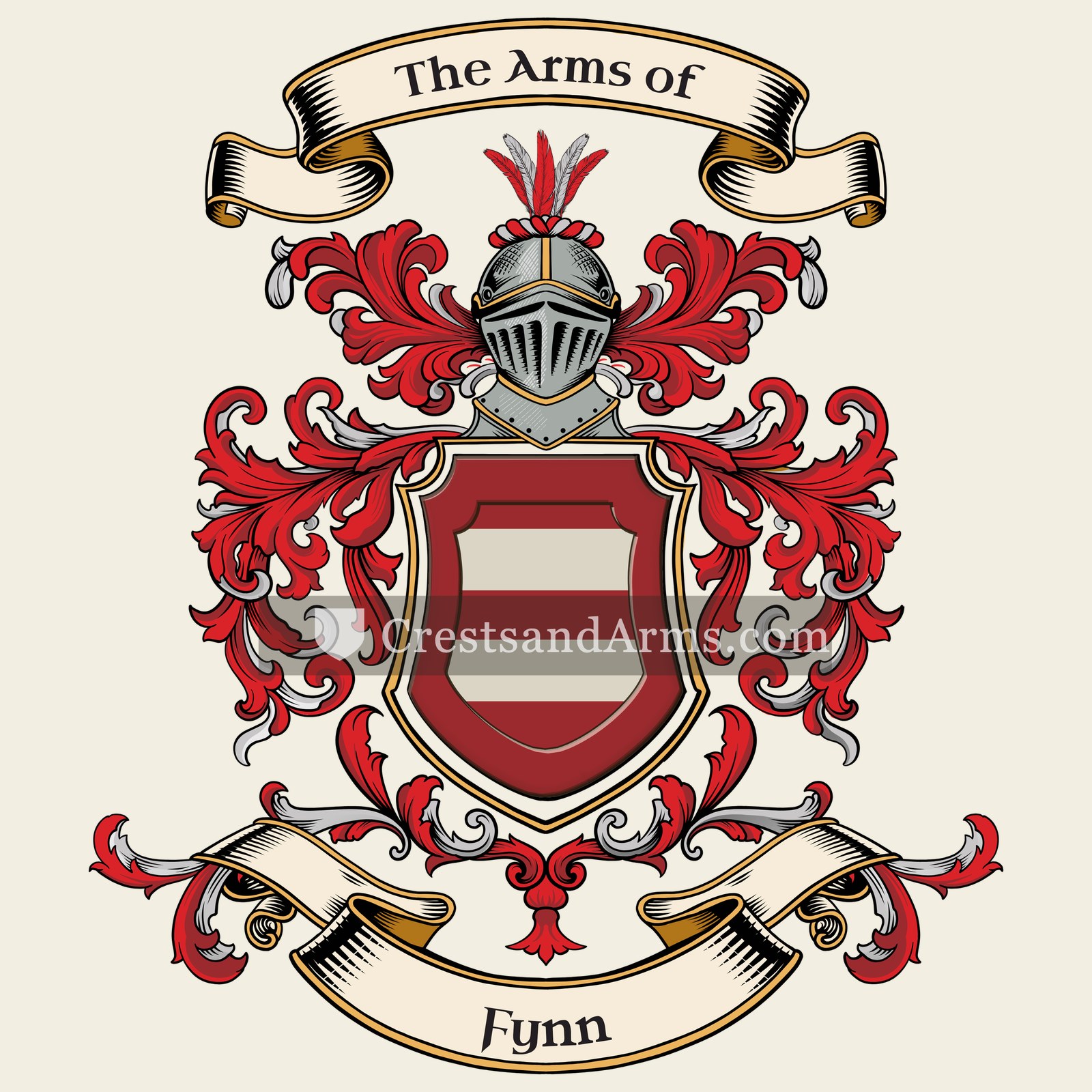


 heronPatience and quiet watchfulness