Map of Germany showing where the Gabela arms are recorded
The Gabela arms were recorded in Saxony, c. 1765.
Saxony had mines, trade and old landed families all at once. Silver made some fortunes and land held others, and both sorts of family kept arms, which is why Saxon names appear so often in the registers.
This is where the arms were entered in the register. Families often moved to other parts of the country, so the same name can turn up in more than one region.
The body that granted and recorded arms in Germany in this period.
Francis I, Holy Roman Emperor
Sovereign of the period
Francis I, Holy Roman Emperor
1745–1765
Reigning in Germany when the Gabela arms are first recorded.
How Arms Worked in Germany
In the Holy Roman Empire, coats of arms were often granted to individuals by the Emperor or his representatives. These arms were then passed down through the generations to all legitimate descendants of the original holder. Younger branches of a family usually kept the same shield design without needing to change it, as the arms belonged to the entire lineage.
Granting authority
The Holy Roman Emperor held the sole power to grant new coats of arms throughout his vast imperial territories.
How they got arms
Families typically obtained their coats of arms through a formal imperial grant or by proving their noble status to the authorities.
Where arms were recorded
These grants were officially recorded in the Imperial Chancery registers, which began keeping formal records of such honors during the Middle Ages.
The family's standing
Recorded among the armigerous families of Saxony.
Origin & History of the Gabela Family in Germany
The Gabela family name finds its historical roots in the region of Saxony, where records confirm the presence of family members as early as 1765. During this period, Saxony was a center of significant cultural and industrial activity within the Holy Roman Empire. The name likely originated as a localized identifier, common for families living in rural or developing trade communities during the eighteenth century. As people in the region began to move from small villages to growing towns, families like the Gabelas often became linked to specific trades or agricultural roles that defined their social standing. By remaining in the Saxon region, the family participated in the shifting landscape of German history, moving through the transition from agrarian life to the early stages of modernization that defined the late 1700s.
Meaning of the Gabela family crest colors & symbols
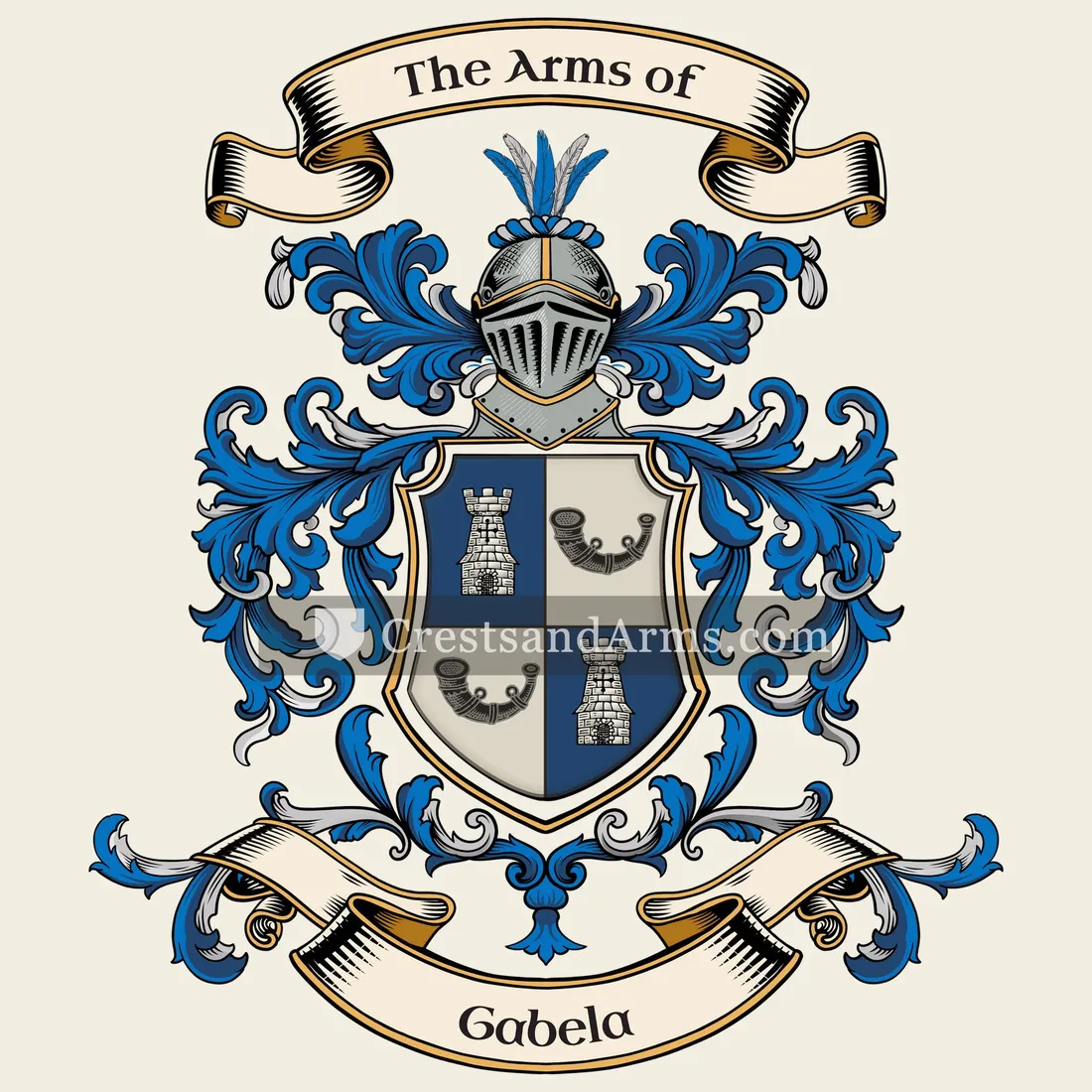
Symbols on this shield
towerGrandeur and solidity, and a stronghold defended
hunting horn stringedOne who delights in the chase
Colours
Blue (Azure)Means: Loyalty and truth
Silver (Argent)Means: Peace and sincerity
Black (Sable)Means: Constancy
Historical info
Source
J. B. Rietstap, Armorial Général, Gouda: G. B. van Goor Zonen, 1884–87
Blazon (the actual original written record)
“Ec.: aux 1 et 4 d'azur à une tour d'arg., ouv. et aj. du champ; aux 2 et 3 d'arg. à un cor-de-chasse de sa., posé en bande, lié d'azur, le lien en double sautoir. Sur le tout de gu. à deux fourches d'azur, emm. d'or, passées en saut. dans une couronne d'or. Cq. cour. C.: un lion d'or, cour. du même, assis de front, tenant devant son corps un écusson aux armes du surtout: le tout entre deux prob., coupées alt. d'azur et d'arg. S.: deux lions d'or, cour. du même.”
Denmarkc. 1722
Digital archive packCoat of arms PNG, gold border print PDF, vector SVG and the certificate of authenticity. Sent to your email in minutes.
Map of Denmark showing where the Gabela arms are recorded
The Gabela arms were recorded in Denmark, c. 1722.
Arms such as these were typically recorded in Sjaælland.
Zealand held the Danish court, the crown's offices and Copenhagen itself. Families who served the king kept estates within reach of it, and royal service was the ordinary route to a coat of arms.
This is where the arms were entered in the register. Families often moved to other parts of the country, so the same name can turn up in more than one region.
The body that granted and recorded arms in Denmark in this period.
Frederik IV of Denmark
Sovereign of the period
Frederik IV of Denmark
1699–1730
Reigning in Germany when the Gabela arms are first recorded.
How Arms Worked in Denmark
Danish heraldry during this period was closely tied to noble status and royal favor rather than being open to all citizens. Arms were typically granted by the monarch to individuals, and these symbols were then shared by all members of the noble house. If a family line died out, the right to use those specific arms ended with them.
Granting authority
The Danish royal chancery held the power to issue and regulate official coats of arms for the kingdom.
How they got arms
Families usually received their arms through a formal royal grant that confirmed their noble status and rights.
Where arms were recorded
These grants were officially recorded in the Danish Royal Chancery records starting in the sixteenth century.
The family's standing
Recorded among the armigerous families of Denmark.
Origin & History of the Gabela Family in Denmark
The Gabela family name first appears in the historical records of Sjælland, Denmark, during the early eighteenth century. By 1722, members of the family were established within the region, living during a period when Denmark was transitioning through significant social and administrative changes under the absolute monarchy. The name itself is distinct and carries linguistic roots that suggest connections to broader European movements of people during that era. While the family lived in a time of strict social hierarchies, they integrated into the local community and contributed to the regional history of the Danish island. As the family grew, they became part of the fabric of Sjælland, navigating the agricultural and social shifts that defined life in Denmark during the 1700s. Their presence in the early records provides a clear window into the lives of families who helped shape the local culture of the island before the modern era.
Gabela Meaning & Related Branches
Root word
Gabel
A German term for a fork or a pronged tool.
This name
GabelaRefers to a person who lived near a fork in a road or river.
also spelled
Gable
Documented Sources
J. B. Rietstap, Armorial Général, Gouda: G. B. van Goor Zonen, 1884–87
Sächsisches Staatsarchiv, Kirchenbücher der Evangelisch-Lutherischen Landeskirche Sachsens, 1765
Blaschke, Karlheinz, Bevölkerungsgeschichte von Sachsen bis zur industriellen Revolution, 1967
Digital archive packCoat of arms PNG, gold border print PDF, vector SVG and the certificate of authenticity. Sent to your email in minutes.


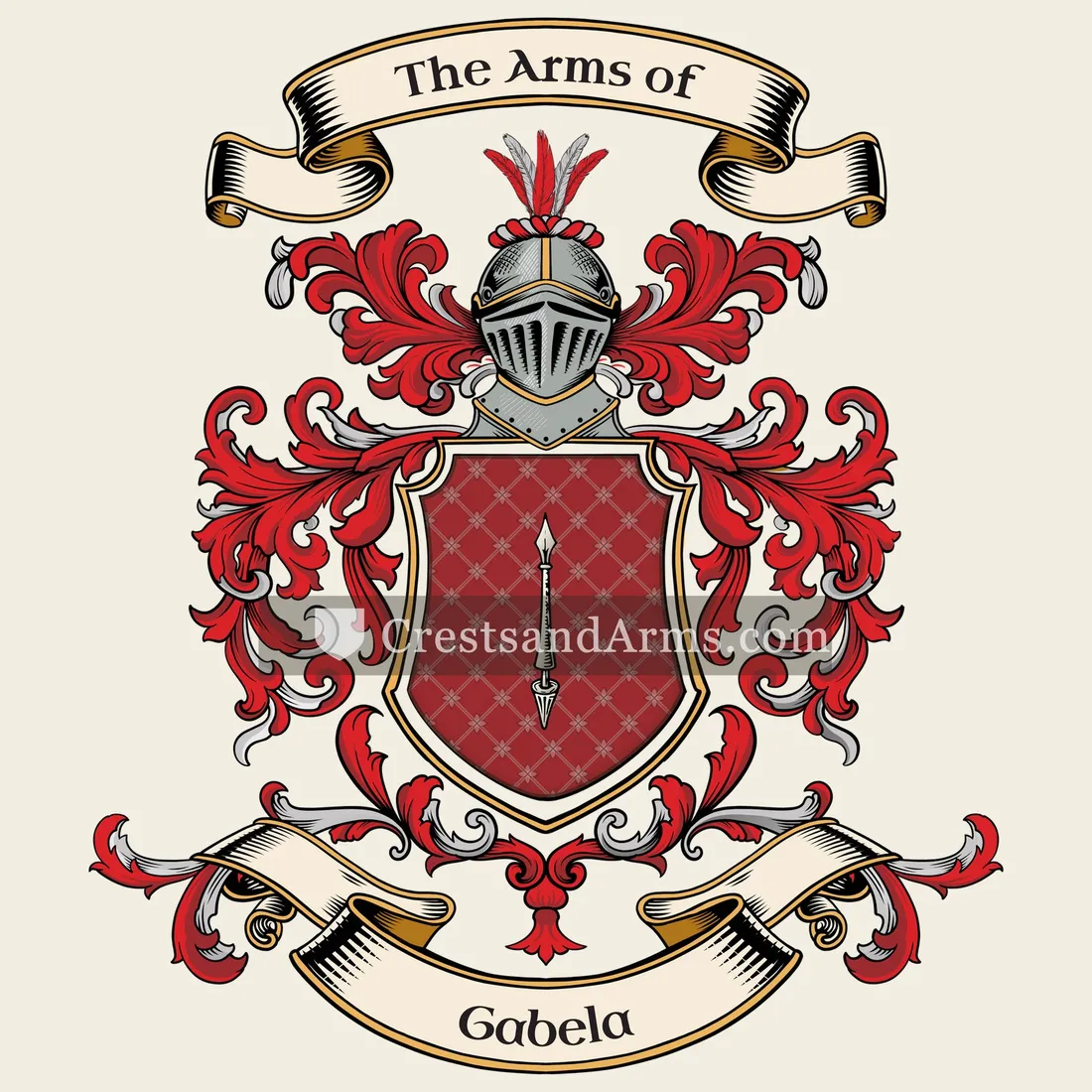
 lanceKnightly service and the tilt
 lanceKnightly service and the tilt


 towerGrandeur and solidity, and a stronghold defended
 hunting horn stringedOne who delights in the chase