Map of France showing where the Gains arms are recorded
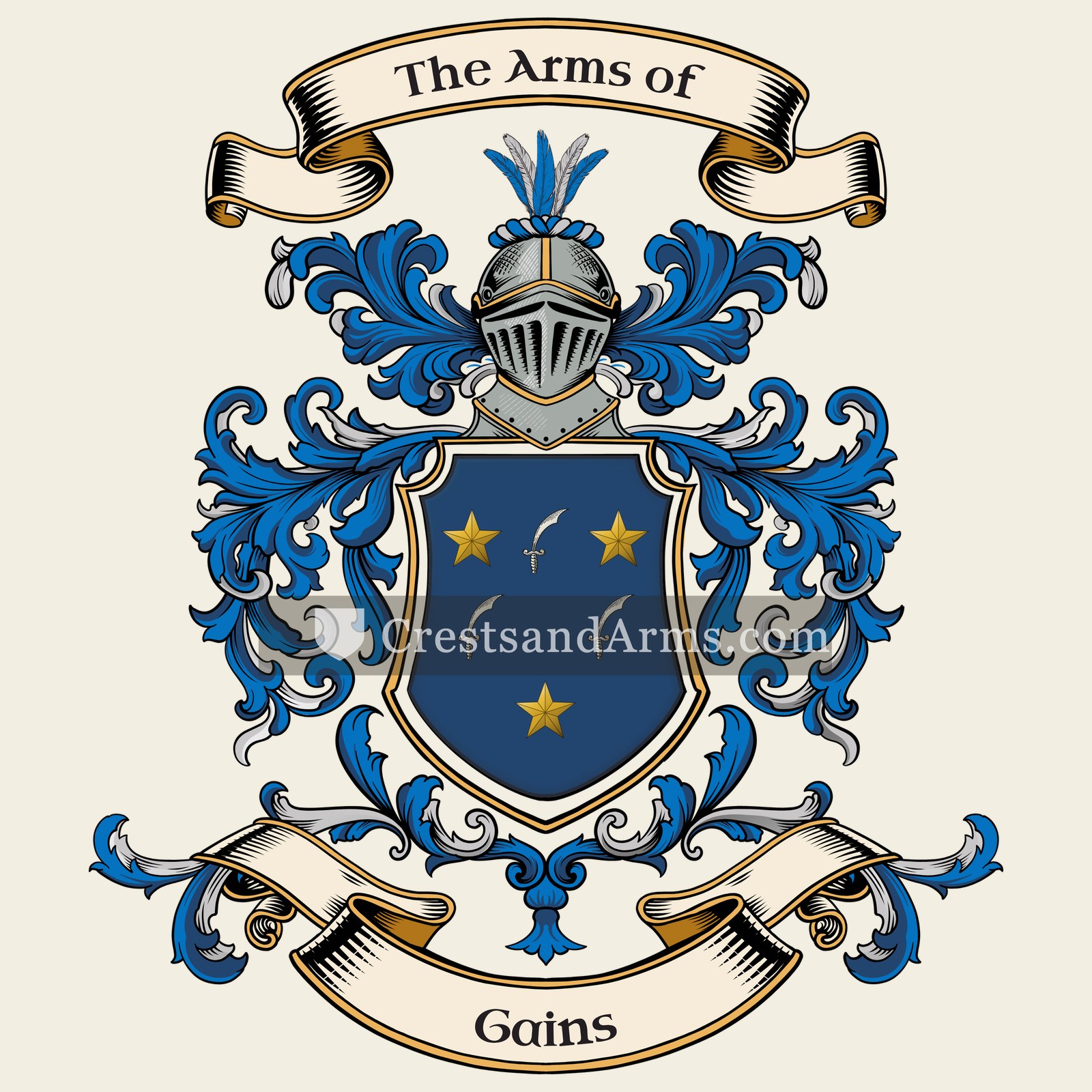
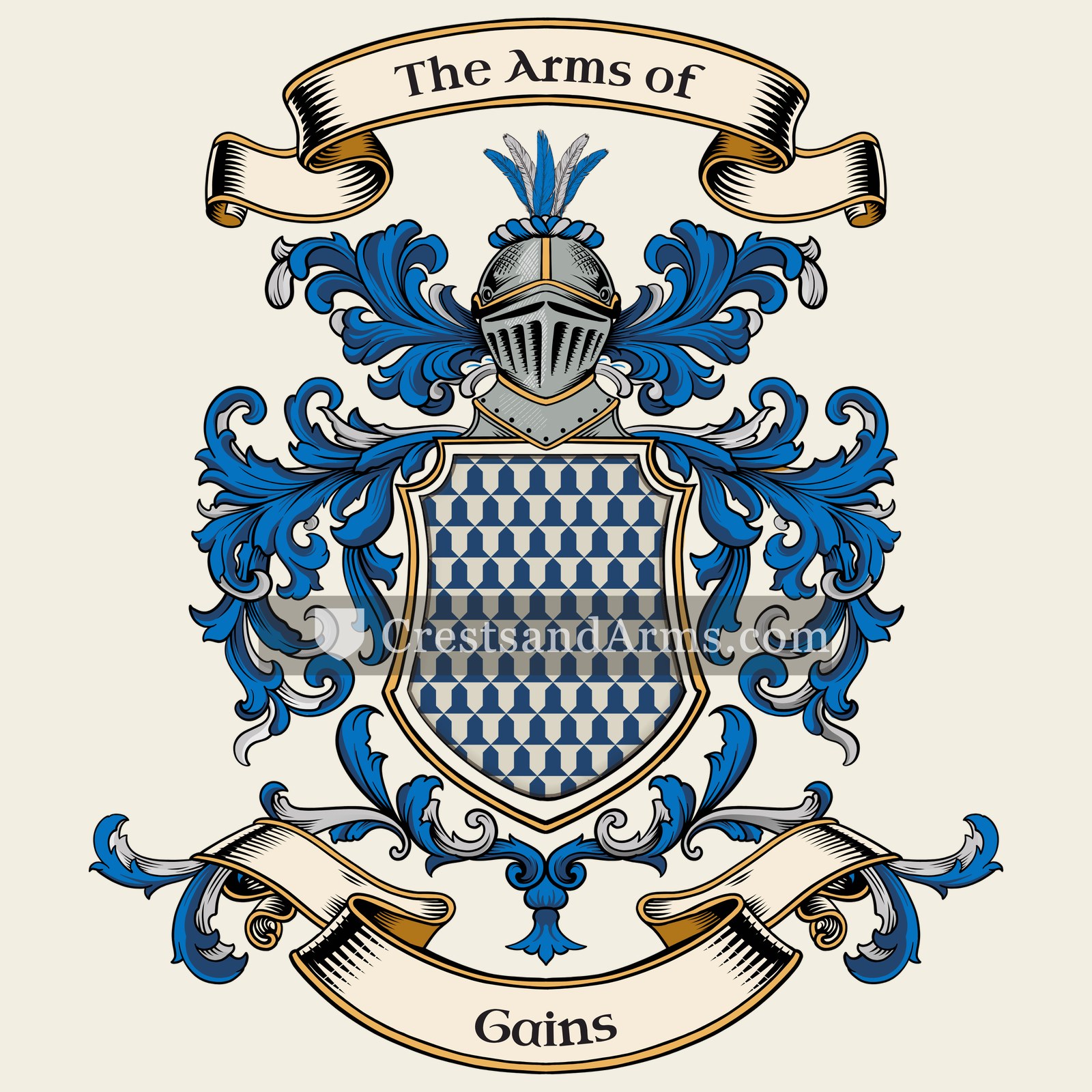
The Gains arms were recorded in Bretagne, c. 1663.
More families held coats of arms in Bretagne than anywhere else in France. The land was divided into many small estates rather than a few large ones, so far more households counted as gentry, and each needed a shield of its own to be told apart.
This is where the arms were entered in the register. Families often moved to other parts of the country, so the same name can turn up in more than one region.
The body that granted and recorded arms in France in this period.
Louis XIV of France
Sovereign of the period
Louis XIV of France
1643–1715
Reigning in France when the Gains arms are first recorded.
How Arms Worked in France
In France, a coat of arms was a mark of honor that passed down through the male line to all legitimate descendants. Families often used the same shield without changes to show their shared heritage. If a branch wanted to stand out, they could add a small mark to their shield to show their specific place in the family tree.
Granting authority
The Juge d'armes de France acted as the official authority that regulated and verified coats of arms across the country.
How they got arms
Families typically inherited their arms from ancestors, though they could also receive them through royal grants or by proving their noble status.
Where arms were recorded
Coats of arms were officially recorded in the Armorial Général de France, which began its main collection in the year 1696.
The family's standing
Recorded among the armigerous families of Bretagne.
Origin & History of the Gains Family in France
The family name Gains, often associated with the historical region of Bretagne, finds its roots in the complex social landscape of seventeenth-century France. By the year 1663, records confirm that members of the family were established within this rugged coastal province, a time when the region maintained a distinct cultural identity separate from the rest of the French kingdom. The name likely evolved from local linguistic patterns or descriptive nicknames common among the rural population of the era. Families in Bretagne during this period were deeply connected to the land and the maritime traditions of the Atlantic coast. As the family grew, they participated in the local parish life and the agricultural economy that defined the Breton countryside. This early presence in the region suggests that the ancestors of the Gains family were part of the hardworking communities that navigated the shifting political and social tides of pre-revolutionary France.
Coat of Arms & Family Crest Details
Symbols on this shield
vairProtection, and the winter fur
Colours
VairMeans: Protection
Red (Gules)Means: Military strength
Historical info
Source
Sir Bernard Burke, The General Armory of England, Scotland, Ireland and Wales, London: Harrison & Sons, 1884
Blazon (the actual original written record)
“Barry of six vair and gu”
Englandc. 1620
Digital archive packCoat of arms PNG, gold border print PDF, vector SVG and the certificate of authenticity. Sent to your email in minutes.
Map of England showing where the Gains arms are recorded
The Gains arms were recorded in England, c. 1620.
Arms such as these were typically recorded in York.
Yorkshire is the largest of the English counties, and it held more gentry families than any other. Land there was split among a great many households rather than a few, so a great many of them carried arms.
This is where the arms were entered in the register. Families often moved to other parts of the country, so the same name can turn up in more than one region.
The body that granted and recorded arms in England in this period.
James VI and I
Sovereign of the period
James VI and I
1603–1625
Reigning in France when the Gains arms are first recorded.
How Arms Worked in England
English heraldry allowed arms to be shared by all legitimate descendants of the original owner. These symbols were treated as personal property that moved through the generations to all children. While the eldest son kept the original design, other family members could use the same shield without needing to change it or register their own unique versions.
Granting authority
The College of Arms in London has regulated the use of coats of arms throughout England and Wales since 1484.
How they got arms
Families typically obtained their coats of arms through a formal grant from the Crown or by proving their ancient right to them.
Where arms were recorded
All official coats of arms are recorded in the registers kept at the College of Arms, which date back to the fifteenth century.
The family's standing
Recorded among the armigerous families of England.
Origin & History of the Gains Family in England
The family name Gains traces its roots to the northern regions of England, where it emerged as a descriptive identifier during the late medieval period. By the early seventeenth century, historical records confirm that members of the family were well-established in the city of York. During this era, York served as a vital hub for trade and administration, placing the family in a central location during a time of significant social change. The name likely evolved from Old English or Old Norse linguistic roots, reflecting the diverse cultural influences present in the northern counties. As residents of a major urban center like York in 1620, these early individuals were part of a growing class of citizens who contributed to the local economy and the civic life of the city. Their presence in such a prominent historical location suggests that the family was integrated into the fabric of northern English society long before the mass migrations of later centuries.
Gains Meaning & Related Branches
Root word
Garin
Derived from the Germanic elements meaning spear and rule or strength.
This name
GainsA patronymic surname indicating descent from a person named Garin or Warin.
also spelled
Gain
Gains
Carce
Gain-Carce
Gan de Karse
Documented Sources
J. B. Rietstap, Armorial Général, Gouda: G. B. van Goor Zonen, 1884–87
Archives départementales d'Ille-et-Vilaine, Série B: Cours et juridictions
Archives départementales du Finistère, Série E: Familles et seigneuries
Galliou, Patrick, Histoire de la Bretagne, 2005
Le Page, Dominique, Pour en finir avec le Moyen Âge: La Bretagne au XVIe siècle, 2003
Digital archive packCoat of arms PNG, gold border print PDF, vector SVG and the certificate of authenticity. Sent to your email in minutes.


 swordJustice, and military honour
 mulletThe third son, and a divine quality from above
 swordJustice, and military honour
 mulletThe third son, and a divine quality from above